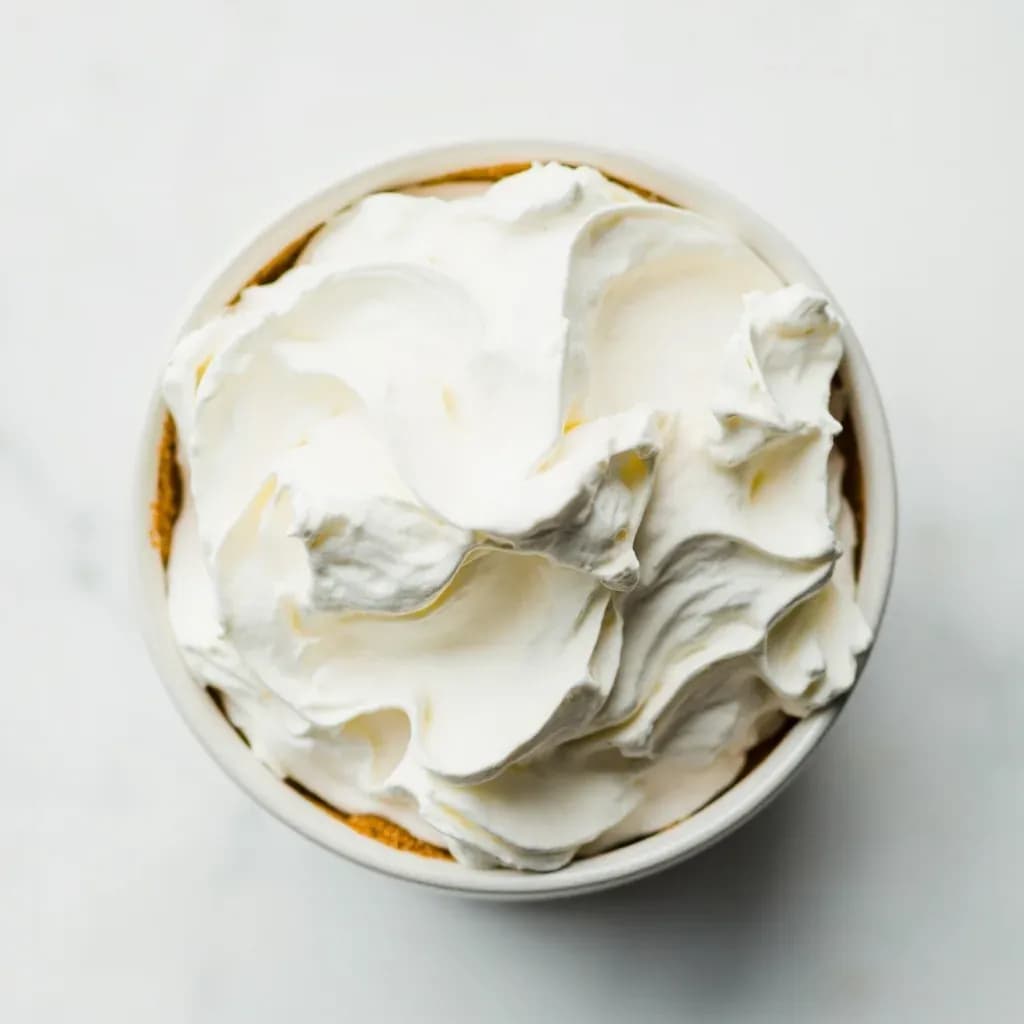
Prep & Assembly
Whipping Meringue
Beating egg whites with sugar into a glossy, stable foam for desserts, toppings, and bases.
Whipping meringue beats egg whites with sugar until air is incorporated into stiff, glossy peaks stabilized by the dissolved sugar. French meringue adds raw sugar to whites, while Italian uses hot syrup and Swiss warms the whites and sugar together for greater stability. The foam is baked into crisp shells, folded into batters, or torched as a topping.
Meringue is a sugar-stabilized foam made from whipped egg whites — deceptively simple to look at, but really a small piece of applied protein chemistry. When you whip whites, you unfold the ovalbumin proteins and stretch them around air bubbles; the sugar dissolves into the water and thickens the liquid around the bubbles, holding the foam together, and during baking it raises the temperature at which the whites eventually set so the meringue can dry slowly without collapsing. Get the balance right and you have something that can be piped into rosettes, baked into crisp shells, folded into mousses, or torched onto pies.
The technique divides into three classic styles — French, Swiss, and Italian — which differ less in their end result than in how the sugar is added. French whips raw whites and adds sugar toward the end; Swiss warms the whites and sugar together before whipping; Italian pours a hot sugar syrup into whipping whites. All three produce a glossy foam, but they vary in stability, sheen, and whether they need to be baked to be safe. Knowing which one you want before you start is half the work.
Meringue matters to a cook because it pulls more weight than almost any other building block. It can be a dessert on its own (kisses, pavlova), a structural layer (Baked Alaska, dacquoise), a topping (lemon meringue pie), or a base for buttercream and frosting. The margin for error is small, but the variables are few, which is why it rewards precision more than talent.
- Difficulty
- Medium
Types & varieties
Raw whites whipped at room temperature, sugar added gradually toward the end. Lightest texture, most prone to weeping, must be baked. Used for pavlovas, dacquoise, and dry cookies.
Whites and sugar warmed together over a bain-marie to about 50–60 °C / 120–140 °F until the sugar dissolves, then whipped off the heat until cool and glossy. Smooth, dense, and pipeable; safe for uncooked fillings.
Whites whipped while a hot sugar syrup (240–244 °F) is drizzled in. The most stable of the three; used for piping decorations, buttercream bases, Baked Alaska coatings, and lemon meringue pie topping.
Often classed as its own category: a French-style meringue base baked with extra cornstarch and vinegar for a crisp shell and marshmallowy center.
How to do it
- 1
Set up a spotless, fat-free bowl and whisk
Wipe the bowl and whisk with lemon juice or white vinegar, then dry thoroughly. Even a film of butter or yolk will prevent the whites from whipping. Glass, stainless, or copper are ideal; avoid plastic, which holds residual grease in scratches.
- 2
Separate the eggs carefully
Crack each egg over a small ramekin and tip just the white into the mixing bowl. If a yolk slips, set that egg aside for another use. Aim for about 30–35 g of white per large egg.
- 3
Begin whipping on low, then medium
Start at the lowest speed for 30 seconds to break the whites into a loose foam, which helps stabilize them. Increase to medium and whip until the whites form soft, droopy peaks that curl over at the tip.
- 4
Add a stabilizer
Sprinkle in 1/8 tsp cream of tartar per white, or a pinch of salt with a few drops of lemon juice. If you are using a copper bowl, you can skip the acid entirely — copper ions bind to the whites and stabilize the foam on their own.
- 5
Add the sugar in a slow, steady stream
For French meringue, pour superfine or caster sugar in gradually once soft peaks form, about 1 tablespoon at a time, waiting 15–20 seconds between additions. For Swiss, dissolve the sugar into the whites over a bain-marie first. For Italian, pour a 240–244 °F syrup in a thin stream with the mixer running.
- 6
Whip to glossy, firm peaks
Continue beating at medium-high until the meringue is bright white, satiny, and holds a peak that stands straight up when the whisk is lifted. Rub a bit between your fingers — it should feel completely smooth, never gritty.
- 7
Fold in flavorings by hand
Stop the machine. Use a silicone spatula to fold in vanilla, citrus zest, ground nuts, sifted cocoa, or cornstarch, cutting through the middle and scraping under and over to keep the volume intact.
- 8
Shape, pipe, or bake immediately
Use right away: spread on pies, pipe into nests or kisses, or shape onto parchment. Bake French and Swiss meringues at 200–225 °F / 90–110 °C until dry to the touch, then cool in the turned-off oven. Italian meringue can be used as-is for toppings or briefly torched.
Troubleshooting: Why Meringue Fails
Most meringue disasters come down to two underlying causes: sugar that has not fully dissolved, and meringue shocked by a sudden temperature change. Learn to read the symptoms and the cure usually reveals itself.
- Weeping or beading (syrup pooling on the surface) almost always means undissolved sugar or underbaking. The fix is lower heat and longer time, not more sugar.
- Cracked or collapsed shells come from pulling meringue out of a hot oven into cool air; cool it in the turned-off oven with the door ajar.
- Dry, lumpy, weeping whites in the bowl are overbeaten; once curdled, the foam is past saving — start over.
- Foam that never thickens points to fat contamination from yolk, butter, or a greasy bowl.
- A gritty texture in the finished meringue means the sugar did not fully dissolve; rub a bit between your fingers as you whip to check.
- Deflation after folding usually means too many turns or too much force — fold gently with a silicone spatula in three or four passes.
Common uses
Tips & pitfalls
- Wipe the bowl and whisk with a cut lemon or white vinegar and dry thoroughly; any trace of fat — yolk, butter, oil — will stop the whites from whipping altogether.
- Separate eggs one at a time into a small ramekin, then tip the white into the mixing bowl. A single drop of yolk in the main bowl ruins the whole batch, but a contaminated small bowl is easy to set aside.
- Add sugar only after the whites reach soft peaks, then add it gradually. Dumping sugar into loose foam deflates it and prevents the sugar from dissolving properly.
- Test for dissolved sugar by rubbing a bit of meringue between thumb and forefinger as you whip. It should feel perfectly smooth; any grittiness means the meringue will weep in the oven.
- Stop whipping the moment the peaks stand straight and the surface looks like satin. Overbeaten whites turn dry, lumpy, and weep liquid — once curdled, they are past saving.
- Fold in flavorings (vanilla, citrus zest, nuts, chocolate) by hand with a silicone spatula. Even brief machine mixing after the meringue is made will knock out the volume you just built.
- Bake low and slow, then turn the oven off and leave the meringue inside with the door ajar. Sudden temperature change is what cracks shells and causes collapse.
- Weeping, beading, or sticky tops are almost never a sugar-quantity problem — they are underbaking or undissolved sugar. Reach for more time and lower heat, not more sugar.
Good to know
- Primary ingredients
- Egg whites and sugar; optional stabilizers such as cream of tartar, salt, lemon juice, vinegar, or a copper bowl.
- Standard ratio
- Roughly 50 g (about 1/4 cup) caster sugar per large egg white; richer desserts up to 60 g, lighter foams as low as 35 g.
- Peak stages
- Foamy → soft peaks (curl over) → firm/stiff peaks (stand straight) → overbeaten (dry, curdled, weeping).
- Whipping time
- Soft peaks in 2–3 minutes on medium; full stiff, glossy peaks in 4–6 minutes with a stand mixer, longer by hand.
- Sugar syrup temp (Italian)
- 240–244 °F / 115–118 °C, the soft- to firm-ball stage.
- Baking temp
- 200–225 °F / 90–110 °C, low and slow for 60–120 minutes, then cooled in the oven to prevent cracking.
- Storage
- Fully baked, dry meringues keep 2–4 weeks in an airtight tin at room temperature; soft or unbaked meringues should be used within hours.
- Difficulty
- Beginner-friendly for French; intermediate for Swiss; advanced for Italian (requires syrup timing).
Also called
Making Meringue · Beating Egg Whites · Whisking Meringue
Dishes that rely on it
Related

Whisk
Beat ingredients smooth and aerated with a looping wire motion

Sift
Pass dry ingredients through mesh to aerate and remove lumps

Strain
Pour through mesh to separate solids from liquid for a smooth result

Filter
Pass liquid through fine material to clarify out the smallest particles

Rice
Press cooked potatoes through small holes for fluffy, lump-free texture

Mash
Crush soft cooked food into a rustic, creamy purée

Grind
Crush food into a coarse to fine texture, from spices to meat

Grate
Shred food into fine bits against a sharp-toothed surface