East Asia
Sichuan Buddhist Vegetarian
Also: Sichuan Temple Cuisine, Chuan Zhai Cai, 斋菜, Sichuanese Vegetarian
The meatless counterpoint to Sichuan's fiery meat-heavy canon — temple cooking that channels the same bold flavors through tofu, gluten, and mountain vegetables while honoring Buddhist precepts.
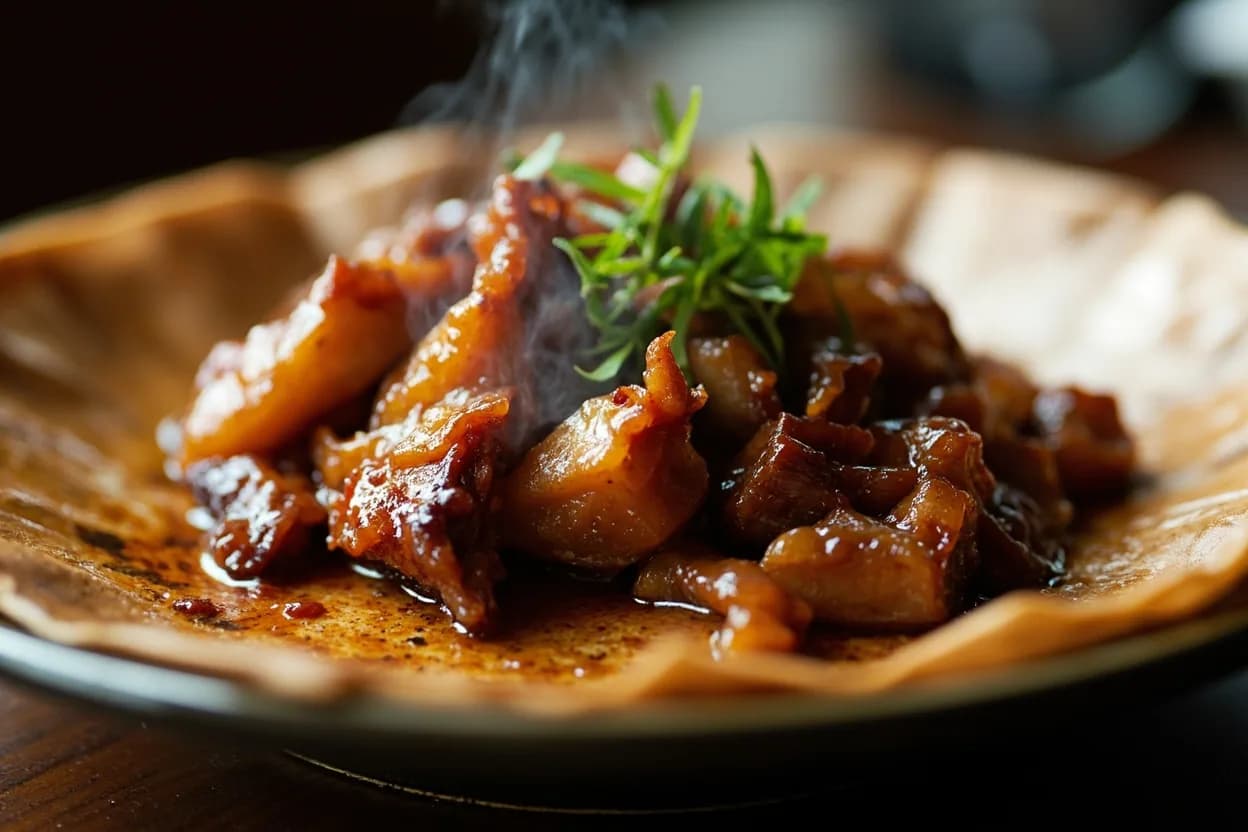
Sichuan Buddhist vegetarian cuisine is the plant-based cooking tradition developed in and around Sichuan's Buddhist temples, particularly Wenshu Monastery in Chengdu and Emei Shan monasteries. It observes the Five Pungent Roots ban (onion, garlic, leeks, chives, asafoetida) as well as pork and all flesh, yet uses the same Sichuan flavor grammar — doubanjiang, Sichuan peppercorn, black bean paste, dried chilies — applied to tofu, gluten-based mock meats, mushrooms, bamboo shoots, and mountain vegetables. The cuisine ranges from rustic temple canteen food to elaborate 'mock meat' banquets where wheat gluten and pressed tofu replicate the visual form and chew of duck, fish, and pork belly. This duality — ascetic intent, indulgent flavor — is the cuisine's defining tension.
The flavour base
Doubanjiang (fermented chili-bean paste) and Sichuan peppercorn ma la foundation, applied without garlic or onion; aromatics replaced with ginger, aged citrus peel, and fermented black bean; sesame paste and chili oil used extensively for richness
Pantry staples
Key ingredients
Signature techniques
Signature dishes
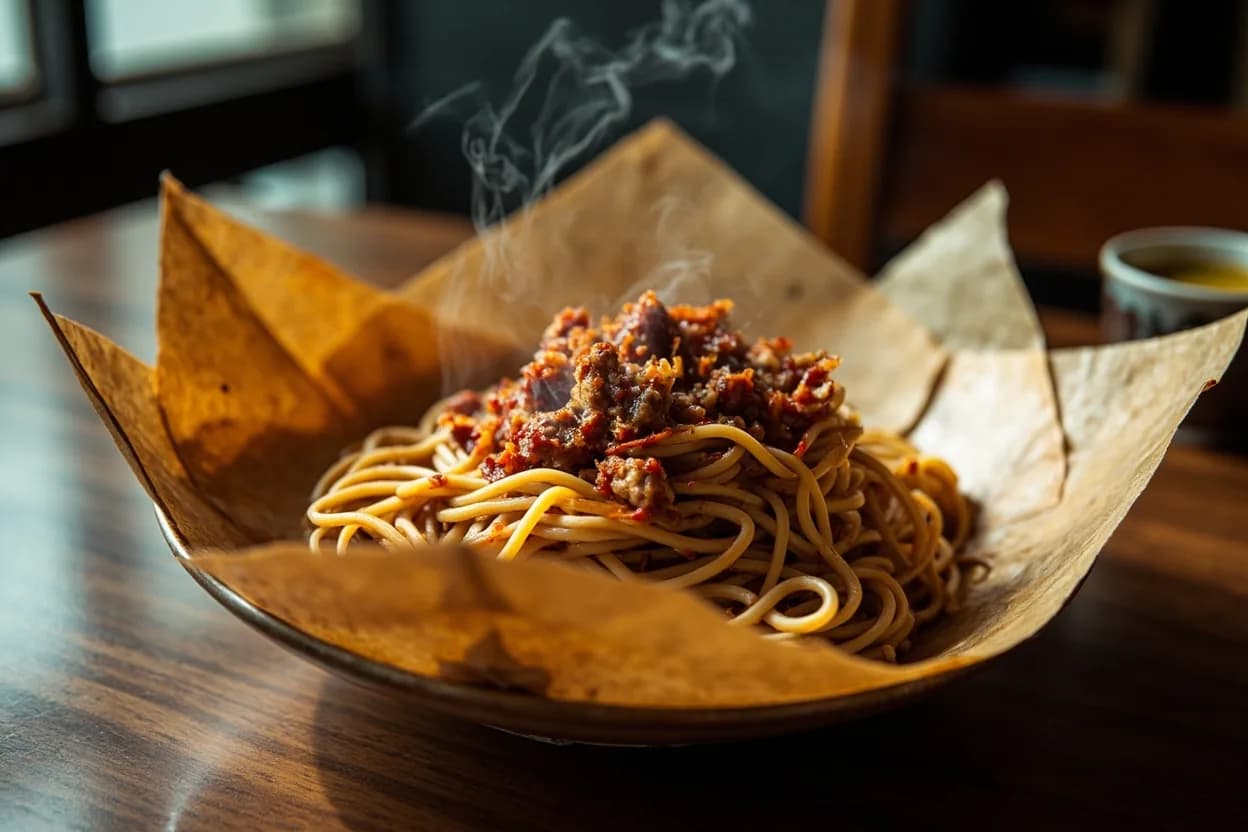
Sichuan Buddhist Vegetarian on the table
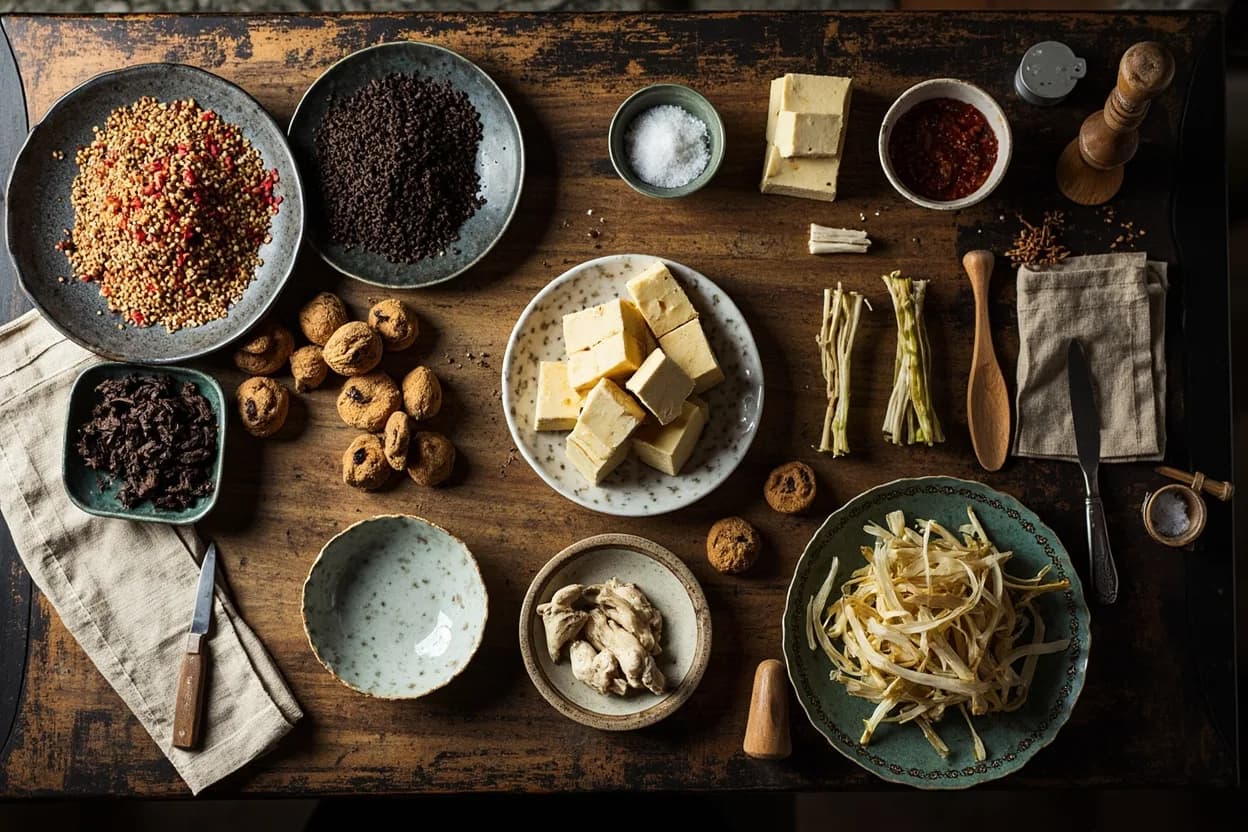
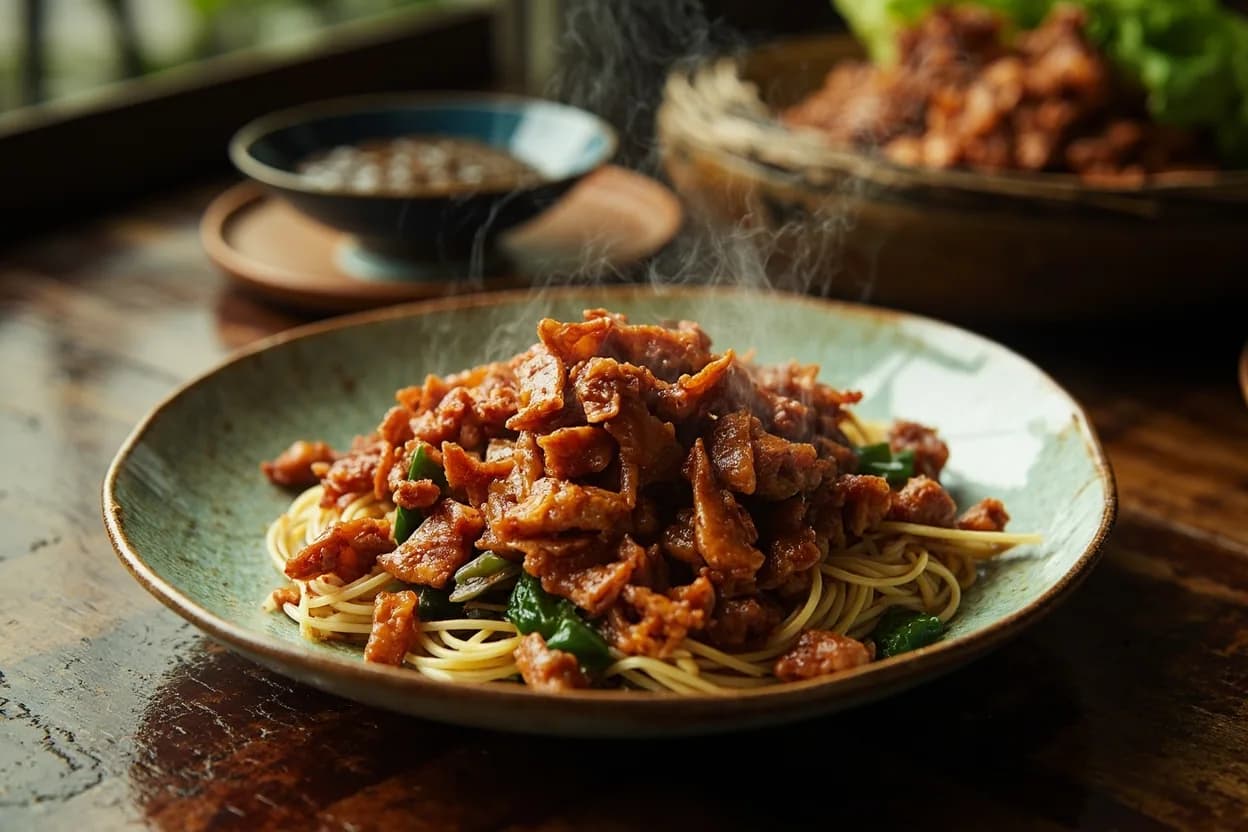
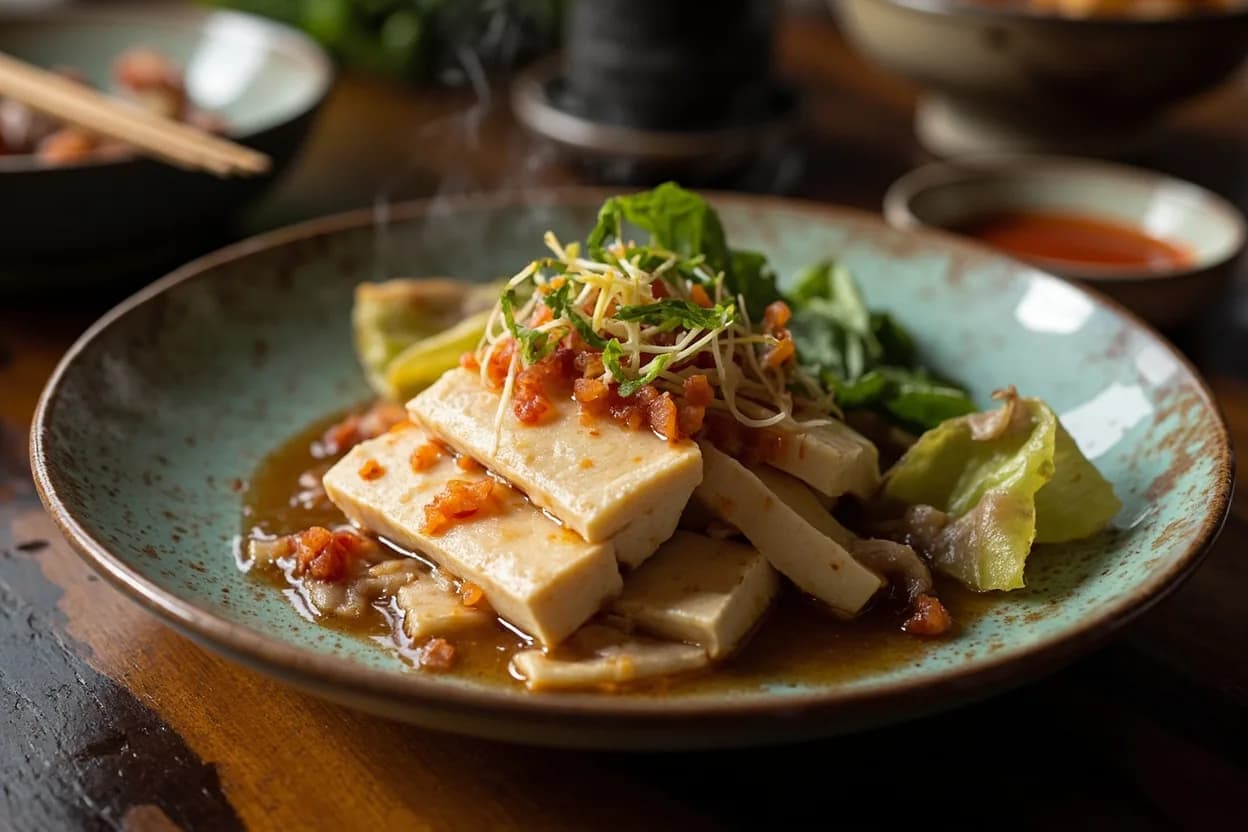
At the table
Temple meals are communal and silent, served at long wooden tables in refectories. Monasteries like Wenshu serve a prix-fixe set lunch to monks and lay visitors alike. Outside temples, dedicated zhai vegetarian restaurants offer multi-course mock-meat banquets. Home practice tends to be simpler — a tofu or vegetable dish alongside rice and pickles.
History & context
Buddhism arrived in Sichuan via the Silk Road and the Yangtze corridor during the Han Dynasty, and vegetarian cooking practices began developing in monastic communities from the 4th–5th century CE. The Five Pungent Roots doctrine (based on Lankavatara Sutra teachings) shaped the cuisine's distinct vocabulary of substitutes for alliums. Emei Shan, one of China's four sacred Buddhist mountains, became a center of refined vegetarian cooking whose recipes circulated through the monastic network. The mock-meat banquet tradition (su cai, 素菜) reached its peak sophistication under Song and Ming dynasty patronage when wealthy lay devotees funded elaborate temple kitchens to prove that meatless cooking could rival imperial banquet standards.
Regional variations
- Emei Shan temple cooking
High-altitude mountain herbs and wild ferns dominate; simpler, more austere preparations than city temple cuisine; famous for mushroom diversity
- Wenshu Monastery Chengdu
The most accessible and polished urban version; large refectory serving lunch daily; combines rustic temple staples with more elaborate set-menu banquets for lay visitors
- Home devotee cooking
Practiced on Buddhist holidays (1st and 15th of lunar month); typically simpler — no mock meats, just seasonal vegetables with Sichuan seasoning
Related cuisines
- Sichuan
The parent flavor system; Buddhist vegetarian cooking applies identical seasoning grammar minus meat and alliums
- Jiangsu Buddhist Vegetarian
The refined Jiangnan temple tradition — milder, sweeter, less chili-forward, equally sophisticated in mock-meat technique
- Taiwanese Vegetarian
Heavily influenced by Chinese Buddhist traditions; adds indigenous vegetables; commercially widespread in Taiwan
Canonical recipes
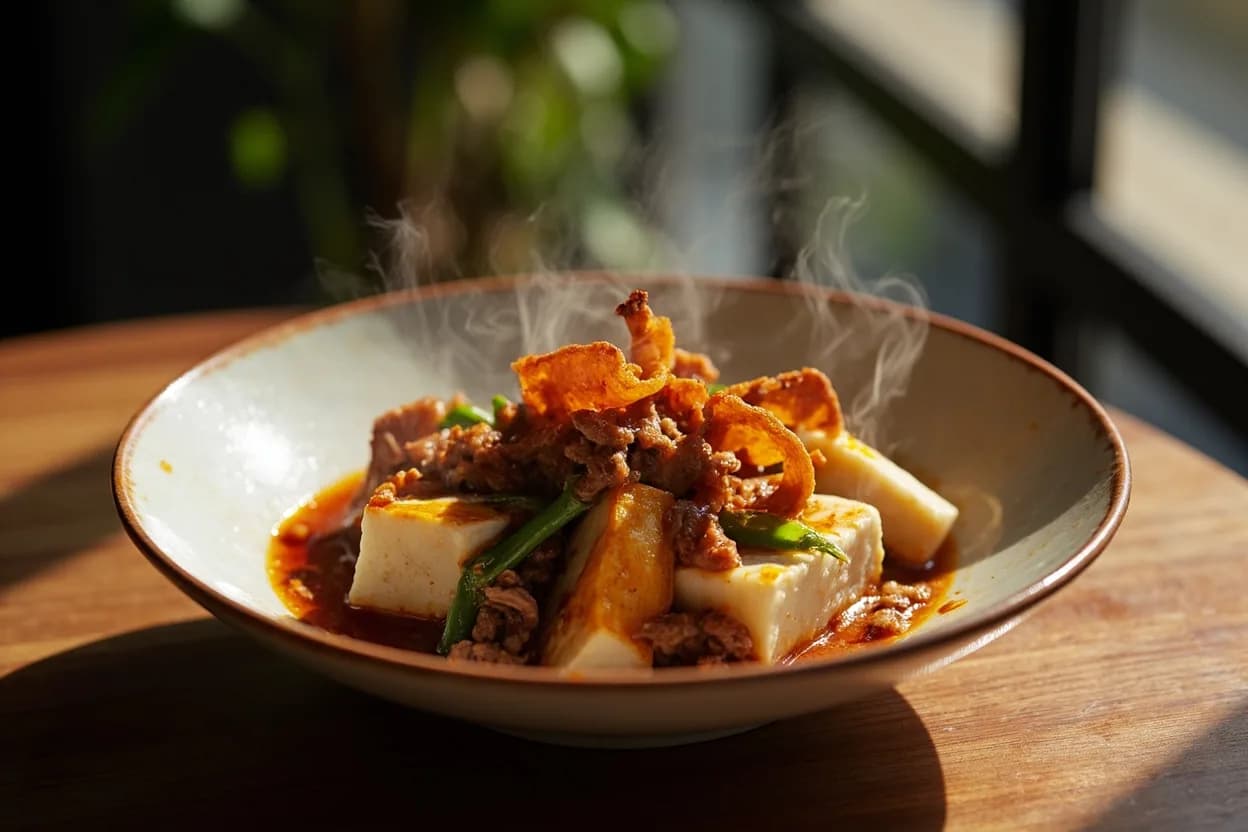
The dishes that define Sichuan Buddhist Vegetarian, documented in the Canon.
References
- 1.Land of Plenty: A Treasury of Authentic Sichuan Cooking — Fuchsia Dunlop
- 2.The Vegetarian Option — Colin Spencer
- 3.Flavor and Fortune — Jacqueline M. Newman
- 4.Buddhist Vegetarian Restaurants in China — Shi Yongxin (abbot writings on temple cuisine)
Confidence: high
Notes
The allium paradox
Garlic and onion — the aromatic backbone of most Sichuan cooking — are absent in strict temple food. Cooks compensate with ginger, doubled fermented-paste quantities, and mushroom dashi-style stocks that provide the savory depth alliums would otherwise supply.
Mock meat as spiritual exercise
The elaborate simulation of meat textures in temple cuisine has a spiritual rationale beyond convenience: it demonstrates that renunciation does not require deprivation, and that skill and devotion can transform humble ingredients into beauty. Critics within Buddhism have also argued the opposite — that craving the form of meat undermines the intent of vegetarianism.