South Asia
Udupi (Karnataka Saraswat)
Also: Udupi cuisine, Saraswat brahmin cuisine, Tulu-brahmin cuisine
The brahmin vegetarian tradition of Karnataka's coast that gave the world the masala dosa — a discipline of temple-food purity, coconut-forward flavor, and aggressive tarka timing.
Udupi cuisine is the vegetarian cooking tradition of the Madhwa brahmin community centered on the Krishna temple town of Udupi in coastal Karnataka. Codified partly through the 13th-century saint-philosopher Madhvacharya's temple-food prescriptions, it forbids onion, garlic, and all meat, building flavor instead through asafoetida, fresh coconut, dried chilies, and precisely executed mustard-curry leaf tarkas. Its global footprint vastly exceeds its geographic origin: the Udupi restaurant format — a standardized menu of dosa, idli, vada, and sambar served in stainless steel — is the dominant South Indian restaurant typology worldwide.
The flavour base
Fresh or grated coconut is the structural base of almost every curry and chutney. Asafoetida (hing) substitutes for alliums. Coconut oil and ghee are the preferred fats. The tarka (tadka) — mustard seeds, dried red chili, curry leaves, and urad dal crackled in oil — is applied with exceptional precision, often added twice (once during cooking, once as a finish).
Pantry staples
Key ingredients
Signature techniques
Signature dishes
Udupi (Karnataka Saraswat) on the table
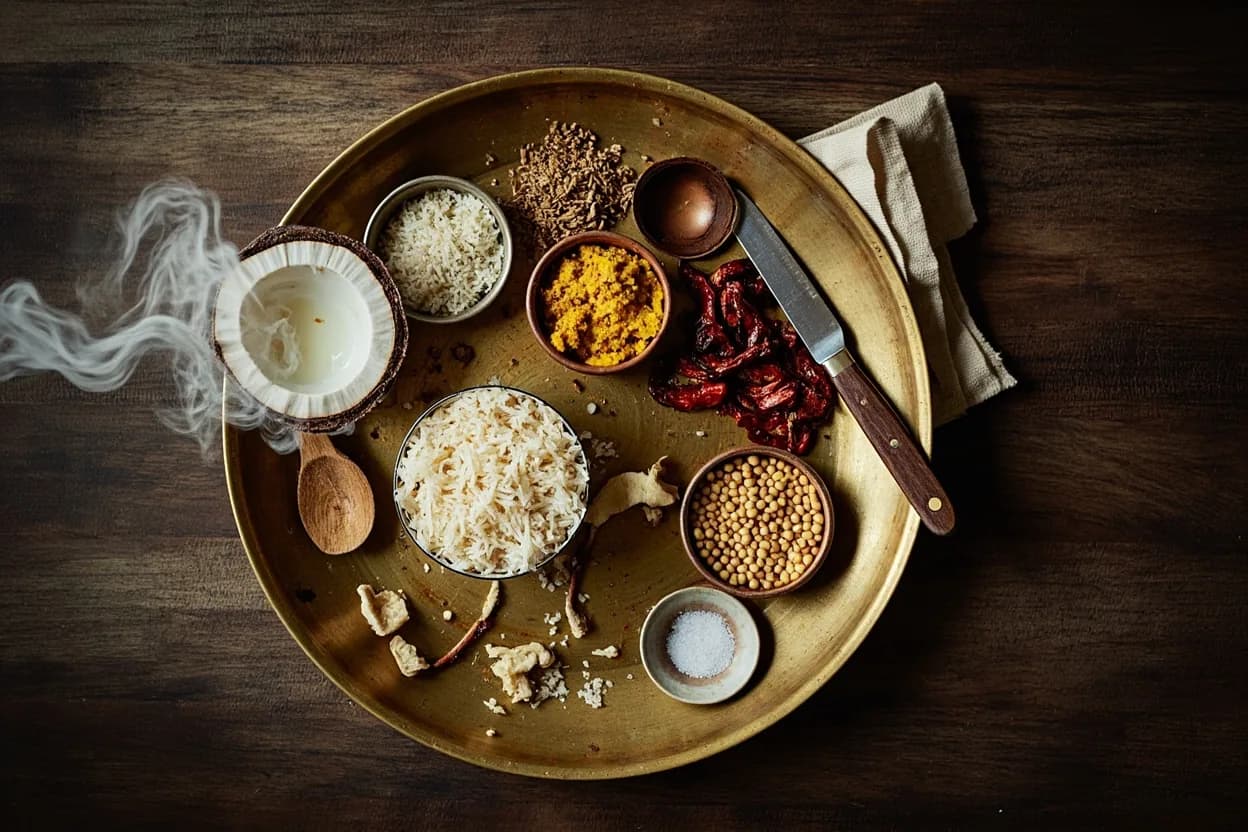
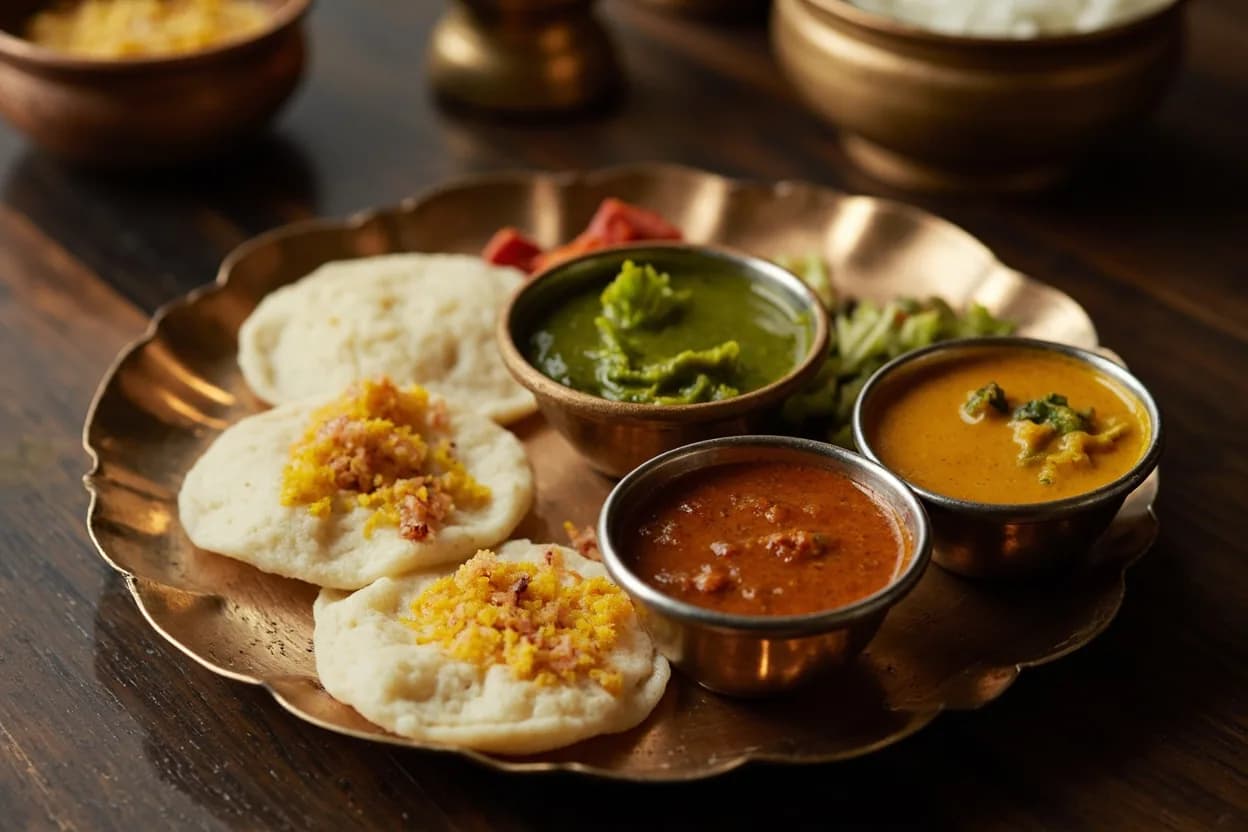
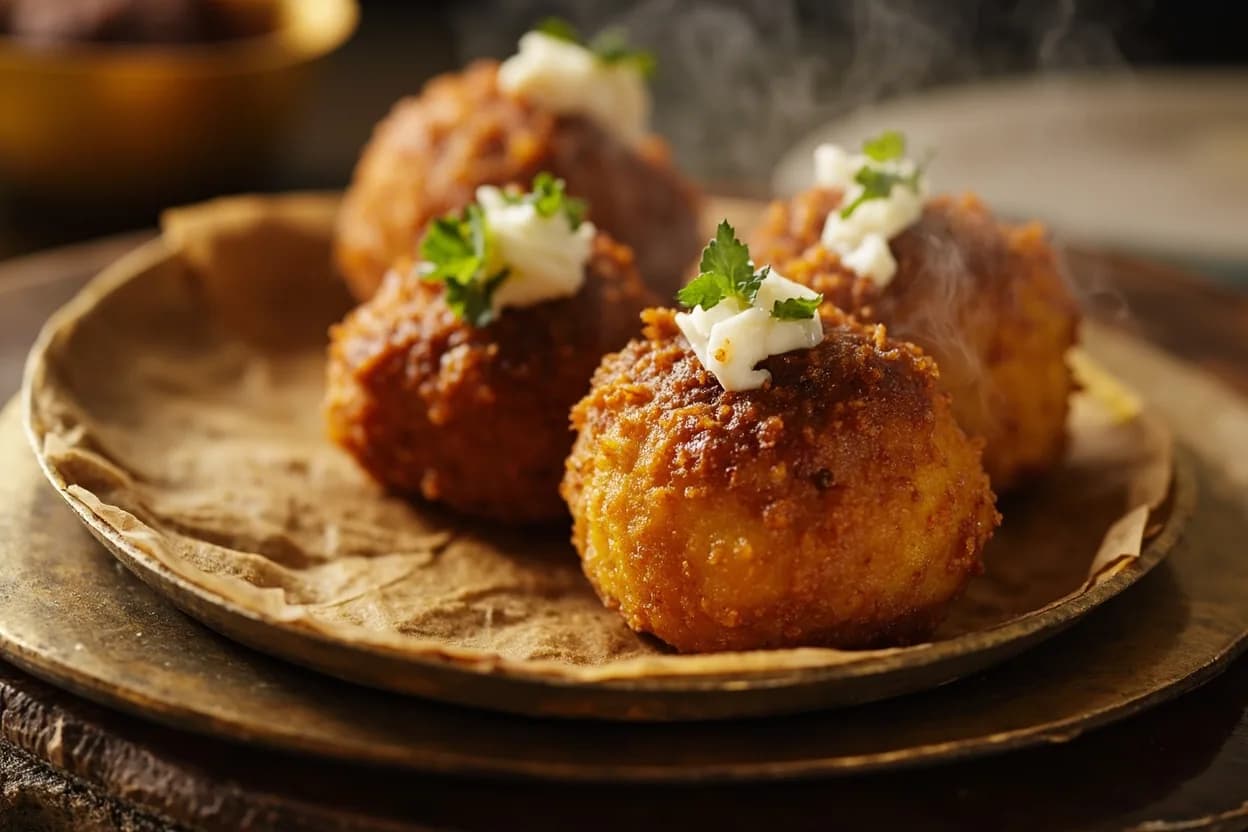
At the table
The brahmin meal follows a formal sequence on a plantain leaf: salt and pickle at the top left, sweets and payasa served first (auspicious), then rice with ghee, sambar, saaru (rasam), kootu (thick vegetable-lentil preparation), palya (dry vegetable stir-fry), and finally buttermilk rice as a digestive close. Temple meals (prasadam) follow this script strictly. The commercial Udupi restaurant condenses this into an à-la-carte format of tiffin (breakfast items) and meals (rice thali).
History & context
The culinary tradition crystallized around the Sri Krishna Matha temple founded by Madhvacharya in 1238 CE. Temple cooks (called Shivalli brahmins) developed a no-onion, no-garlic vegetarian repertoire capable of feeding tens of thousands of pilgrims daily, generating the systematized Udupi kitchen. The mid-20th-century outmigration of Udupi-trained cooks — first to Bombay, then throughout India and globally — transformed a regional temple discipline into the world's most widely replicated South Indian restaurant format. The masala dosa became the single most recognized item in the canon, though its Udupi form (with a potato-turmeric-no-onion filling) differs from Andhra and Tamil versions.
Regional variations
- Mangalorean Saraswat (GSB)
The Gaud Saraswat Brahmin tradition shares the coconut-tamarind base but permits fish; sol (dried kokum) replaces tamarind in many dishes.
- Havyaka brahmin (North Karnataka)
Similar no-onion-garlic discipline but uses more ridge gourd, colocasia, and raw mango; less commercialized.
- Temple prasadam format
The strict Udupi Matha kitchen uses no root vegetables (following sattvic rules); sweet payasa and chakkuli (fried spirals) dominate.
Related cuisines
- Tamil Nadu Brahmin (Iyer)
Parallel no-onion-garlic vegetarian brahmin tradition; shares idli-dosa-sambar format but uses sesame oil and a more tamarind-forward profile.
- Konkani
Shares coastal Karnataka geography; Konkani Catholic cooking is the meat-eating counterpart, using the same coconut and kokum base.
- Kerala Sadhya
A parallel banana-leaf vegetarian feast tradition from Kerala with shared Dravidian logic but distinct dishes and no temple-food restriction on alliums.
Canonical recipes
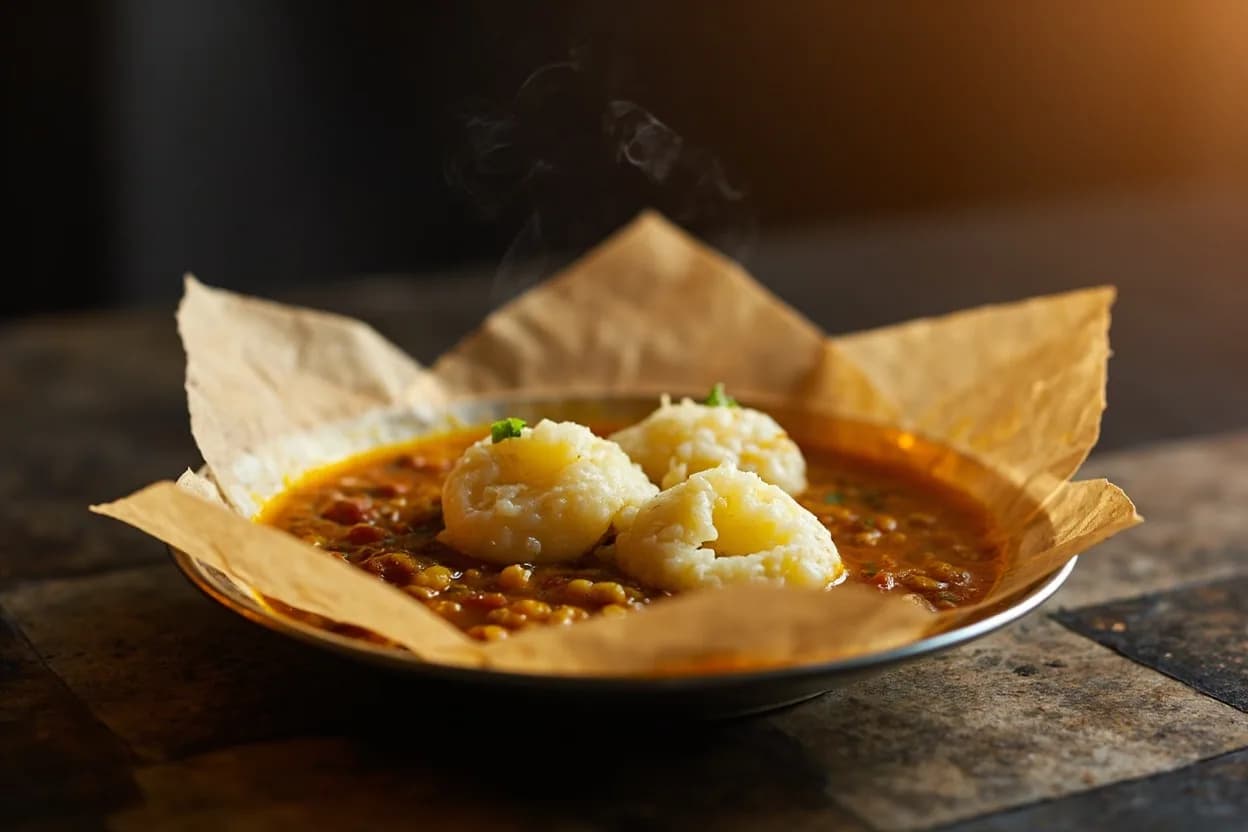
The dishes that define Udupi (Karnataka Saraswat), documented in the Canon.
References
- 1.The Complete Book of Indian Cooking — Suneeta Vaswani
- 2.Dakshin: Vegetarian Cuisine from South India — Chandra Padmanabhan
- 3.Madhwa Brahmin Cuisine — Vijayalakshmi Srinivasan
- 4.The Story of Our Food — K.T. Achaya
Confidence: high
Notes
The dosa paradox
The masala dosa is now among the most globally ubiquitous South Asian foods, yet its Udupi-temple origin demanded no onion in the filling. The non-Udupi versions (with caramelized onion in the potato masala) that dominate most restaurants outside Karnataka represent a practical accommodation to non-brahmin taste. Both versions are legitimate; neither is 'original' in the absolute sense — the dosa predates the Udupi restaurant format by centuries.
Asafoetida as allium surrogate
Hing (asafoetida) in Udupi cooking is not merely a flavoring — it is a theological substitution. Because onion and garlic are classified as rajasic (passion-arousing) in brahmin dietary philosophy, asafoetida provides the sulfurous aromatic depth they would otherwise supply. Udupi cooks use hing more assertively than other South Indian traditions precisely because it carries heavier functional load.