Proteins
Beef Tri-Tip
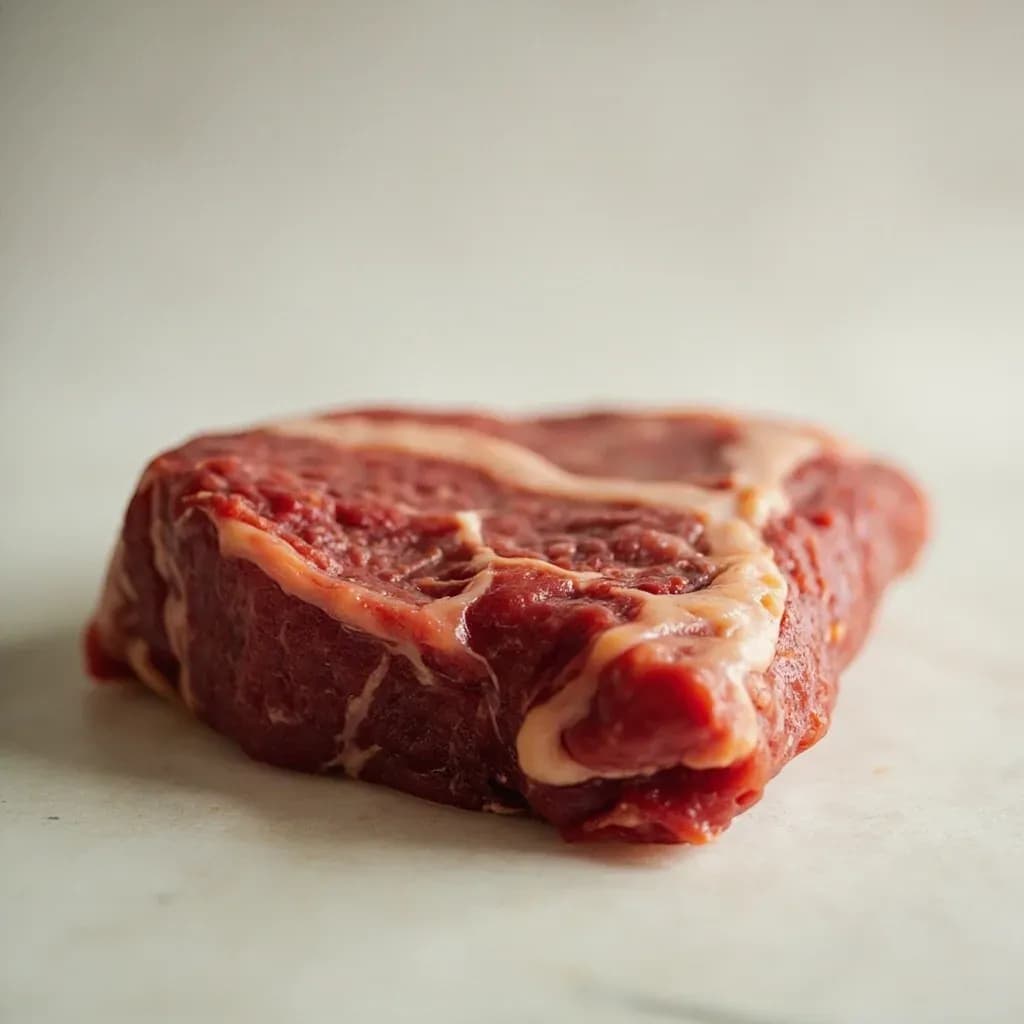
Triangular bottom-sirloin roast, grilled whole and sliced against the grain — a Santa Maria classic.
Tri-tip is a triangular cut from the bottom sirloin, lean but well-flavored and tender when not overcooked. It is the hallmark of California's Santa Maria barbecue, typically seasoned simply and grilled or roasted whole to medium-rare, then sliced thin against the grain. Its modest fat cap bastes the meat as it cooks.
The tri-tip is a triangular muscle from the bottom sirloin, specifically the tensor fasciae latae, that has become synonymous with California's Central Coast. What makes it extraordinary—and frequently mishandled—is its dramatic shift in grain direction roughly two-thirds through the cut. The muscle fibers run diagonally across the triangle, then change orientation toward the narrow point, a feature unique among major beef cuts. When sliced correctly against this dual-direction grain, the tri-tip yields remarkably tender, beefy steaks from an otherwise lean and coarse-grained muscle. This is not a cut that forgives inattention; it rewards precision.
Despite its exceptional eating quality and value—typically $8–12 per pound, outperforming far more expensive cuts when properly cooked—tri-tip remains criminally underutilized outside California. The Santa Maria Valley is its spiritual home, where generations have grilled it over fragrant red oak with a simple rub of salt, pepper, and garlic powder. The region's pride in this preparation is well-founded: the high-heat sear, the wood smoke, the mandatory 10–15 minute rest, and the perpendicular-to-grain slicing combine into a method that coaxes extraordinary tenderness from a lean, firm muscle. Mastering these fundamentals transforms an overlooked bottom sirloin into one of the most satisfying beef experiences available.
- Measured in
- g
- Storage
- Fridge
Types & varieties
The defining regional preparation: rubbed with salt, coarse pepper, and garlic powder, grilled over red oak. Simple, precise, and unmatched.
Sold with silver skin and heavy fat intact. Requires trimming before cooking; occasionally available at warehouse clubs or from butchers.
Low-and-slow in a pellet or offset smoker, often finished with a bark. A Texas Hill Country adaptation that works well for feeding crowds.
Common uses
Tips & pitfalls
- Slice against the grain without exception—this is the single most important technique. The grain runs diagonally, then changes direction at the widest point; adjust your knife angle at the transition to stay perpendicular to fibers throughout.
- Let the tri-tip rest 10–15 minutes before slicing. Carryover heat brings it from 125°F to 130–135°F medium-rare, and resting allows juices to redistribute throughout the muscle.
- For Santa Maria style, apply the rub 30–60 minutes ahead. Salt dissolves surface proteins, improving crust adhesion and flavor penetration.
- Maintain high direct heat (500°F+) when searing. Tri-tip's leanness means it cooks fast—3–4 minutes per side for the initial sear, then move to medium heat.
- Use a probe thermometer. Pull at 125°F; the residual heat does the rest. Overcooking is the second-most common tri-tip failure after incorrect slicing.
- Store tri-tip wrapped in butcher paper, not plastic, for best texture retention. Plastic traps moisture and accelerates discoloration.
- If cutting into cubes for stew, butterfly the tri-tip and tie it before cubing. This ensures a tender center in each piece despite the lean nature of the cut.
Nutrition
Nutrition
No USDA FoodData Central match for Beef Tri-Tip yet. We surface a per-100 g profile once a generic whole-food entry is matched and verified.
In the shops
Matched grocery products
No matched grocery products for Beef Tri-Tip yet.
Good to know
- Primals
- Bottom sirloin (NAMP #185C)
- Weight
- 1.5–3 lbs typical; 4–5 lbs untrimmed
- Shape
- Triangular, tapering to a distinct point
- Fat Content
- Lean; thin fat cap optional depending on source
- Origin
- Santa Maria Valley, California's Central Coast
- Texture
- Firm, coarse-grained when raw; tender when sliced correctly
- Internal Temp
- 130–135°F for medium-rare (pull at 125°F for carryover)
- Yield
- 75–80% cooked yield after trimming and proper slicing
- Shelf Life
- 3–5 days refrigerated; up to 12 months frozen at 0°F
- Butchery
- Tensor fasciae latae muscle from bottom sirloin subprimal
Substitutes
- Top Sirloin — The closest retail substitute; leaner and slightly more uniform in texture. Roast whole or slice thin for similar applications.
- Flank Steak — Different primal (plate), stronger grain, and requires marination. Useful when tri-tip is unavailable but behaves quite differently.
- Tri-Tip (Alternate Supplier) — A steer has two tri-tips; if your usual source is out, specialty butcher shops often stock from different suppliers.
- Porterhouse or T-Bone — Substantially more expensive and from a different primal; yields more tender steak but less beefy intensity.
Pairs with
Also called
Santa Maria Tri-Tip · Bottom Sirloin
Related

Egg
The kitchen's everything ingredient — bind, leaven, enrich, or fry

Chicken Breast
Lean, quick-cooking white meat for everyday dinners

Ground Beef
Versatile minced beef for burgers, ragù, tacos, and meatballs

Pork Loin
Lean, tender roasting cut that stays juicy with care

Salmon
Rich, rosy fish that roasts, grills, or cures beautifully

Egg White
Pure protein that whips to airy peaks for meringue and more

Egg Yolk
Rich, golden yolk for custards, mayonnaise, and pasta

Quail Egg
Tiny, speckled eggs for garnishing and elegant bites