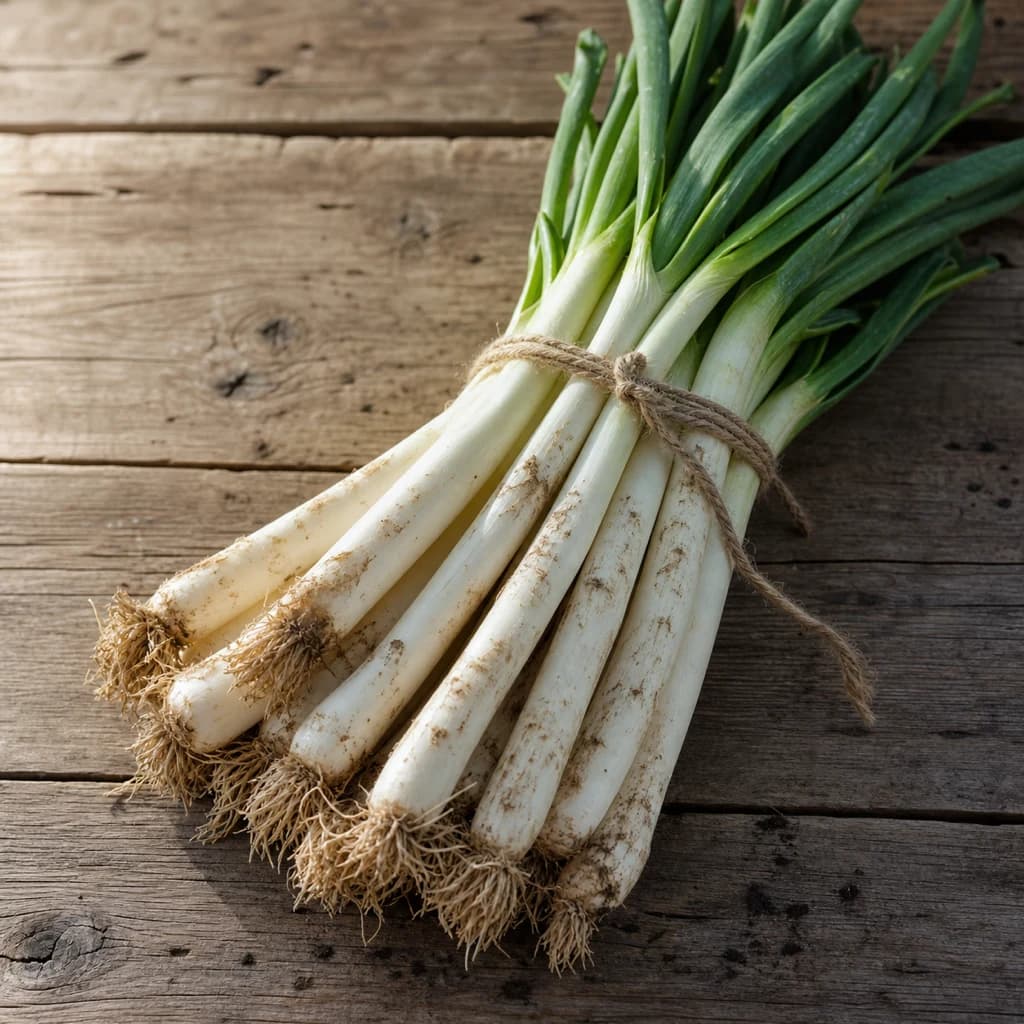
Natural form
Fresh calçots as harvested: long, slender white-stemmed spring onions with intact roots and green tops.
Shows the raw ingredient before cooking so readers can identify and select calçots at a market.
Produce
Calçot
Sweet Catalan spring onion grilled over flames and eaten with romesco sauce.
Calçots are a mild, sweet variety of spring onion from Catalonia, longer and more tender than scallions. They are the centerpiece of the calçotada, charred whole over open flames until blackened, then peeled and dipped in romesco or salvitxada sauce. Grilling caramelizes the layers into a soft, sweet, smoky interior.
Calçot is a distinct variety of spring onion (Allium cepa) cultivated almost exclusively in and around the town of Valls in Catalonia's Tarragona province. What sets it apart from ordinary spring onions is the growing technique called calçar—successive earthing-up of soil around the developing stalks as they grow, bleaching the lower stems to extraordinary length (15–25 cm of white/blanched flesh) and concentrating sugars that make the finished product tender and sweet rather than sharp. The calçotada tradition is inseparable from Catalan social life: from late December through April, friends and families gather outdoors around a vine-shoot fire, grilling calçots by the dozen, peeling back the charred black exterior to reveal caramelized, almost custardy flesh within. The experience is communal and deliberately informal—traditionally eaten without cutlery, held by the green tops and lowered whole into salvitxada sauce before going into the mouth in one practiced motion. Note that salvitxada differs from standard romesco: it typically omits tomato and relies exclusively on ñora peppers for its fruity, mild heat.
- Measured in
- piece
- Storage
- Fridge
Types & varieties
The IGP-protected variety from the Valls region; characterized by particularly long, tender white stalks and consistent sweetness.
Late-season calçots harvested into April or May; slightly more pungent; grown in lower-altitude areas with less rigorous earthing-up.
Not a separate variety but a cooking state: the burnt outer layer left intentionally intact during grilling to protect the tender interior from direct flame.
The Calçar Technique
The word calçot derives from the Catalan calçar (to earth up, to shoe), describing the repeated mounding of soil around the onion's emerging stalks over a growing season of several months. This constant burial keeps light from reaching the lower stem, inhibiting chlorophyll development and forcing the plant to elongate its blanched white portion dramatically while building sugar reserves. The result is a structural and flavor transformation impossible to achieve with standard spring onions, regardless of size. The technique requires loose, well-drained soil and attentive harvesting—pulled rather than cut so the full blanched length remains intact.
- Harvest by pulling, not cutting, to preserve the full white stalk
- Soil must be loose enough to mound repeatedly without compacting
- Timing of harvest (late winter) coincides with maximum stalk elongation
The Salvitxada Distinction
Calçots are served with salvitxada, a sauce often confused with standard romesco but with definable differences. Authentic salvitxada is built on ñora peppers (dried, wrinkled Spanish peppers with mild, complex, fruity heat), not the ancho or mulato peppers common in Mexican romesco. It typically omits tomato, relying instead on toasted almonds and hazelnuts, garlic, olive oil, and sometimes a splash of wine or brandy for acidity. The texture is coarser than a smooth purée—traditionally pounded in a mortar rather than blended to a uniform paste. The sauce's job is to cut through the smoky richness of the grilled onion, so it must have enough acidity and salt to balance, not merely complement.
- Always use ñora peppers, not ancho or chipotle—they have a distinctive fruity sweetness
- Toast the nuts in a dry pan until golden to deepen flavor
- Let the sauce rest overnight in the refrigerator; flavors meld and improve
The Calçotada Ritual
A proper calçotada is a social institution, not merely a meal. The gathering traditionally burns vine shoots (sarments) from pruned grape vines as fuel when available, imparting a faintly fruity smoke that distinguishes the flavor. Calçots are grilled directly over the flames on a terracotta tile (a material that holds and radiates steady heat), turned with tongs until the entire exterior is charred black. They are never peeled before serving. The eating protocol is specific: grasp the green top, lower the white end into the salvitxada pooled on a tile of coarse bread, tilt your head back, and eat in one bite from bottom to top—a technique that prevents sauce drips and is considered a mark of practiced familiarity with the tradition. Second portions of salvitxada are mopped up with bread; young red wine or vi ranci washes everything down. The meal typically ends with grilled lamb or botifarra sausage, but the calçots lead and define the event.
- Grape vine shoots are traditional fuel but oak or charcoal work
- Terracotta tiles distribute heat evenly; a flat grill surface is the substitute
- The one-bite technique protects clothes from sauce and is considered proper etiquette
Common uses
Tips & pitfalls
- Grill over medium flame (not high), turning occasionally—high heat dries them out and leaves the core raw; the goal is even charring throughout
- The outer layer blackens completely; resist removing it during cooking as it acts as insulation that steams the interior
- Let charred onions rest 2–3 minutes before peeling—this loosens the burnt layers and prevents burns to your fingers
- Hold by the green tops when dipping; tilt head back and eat in one bite from bottom up, a practiced technique that avoids sauce drips
- If substituting, use the thickest spring onions available and peel only one outer layer; increase grill time slightly as they are smaller
- For authentic salvitxada, use ñora peppers (dried), not ancho or chipotle; ñoras have a distinct fruity, mild heat
- Do not overcook—slightly underdone is preferable; they should be tender throughout when pierced with a skewer
- Store unwashed in a ventilated bag in the refrigerator; moisture accelerates spoilage
Nutrition
Energy
134 kJ · per 100 g
Where the calories come from
Protein
1.8g
4% DV
Carbs
7.3g
3% DV
Fat
0.2g
0% DV
Fiber
2.6g
9% DV
Sugars
2.3g
of which
Sodium
16mg
1% DV
Source · USDA FoodData Central · Onions, spring or scallions (includes tops and bulb), raw
View on FDC →In the shops
Matched grocery products
No matched grocery products for Calçot yet.
Good to know
- Origin
- Catalonia, Spain (Valls, Tarragona province)
- Season
- Late December through April, peak January–March
- Botanical classification
- Allium cepa; variety of spring onion
- Growing method
- Earthed up (calçar) as they grow, blanching the stems for sweetness and tenderness
- Protected status
- Calçot de Valls has Indicació Geogràfica Protegida (IGP) status
- Size
- White/blanched portion 15–25 cm; total length including greens up to 40 cm
- Flavor (raw)
- Mild, sweet, slightly vegetal
- Flavor (grilled)
- Caramelized sweetness with light smokiness
- Storage
- Refrigerate immediately; use within 5–7 days; do not wash until ready to use
- Traditional serving
- On terracotta tiles at communal calçotadas, accompanied by salvitxada and coarse bread
Substitutes
- Large spring onions (scallions) — Thickest available; trim roots and most green tops; grill as normal but expect smaller yield and a shorter blanched section
- Japanese bunching onion (negi) — Acceptable substitute though more pungent raw; excellent for grilling as the high sugar content caramelizes well
- Young leeks — Work in a pinch; separate and flatten slightly before grilling to ensure even cooking; remove tougher outer layers first
Pairs with
Also called
Spring Onion · Catalan Spring Onion
Appears in these dishes

Related
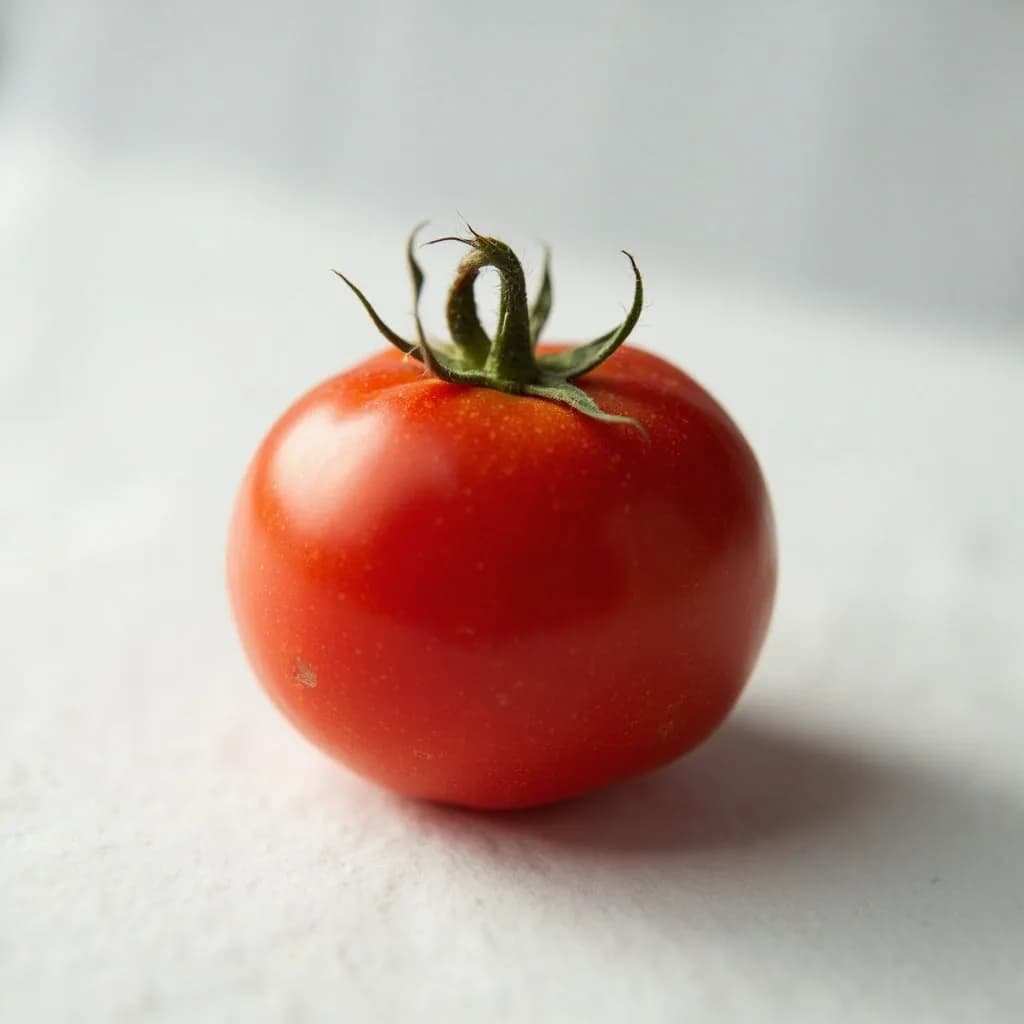
Tomato
Juicy, sun-sweet fruit for sauces, salads, and slow-cooked depth
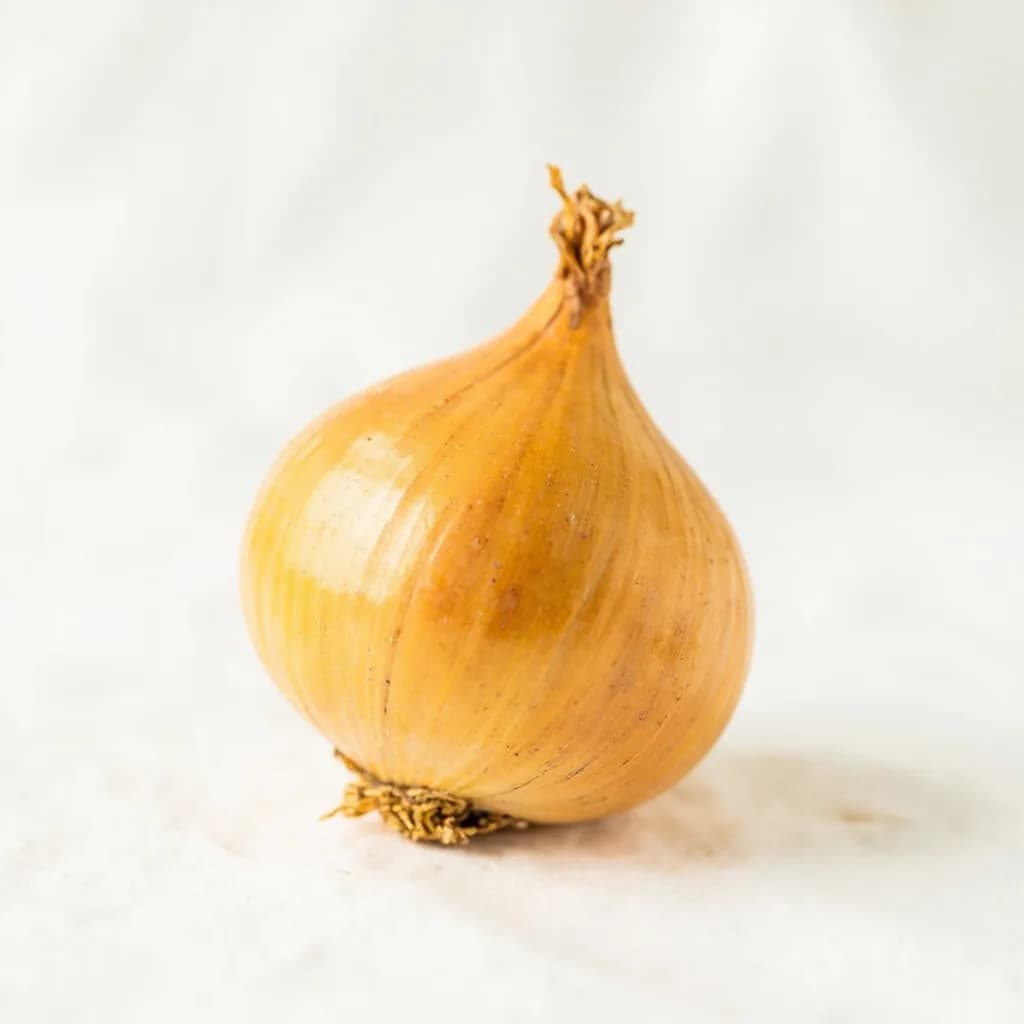
Yellow Onion
The aromatic backbone of soups, sofritos, and braises
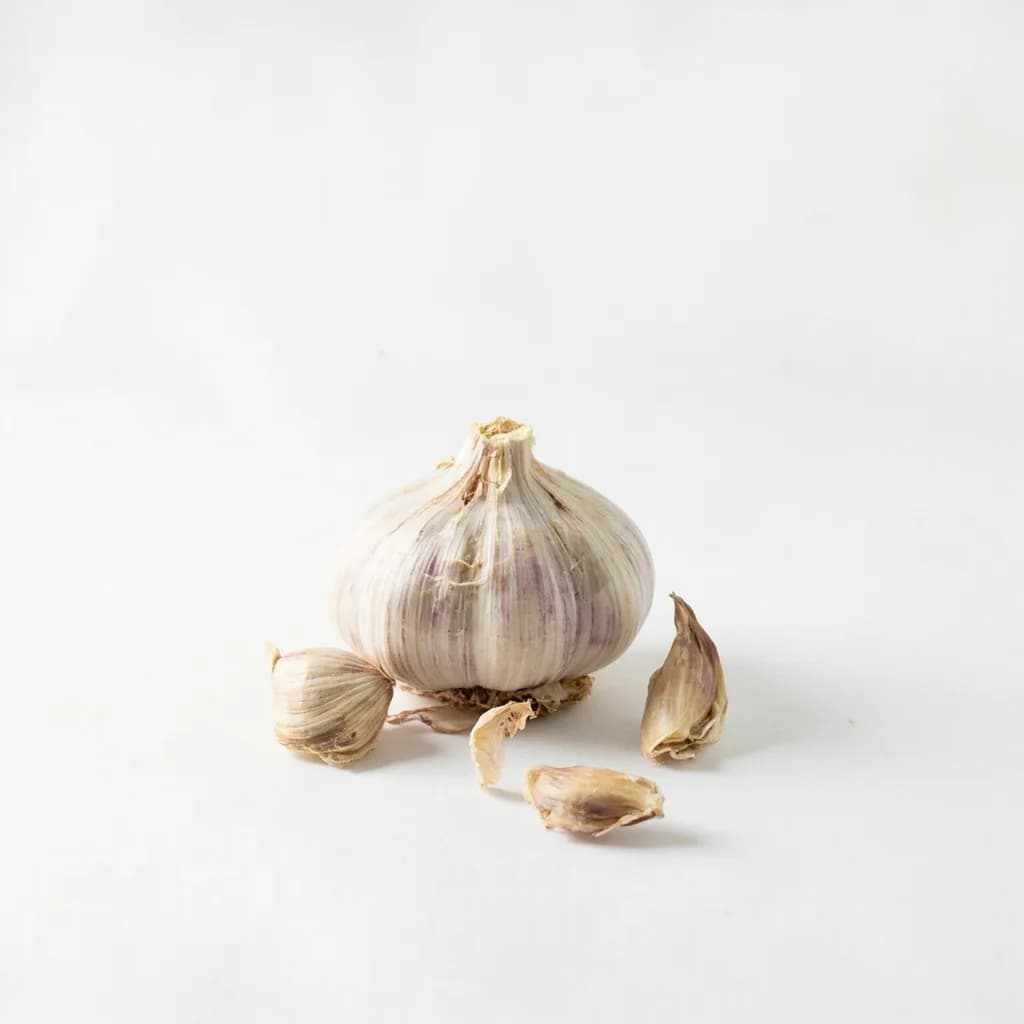
Garlic
Pungent cloves that perfume nearly every savory dish
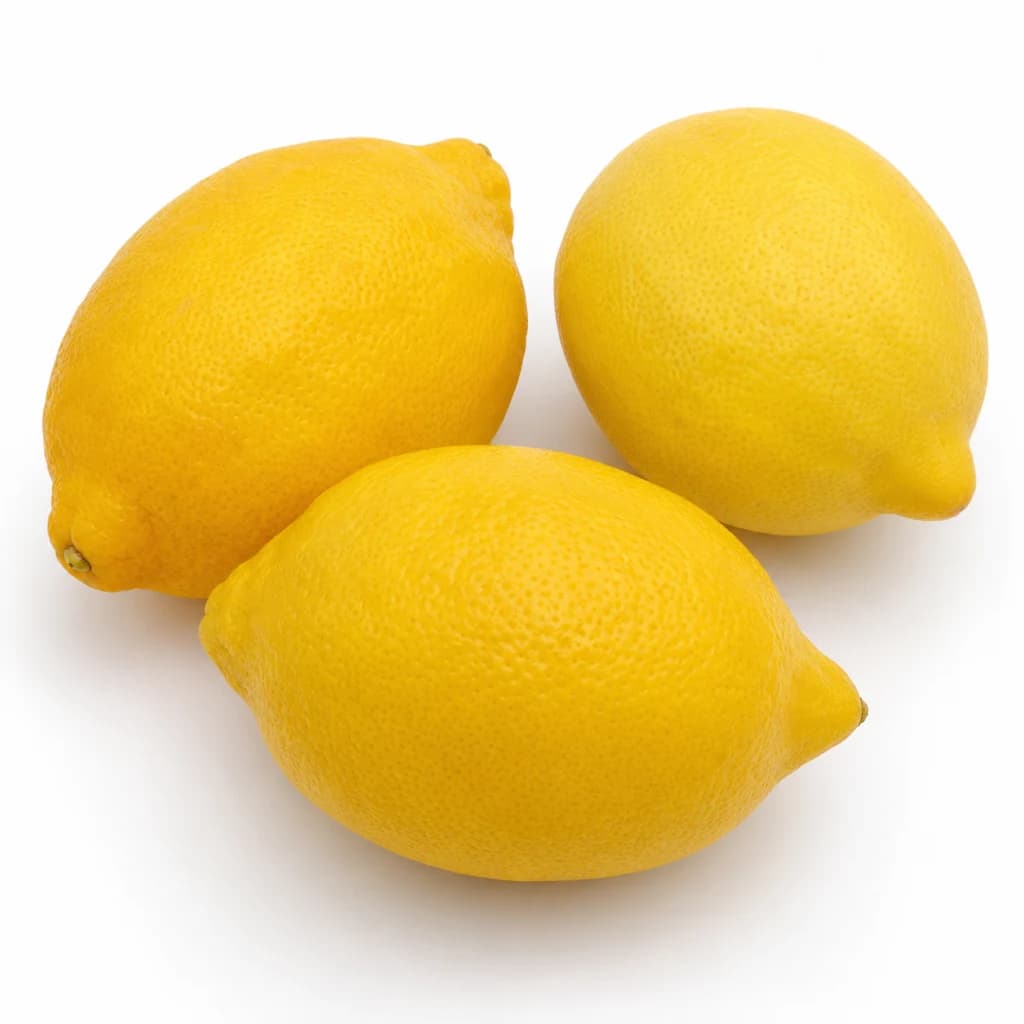
Lemon
Bright, acidic citrus that wakes up almost any dish
Potato
Humble, hearty staple — roast, mash, fry, or boil
Carrot
Sweet, crunchy root — raw, roasted, or the base of a sofrito
Cucumber
Cool, crisp, and watery — for salads, pickles, and tzatziki

Lettuce
Crisp leaves for salads, wraps, and a fresh crunch