Natural form
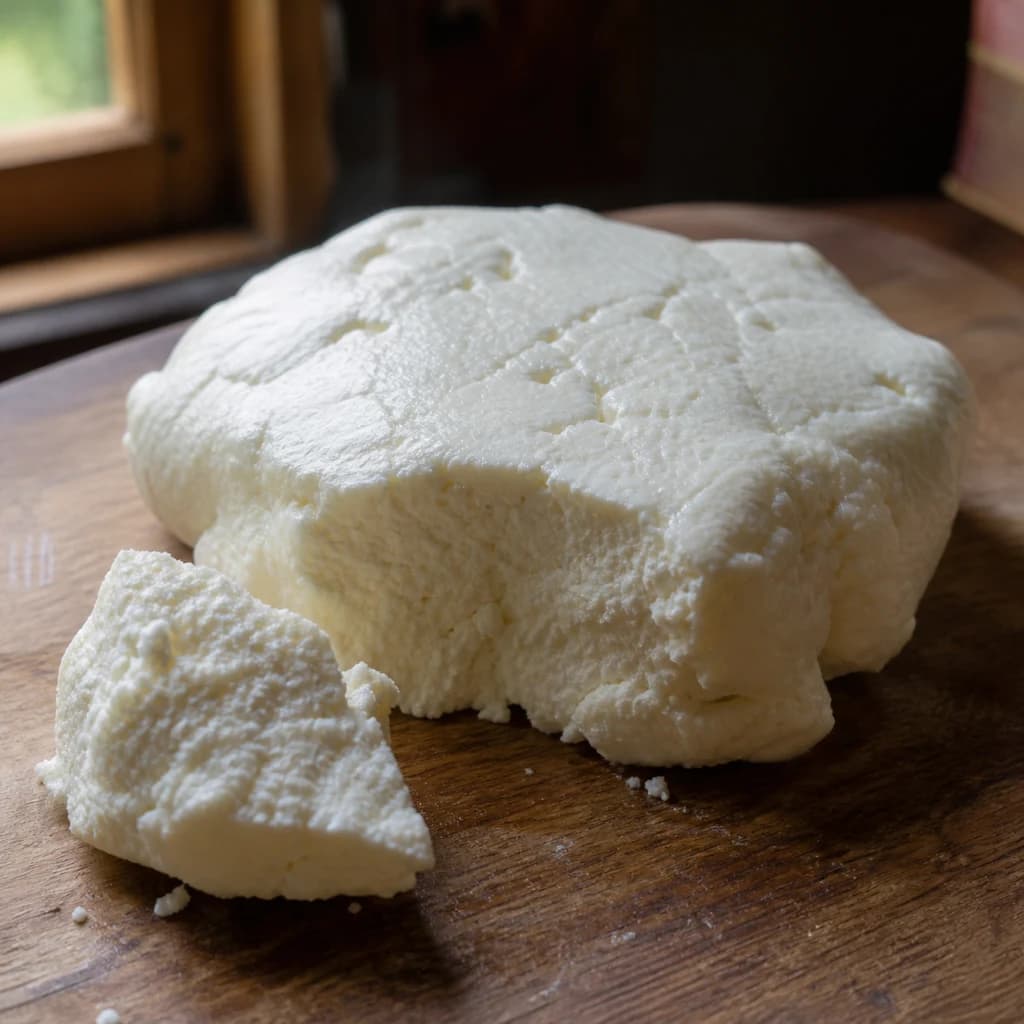
Fresh datshi in its natural block form, soft white and slightly crumbly, ready for cooking.
Shows the cheese as it looks when purchased or freshly made — its color, texture, and soft block shape help readers recognize it unmistakably.
Dairy & Eggs
Datshi (Fresh Cheese)
Bhutanese soft fresh cheese, the melting heart of ema datshi chili stew.
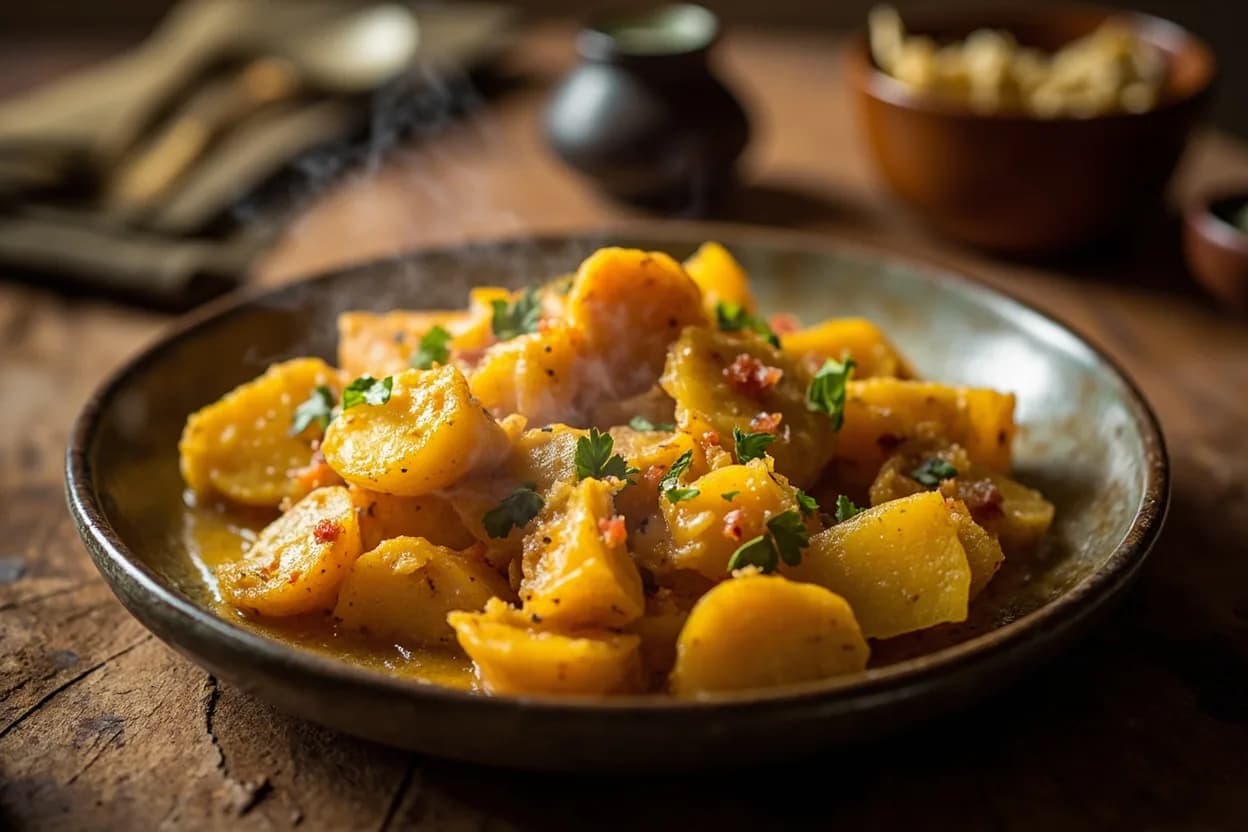
Datshi is a soft, fresh, mildly tangy cheese central to Bhutanese cuisine, traditionally made from cow's or yak milk. It melts into a creamy sauce and is the defining ingredient of ema datshi, the national dish of chilies stewed in cheese. It is also paired with potatoes and mushrooms in similar dishes.
Datshi is a fresh, unaged soft cheese made by curdling milk with natural acids—typically lemon juice, whey starter, or buttermilk—and then straining and lightly pressing the curds. In Dzongkha, datshi simply means cheese, but the fresh variety is the backbone of Bhutanese home cooking. Its defining kitchen behavior is resistance to melting: when dropped into hot liquid, it holds its shape, absorbs surrounding flavors, and develops a pleasant firm-to-chew texture rather than stringing or pooling. This makes it uniquely suited to the long-simmered stews that dominate Himalayan cooking. Datshi is almost always made at household level rather than industrially; commercial production for export is rare because the cheese spoils within days. It is mild and slightly tangy with a clean dairy character, off-white in color, and soft enough to crumble yet dense enough to cut into cubes. The quality marker is freshness—a clean, faintly sweet smell means the cheese is good; any sour or ammonia-like odor means discard it. Used generously in Ema Datshi, the national stew, datshi is not merely an ingredient but a measure of hospitality: more datshi in the pot signals a more generous table.
- Measured in
- g
- Storage
- Fridge
Allergens
Types & varieties
Standard variety made from domestic cow's milk; milder in flavor and more widely available
Made from yak milk in high-altitude areas; richer, slightly higher fat content, more pronounced flavor and aroma
Regional Variation in Ema Datshi
The ratio of chilies to cheese in the national stew varies significantly across Bhutan. Bumthang, the cheese-producing heartland, tends toward more datshi and fewer chilies, yielding a milder, creamier dish. Southern regions make it much hotter and often with less cheese. Both are authentic expressions—the spice level is a matter of regional taste, not correctness. When cooking Ema Datshi, adjust the cheese-to-chili ratio to your heat tolerance and remember that the cheese will absorb and mellow some of the chili heat over the cooking time.
- Bumthang style: more datshi, fewer chilies, creamier result
- Southern style: heavier on the chilies, sharper heat, less cheese
- The cheese itself tempers chili heat as it simmers — taste the broth before adding cheese to gauge seasoning
Datshi in the Broader Himalayan Context
Fresh acid-coagulated cheeses appear across the Himalayan region and the Indian subcontinent, but datshi's particular character comes from the specific milk used (often a blend of cow and yak in highland areas) and the traditional pressing method, which leaves enough moisture to stay tender while achieving enough density to survive frying. Neighboring paneer, quark-style cheeses in Nepal, and Tibetan chura (butter tea cheese) all share the same acid-curdling principle but differ in moisture, fat content, and traditional use. Understanding this family helps when sourcing substitutes and recognizing why datshi behaves the way it does in hot liquid.
- All are made by acid coagulation, not rennet
- Fat content and pressing determine whether the cheese fries golden or falls apart
- Datshi's moderate pressing gives it the specific resilience that makes it ideal for Ema Datshi
Common uses
Tips & pitfalls
- Press the curds lightly after draining for a firmer texture if frying; leave more moisture for stews where the cheese will absorb liquid and flavor
- The cheese should smell clean and faintly sweet — any sour, ammonia-like, or off odor indicates spoilage and the cheese should be discarded
- Do not over-stir when adding to hot stews or it will break into small pieces instead of holding satisfying chunks
- Traditional Ema Datshi uses generous butter; the cheese absorbs the rich fat and carries the chili heat — swapping butter for oil changes the dish's character significantly
- If using yak datshi, reduce the cooking time slightly as the higher fat content causes it to break more readily in prolonged simmers
- Always cut datshi into even cubes before adding to stews — uneven pieces mean uneven cooking and some will dissolve while others stay raw inside
- When frying datshi, ensure the pan is properly hot before adding the cheese; a cold start causes the cheese to stick and lose moisture before forming a golden crust
- Store datshi in a covered container with a paper towel underneath to absorb excess moisture and extend usable life by a day or two
Nutrition
Energy
1628 kJ · per 100 g
Where the calories come from
Protein
25.6g
51% DV
Carbs
1.6g
1% DV
Fat
31.1g
40% DV
Fiber
0g
0% DV
Sugars
1.6g
of which
Sodium
800mg
35% DV
Source · USDA FoodData Central · approx. Cheese, fontina
View on FDC →In the shops
Matched grocery products
No matched grocery products for Datshi (Fresh Cheese) yet.
Good to know
- Origin
- Bhutan (Himalayan kingdom)
- Milk Type
- Cow's milk (primary); yak milk in high-altitude regions
- Category
- Fresh soft cheese (unaged)
- Flavor
- Mild, slightly tangy, clean dairy taste
- Texture
- Soft, crumbly, moisture content high; holds shape when cooked
- Color
- White to off-white
- Production
- Curdled with natural acids (lemon juice, whey starter, or buttermilk); strained and lightly pressed
- Shelf Life
- Refrigerate and use within 3–5 days; highly perishable
- Key Cooking Property
- Holds firm texture when heated; does not melt or stretch
Substitutes
- Paneer (Indian fresh cheese) — Closest textural match; press firmly, cut in cubes, and use 1:1. Paneer holds shape when cooked and has a similar mild flavor, making it the most reliable substitute for stews and frying.
- Cottage Cheese (large-curd) — Comparable mild flavor and fresh quality; texture is softer and wetter, so pat dry before frying or add directly to stews where its tenderness is an asset rather than a liability.
- Fresh Ricotta — Similar soft fresh quality but too moist for frying; acceptable in stews and soups where it will absorb liquid and break into the broth — useful in a pinch but changes the dish's character.
- Homemade Acid-Curd Cheese — Heat 1 liter of whole milk to just below boiling, add 2 tablespoons of lemon juice, stir gently, let curds form, then strain through cheesecloth for 30 minutes. This replicates datshi directly and takes less than an hour.
Also called
Bhutanese Cheese
Appears in these dishes
Related

Whole Milk
Rich, full-fat milk for drinking, coffee, sauces, and baking
Butter
Golden fat for searing, baking, and finishing a sauce
Yogurt
Tangy, creamy culture for breakfast, sauces, and marinades
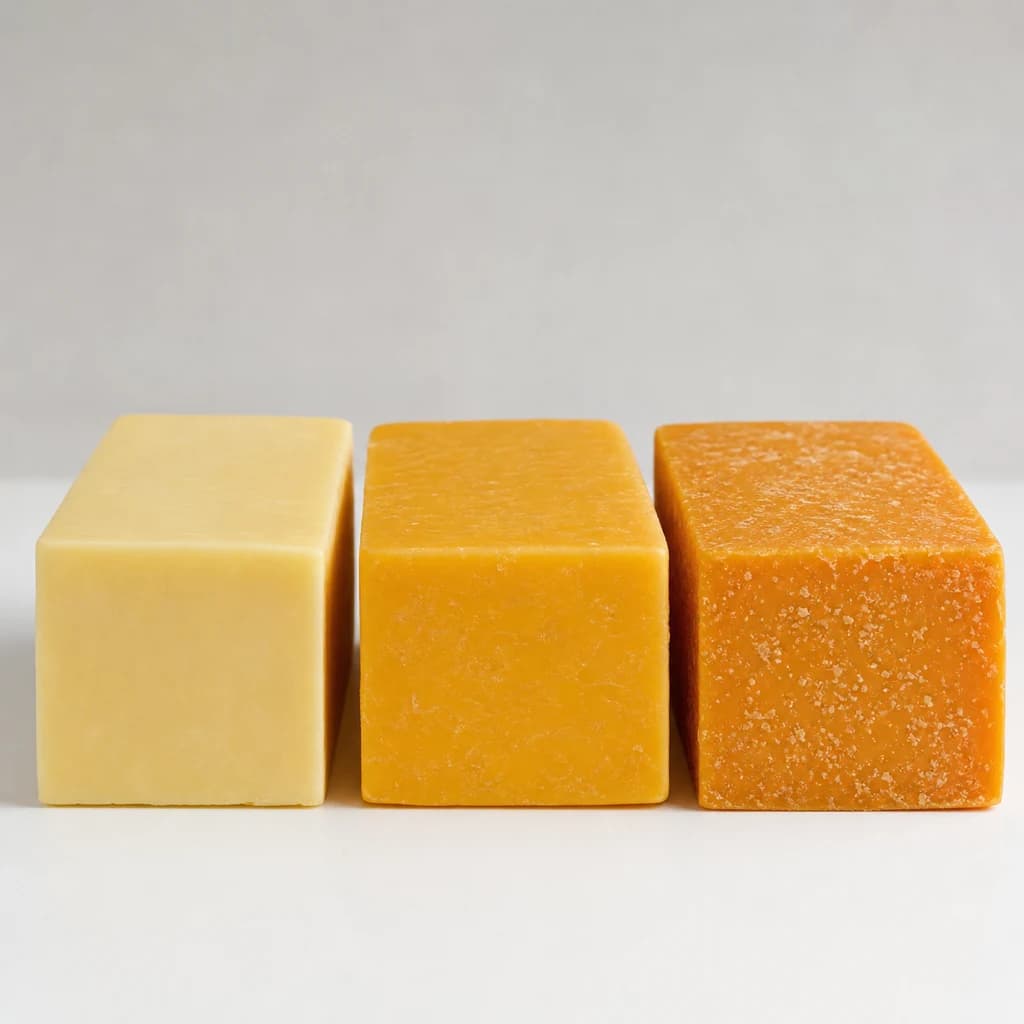
Cheddar Cheese
Sharp, melty cheese for sandwiches, gratins, and grating
Skim Milk
Fat-free milk for lighter drinking, coffee, and cooking
Heavy Cream
Rich cream that whips, enriches sauces, and sets ganache

Sour Cream
Tangy, thick cream for dolloping, baking, and dips
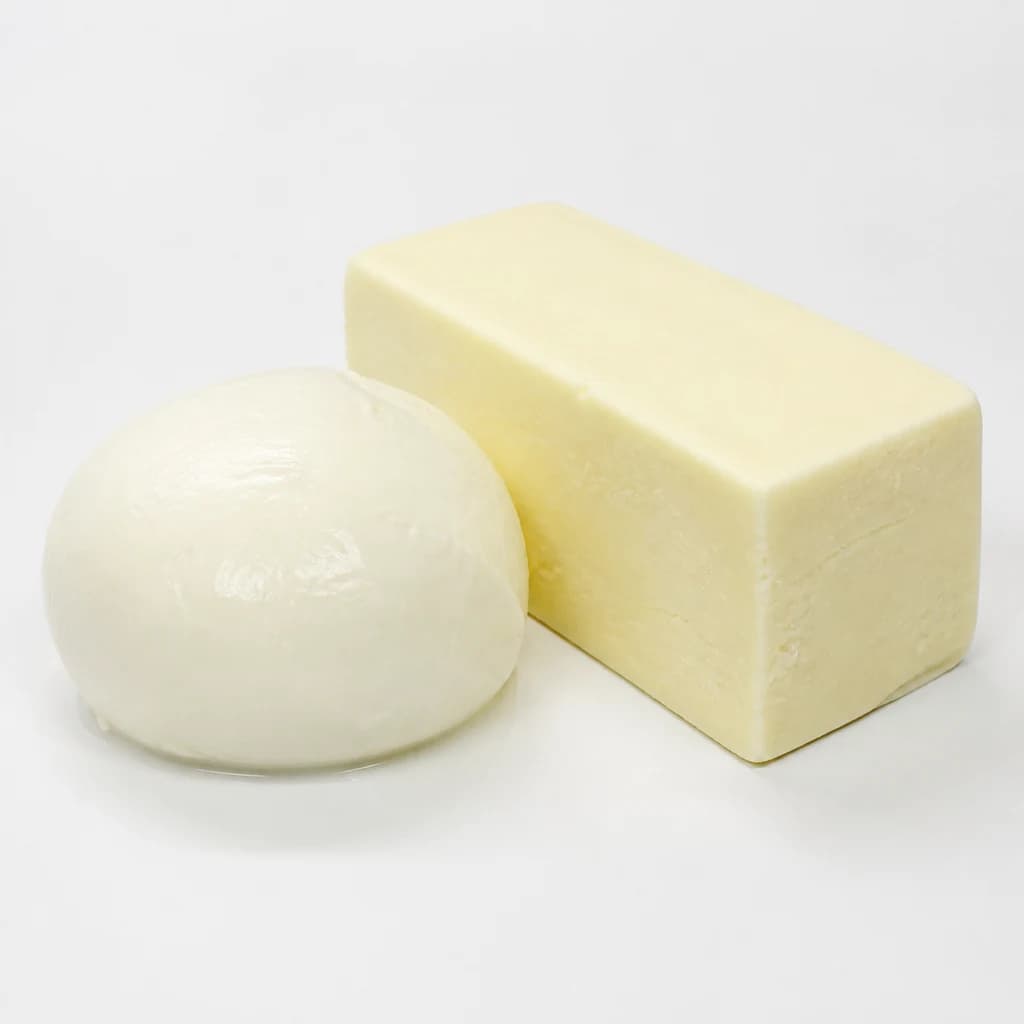
Mozzarella
Soft, milky cheese that melts into stretchy pizza pulls