Produce
Dried Lily Bulb
Pale dried lily flower bulbs, slightly sweet and starchy, used in Chinese soups and tonics.
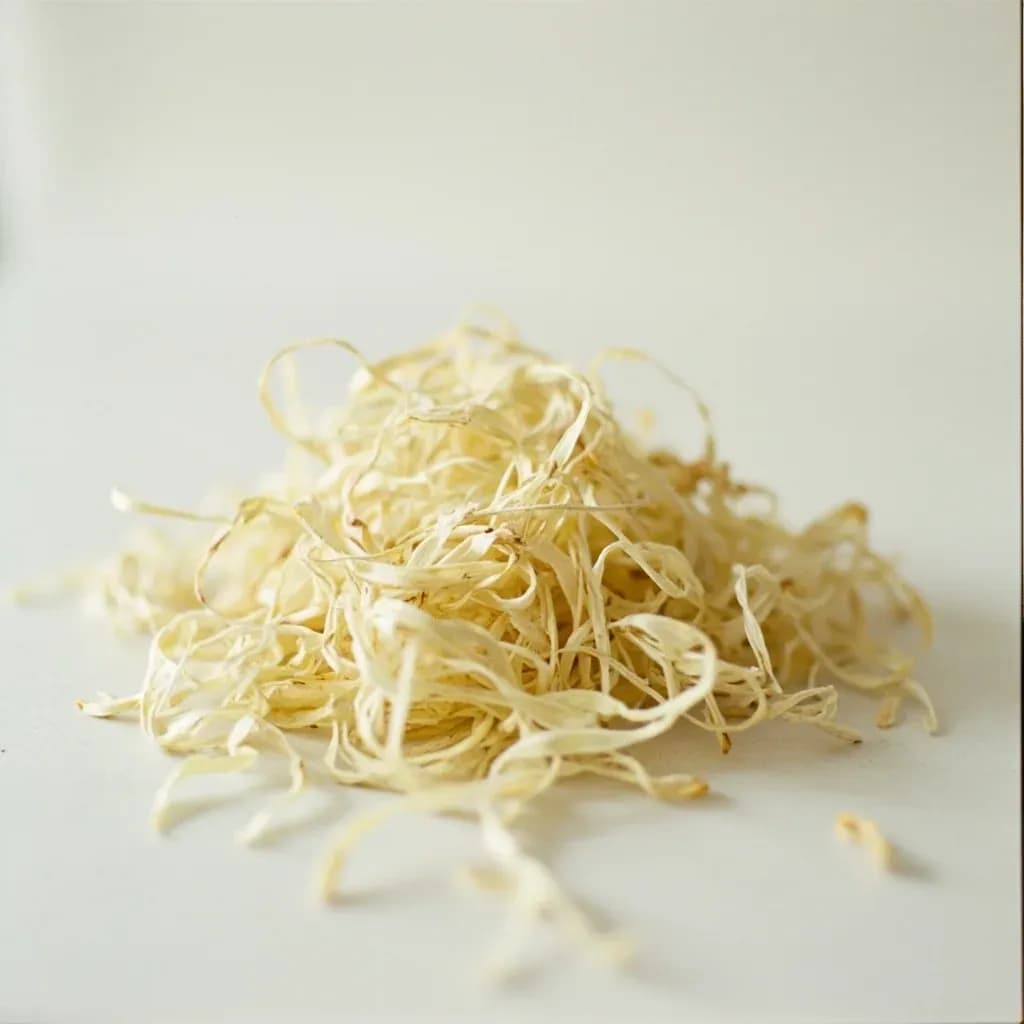
Dried lily bulbs are the scaled bulbs of edible lilies, dried to a pale ivory color with a mild, slightly sweet and bitter taste. Common in Chinese cooking, they are rehydrated and added to soups, stir-fries, and sweet tong sui desserts, valued in traditional medicine for their soothing properties. The petal-like scales turn soft and translucent when simmered.
Dried lily bulb (百合, bǎi hé) is the rehydrated bulb of several Lilium species, most commonly Lilium brownii and Lilium lancifolium. The name literally translates as "hundred reunions," a nod to its traditional symbolism of family harmony and reunion—making it a staple in celebratory soups and festive meals across East Asia. The bulbs are sliced thin and dried, becoming papery white to pale yellow with an irregular, crumpled appearance. Their flavor is mildly sweet and faintly starchy, with a clean quality that absorbs surrounding flavors without overwhelming them.
In both Chinese and Japanese culinary traditions, dried lily bulb is prized for its ability to add body and subtle sweetness to broths while contributing a yielding, slightly firm texture. It behaves differently from most dried ingredients: unlike long-cooking items such as dried scallops or shiitake, lily bulbs need only brief cooking once rehydrated. Left too long in the pot, they dissolve into a mushy, starchy paste. In Traditional Chinese Medicine, bǎi hé is classified as sweet, slightly bitter, and slightly cold, believed to moisten the lungs and calm the spirit—hence its prominent role in nourishing herbal soups. The slight bitterness is intentional in TCM formulations but must be controlled; it comes from the central shoot that runs through each bulb slice, and this must be removed before cooking. The fresh form (鲜百合, xian bai he) appears in Japanese cuisine, particularly in kinpira preparations, where its sweeter, more delicate character is showcased.
- Measured in
- g
- Storage
- Pantry
Types & varieties
Pale white to cream-colored slices; the most common form in Chinese markets and the standard for soups and tonics
Considered a premium origin; large, thick flakes with a cleaner flavor and less bitterness than other sources
From L. lancifolium; orange-spotted petals are used as garnish, but the bulb is the primary culinary variety
Perishable; used within days of purchase; slightly sweeter than dried; common in Japanese cuisine; bitter shoot must still be removed
Distinguishing Lily Bulb from Daylily
These two ingredients are frequently confused in English, but they are entirely different plants with different flavors and culinary uses. Dried lily bulb (百合, bǎi he) comes from Lilium species—starchy, mildly sweet bulbs sliced and dried. Dried daylily (金针花 or 黄花菜, jin zhen hua) is the dried bud of Hemerocallis fulva, a floral vegetable with an earthy, slightly bitter flavor used as a savory ingredient in stir-fries and soups. In Chinese medicine, daylily is called Xuan Cao and has different properties. Korean cuisine maintains clearer terminology: baekhap specifically refers to Lilium bulb preparations. If a recipe calls for bai he in a Chinese context, it almost always means lily bulb, not daylily.
- Never substitute daylily for lily bulb in soups or tonics—they have incompatible textures and flavors
- Check the botanical name on packages when available: Lilium spp. versus Hemerocallis spp.
Understanding TCM Classification
In Traditional Chinese Medicine, dried lily bulb is classified as sweet, slightly bitter, and slightly cold. It is said to moisten the lungs, calm the spirit, and reduce heat. This classification explains its prominence in recipes designed for autumn and winter, when the body is believed to need moistening. The slight cold property is why ginger is often added in savory preparations—to balance the cooling effect. For home cooks, the practical takeaway is that lily bulb pairs naturally with other "cooling" ingredients like lotus seed, longan, and snow ear fungus in sweet preparations, while savory soups typically include ginger to create balance.
- In savory soups, add a slice or two of fresh ginger when cooking with lily bulb
- In sweet preparations, the natural affinity with rock sugar and longan balances the slight bitterness
Common uses
Tips & pitfalls
- Always remove the central bitter shoot—split the rehydrated slices and pull out the green or yellow inner core; failure to do this makes the dish taste unpleasant
- Soak in warm water (around 40°C/105°F), not cold; cold water extends soaking to 2+ hours and produces uneven hydration
- Add to soups in the last 30–45 minutes of cooking only; unlike dried scallops or goji berries, lily bulbs disintegrate if simmered for hours
- Press gently between your fingers after soaking—properly hydrated bulbs feel slightly firm with no hard core; discard any that remain gritty or hard throughout
- For dessert soups, stop cooking while they still hold their shape; they continue softening off heat and will become mushy if boiled until tender in the pot
- Quality matters: choose pure white color with uniform thickness and no dark spots; yellowed or spotted pieces indicate age or improper storage and will have off flavors
- Do not confuse with daylily (金针花)—they are completely different ingredients, though both are loosely called "lily" in English
- A small number of people are sensitive to raw lily bulb; always cook thoroughly before serving
- Gansu-origin bulbs are worth seeking out for important dishes—they have larger, cleaner-tasting flakes with less bitterness than commodity-grade product
Nutrition
Nutrition
No USDA FoodData Central match for Dried Lily Bulb yet. We surface a per-100 g profile once a generic whole-food entry is matched and verified.
In the shops
Matched grocery products
No matched grocery products for Dried Lily Bulb yet.
Good to know
- Scientific names
- Lilium brownii, Lilium lancifolium (tiger lily), Lilium pumilum; family Liliaceae
- Chinese name
- 百合 (bǎi hé), literally "hundred reunions"
- Japanese name
- 百合根 (yurine)
- Form when sold
- Dried, papery white to pale yellow irregularly shaped slices; inner bitter shoot must be removed before use
- Prep required
- Soak 30–60 minutes in warm water until pliable, then split and remove the bitter green/yellow central shoot
- Typical yield
- Dried to rehydrated ratio approximately 1:2.5 to 1:3
- Texture when cooked
- Tender but retains slight resistance; becomes mushy if overcooked
- Shelf life
- Stored airtight in a cool, dry, dark place: up to 1–2 years
- Primary regions
- Gansu, Hunan, and Zhejiang provinces in China; also Japan and Korea
Substitutes
- Fresh lily bulb — Best substitute if available; no soaking required—simply cut, remove the shoot, and use directly; slightly sweeter and more delicate
- Dried lotus root slices — Provides similar starchy texture in soups; slightly crunchier when cooked; different flavor but compatible with the same savory and sweet preparations
- Glass noodles (bean thread noodles) — Can approximate the yielding texture in braises and soups; absorbs flavor well but contributes no flavor of its own—adjust seasoning accordingly
- Water chestnuts (fresh or canned) — Useful for fresh applications like salads or quick-cooked dishes where crispness is desired; not a direct flavor substitute but provides textural contrast
Pairs with
Also called
百合 · Bai He
Related

Tomato
Juicy, sun-sweet fruit for sauces, salads, and slow-cooked depth

Yellow Onion
The aromatic backbone of soups, sofritos, and braises

Garlic
Pungent cloves that perfume nearly every savory dish

Lemon
Bright, acidic citrus that wakes up almost any dish

Potato
Humble, hearty staple — roast, mash, fry, or boil

Carrot
Sweet, crunchy root — raw, roasted, or the base of a sofrito

Cucumber
Cool, crisp, and watery — for salads, pickles, and tzatziki

Lettuce
Crisp leaves for salads, wraps, and a fresh crunch