Produce
Dried Longan
Chewy, smoky-sweet dried fruit simmered in Chinese soups, teas and tonic desserts.
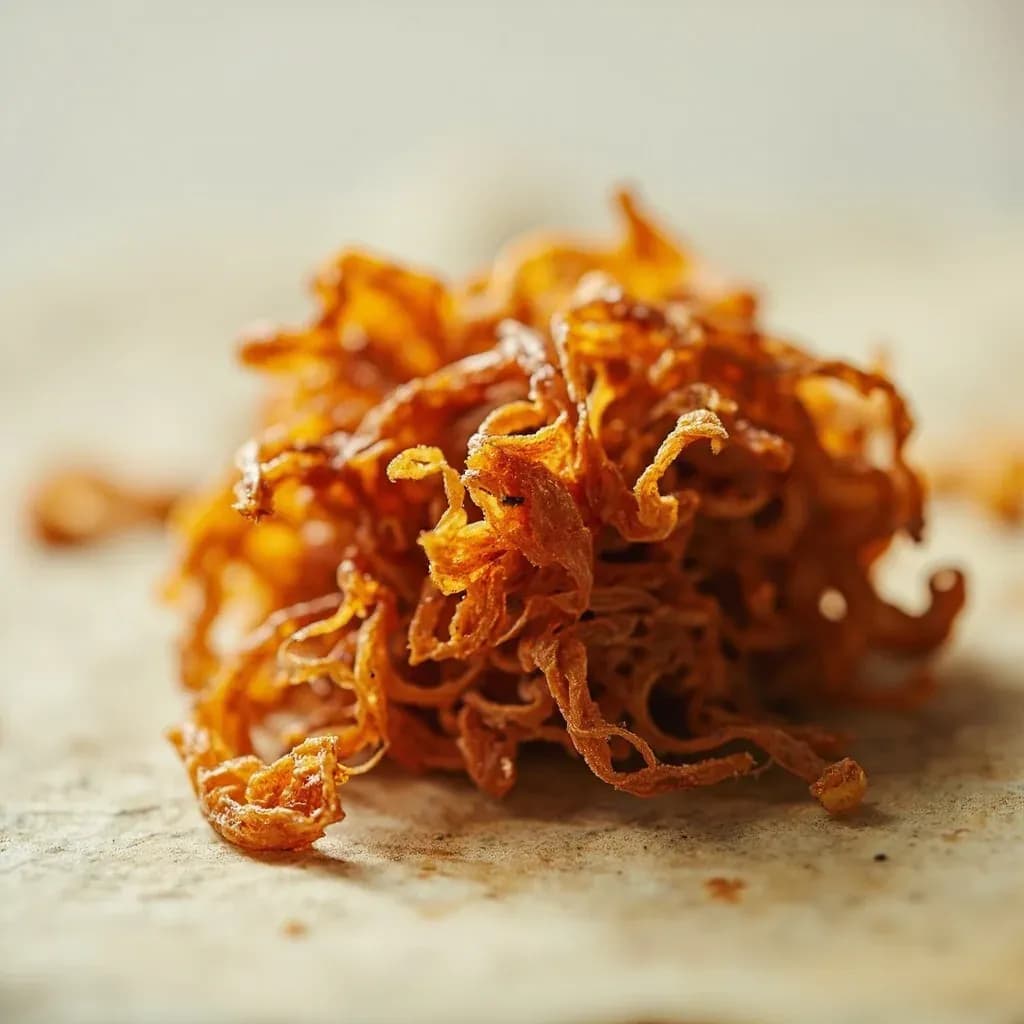
Dried longan is the shelled, dehydrated flesh of the longan fruit, dark amber, chewy, and intensely sweet with a smoky note. It is steeped in teas and simmered in Chinese sweet soups, congee, and herbal tonics, often paired with red dates and goji berries. Valued in traditional cooking as a warming, nourishing ingredient, it rehydrates and softens as it cooks.
Dried longan is the sun-dried or mechanically dried flesh of the longan fruit (Dimocarpus longan), a tropical stone fruit in the Sapindaceae family alongside lychee and rambutan. The drying process concentrates the fruit's natural sugars into an intensely honeyed, floral sweetness, while traditional sun-drying imparts a subtle smokiness absent from the fresh fruit. The flesh becomes dense, chewy, and slightly sticky—unlike the juicy burst of fresh longan—making it suited for slow-simmered preparations where it releases sweetness gradually into broths and liquids. In Chinese markets, dried longan is typically sold loose by weight in open bins or bags, which generally signals higher quality than the sealed packages common in Western grocery stores. Vietnamese and Thai varieties tend toward a softer texture; Chinese varieties from Fujian and Guangdong are widely considered the premium standard. In Traditional Chinese Medicine, dried longan is classified as warming and is one of the most valued tonic ingredients—believed to nourish the blood, calm the spirit, and support healthy sleep. This dual identity as both culinary ingredient and medicinal herb shapes nearly every traditional preparation, from restorative postpartum congees to calming evening teas.
- Measured in
- g
- Storage
- Pantry
Types & varieties
Premium grade; large, plump, uniform pieces with bright color and high sweetness
Common export grade; medium-sized, widely available in Asian markets
Commercial grade; smaller pieces, often used in tea blends and soups
From uncultivated trees; smaller fruit, more intense flavor, higher price
Fresh vs. Dried Longan
The distinction matters in the kitchen. Fresh longan is juicy and lightly sweet with a translucent flesh; it is used in desserts, eaten out of hand, or added at the very end of cooking where its delicate character would be lost to prolonged heat. Dried longan undergoes a fundamental transformation—the sugars concentrate, the texture firms into a dense chew, and for sun-dried varieties, a gentle smokiness develops. This dried form is not a substitute for fresh; it serves entirely different culinary purposes. More importantly, within TCM and many traditional recipes, the fresh and dried forms are assigned different properties, so follow the recipe's specification closely.
- Fresh: cooling properties, juicy texture, added at end of cooking or served raw
- Dried: warming properties, chewy texture, slow-cooked to release concentrated sweetness
Common uses
Tips & pitfalls
- Quality indicator: Choose glossy, plump pieces; avoid those that are dull, hard, or have visible mold spots
- Rehydrate briefly in warm water (5–10 min) before adding to soups to ensure even cooking throughout the pot
- Always remove the hard seed from fresh longan before drying; dried longan is typically sold seedless
- For tea, a small handful (5–10 pieces) per person is sufficient; steep 5–10 minutes for good extraction
- Pair with slightly bitter or astringent herbs (goji, chrysanthemum) to balance the concentrated sweetness
- Do not overcook in soups: add in the last 10–15 minutes to preserve some chew and prevent mushiness
- Store away from strong odors; dried fruit readily absorbs neighboring flavors from garlic, spices, or strong tea
- Common mistake: Using too much—dried longan is intensely sweet and can overwhelm other ingredients
- Common mistake: Skipping rehydration for soup use, resulting in uneven texture where some pieces stay hard while others soften
Nutrition
Energy
251 kJ · per 100 g
Where the calories come from
Protein
1.3g
3% DV
Carbs
15.1g
6% DV
Fat
0.1g
0% DV
Fiber
1.1g
4% DV
Sodium
0mg
0% DV
Source · USDA FoodData Central · Longans, raw
View on FDC →In the shops
Matched grocery products
No matched grocery products for Dried Longan yet.
Good to know
- Origin
- Southern Asia; major production in China (Fujian, Guangdong), Vietnam, Thailand
- Plant family
- Sapindaceae (soapberry family, same as lychee and rambutan)
- Botanical name
- Dimocarpus longan
- Processing
- Fresh longan is pitted, then sun-dried or mechanically dried until chewy; traditional sun-drying imparts a mild smoky flavor
- Color (dried)
- Deep amber to dark brown; quality pieces are glossy, not dull
- Flavor
- Concentrated sweetness with honey and floral notes; mild smokiness from traditional drying
- Texture
- Chewy, slightly sticky; flesh should be thick and gelatinous, not hard or papery
- TCM classification
- Warming; believed to nourish blood, calm the spirit, and support sleep
- Storage
- Airtight container in cool, dry place; refrigerate for extended shelf life (up to 1 year)
- Key nutrients
- Iron, vitamin C, potassium, riboflavin; natural fruit sugars concentrated by drying
Substitutes
- Dried lychee — Similar chewy texture and sweetness; slightly less floral, more acidic; use 1:1
- Dried longan in syrup — Softer texture, very sweet; rinse before using to control sweetness; reduce other sweeteners in recipe
- Dried jujube (red dates) — Different flavor (earthy, not fruity) but similar warming tonic use in Chinese cooking; texture is softer; not a direct flavor substitute but works in the same soup applications
- Goji berries — Not similar in flavor but used in same tonic preparations; add sweetness and body to soups and teas
Pairs with
Also called
桂圓 · Longan · Dried Dragon Eye
Related
Tomato
Juicy, sun-sweet fruit for sauces, salads, and slow-cooked depth
Yellow Onion
The aromatic backbone of soups, sofritos, and braises
Garlic
Pungent cloves that perfume nearly every savory dish
Lemon
Bright, acidic citrus that wakes up almost any dish
Potato
Humble, hearty staple — roast, mash, fry, or boil
Carrot
Sweet, crunchy root — raw, roasted, or the base of a sofrito
Cucumber
Cool, crisp, and watery — for salads, pickles, and tzatziki

Lettuce
Crisp leaves for salads, wraps, and a fresh crunch