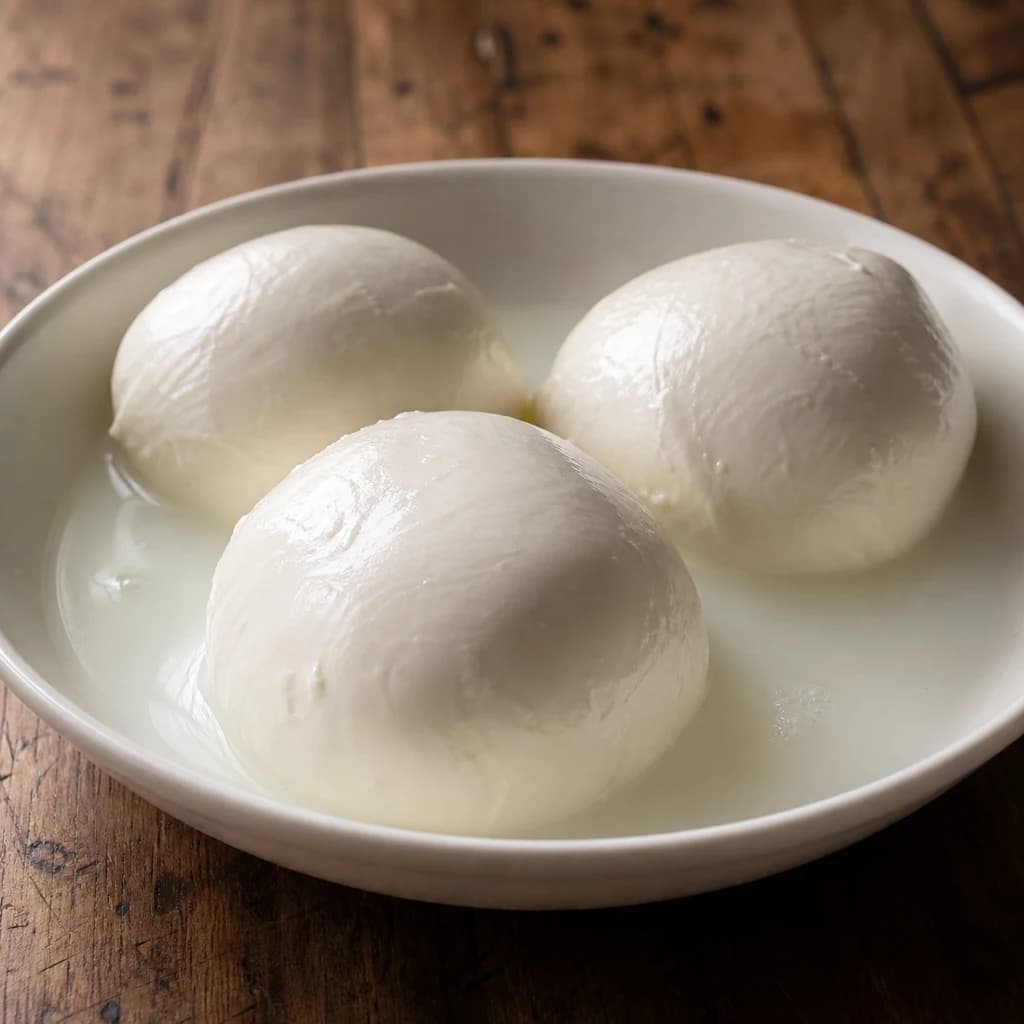
Natural form
Fresh fior di latte balls resting in their milky whey, showing the soft, springy texture.
Shows the characteristic round shape, pearlescent white exterior, and the light brine that preserves fresh mozzarella — the first thing a buyer sees at market.
Dairy & Eggs
Fior di Latte
Fresh cow's-milk mozzarella, mild and milky; the classic pizza melting cheese.
Fior di latte is fresh Italian mozzarella made from cow's milk (rather than buffalo), with a soft, springy texture and mild, milky flavor. It melts into stretchy strands, making it the standard cheese for pizza and baked pasta. Fresh and lower in moisture than buffalo mozzarella, it browns and melts cleanly.
Fior di latte is fresh mozzarella made exclusively from cow's milk, distinct from the buffalo milk version that dominates premium Italian cheese counters. The name translates to "flower of milk" and refers to the delicate, milky character that sets it apart from both buffalo mozzarella and the low-moisture mozzarella sold in grocery store blocks. Developed in Southern Italy as a cow's milk alternative to buffalo mozzarella, fior di latte became the workhorse of Neapolitan and Roman pizzerias precisely because its 52–60% moisture content and 18–22% fat produce a predictable, even melt without the excessive oiliness that buffalo mozzarella can release under high heat.
In Italy, the legal distinction matters: without qualification, the word "mozzarella" legally means buffalo milk. Fior di latte specifies the cow's milk version. The difference in fat content matters in the kitchen—fior di latte melts more evenly and with less greasiness, making it the professional choice for baked applications. For cold applications like Caprese, buffalo mozzarella is often preferred for its more complex, tangy flavor, but fior di latte is perfectly adequate and widely used. The quality depends entirely on freshness; the best fior di latte is made and sold the same day, with a smooth, elastic texture that feels slightly rubbery when raw and transforms into a creamy, slightly stringy consistency when heated.
- Measured in
- g
- Storage
- Fridge
Allergens
Types & varieties
Traditional Campanian fior di latte from the Agerola plateau; PDL (Protected Designation of Locality) recognition in Campania
Well-known commercial brand of fior di latte from the Salerno area
Braided fior di latte; the braid helps the cheese hold together in brine and aids slicing
Small bite-sized balls, typically 1–2 inches; sold in brine or whey
Cherry-sized balls; mid-range between bocconcini and regular mozzarella
Elongated oval shapes; preferred by many pizzaioli for even melting coverage on pizza
Common uses
Tips & pitfalls
- Bring fior di latte to room temperature 30–45 minutes before use; cold mozzarella releases steam and excess water during cooking, causing soggy, uneven melt
- Drain and pat dry on paper towels if brine-soaked before using on pizza—moisture is the enemy of a crisp crust
- Slice or shred just before using; pre-shredded mozzarella is usually low-moisture and will not behave the same way
- For pizza, tear into irregular pieces rather than shredding—this distributes melt more evenly and creates better coverage
- Store in original whey or brine; do not use plastic wrap or sealed containers without liquid, which causes it to dry and become rubbery
- Check the production date when buying; fior di latte is best within 48 hours of making
- The ideal melt temperature for fior di latte is approximately 130–140°F/54–60°C; beyond this it can become oily
- Never substitute low-moisture part-skim mozzarella for fior di latte in recipes calling for the fresh version—the moisture and fat content difference is significant
- For a crispier pizza base, briefly pre-bake the crust without cheese, then add fior di latte for the final minutes of baking
Nutrition
Nutrition
No USDA FoodData Central match for Fior di Latte yet. We surface a per-100 g profile once a generic whole-food entry is matched and verified.
In the shops
Matched grocery products
No matched grocery products for Fior di Latte yet.
Good to know
- Source
- Fresh cow's milk (not buffalo)
- Origin
- Southern Italy; developed for pizzeria use in Naples and Campania as an alternative to buffalo mozzarella
- Moisture Content
- 52–60%; high moisture distinguishes it from low-moisture mozzarella
- Fat Content
- 18–22% (whole milk); lower fat than buffalo mozzarella
- Texture
- Smooth, elastic, slightly rubbery when raw; melts to a creamy, slightly stringy consistency
- Shelf Life
- 7–10 days refrigerated in brine; best within 3–5 days of production
- Storage
- Kept in its own whey or brine at 39–45°F; do not freeze
- Season
- Year-round; fresh production daily at good producers
- Traditional Form
- Tied into braids, knots, or small balls (bocconcini)
- Legal Distinction
- In Italy, "mozzarella" without qualification legally means buffalo milk; fior di latte specifies cow's milk
Substitutes
- Fresh mozzarella (cow's milk) from local dairy — Closest match; look for similar moisture content and elasticity
- Low-moisture part-skim mozzarella — Acceptable for baked applications like pizza, but the melt will be less creamy and more rubbery; flavor is slightly more cooked and less milky
- Scamorza — Slightly smoked cow's milk cheese; similar melt properties but adds a light smoke flavor; acceptable for pizza with a different profile
Pairs with
Also called
Cow's Milk Mozzarella
Appears in these dishes

Related

Whole Milk
Rich, full-fat milk for drinking, coffee, sauces, and baking
Butter
Golden fat for searing, baking, and finishing a sauce
Yogurt
Tangy, creamy culture for breakfast, sauces, and marinades
Cheddar Cheese
Sharp, melty cheese for sandwiches, gratins, and grating
Skim Milk
Fat-free milk for lighter drinking, coffee, and cooking
Heavy Cream
Rich cream that whips, enriches sauces, and sets ganache

Sour Cream
Tangy, thick cream for dolloping, baking, and dips
Mozzarella
Soft, milky cheese that melts into stretchy pizza pulls