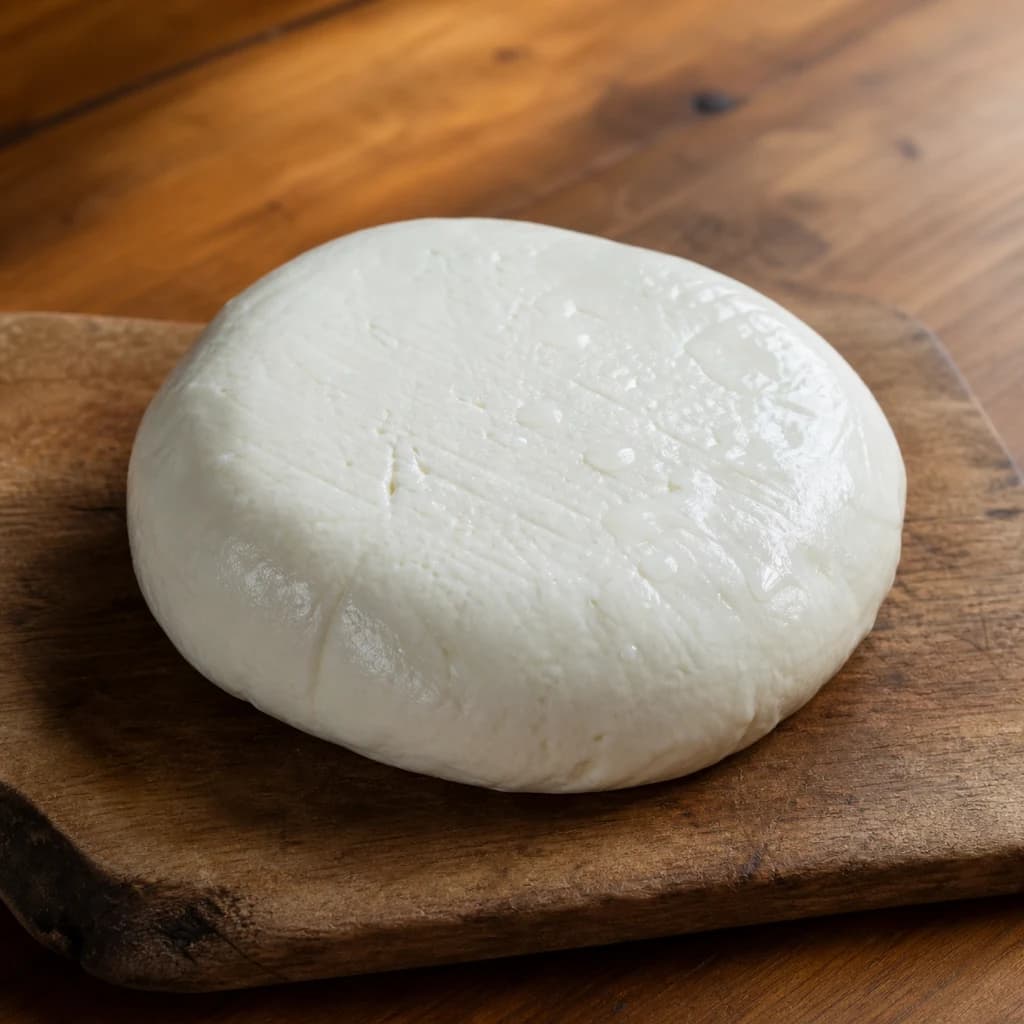
Natural form
A whole block of fresh queso guayanés on a wooden board, showing its smooth white surface.
Shows the cheese in its whole, uncut state so readers recognize its typical size, shape, and white exterior.
Dairy & Eggs
Guayanés Cheese
Soft, mild Venezuelan stretched-curd cheese eaten with arepas and breakfast.
Queso guayanés is a soft, white, mild Venezuelan cheese made by kneading curd into a smooth, elastic, slightly salty paste. It is creamy and meltable, popular stuffed into arepas, cachapas, and breakfast plates. Its gentle flavor and soft texture make it a favorite everyday table cheese.
Guayanés is a stretched-curd cheese from the Guayana region of Venezuela, produced primarily in the states of Bolívar and Amazonas along the Orinoco River basin. Made from cow's milk using the pasta filata technique—where curds are heated and kneaded into an elastic, pliable mass—it belongs to the same family as other Latin American white cheeses but carries its own regional character. The cheese bridges the gap between fresh eating cheeses and harder grating cheeses: the fresco version is consumed within days of production, while the madurado (aged) version serves a preservable pantry role similar to how Parmesan functions in Italian cooking.
At its best, Guayanés is semi-firm with a smooth, elastic texture and a clean, mildly salty flavor with gentle lactic notes. Fresh Guayanés Fresco slices cleanly over an arepa at breakfast, while the aged Guayanés Madurado develops a firmer body, more pronounced saltiness, and occasional protein crystals that make it excellent for grating over dishes or achieving a golden crust when fried. Production quality varies considerably—artisanal versions made with raw or minimally processed milk near the production regions develop subtle complexity that mass-produced supermarket versions often lack.
The cheese is traditionally formed into round loaves, braids, or small wheels. It ranges from white to creamy white when fresh, and may develop a faint yellow tint with aging. With 18–22% fat in dry matter, it has enough richness to brown beautifully when fried while remaining mild enough not to overwhelm the simple preparations where it typically appears.
- Measured in
- g
- Storage
- Fridge
Allergens
Types & varieties
Fresh, younger version with softer texture, higher moisture, and the mildest flavor. Best for slicing alongside arepas, eating plain, or melting over cachapas.
Aged version with firmer texture, more pronounced saltiness, and occasional protein crystallization. Better suited for grating over dishes and frying, where it holds its shape and develops a golden crust.
Common uses
Tips & pitfalls
- When frying Guayanés, use medium-high heat and cook briefly—1–2 minutes per side—until the exterior forms a golden crust while the interior remains soft. Overcooking makes it tough and rubbery.
- To slice cleanly, use a hot, dry knife; the slight heat melts the surface just enough to prevent crumbling and dragging the elastic curd.
- Fresh Guayanés should smell clean and lactic. Any sour or ammonia notes indicate over-ripening—discard or use only for cooking where the flavor will cook off.
- If the cheese weeps moisture in the refrigerator, pat it dry before using to ensure proper browning when fried.
- When substituting in recipes calling for frying cheese, select a fresh, high-moisture version for best results; aged versions will not melt as readily and may stay too firm.
- For grating applications, use the madurado variety; the firmer, slightly dried texture grates more cleanly than the fresh version, though the elastic quality of stretched-curd cheeses can cause some clumping on standard graters.
- Artisanal versions from the Guayana region have better flavor complexity than mass-produced supermarket versions, which are often made with standardized industrial milk. Seek out specialty Latin markets if flavor matters for your preparation.
Nutrition
Energy
1628 kJ · per 100 g
Where the calories come from
Protein
25.6g
51% DV
Carbs
1.6g
1% DV
Fat
31.1g
40% DV
Fiber
0g
0% DV
Sugars
1.6g
of which
Sodium
800mg
35% DV
Source · USDA FoodData Central · approx. Cheese, fontina
View on FDC →In the shops
Matched grocery products
No matched grocery products for Guayanés Cheese yet.
Good to know
- Origin
- Guayana region of Venezuela (states of Bolívar and Amazonas)
- Type
- Stretched-curd (pasta filata) cheese
- Milk
- Cow's milk (vacuno)
- Color
- White to creamy white when fresh; yellow tint when aged
- Texture
- Semi-firm, smooth and elastic when fresh; firmer with aging
- Flavor
- Mild, slightly salty, clean lactic notes that intensify with aging
- Fat Content
- 18–22% fat in dry matter
- Aging
- Fresh (a few days) to semi-aged (several weeks); aged versions called madurado
- Shelf Life
- Fresh: 2–3 weeks refrigerated; aged: up to 2 months
Substitutes
- Queso blanco (Colombian or generic Latin American) — The most direct substitute; similar stretched-curd texture and mild flavor. Colombian queso blanco tends to be slightly firmer, so adjust cooking times when frying.
- Queso de freír — Specifically formulated for frying; holds its shape better than Guayanés when fried and browns evenly. Widely available in Latin grocery stores.
- Fresh mozzarella — Similar mild flavor and meltability. Less salty overall, so adjust seasoning when using. May not hold its shape as well when fried.
- Requesón — Only suitable for fresh applications like stuffing arepas. Not appropriate for frying as it lacks the stretched-curd structure to hold together in hot oil.
Pairs with
Also called
Queso Guayanés
Related

Whole Milk
Rich, full-fat milk for drinking, coffee, sauces, and baking
Butter
Golden fat for searing, baking, and finishing a sauce
Yogurt
Tangy, creamy culture for breakfast, sauces, and marinades
Cheddar Cheese
Sharp, melty cheese for sandwiches, gratins, and grating

Skim Milk
Fat-free milk for lighter drinking, coffee, and cooking
Heavy Cream
Rich cream that whips, enriches sauces, and sets ganache

Sour Cream
Tangy, thick cream for dolloping, baking, and dips
Mozzarella
Soft, milky cheese that melts into stretchy pizza pulls