Proteins
Dogfish
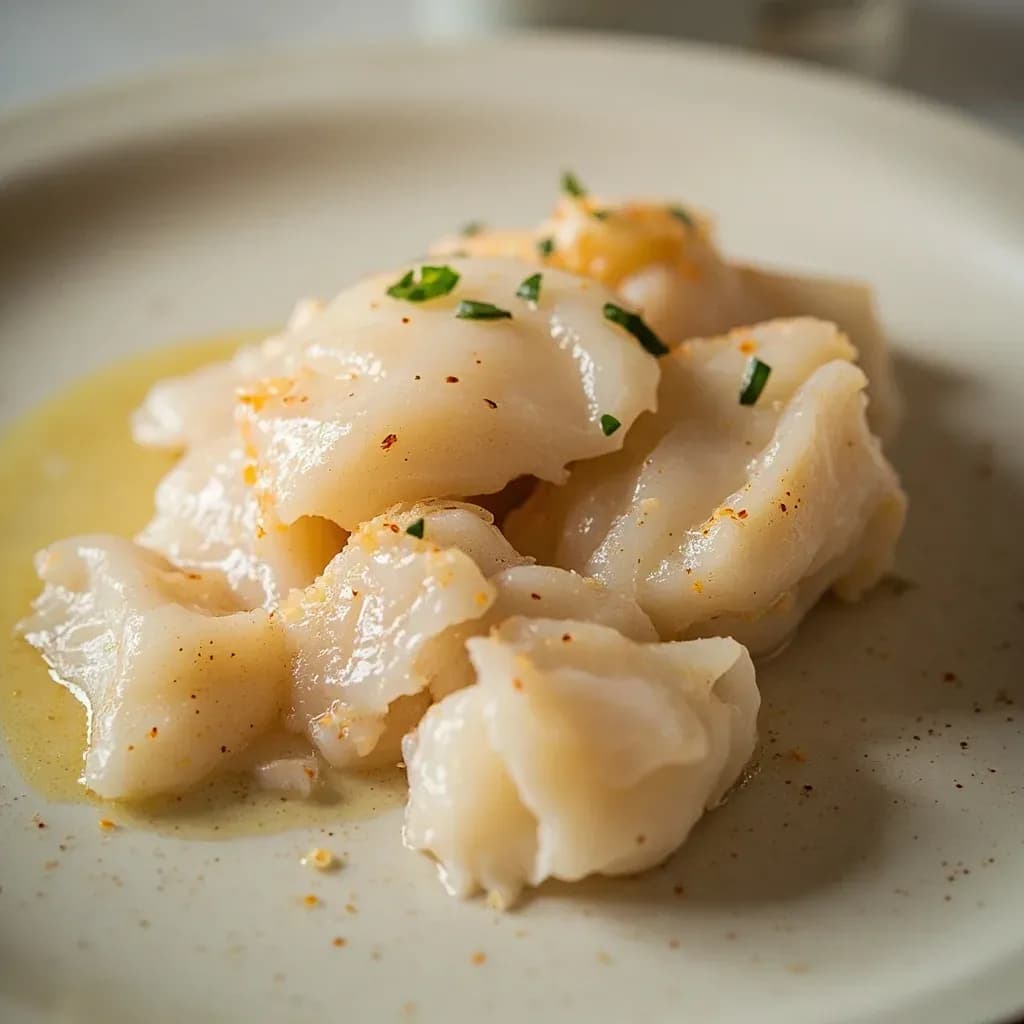
Small shark with firm white flesh, classic for Spanish cazón en adobo.
Dogfish is a small species of shark with firm, boneless white flesh. In Andalusia it is marinated in vinegar, garlic, and spices then fried as cazón en adobo, and in Britain it sometimes stands in for cod in fish and chips. Its dense texture holds up well to frying and marinating.
Dogfish is a small shark—typically 2–3 feet long—with dense, muscular white flesh that has anchored traditional cooking from Andalusia to the British Isles. The most commonly used species is the spiny dogfish (Squalus acanthias), named for the small spines at the base of its dorsal fins that require care when handling. Its flesh is mild and clean with a subtle marine sweetness, denser than most white fish and muscular in a way that makes it forgiving in braises and stews while still flaking well under direct heat. The firm texture, combined with a relatively low price and good sustainability profile in many regions, has made dogfish a working-class staple rather than a luxury—it is the honest, reliable fish that feeds people well without ceremony.
The catch is freshness. Dogfish has high levels of urea and related compounds that break down rapidly after death, quickly producing ammonia—the single most important thing to know about this fish. A pronounced ammonia smell is a disqualifier: it cannot be cooked away, and no amount of milk-soaking or lemon will fix fish that has passed its window. Buy from a fishmonger you trust, use the same day, and never hesitate to smell before you buy. Beyond freshness, dogfish rewards simple treatment: the flesh has enough character to hold its own in bold marinades like Andalusian adobo, yet enough delicacy to disappear under heavy seasoning if you are not careful.
Geographically, dogfish goes by many names and wears many traditions. In Spain it is the cazón that defines the Andalusian snack cazón en adobo, fried in a spiced vinegar marinade. In Britain it is rock salmon or simply flake, the traditional fish-and-chips fish that generations of working people knew before it fell out of fashion. In Australia, "flake" technically refers to gummy shark, but dogfish and related species are frequently substituted under the same name. Understanding these names unlocks a genuine transatlantic culinary lineage: the same firm, mild shark feeding working-class tables from Cadiz to Cornwall to Cape Town.
- Measured in
- g
- Storage
- Fridge
Allergens
Types & varieties
Squalus acanthias; the most widely used species; has small defensive spines at the dorsal fins; Atlantic and Pacific populations available year-round
Mustelus canis (Atlantic) and M. californicus (Pacific); gentler texture and slightly less firm; no spines to worry about when handling
Regional Andalusian name for spiny dogfish; the canonical fish for cazón en adobo and other traditional Spanish preparations
British term for dogfish, especially when sold for fish and chips; the historic chippy fish before it fell out of favor in some markets
Common market name for gummy shark and related species sold as flake in Australian fish-and-chips shops
Why the firm texture matters
Dogfish flesh is built differently from most white fish. The muscle fibers run tight and dense, giving it a steak-like quality that can take handling that would destroy flakier fish. This is not a fish that needs to be coddled—soups, stews, and braises that would reduce cod to mush leave dogfish intact. This resilience made it a practical choice for traditional cuisines that valued keeping fish intact through long cooking. It also makes dogfish forgiving of uneven heat distribution in a pan or on a grill, though the corollary is that overcooking dries it out just as readily as any other fish. The key is understanding that the apparent sturdiness of the raw flesh does not mean it is immune to overcooking—the opposite, in fact, because dry dogfish becomes noticeably tough and dense.
- Dense muscle structure = holds together in liquids; not immune to overcooking
- Steak-like quality makes it forgiving of uneven heat if you pull it off early
- The firm texture also means it needs less cooking time than you might expect from something so dense
- Cuts with even thickness are essential because the density slows heat penetration unevenly
On freshness and ammonia
The urea and related nitrogen compounds in dogfish flesh break down post-mortem into ammonia gas, and this is the defining quality concern for the cook. Unlike many fish where a slight staleness can be masked, dogfish is not forgiving here. The moment you open a package and smell sharp ammonia, you have a fish that should go back. No marinade, no cooking method, no amount of lemon juice will correct it. Trust your nose. When you do get genuinely fresh dogfish—clean, mildly marine, with no hint of sharpness—the flesh is clean and pleasant. The practical implication is straightforward: establish a relationship with a fishmonger who moves product quickly, buy the same day, and cook immediately. If you cannot cook the same day, freeze it—properly wrapped and frozen at peak freshness, dogfish holds well for months.
- Ammonia smell means the fish is spoiled; no cooking method fixes it
- Ask your fishmonger to bleed and gut immediately after catch—blood left in the flesh affects flavor
- Smell the fish before buying every single time, even from a trusted source
- Fresh, properly stored dogfish smells clean and oceanic, with no sharpness
Common uses
Tips & pitfalls
- Buy from a trusted fishmonger and use the same day; ammonia development is irreversible and cooking does not remove it
- Ask the fishmonger to bleed and gut the fish immediately after catch—blood in the flesh clouds the flavor
- Soak fillets in cold milk for 30–60 minutes before cooking to mellow any lingering fishiness and draw out residual blood
- Pat thoroughly dry before cooking—surface moisture prevents proper searing and browning
- Season simply: salt, lemon, olive oil, garlic. The mild flesh disappears under heavy seasoning
- Do not overcook—dogfish is leaner than many sharks and dries out quickly, becoming tough
- Remove the skin before cooking if you want a cleaner flavor; the skin can be tough and slightly bitter
- Cook to 145°F / 63°C minimum to ensure food safety; check for parasites, which are less common in cold-water species
- When buying steaks, ensure even thickness throughout for uniform cooking
Nutrition
Nutrition
No USDA FoodData Central match for Dogfish yet. We surface a per-100 g profile once a generic whole-food entry is matched and verified.
In the shops
Matched grocery products
No matched grocery products for Dogfish yet.
Good to know
- Scientific name
- Squalus acanthias (spiny dogfish); Mustelus species (smooth dogfish)
- Flavor
- Mild, clean white flesh with subtle marine sweetness; ammonia notes indicate spoilage that cooking cannot remedy
- Texture
- Firm, dense, and muscular; flakes well when cooked; holds together in liquids without disintegrating
- Color
- Off-white to pale gray flesh; dark gray-brown skin
- Fat content
- Lean for a shark; modest omega-3 content
- Yield
- Approximately 50–55% edible meat from whole fish
- Shelf life
- 1–2 days raw on ice; up to 3–4 months properly frozen
- Mercury
- Lower than many larger sharks due to small size and lower position in the food chain
- Health note
- Contains elevated uric acid; not recommended for people with gout
Substitutes
- Skate wing — Similar firm, mildly flavored white fish with comparable density; slightly sweeter; the classical French reference point for dogfish-style preparations
- Monkfish — Comparable density and mild, clean flavor; considered the luxury equivalent; significantly more expensive but an excellent swap for texture and taste
- Hake — Firm white fish with similar mild flavor and good availability across Europe; slightly less dense but holds up well in most preparations
- Wolffish — Firm, mild white flesh with a similarly muscular texture; sustainably sourced in many regions; an excellent one-to-one substitute in any application
- Sea bass fillets — Similar clean, mild flavor profile; less firm than dogfish so it works better for gentle cooking methods than deep-frying
- Cod — Less dense; acceptable for soups, stews, and braises but unsuitable for frying or applications that need structural integrity
Pairs with
Also called
Cazon en Adobo · Cazón · Huss · Rock Salmon
Related

Egg
The kitchen's everything ingredient — bind, leaven, enrich, or fry

Chicken Breast
Lean, quick-cooking white meat for everyday dinners

Ground Beef
Versatile minced beef for burgers, ragù, tacos, and meatballs

Pork Loin
Lean, tender roasting cut that stays juicy with care

Salmon
Rich, rosy fish that roasts, grills, or cures beautifully

Egg White
Pure protein that whips to airy peaks for meringue and more

Egg Yolk
Rich, golden yolk for custards, mayonnaise, and pasta

Quail Egg
Tiny, speckled eggs for garnishing and elegant bites