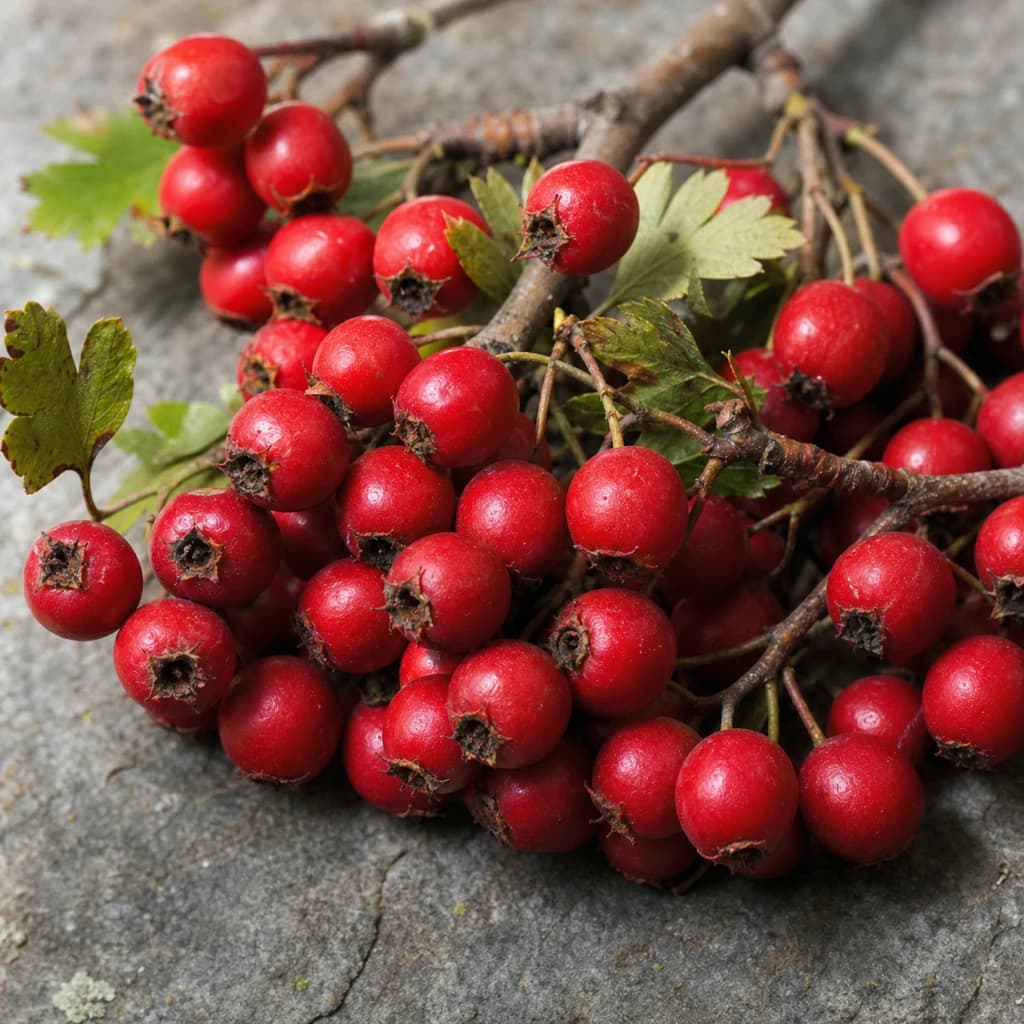
Natural form
Fresh hawthorn berries on the branch, showing their small size and vivid red skin.
Establishes the berry's appearance in nature — size, color, clustering habit, and the woody stem — so readers recognize it at source.
Produce
Hawthorn Berry
Small tart red berry used in candies, fruit rolls, and syrups across China.
Hawthorn berries are small, tart red fruits from the hawthorn tree, popular in Chinese cooking and folk medicine. They are made into the candied skewers known as tanghulu, pressed into chewy fruit rolls, and simmered into sweet-sour syrups and preserves. Their bright acidity and natural pectin make them well suited to jellies and digestives.
Hawthorn berry is a small, single-seeded fruit from the Crataegus genus, prized across both East Asian and European traditions for its intense tartness and bright color. The berries range from 1–2 cm in diameter—roughly half the size of a cherry—with firm flesh encasing a central pyrene (woody seed) that must be removed before eating or cooking. When raw, hawthorn has a pleasantly tart, mildly sweet flavor with occasional astringency; cooking transforms it entirely, mellowing sharpness into a jammy depth that works equally well in sweets and savory preparations. The berry's high natural pectin also makes it exceptionally suited to preserves and fruit rolls, where it contributes body without requiring additional thickeners.
In China, hawthorn (shan zha) occupies a beloved dual role as both seasonal street food and medicinal ingredient—the candied hawthorn on a stick is a festival treat with roots dating to the Song dynasty. Fresh hawthorn appears in markets from September through October, while dried berries, paste, and powder are available year-round for both culinary and traditional medicine use. Outside Asia, hawthorn remains underutilized despite being abundant across North America and Europe; foragers in many regions can find hawthorn growing wild in parks and hedgerows, though correct species identification is essential.
The seed is the critical safety consideration: hawthorn seeds contain amygdalin, a cyanogenic compound that releases hydrogen cyanide when metabolized. For any preparation involving significant quantities of berries, the seeds must be completely removed; small amounts consumed accidentally pose minimal risk, but seed removal should be standard practice in any recipe. The single-seeded structure makes hawthorn more labor-intensive to process than berries like raspberries or strawberries, which limits its commercial appeal but rewards the home cook willing to invest the extra effort.
- Measured in
- g
- Storage
- Fridge
Types & varieties
The primary culinary variety in China; large bright-red berries with excellent acidity; sold fresh in markets during season and dried year-round
Larger-fruited variety, sometimes called 'big-fruited hawthorn'; preferred for preserves and candies due to higher flesh-to-seed ratio
Native to Europe; smaller, darker berries; traditional for wine-making and preserves in British and French traditions
North American species; bright red berries; used by Indigenous peoples; less commonly found in commercial trade
Pacific Northwest native; dark purple-black berries; traditional food source of Indigenous peoples of the region
Sourcing: Culinary vs. Medicinal Products
Distinguish clearly between culinary and medicinal hawthorn products before purchasing. Culinary dried berries are typically sliced or left whole, lighter in color, and intended for direct food use. Medicinal hawthorn powder and paste are often ground very fine, may include stems, and are formulated for decoctions and traditional medicine preparations rather than eating. For foraged berries, harvest from healthy trees well away from roadsides and areas with pesticide application; wash thoroughly and always remove seeds.
- Culinary dried berries: sliced or whole, lighter color, food-grade
- Medicinal products: very fine powder, may include stems, not for direct eating
- Foraged berries: source from clean areas, wash well, remove all seeds
Processing Fresh Hawthorn
The single-seeded structure requires deliberate seed removal before cooking. Score each berry around its equator with a sharp paring knife, then twist to split open and extract the seed. For large quantities, soaking scored berries in cold water for 15–30 minutes helps the skins split and reduces cooking time. After cooking until very soft, press the flesh through a fine-mesh sieve for smooth purees (ideal for fruit rolls and sauces), or leave intact for chunkier preparations like compotes.
- Score around the equator and twist to split
- Soak scored berries in cold water 15–30 minutes to ease skin splitting
- Press cooked berries through fine-mesh sieve for smooth purees
- Work quickly when cutting—hawthorn oxidizes and darkens rapidly
Common uses
Tips & pitfalls
- Always remove the seeds from fresh hawthorn before cooking or eating; the seeds are not edible in quantity due to cyanogenic compounds.
- When making hawthorn sauce or candy, score the berries around their equator and soak briefly in cold water to help the skins split — this reduces cooking time and improves texture.
- For a smoother puree (as for fruit rolls), cook berries until very soft, then press through a fine-mesh sieve to remove seeds and tough skin fragments.
- Commercial hawthorn powder and paste (used in Chinese medicine) are not interchangeable with culinary-grade dried berries; verify intended use before purchasing.
- If foraging wild hawthorn, correctly identify the species — many Crataegus species are edible, but accurate identification is essential; avoid berries from areas treated with pesticides or near heavy traffic.
- Dried hawthorn berries rehydrate well; soak 30 minutes in warm water before using in teas or compotes.
- Astringency is a common complaint with underripe or raw hawthorn; cooking eliminates much of the tannic grip.
- Hawthorn oxidizes and darkens when cut — work quickly or sprinkle with lemon water if color matters in the finished dish.
Nutrition
Nutrition
No USDA FoodData Central match for Hawthorn Berry yet. We surface a per-100 g profile once a generic whole-food entry is matched and verified.
In the shops
Matched grocery products
No matched grocery products for Hawthorn Berry yet.
Good to know
- Scientific Name
- Crataegus pinnatifida (Chinese hawthorn); Crataegus monogyna (European hawthorn)
- Origin
- Northern Hemisphere; native to East Asia (China, Korea, Japan) and Europe; naturalized across North America
- Peak Season
- Late summer to early fall (September–October in the Northern Hemisphere)
- Color
- Bright red most common; also dark purple and orange-yellow varieties
- Size
- 1–2 cm diameter; smaller than a cherry; firm flesh with single central seed (pyrene)
- Flavor
- Tart, mildly sweet with hint of bitterness; raw flavor sharpens, cooked flavor intensifies and mellows
- Seed Warning
- Seeds contain amygdalin (cyanogenic compound); always remove before eating or cooking in quantity
- Common Forms
- Fresh whole berries, dried whole berries, hawthorn paste, hawthorn concentrate/syrup, hawthorn powder
Substitutes
- Cranberries — Best substitute for sauces and sweetened preparations; similar tartness and color; cook down the same way; use slightly more as cranberries are larger
- Tart Cherries (fresh or frozen) — Comparable tartness; work well in jams and sauces; available frozen year-round for convenience
- Goji Berries (dried) — For teas and soups; different flavor profile but similar traditional Chinese culinary context; texture is softer
- Pomegranate Seeds (fresh) — Visual substitute for garnishes and salads; far sweeter; not a flavor substitute
- Rose Hips — Similar size, color, and tartness; excellent for teas and jams; seeds also must be removed before use
Pairs with
Also called
Shan Zha · Chinese Haw
Related
Tomato
Juicy, sun-sweet fruit for sauces, salads, and slow-cooked depth
Yellow Onion
The aromatic backbone of soups, sofritos, and braises
Garlic
Pungent cloves that perfume nearly every savory dish
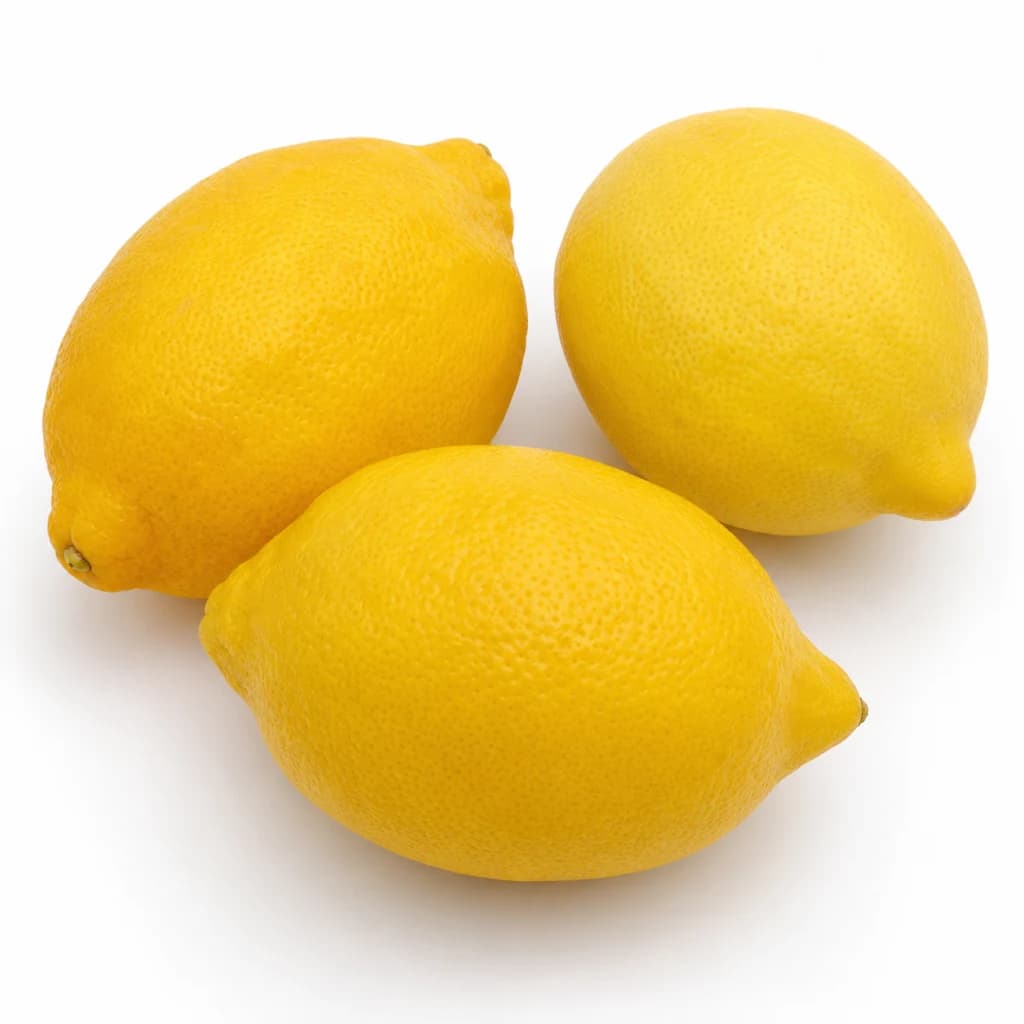
Lemon
Bright, acidic citrus that wakes up almost any dish
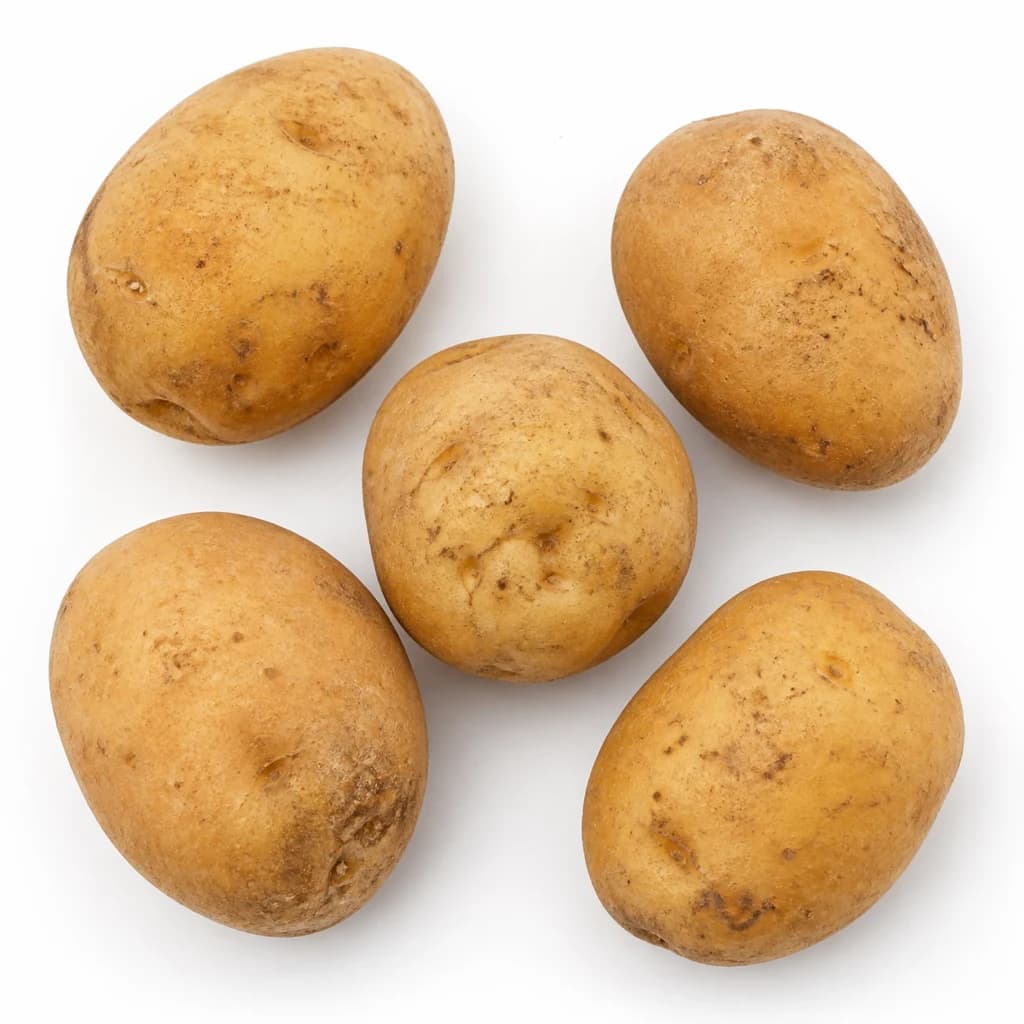
Potato
Humble, hearty staple — roast, mash, fry, or boil
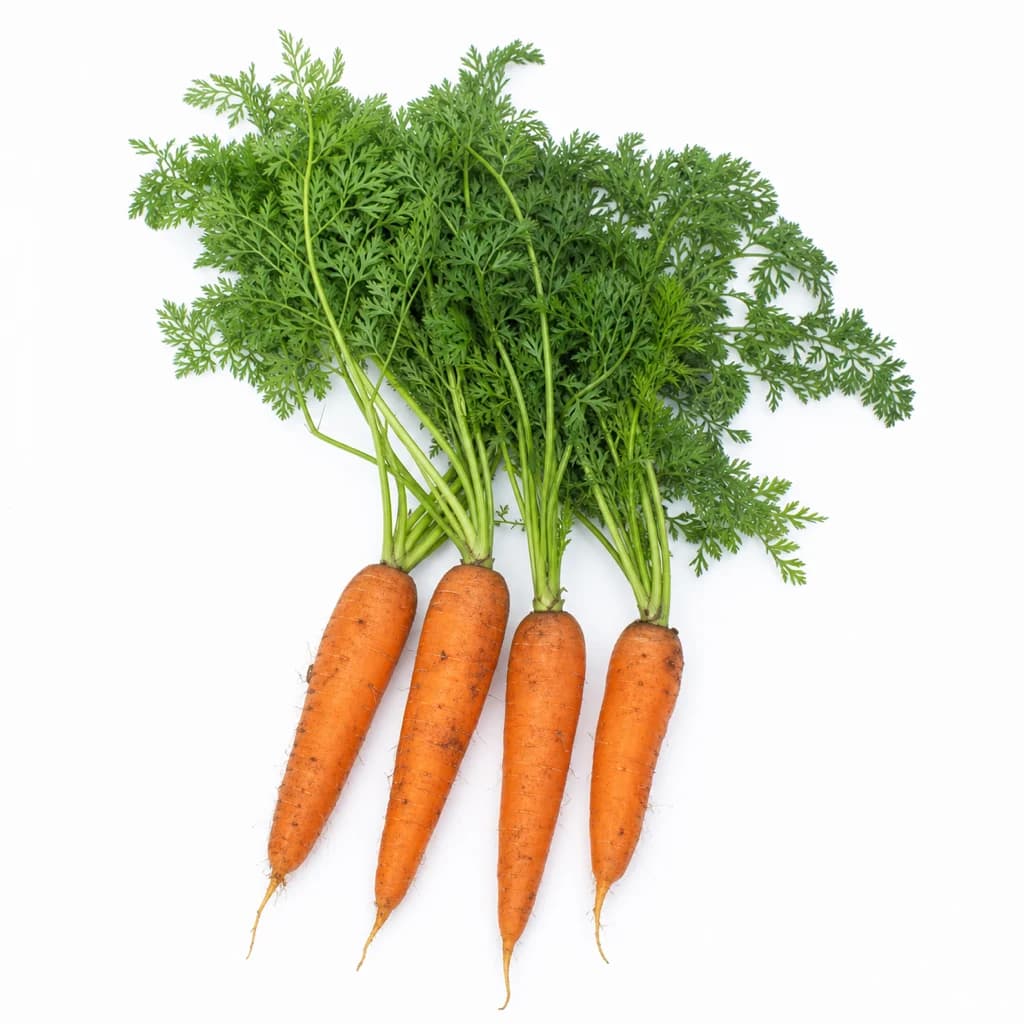
Carrot
Sweet, crunchy root — raw, roasted, or the base of a sofrito
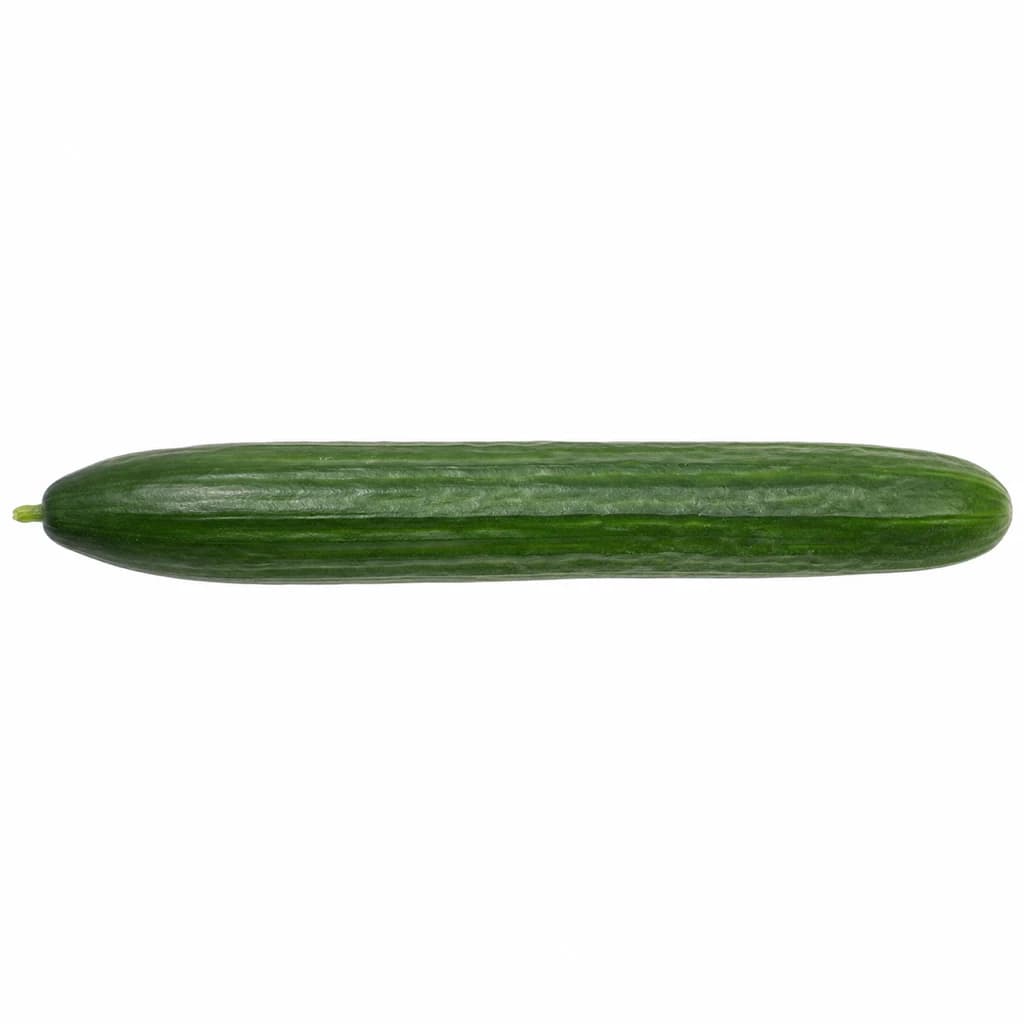
Cucumber
Cool, crisp, and watery — for salads, pickles, and tzatziki

Lettuce
Crisp leaves for salads, wraps, and a fresh crunch