Baking
High-Extraction Flour
Flour milled to keep more bran and germ than white, for flavorful artisan breads.
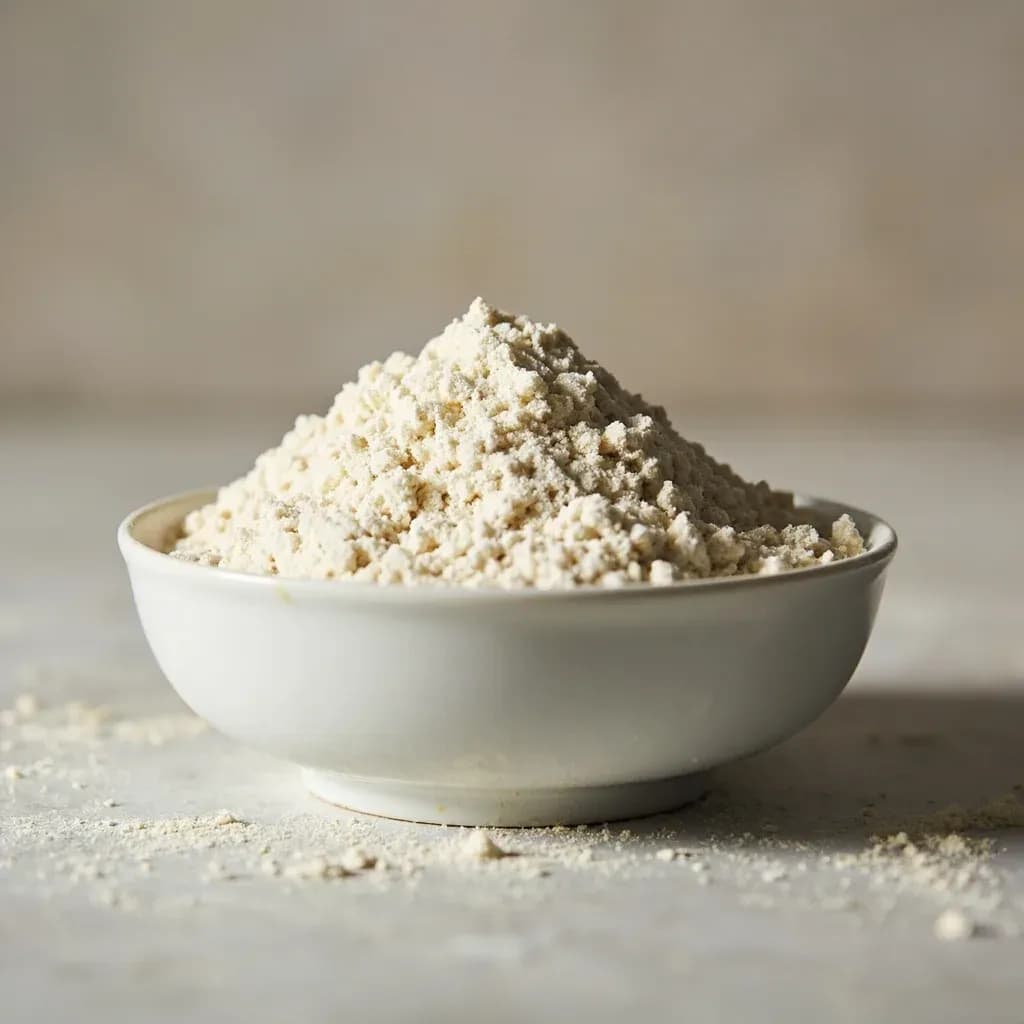
High-extraction flour is milled to retain a higher proportion of the wheat bran and germ than refined white flour, but less than full whole-wheat. The result is a creamy, off-white flour with more flavor, color, and nutrition while still baking up relatively light. Artisan bakers prize it for complex, well-fermented loaves.
High-extraction flour occupies the productive middle ground between refined white flour and whole wheat, typically retaining 80–85% of the wheat grain. This means the bran and germ are partially preserved rather than completely removed (as in white flour) or fully included (as in whole wheat). The result is a flour with noticeably more flavor complexity, higher mineral and vitamin content, and better baking performance than whole wheat in most applications. The germ contributes natural sugars and enzymes that accelerate fermentation and deepen flavor, while the bran—present in smaller, more tender quantities than in 100% whole wheat—adds texture without the coarse, sometimes bitter bite of whole-grain bran layers. High-extraction flours behave quite differently from white flour in the mixer and oven. The bran's sharp cellular structures physically cut gluten strands if the dough is underdeveloped, requiring longer autolyse and gentler mixing technique. The germ's oils shorten shelf life and drive faster fermentation. Yet the higher mineral content from retained bran actually promotes better caramelization and Maillard browning, giving crusts a deeper, more attractive color than you might expect from the pale flour. For bakers seeking the nutritional benefits of whole grain without sacrificing the eating quality of white-flour breads, high-extraction flour is the practical solution that neither whole wheat nor white can match.
- Measured in
- g
- Storage
- Pantry
Allergens
Types & varieties
Coarsely stone-milled high-extraction wheat flour; term popularized by Sylvester Graham in the 19th century for its perceived digestive benefits
French bread flour standard at ~80% extraction; widely used for traditional baguettes and country loaves; produces a relatively open crumb with gentle grain flavor
Slightly more complete extraction than Type 80; produces denser crumb with more pronounced grain flavor; favored for robust country breads
Canadian high-protein wheat flour, often 80–85% extraction; strong gluten development makes it ideal for artisan crusty breads requiring substantial structure
Made from ancient grain spelt; lower gluten potential but excellent flavor complexity; easier to digest for some people due to different protein structure
From the oldest cultivated wheat; nutty, sweet flavor with notably lower gluten; ancient grain revival variety that behaves quite differently in fermentation
Technically a high-extraction flour but typically categorized separately as 'dark rye' or 'medium rye' by most mills; contributes darker color and denser texture to bread formulas
Common uses
Tips & pitfalls
- Increase hydration by 5–10% compared to your standard bread formula—the bran absorbs considerably more water than white flour's endosperm-only particles
- Sift or whisk before measuring to aerate and break up any compacted bran; settled high-extraction flour compacts significantly more than white flour and will yield dense, heavy loaves if measured by volume without aeration
- Consider a longer autolyse of 20–30 minutes minimum to fully hydrate the bran before mixing develops gluten—bran's sharp fragments cut gluten strands if dough is underdeveloped, leading to poor gas retention and dense crumb
- The germ's natural oils shorten shelf life dramatically; buy in quantities you'll use within 1–2 months at room temperature, or portion and freeze immediately upon receipt
- Blend with bread flour for transitional baking—many bakers start at 50/50 and work up to 100% high-extraction as they adjust their technique for the different dough behavior
- Expect slightly faster fermentation rates due to the germ's natural sugars and enzymes feeding the yeast; monitor your bulk fermentation closely to avoid over-proofing
- For crusty breads, the flour's higher mineral content promotes better caramelization and Maillard browning—expect darker crust color than the pale flour suggests and plan accordingly
- Stone-milled versions retain more germ integrity than roller-milled; if freshness matters for your application, check with your miller about their process
Nutrition
Nutrition
No USDA FoodData Central match for High-Extraction Flour yet. We surface a per-100 g profile once a generic whole-food entry is matched and verified.
In the shops
Matched grocery products
No matched grocery products for High-Extraction Flour yet.
Good to know
- Extraction rate
- Typically 80–85% of the whole grain retained (vs. ~50–60% for standard white flour and 100% for whole wheat)
- Ash content
- Approximately 0.75–1.0% ash, reflecting higher mineral content from retained bran and germ
- Shelf life
- 2–6 months at cool room temperature; refrigerate or freeze to extend to 6–12 months due to germ oils that oxidize and turn rancid
- Protein content
- Varies by wheat variety and extraction rate, typically 10–13% for artisan bread applications
- Color
- Creamy beige to light tan, noticeably darker than white flour but lighter than whole wheat
- Milling process
- Unbleached, stone-milled or roller-milled with controlled bran and germ retention
- Grain source
- Most commonly wheat (Triticum aestivum); also available in heritage and ancient grain varieties
Substitutes
- Whole wheat flour — Closest match nutritionally but is 100% extraction; expect denser crumb, more bitter notes, and significantly more hydration needed; use at 75% ratio in recipes expecting high-extraction, and expect a coarser texture
- Graham flour (whole grain) — American-style coarsely ground whole wheat; more granular texture and more assertive bran flavor; works as 1:1 substitute but produces a coarser, less refined crumb
- Mix of white bread flour and wheat bran — Add 1–2 tablespoons wheat bran per cup of bread flour to approximate the bran content of 80% extraction flour; simpler and more accessible than true high-extraction but produces less balanced flavor than mill-fresh product
Pairs with
Also called
Type 85 Flour · T80 Flour
Related

All-Purpose Flour
The do-anything flour for bread, cakes, sauces, and dredging

Bread Flour
High-protein flour for chewy, well-risen breads
Whole Wheat Flour
Nutty, whole-grain flour for hearty breads and bakes
Cake Flour
Fine, low-protein flour for tender, delicate cakes
Almond Flour
Nutty, gluten-free flour for macarons and tender bakes

Baking Powder
All-in-one leavener for fluffy cakes, pancakes, and biscuits

Baking Soda
Pure leavener that needs acid to lift — and tenderize
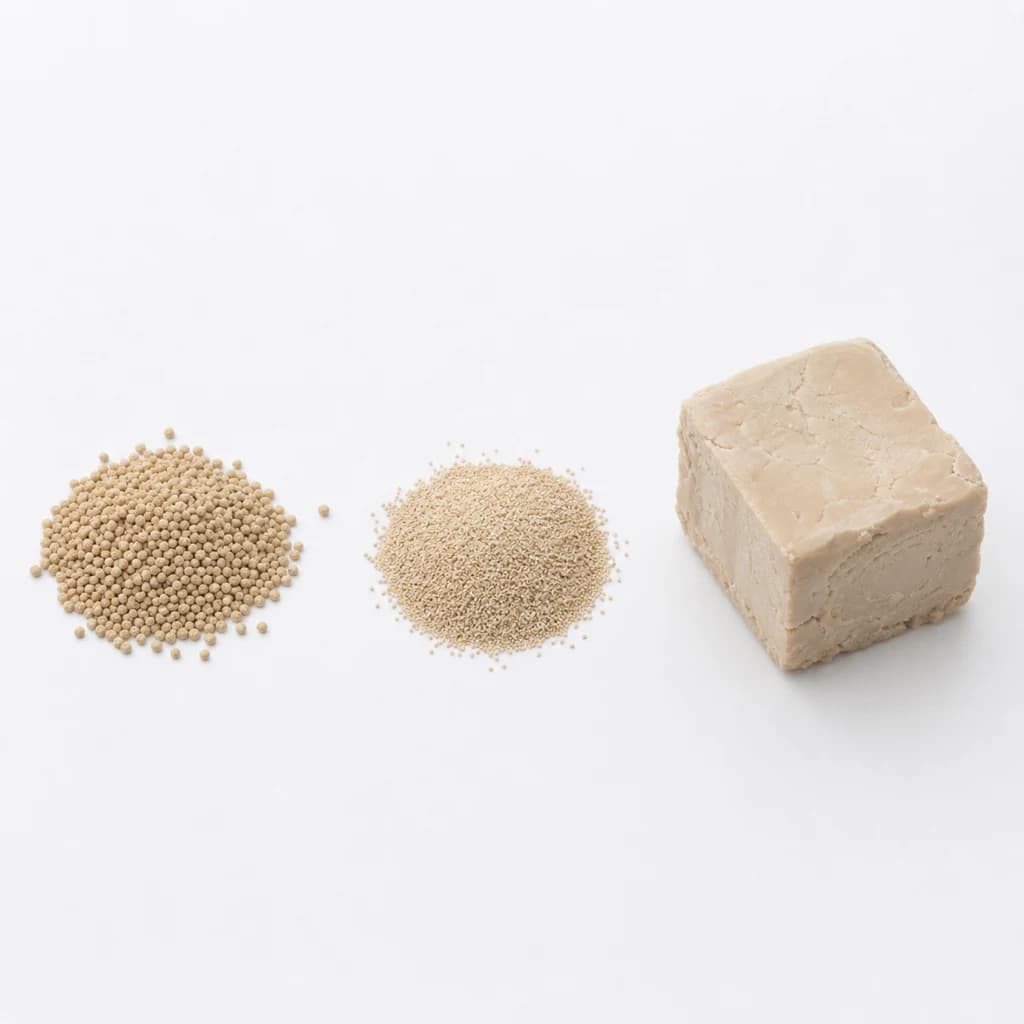
Yeast
Living leaven that makes bread rise and dough come alive