Produce
Home Fries (Diced Potato)
Diced potatoes pan-fried until crisp; a classic breakfast side dish.
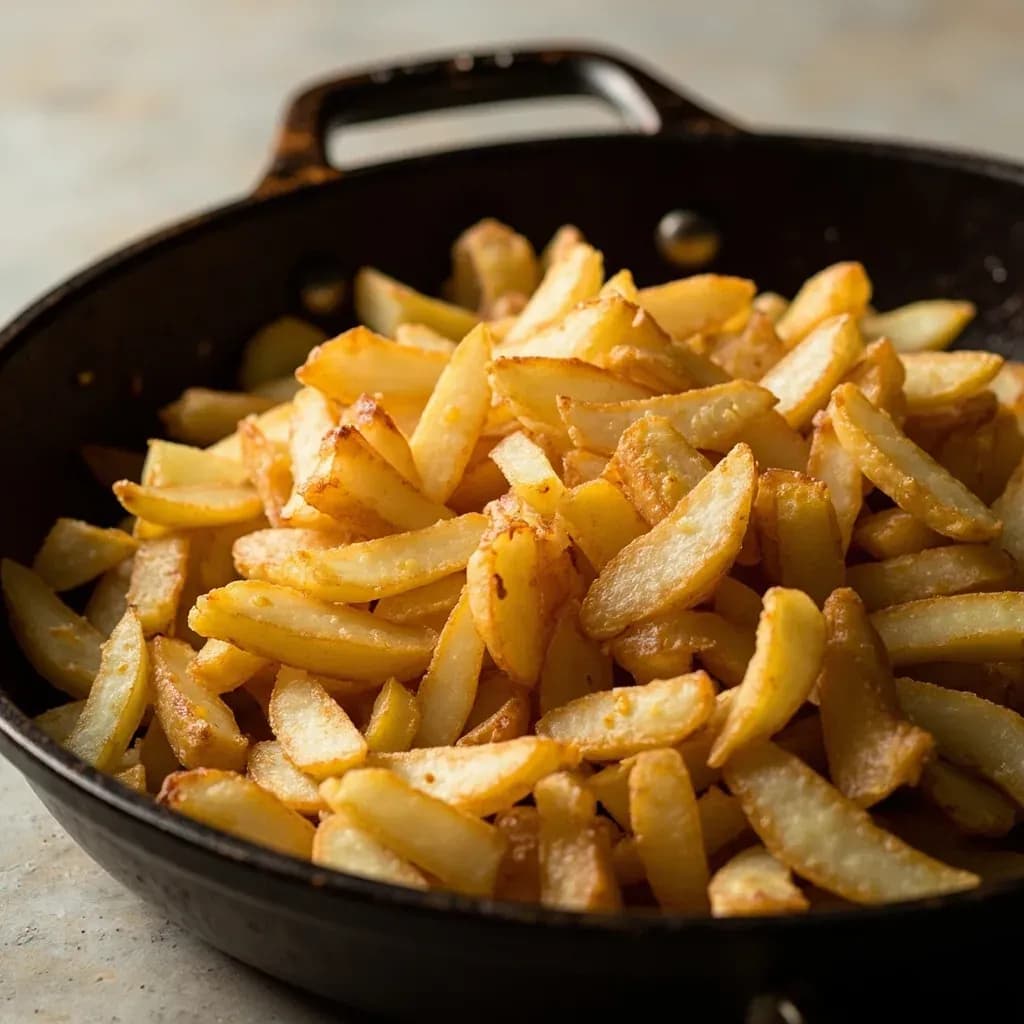
Home fries are diced or cubed potatoes pan-fried until golden and crisp on the outside and tender within, often with onions and peppers. A diner and breakfast staple, they are seasoned simply with salt, pepper, and paprika. Parboiling the potatoes first helps them cook evenly and crisp without burning.
Home fries are diced potatoes—typically 1/2- to 3/4-inch cubes—pan-fried in butter, oil, or bacon fat until they develop a deep golden crust while the interior remains tender and creamy. The technique relies on direct fat-to-potato contact in a hot heavy pan, which accelerates browning through the Maillard reaction and creates the signature textural contrast that defines the dish. This method distinguishes home fries from French fries (deep-fried for stringently crisp results throughout) and from roasted potatoes (oven-cooked via dry heat, typically herbaceous and drier in interior). The defining characteristic is that accelerated, concentrated browning in a hot skillet creates an exterior that shatters against the fork while the inside yields smoothly.
The dish occupies a specific and honored niche in American breakfast tradition, particularly in diner and Southern cooking. It evolved as a home-style alternative to French fries—simpler, requiring no deep-frying equipment, and more forgiving in execution. Home fries became a fixture on breakfast plates alongside eggs, bacon, and toast, absorbing pan drippings and carrying the savory essence of the breakfast skillet. Their forgiving nature is a defining strength: variations in potato type, dice size, seasoning, and fat choice all produce valid interpretations.
Three non-negotiable principles govern the technique regardless of style. First, the potato surface must be bone-dry before it hits the fat—surface moisture is the enemy of browning. Second, there must be adequate hot fat in the pan; home fries are not a low-fat preparation. Third, patience is essential: resist the urge to stir constantly or flip prematurely. Let contact do the work.
- Measured in
- g
- Storage
- Pantry
Types & varieties
Cubed potatoes browned in butter with optional diced onion, seasoned with salt and black pepper.
Often includes bell peppers, onions, and sometimes jalapeños; more heavily seasoned with paprika or cayenne.
Parboiled until just tender, then pan-fried; yields ultra-creamy interior with a shattering crust.
Thicker-cut cross-section slices (1/2 inch) pan-fried; similar concept, different geometry.
Smaller dice (1/4- to 1/2-inch), cooked in a single layer until edges are lacy and golden.
Why Soaking and Drying Matter
Surface starch is the primary obstacle to crisp home fries. When potatoes go into the pan wet, they steam instead of sear—the water flashes to steam, creating a barrier between the potato and the hot fat. Soaking 30–60 minutes in cold water draws out excess starch and hydrates the surface cells. After soaking, thorough drying with clean towels is not optional; it is the actual crispness-making step. Some cooks rinse after soaking, others do not, but the drying is non-negotiable.
- Soak in cold water 30–60 minutes
- Dry completely with towels—pat, don't just drain
- Wet potatoes in a hot pan produce steam, not sear
The Parboiling Shortcut
Twice-cooked home fries—parboiled then pan-fried—represent the most reliable path to consistently excellent results. Parboil cubed potatoes 5–7 minutes until just fork-tender throughout; they should feel firm enough to resist but yield easily. Drain immediately and shake the colander vigorously to roughen the surfaces (this creates more edge area for browning). Let them steam-dry in the colander for 5 minutes. The parboiling step guarantees the interior will be creamy; the pan-frying step guarantees the exterior will be crisp. Neither step alone achieves both.
- Parboil 5–7 minutes until just fork-tender
- Shake colander to roughen surfaces for more crust
- Proceed directly to hot pan after 5 minutes of steam-drying
The Crowding Problem
Overcrowding is the most common home fry mistake. When too many potatoes fill the pan, they overlap and exude moisture faster than the fat can evaporate. The result is a gray, steamed mass rather than golden cubes. Each piece needs direct contact with the hot pan surface to brown properly. If your dice from 1 pound of potatoes doesn't fit in a single layer in your pan without overlapping, cook in two batches. The extra few minutes are worth it.
- Single layer only—no overlapping
- Cook in batches if needed
- Overcrowded pan = steamed potatoes
Common uses
Tips & pitfalls
- Soak diced potatoes in cold water 30–60 minutes, then dry thoroughly with towels—this removes surface starch and is essential for crisp results.
- Parboil potatoes 5–7 minutes until just fork-tender; drain, shake to roughen edges (for more crust), then proceed to pan-fry. This guarantees creamy interiors.
- Use a heavy pan and preheat it properly—drop a piece of potato in; it should sizzle immediately upon contact.
- Don't crowd the pan. Potatoes need space to make contact with the hot surface; overcrowding steams them. Work in batches if necessary.
- Resist the urge to stir constantly—let potatoes develop a crust on each side, flipping only when golden, about 3–4 minutes per face.
- Start with higher heat to sear, then reduce to medium to cook through without burning the exterior.
- Season in stages: salt after parboiling, then again just before serving for best flavor penetration.
- Add diced onion during the last 5–6 minutes of cooking if using, so it softens without burning.
- For extra crispy results, finish in a 425°F oven 5–7 minutes after initial pan-frying.
Nutrition
Energy
243 kJ · per 100 g
Where the calories come from
Protein
2.6g
5% DV
Carbs
12.4g
5% DV
Fat
0.1g
0% DV
Fiber
2.5g
9% DV
Sodium
10mg
0% DV
Source · USDA FoodData Central · approx. Potatoes, raw, skin
View on FDC →In the shops
Matched grocery products
No matched grocery products for Home Fries (Diced Potato) yet.
Good to know
- Definition
- Diced potatoes (1/2- to 3/4-inch cubes) pan-fried in butter or oil until golden and crisp externally with a tender, yielding interior.
- Origin
- American diner and Southern cooking tradition; evolved as a home-style alternative to French fries.
- Primary Potato Types
- Russet Burbank (starchy, crispy results); Yukon Gold (waxy, buttery interior); Red Bliss (firm, holds shape).
- Typical Dice Size
- 1/2 to 3/4 inch cubes; consistent sizing ensures even cooking and predictable browning.
- Fat Medium
- Butter, bacon fat, vegetable oil, or combinations thereof.
- Equipment
- Heavy skillet (cast iron preferred) or griddle; spatula for flipping.
- Total Cook Time
- 18–25 minutes depending on parcooking method and desired crispness.
- Yield
- Approximately 1 pound raw potatoes yields 2–3 side servings.
- Difficulty
- Easy; accessible to beginners.
- Storage
- Refrigerate leftovers up to 4 days; reheat in a dry skillet over high heat to restore crispness.
Substitutes
- Hash Browns (Shredded) — Shredded potatoes; faster cooking but less substance and interior creaminess.
- Tater Tots — Pre-formed frozen potato nuggets; acceptable shortcut, though less crisp and flavorful than fresh.
- Roasted Potato Cubes — Oven-roasted at higher heat; crisp exterior but typically drier interior than pan-fried.
- Breakfast Potatoes (Wedges) — Larger potato wedges; similar flavor profile but different textural experience.
- Sweet Potato Cubes — Alternative with natural sweetness; requires slightly longer cooking time due to density.
Pairs with
Also called
Diced Potato · Breakfast Potatoes
Appears in these dishes
Related
Tomato
Juicy, sun-sweet fruit for sauces, salads, and slow-cooked depth
Yellow Onion
The aromatic backbone of soups, sofritos, and braises
Garlic
Pungent cloves that perfume nearly every savory dish
Lemon
Bright, acidic citrus that wakes up almost any dish
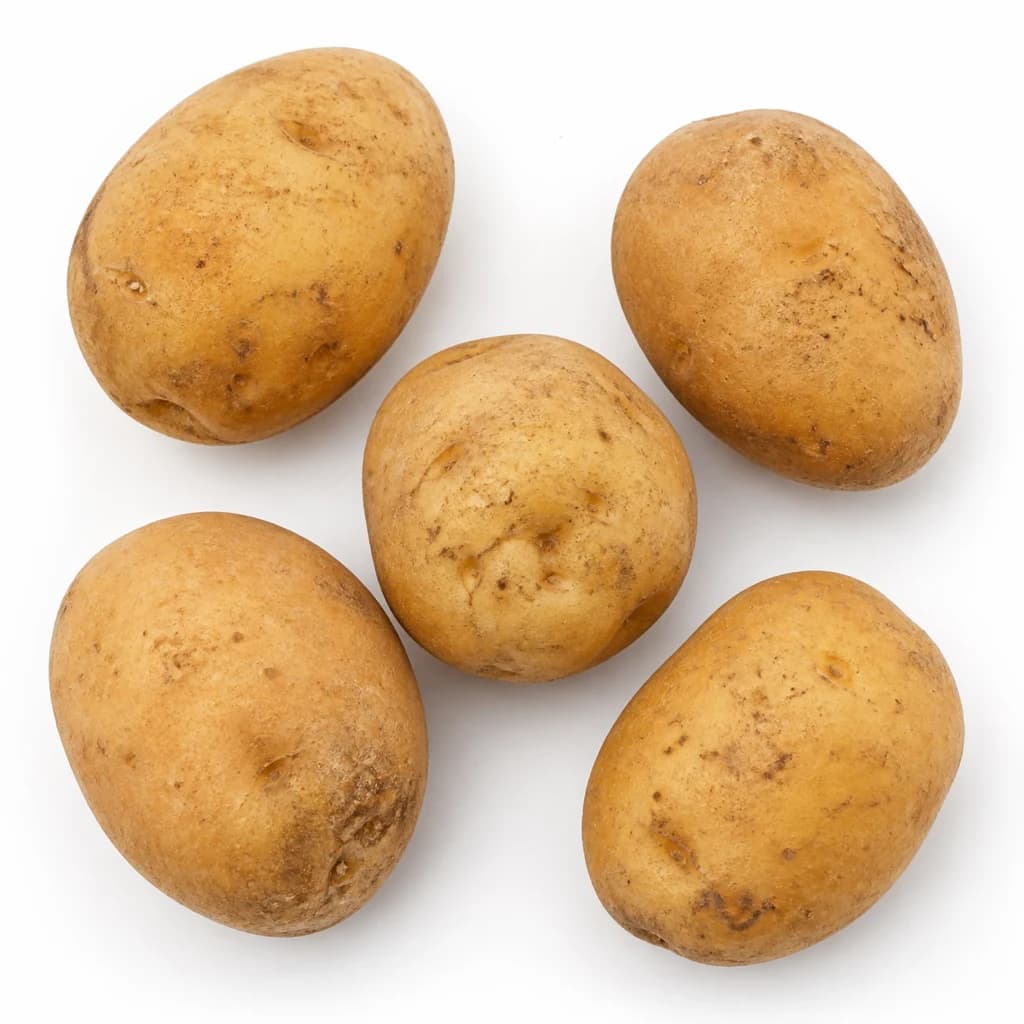
Potato
Humble, hearty staple — roast, mash, fry, or boil
Carrot
Sweet, crunchy root — raw, roasted, or the base of a sofrito
Cucumber
Cool, crisp, and watery — for salads, pickles, and tzatziki

Lettuce
Crisp leaves for salads, wraps, and a fresh crunch