Proteins
Karst Prosciutto (Kraški Pršut)
Slovenian dry-cured ham air-dried in the Karst bora wind, thinly sliced as charcuterie.
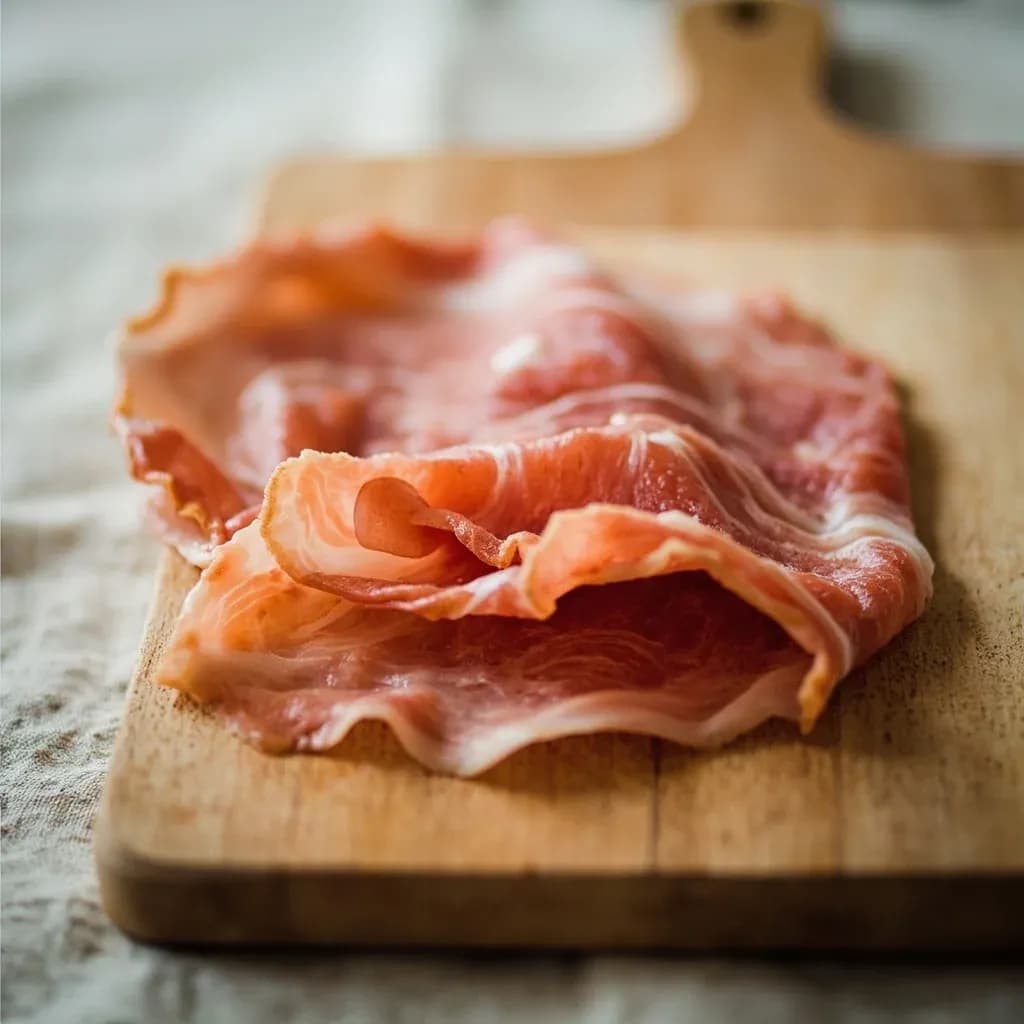
Kraški pršut is a Slovenian dry-cured ham from the Karst plateau, salted and air-dried in the cold bora wind for a year or more. The result is firm, intensely savory and lightly aromatic, sliced paper-thin. It is served as charcuterie with bread, olives and Karst wines.
Kraški pršut is Slovenia's answer to the great dry-cured hams of Europe — a PGI-protected specialty from the limestone Karst plateau (Kras) that straddles the border with Italy's Friuli-Venezia Giulia. Unlike the brine-injected industrial hams that dominate most supermarket shelves, Karst prosciutto is dry-salted by hand, sometimes with a traditional rub of garlic and rosemary, then hung in open-air attics called zaufi where the notorious bora wind (burja) does the slow, patient work of drawing out moisture over a minimum of twelve months. The bora is not merely a drying agent — it is the soul of this ham. Cold, bone-dry, and relentless, it desiccates the meat evenly and infuses it with a clean, almost alpine quality that distinguishes Kraški pršut from the sweeter, more humid-curred hams of Emilia-Romagna. The result is a ham with rose-pink lean, a firm golden-white fat cap, and a flavor profile that is notably less aggressively salty than Parma, with a pronounced nuttiness, faint sweetness, and a clean finish that lingers pleasantly on the palate.
The ham's character is inseparable from the Karst landscape itself. The plateau is a geological wonder of limestone and dolomite, riddled with caves and sinkholes, where cold air funnels down from the plateau to the coastal lowlands in violent, gusty bursts. Traditional producers have worked with this wind for generations, hanging their hams in attic lofts precisely positioned to catch the bora's flow. The fat cap is never completely trimmed — it shields the lean as it cures, slowly rendering into the meat over the long aging period. The finished ham loses roughly half its original weight, emerging denser, more concentrated, and deeply aromatic. When sliced paper-thin and served at room temperature, it is one of the most direct and satisfying expressions of terroir in the charcuterie world.
- Measured in
- g
- Storage
- Fridge
Types & varieties
PGI-certified, bora-wind dried in natural attics (zaufi), minimum 12-month cure; the benchmark style
Cured from the pork jowl rather than the hind leg; richer marbling and more intensely savory; not covered by the PGI spec but produced by some traditionalists
The Bora Wind and Terroir
The bora (burja in Slovene) is a katabatic wind — cold, dry air that funnels from the high Karst plateau down toward the Gulf of Trieste and the Friulian coast. It is most fierce in winter, when temperature differentials between the continental interior and the Adriatic are at their sharpest. The wind's humidity typically drops to near-zero during these episodes, and this desiccating power is what makes the Karst uniquely suited to dry-curing. No other cured ham in Europe relies so directly on a named wind for its character. Producers speak of 'good bora' and 'bad bora' years, and the ham's flavor shifts subtly with the wind's frequency and intensity during the curing months.
- Traditional zaufi (curing attics) are positioned to capture the direct flow of the bora through high-facing windows or vents
- Humidity in the attics drops sharply during bora episodes, accelerating surface drying and contributing to the ham's characteristic dense texture
- Some producers supplement natural bora drying with controlled refrigeration in extremely humid summers, though this is considered a concession to climate variability rather than tradition
Trimming and Shaping
After the long cure, the fat cap is carefully trimmed by hand to reveal the ham's characteristic shape — a teardrop or pear form with the shank bone left clean and exposed as a handle for slicing by hand. The surface fat is reduced but never eliminated; a thin protective layer remains over the lean to prevent it from drying out completely and to continue flavoring the interior as it ages.
- The shank bone is cleaned and sometimes bleached to a brilliant white for presentation
- Professional slicers use a long, flexible knife called a falkra (or prosciutto knife) to produce the characteristic paper-thin sheets
- Avoiding mechanical slicers at service preserves the warmth and slight oxidation that hand-slicing imparts to the lean
Common uses
Tips & pitfalls
- Bring Kraški pršut to room temperature for at least 20–30 minutes before slicing or serving — cold prosciutto has waxy, unpalatable fat and muted aromatics
- Store whole prosciutto legs hanging in a cool, dry, dark place (8–12°C) for up to several months; cover the cut face with a layer of clarified fat or a damp cloth wrapped in cheesecloth to prevent it from drying out
- Slice only what you will eat immediately — once cut, the ham begins to oxidize and lose moisture rapidly
- Press the fat cap lightly with a finger before buying; it should be firm but yielding, not hard or crumbling, which indicates over-drying
- Never pair Kraški pršut straight from the refrigerator with chilled sparkling wine — the cold numbs the palate and masks the ham's nuanced flavor
- Avoid prosciutto that smells of ammonia or has a dull, brownish-gray lean color — these are signs of age beyond peak quality or improper storage
- When larding meats, fold the prosciutto so the fat cap faces inward against the lean protein, protecting it during roasting
- Common mistake: serving prosciutto on a cold ceramic plate straight from the fridge — always use room-temperature plates and allow the ham to rest uncovered for 10 minutes before serving
Nutrition
Energy
1100 kJ · per 100 g
Where the calories come from
Protein
16.3g
33% DV
Carbs
1.8g
1% DV
Fat
20.7g
27% DV
Fiber
0g
0% DV
Sugars
0g
of which
Sodium
1245mg
54% DV
Source · USDA FoodData Central · approx. Ham, minced
View on FDC →In the shops
Matched grocery products
No matched grocery products for Karst Prosciutto (Kraški Pršut) yet.
Good to know
- Origin
- Karst region (Kras), southwestern Slovenia, near the Italian border
- Protected Status
- Protected Geographical Indication (PGI) under EU law; Kraški pršut is a registered designation
- Primary Curing Agent
- Cold, dry bora wind (burja) — a katabatic wind from the Karst plateau that desiccates the ham slowly over many months
- Cure Time
- Typically 12–24 months, depending on starting weight and desired intensity of flavor
- Starting Weight
- Hams traditionally weigh 10–14 kg before trimming and curing begins
- Finished Weight
- Approximately 5–8 kg after trimming and moisture loss during aging — roughly a 40–50% reduction
- Curing Salt
- Sea salt only; no artificial nitrates or nitrites required by the PGI specification
- Flavor Profile
- Less aggressively salty than Parma; nutty, faintly sweet, with a clean, dry finish and no cloying sweetness
- Color
- Rose-pink lean with fine marbling; firm, golden-white fat cap that remains intact through aging
- Typical Service
- Paper-thin hand-sliced sheets at room temperature, fanned on a plate, uncooked
Substitutes
- San Daniele prosciutto — Italian equivalent from Friuli-Venezia Giulia; slightly sweeter and softer in texture due to higher humidity curing; freely interchangeable in most raw applications, though San Daniele has a more rounded, less austere finish
- Presunto de Huelva — Spanish cured ham from the southwest (Andalusia); more intensely cured, gamier, and saltier with deeper umami; use in smaller amounts as a direct substitute is not recommended in raw applications
- Domestic dry-cured country ham (US/UK) — American or British country ham; generally saltier and less refined in texture with coarser grain; acceptable as a substitute in cooked applications where the ham will be washed or simmered before use
Pairs with
Also called
Kraški Pršut · Karst Ham
Related
Egg
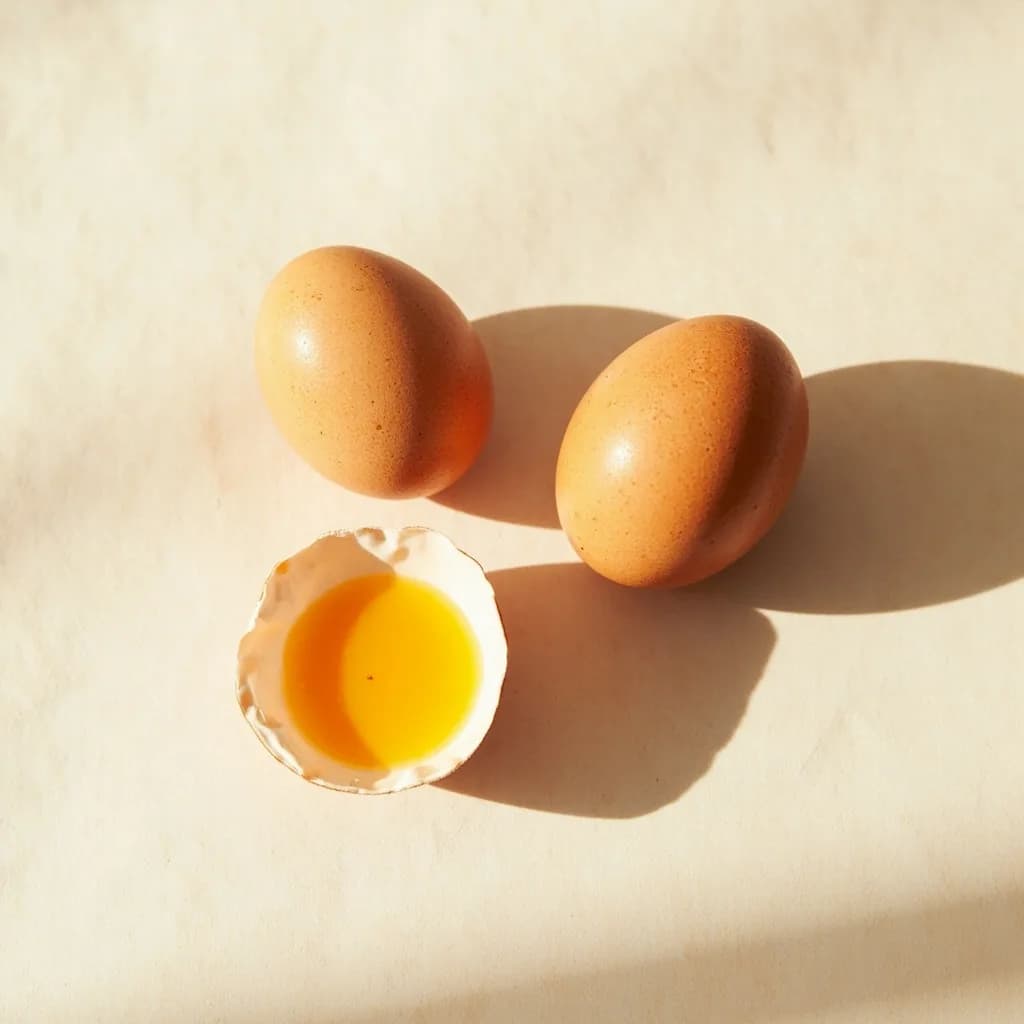
The kitchen's everything ingredient — bind, leaven, enrich, or fry
Chicken Breast
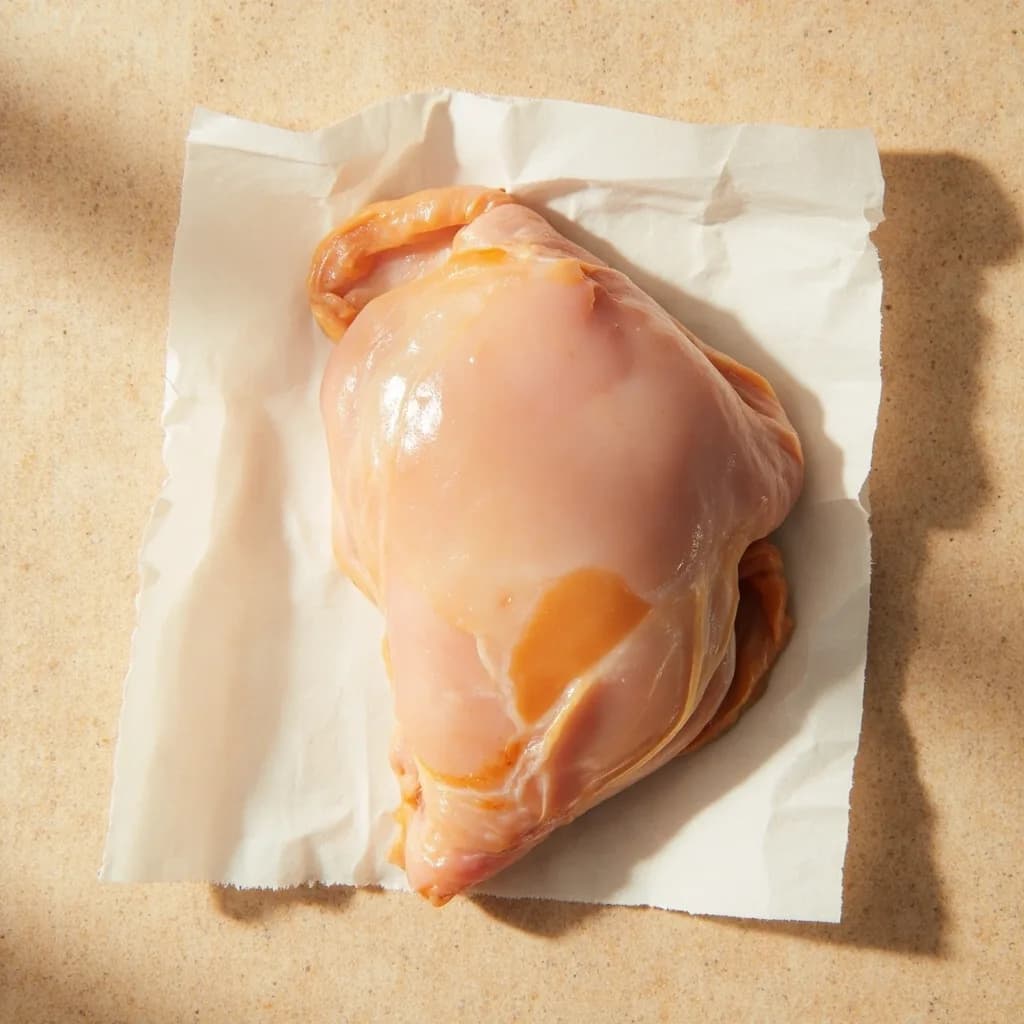
Lean, quick-cooking white meat for everyday dinners

Ground Beef
Versatile minced beef for burgers, ragù, tacos, and meatballs
Pork Loin
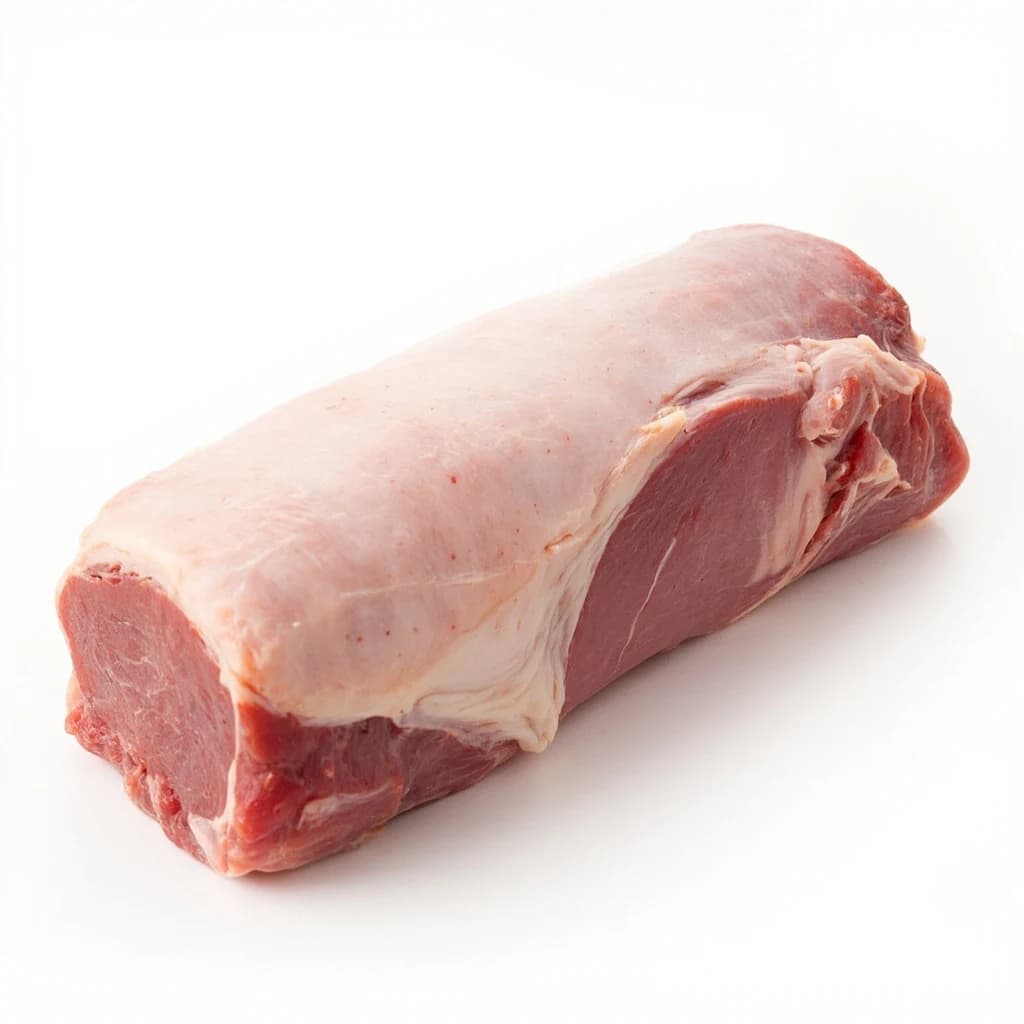
Lean, tender roasting cut that stays juicy with care
Salmon
Rich, rosy fish that roasts, grills, or cures beautifully

Egg White
Pure protein that whips to airy peaks for meringue and more
Egg Yolk
Rich, golden yolk for custards, mayonnaise, and pasta

Quail Egg
Tiny, speckled eggs for garnishing and elegant bites