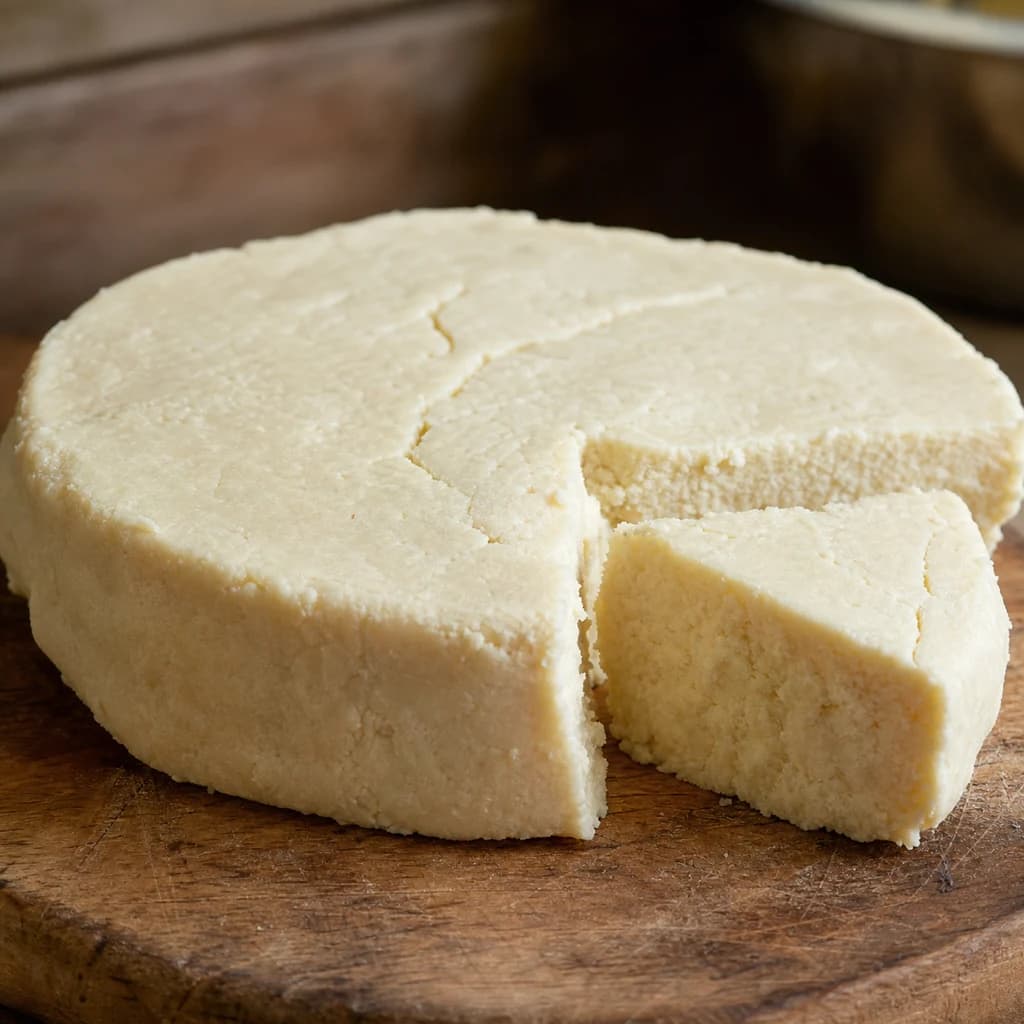
Natural form
A block of freshly made khoya rests on a wooden board, pale ivory and dense.
Shows khoya's distinctive solid block form, matte ivory color, and dense compressed texture so readers recognize it in markets or recipes.
Dairy & Eggs
Khoya (Mawa)
Milk reduced to dense solids by simmering; the rich base for many Indian sweets like barfi and gulab jamun.
Khoya, also called mawa, is whole milk slowly simmered and reduced until most of the water evaporates, leaving dense milk solids. It is the foundation of countless Indian sweets, including barfi, gulab jamun, and peda. Its concentrated, slightly caramelized milkiness gives these confections their richness.
Khoya (also called mawa in Maharashtra and Gujarat, and khoa in Bengal and Nepal) is whole milk reduced to a dense, malleable solid by sustained simmering. The process drives off most of the water, concentrating milk proteins, lactose, and fat into a pliable base that ranges from dry and granular to soft and spreadable depending on how far the cooking progresses. Its flavor is deeply caramelized and quintessentially milky — a result of the Maillard reaction and lactose caramelization that occur during the long, slow cook. This makes khoya far more than a thickener; it is a flavor architect that defines the character of dozens of iconic South Asian sweets.
The fat content of khoya — which can range from 12% to 40% depending on whether buffalo or cow milk is used — determines its behavior in recipes. High-fat, firm khoya holds its shape under heat and is essential for frying; softer khoya spreads smoothly and binds into barfi and peda without crumbling. Commercial khoya is sold in three texture grades, but in many households it is still made fresh because the fat content and freshness of store-bought varieties can vary widely. The single best indicator of quality is smell: properly made khoya carries a clean, sweet note of heated milk; stale khoya smells sour or waxy, and no amount of cooking will correct it.
Regional traditions have shaped distinct khoya identities. North Indian mithai relies on khoya for gulab jamun, barfi, and halwa. Bengali and Mithila sweet-making incorporate khoya or its close relative chhena into sandesh, rasgulla, and cham cham. Awadhi and Delhi traditions fold charoli and pistachios into khoya preparations. Understanding which khoya type to reach for — and how to work with its particular moisture and fat balance — separates competent results from exceptional ones.
- Measured in
- g
- Storage
- Fridge
Allergens
Types & varieties
Firm, dry, and granular. Cooked to near-complete dryness. Essential for frying sweets like gulab jamun and balushahi — it holds its shape and does not absorb excess oil. Breaks cleanly when pressed.
Soft with a visible grain-like texture from residual moisture. Named for its 'seeded' (dana) feel. The preferred choice for rolling sweets like peda and for folding into barfi mixtures.
Soft, moist, and spreadable. Retains more moisture than the other two grades. Used for smooth barfi, sandesh, and rasgulla variants. Spoils fastest of the three — use within two to three days.
Choosing the right khoya for the job
Matching khoya type to preparation is not optional — it directly determines the outcome. The three commercial grades serve specific roles, and reaching for the wrong one will cause frustration at every subsequent step.
- For frying (gulab jamun, balushahi, motichoor laddu): use Batti/Pindi khoya. Its low moisture content means it holds shape in hot oil and does not splatter or absorb excess fat.
- For rolling and shaping (peda, rolled barfi, shaped ladoo): use Danedar khoya. The slight grain and retained moisture make it cohesive under pressure yet tender when bitten.
- For spreading and molding (moist barfi, sandesh, layered desserts): use Chhena khoya or soft-grade khoya. The high moisture content yields a smooth, lickable paste that sets into clean slices.
- If a recipe simply says 'khoya' without specifying type, Danedar is the safest default for most North Indian preparations.
Quality and freshness
Commercial khoya varies enormously in fat content and freshness. Fat content is not always labeled. Use sensory evaluation to assess what you have.
- Fresh khoya smells clean and milky, with a distinct caramelized note. If it smells sour, tallow-like, or flat, it is stale regardless of the printed date.
- Press a small piece firmly. Fresh khoya compresses slightly and holds together. Stale khoya crumbles under pressure and feels dry and chalky.
- Avoid khoya with a mottled yellow-brown color throughout — this indicates uneven cooking during production and will taste bitter when incorporated into sweets.
- If buying from a sweet shop rather than a packaged brand, ask when it was made. Most quality mithai shops make khoya in-house on a daily or every-other-day cycle.
Common uses
Tips & pitfalls
- Stir continuously and scrape every corner of the pot — burning khoya imparts a bitter, scorched flavor that ruins the entire batch
- Use heavy-bottomed, broad-surface cookware — maximum pan exposure to heat reduces cooking time from 3+ hours to 1.5–2 hours
- Control heat: medium-low allows even moisture evaporation; high heat creates uneven texture with hard burnt spots and a mottled color
- For smoother texture in sweets, knead khoya by hand for 3–5 minutes before use to break down any coarse lumps
- Buffalo milk produces whiter, richer khoya; cow milk yields a slightly more golden result — choose based on the visual and flavor outcome you want
- Do not substitute fresh khoya 1:1 with dry milk powder in recipes — fat and moisture content differ significantly and will alter both texture and caramelized flavor
- If khoya becomes too dry and crumbly during storage, grate it finely and heat briefly with 1–2 tablespoons of milk to restore workability
- Test doneness by pressing a small portion between fingers — it should hold shape firmly and feel slightly grainy, not wet or sticky
Nutrition
Nutrition
No USDA FoodData Central match for Khoya (Mawa) yet. We surface a per-100 g profile once a generic whole-food entry is matched and verified.
In the shops
Matched grocery products
No matched grocery products for Khoya (Mawa) yet.
Good to know
- Made from
- Whole cow or buffalo milk, simmered until most water evaporates
- Yield
- Approximately 1 kg khoya from 8–10 liters whole milk (roughly 10–12% yield)
- Fat content
- 12–40% depending on type (buffalo milk yields higher fat)
- Shelf life
- 5–7 days refrigerated in airtight container; up to 3 months frozen
- Seasonal peak
- October–March when milk supply is most abundant; year-round in modern dairy production
- Common names
- Khoya (Hindi/North India), Mawa (Maharashtra, Gujarat), Khoa (Bengal, Nepal, Bangladesh)
- Key equipment
- Heavy-bottomed karahi or broad pot; wooden spoon or khurchan stick for continuous scraping
- Color guide
- White to pale yellow; deeper color indicates longer cooking or higher heat, which can introduce bitter notes
Substitutes
- Ricotta cheese (drained overnight) — Best textural substitute. Simmer with a little milk to reduce moisture, then use as 1:1 replacement. Does not replicate the caramelized milk flavor but mimics texture well for barfi and peda.
- Evaporated milk + milk powder paste — Simmer 1 cup evaporated milk with 3 tablespoons milk powder over low heat until thick. Cool before using. Closer to khoya's flavor than ricotta but requires careful cooking to avoid graininess.
- Condensed milk + milk powder — Mix 1 cup sweetened condensed milk with 2–3 tablespoons milk powder, heat gently until cohesive. Use in sweet recipes where the added sugar is adjustable.
- Paneer (crumbled and cooked down) — A distant substitute. Crumble 250g fresh paneer, cook with 2 tablespoons milk over low heat, stirring until a cohesive paste forms. Works in texture-driven applications only.
Pairs with
Also called
Mawa · Khoa · Reduced Milk Solids
Appears in these dishes
Related

Whole Milk
Rich, full-fat milk for drinking, coffee, sauces, and baking
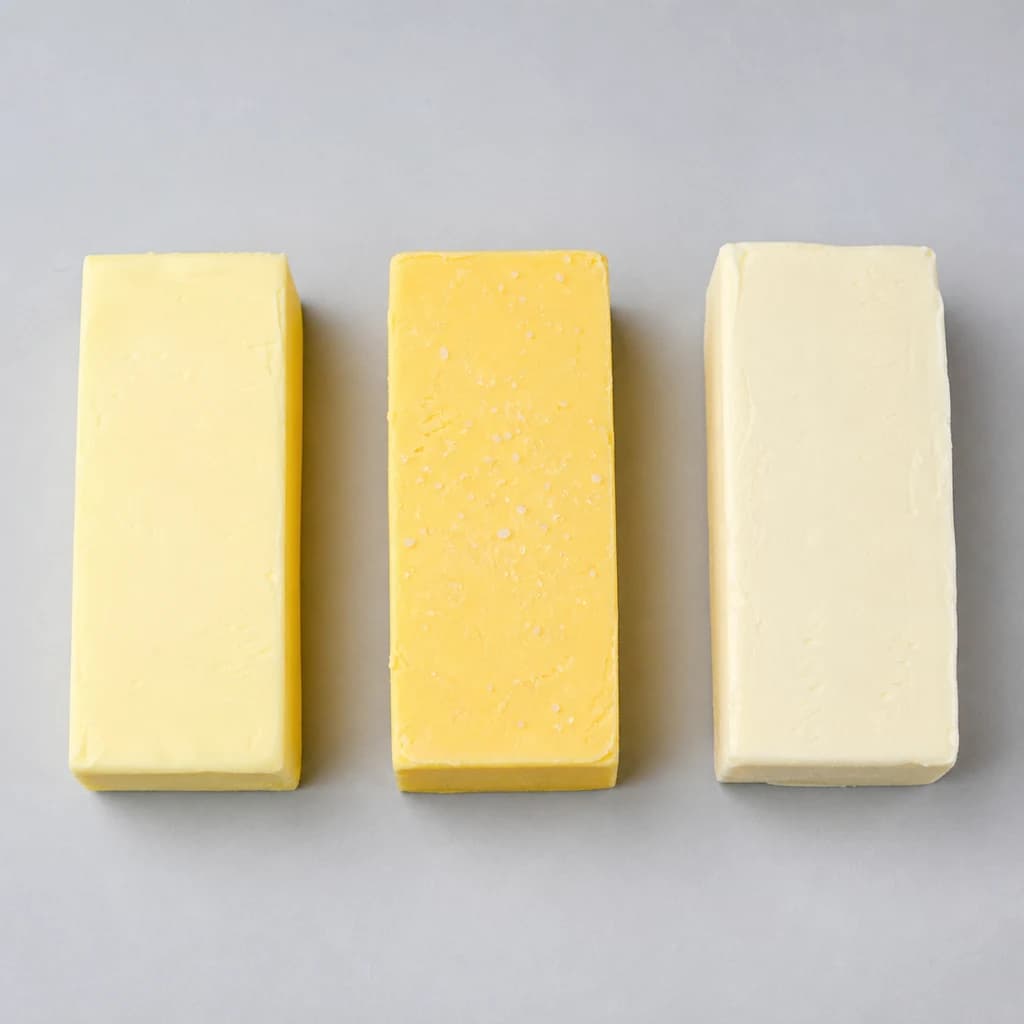
Butter
Golden fat for searing, baking, and finishing a sauce
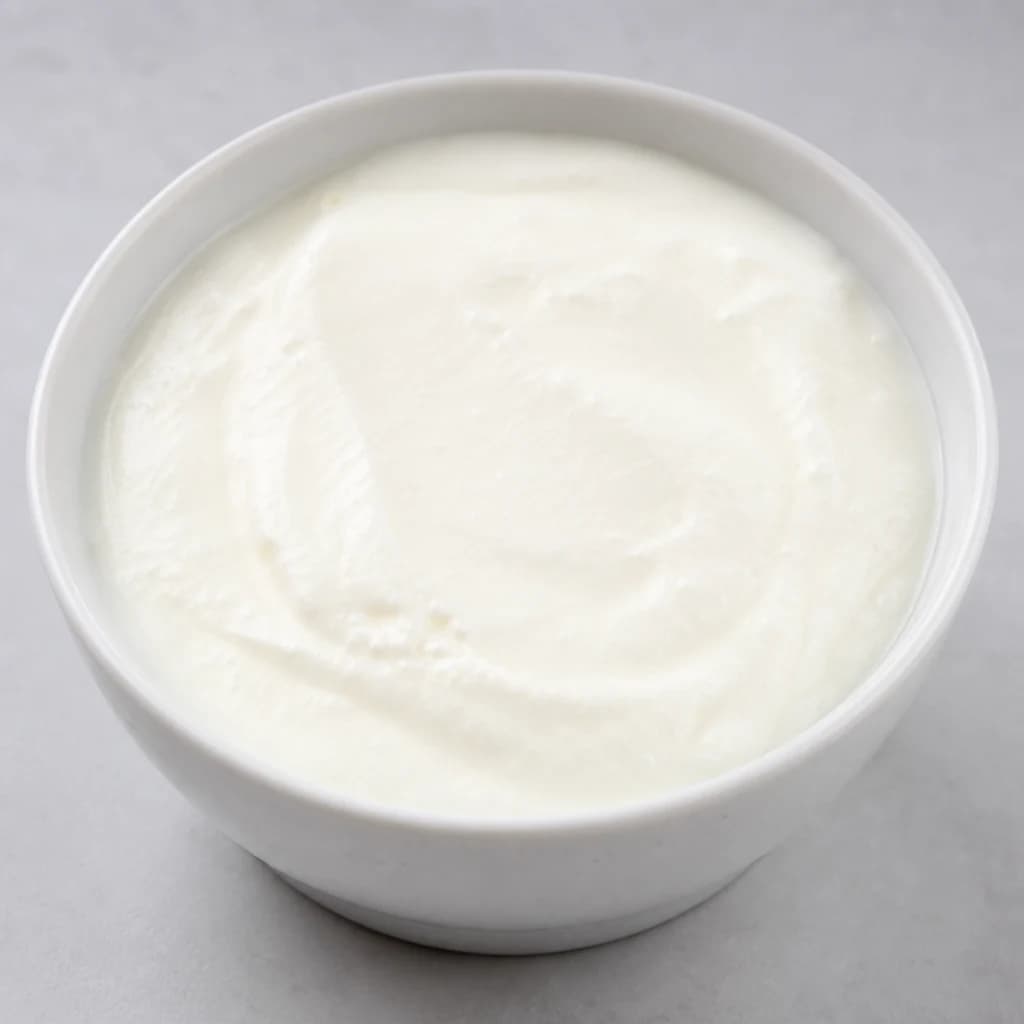
Yogurt
Tangy, creamy culture for breakfast, sauces, and marinades
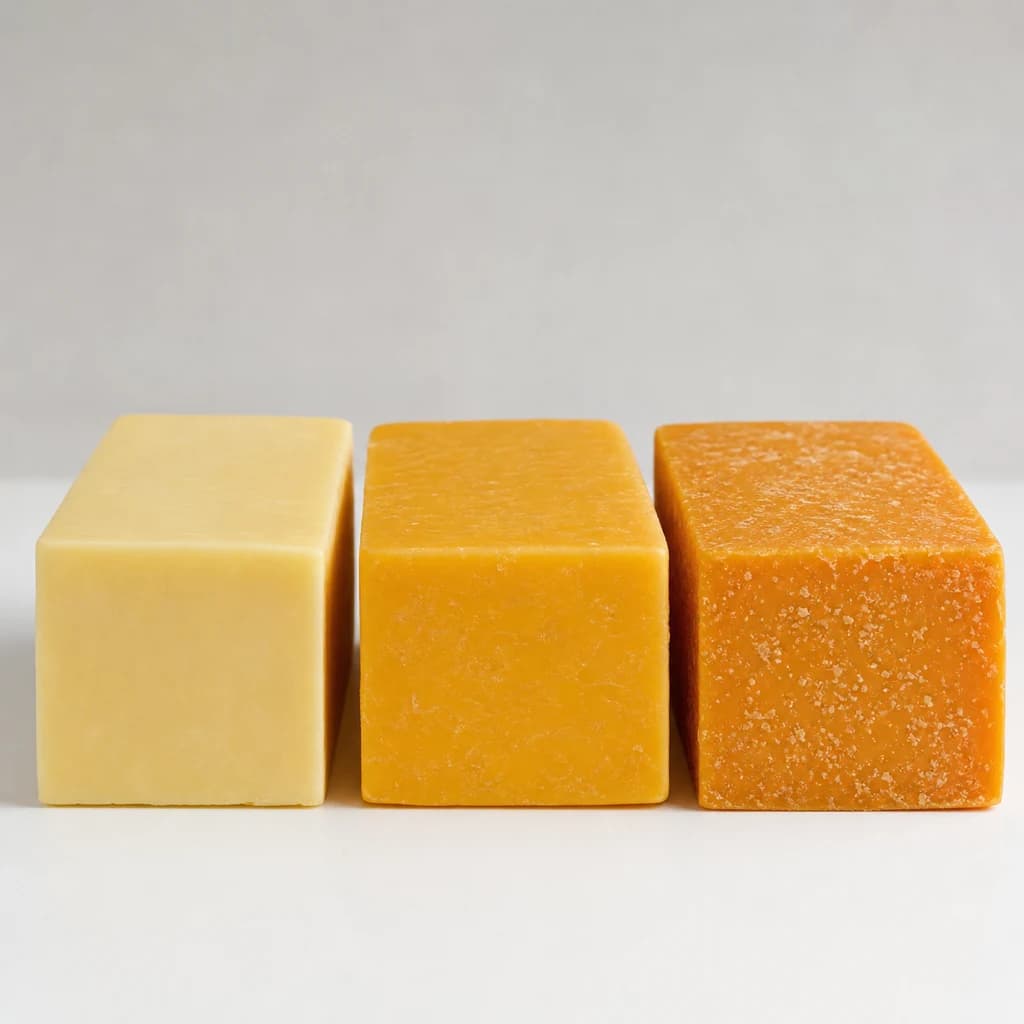
Cheddar Cheese
Sharp, melty cheese for sandwiches, gratins, and grating
Skim Milk
Fat-free milk for lighter drinking, coffee, and cooking
Heavy Cream
Rich cream that whips, enriches sauces, and sets ganache

Sour Cream
Tangy, thick cream for dolloping, baking, and dips
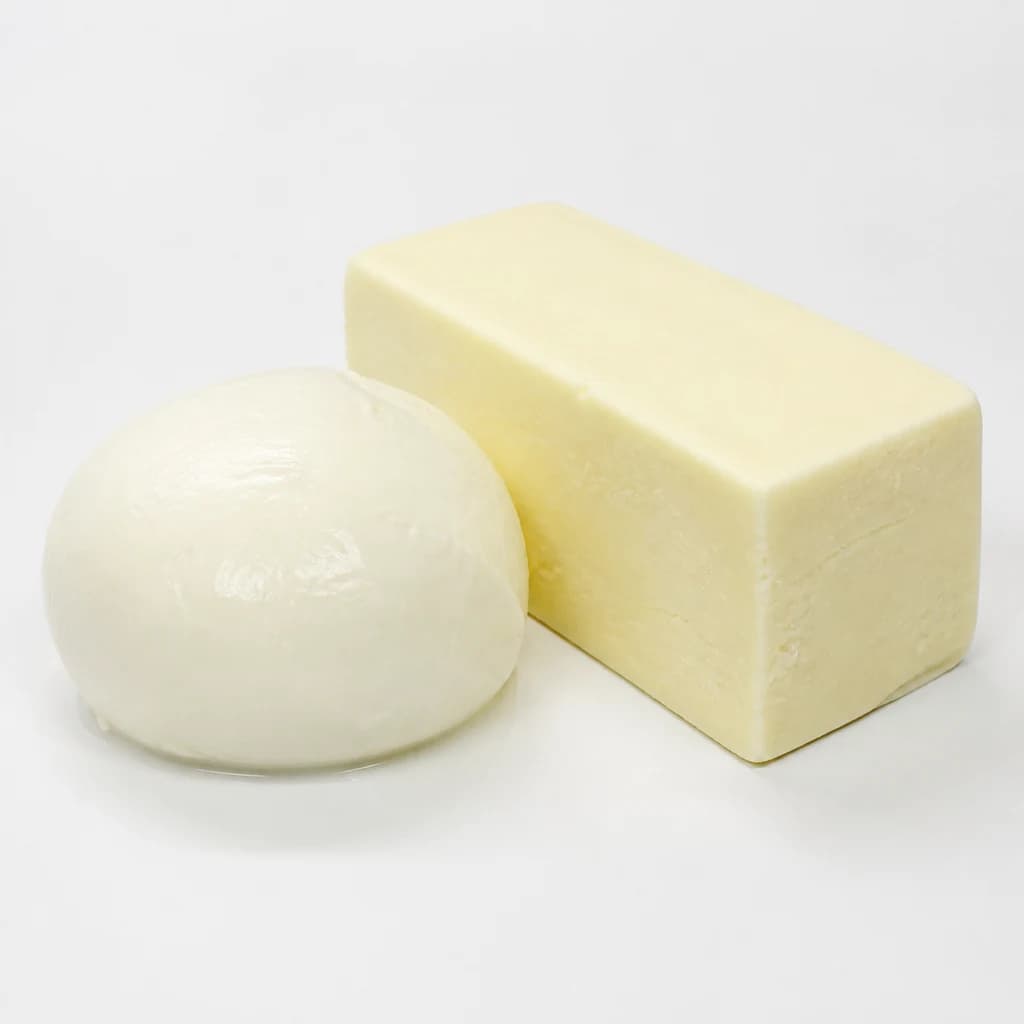
Mozzarella
Soft, milky cheese that melts into stretchy pizza pulls