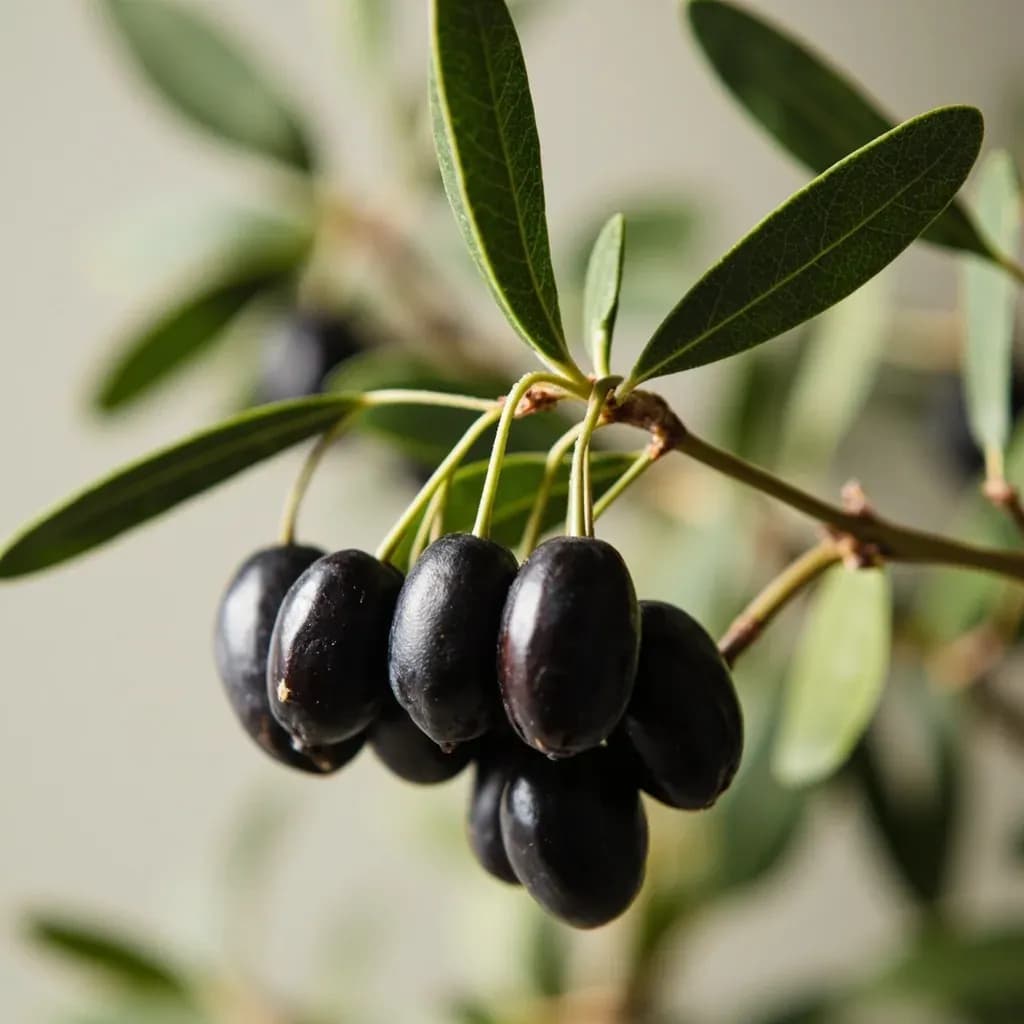
Produce
Leccino Olive
Italian olive for mild, balanced oil and gentle, sweet table olives.
Leccino is a widely grown Italian olive variety used for both oil and table olives. It produces a mild, well-balanced oil that is fruity and sweet with a soft, almost buttery character and little bitterness. As a table olive it is gentle and rounded, often blended with sharper varieties.
Leccino is a major Italian olive cultivar, originating in Tuscany where it has been documented since at least the sixteenth century. It is the workhorse of Italian olive cultivation—vigorous, reliably productive, and relatively cold-tolerant for an Italian variety, which explains its spread throughout Tuscany, Umbria, and Lazio, and its successful establishment in California and other Mediterranean-climate regions worldwide. The olive itself is medium to large, elliptical to ovoid, ripening from green to black.
What defines Leccino is its mildness. The oil is delicate and fruity with notably low bitterness and pungency, presenting as golden yellow with green notes when fresh. This mildness is both the variety's greatest asset and its limitation: Leccino oil is rarely used alone in premium Tuscan blends because it lacks the assertive character of more pungent varieties. Instead, it serves as the gentle foundation—the body and roundness—upon which varieties like Frantoio build their complexity and Pendolino contributes aromatics. As a table olive, Leccino is honest but unremarkable: it cures well, yields generously, and accepts brine or dry-curing without protest, but it will never be mistaken for a Kalamata or a Castelvetrano in terms of distinctive flavor. Understanding Leccino on its own terms is essential: evaluate it for balance and fruit, not for the peppery bite or aggressive bitterness you might seek in other oils.
- Measured in
- g
- Storage
- Pantry
Types & varieties
Distinct type from the Florence area; considered by some ampelographers to be a regional variation rather than a separate variety
A clonal selection noted for larger fruit size
Leccino in the California Context
Leccino arrived in California in the 1880s and has since become a significant portion of that state's olive oil production, particularly in coastal and inland valley groves suited to its chill requirements. California Leccino oil tends toward the milder, fruitier end of the spectrum, often with slightly more pronounced sweetness than its Tuscan counterparts. Occasionally, California product is mislabeled as 'Leccino F,' a nomenclature error to watch for when sourcing.
- California Leccino is typically harvested earlier than Italian production to preserve aromatics
- Cold-tolerance makes Leccino suitable for marginal olive-growing climates where other Italian varieties struggle
Common uses
Tips & pitfalls
- Harvest Leccino early (green to purple) for brighter, more aromatic oil; wait for full black ripening only if seeking extreme mildness
- Process olives within 24–48 hours of harvest to prevent oxidation and preserve delicate fruitiness
- For table olives, cure in brine at 6–8% salt concentration for 3–6 weeks; taste frequently as Leccino can become bland if over-cured
- Do not expect Leccino oil to deliver the peppery bite of Robusto or the bitterness of Frantoio; evaluate it on its own mild terms
- Store oil in dark bottles, away from heat; even stable oils like Leccino degrade within 12–18 months of opening
- When blending, use Leccino to round out sharper varieties rather than expecting it to carry the blend alone
- Plant Leccino near Pendolino or Frantoio for optimal pollination; it is partially self-sterile and sets better fruit with companions
Nutrition
Energy
983 kJ · per 100 g
Where the calories come from
Protein
11.8g
24% DV
Carbs
9.2g
3% DV
Fat
16.5g
21% DV
Fiber
0g
0% DV
Sugars
0g
of which
Sodium
964mg
42% DV
Source · USDA FoodData Central · approx. Olive loaf, pork
View on FDC →In the shops
Matched grocery products
No matched grocery products for Leccino Olive yet.
Good to know
- Origin
- Tuscany, Italy (documented since at least the 16th century)
- Primary Regions
- Tuscany, Umbria, Lazio; widely grown in California and other Mediterranean-climate areas worldwide
- Harvest Season
- October to December, depending on intended use
- Fruit Size
- Medium to large (3–5 g per olive)
- Fruit Shape
- Elliptical to ovoid
- Ripening Color
- Green to black; tends toward black when fully ripe
- Primary Uses
- Olive oil production (primary), table olives (secondary)
- Oil Character
- Mild, delicate, fruity; low bitterness and pungency; golden yellow with green notes when fresh
- Tree Vigor
- Vigorous and productive; relatively cold-tolerant for an Italian variety
- Flowering
- Late season; partially self-sterile; benefits from pollinators like Pendolino
Substitutes
- Frantoio — Sharper, more bitter; not a direct flavor match but the other classic Tuscan oil variety
- Pendolino — Very mild, low-yielding; used more as a pollinator than a primary oil source
- Arbequina — Spanish variety; similarly mild and fruity, slightly more floral
- Maurino — Tuscan variety with comparable mildness
Pairs with
Related

Tomato
Juicy, sun-sweet fruit for sauces, salads, and slow-cooked depth

Yellow Onion
The aromatic backbone of soups, sofritos, and braises

Garlic
Pungent cloves that perfume nearly every savory dish

Lemon
Bright, acidic citrus that wakes up almost any dish

Potato
Humble, hearty staple — roast, mash, fry, or boil

Carrot
Sweet, crunchy root — raw, roasted, or the base of a sofrito

Cucumber
Cool, crisp, and watery — for salads, pickles, and tzatziki

Lettuce
Crisp leaves for salads, wraps, and a fresh crunch