Natural form
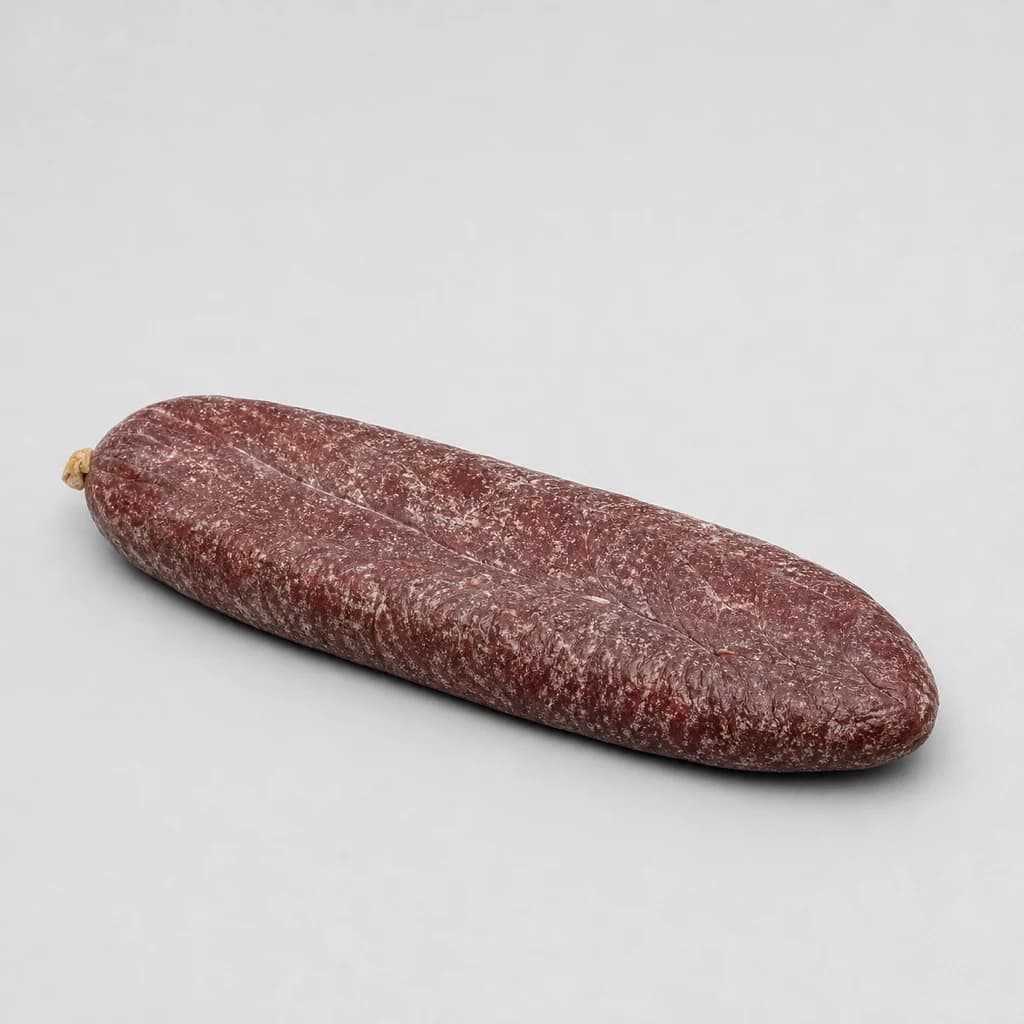
Whole lukanka showing its characteristic flattened cylindrical shape and dark cured exterior.
Shows the defining visual trait of lukanka — the pressed, flattened form that distinguishes it from round sausages — so readers can identify it on sight.
Proteins
Lukanka (Cured Sausage)
Flattened Bulgarian dry-cured sausage of pork and beef spiced with cumin and black pepper.
Lukanka is a semi-dried Bulgarian sausage made from pork, beef and sometimes veal, seasoned with cumin, black pepper and savory. It is pressed into a flattened cylindrical shape during drying and eaten thinly sliced as a meze. The flavor is rich, spicy and slightly tangy from fermentation.
Lukanka is one of Bulgaria's most revered charcuterie traditions—a dry-cured sausage made from pork and beef, distinguished by its characteristically flattened shape achieved through pressing during the aging process. This is not incidental; the pressing compacts the meat, accelerates moisture loss, and creates the dense, intensely flavored texture that slices cleanly into paper-thin rounds. The spice profile centers on cumin and black pepper, which develop complex, aromatic notes through slow curing of two to four months. The sausage is never cooked—curing alone transforms the raw meat into a finished product ready to slice and serve. The white mold that coats the exterior casing is the hallmark of proper aging, analogous to fine French saucisson, and signals a product that has developed its flavors correctly. Elhovo lukanka holds Bulgarian protected geographical indication status, establishing it as the benchmark against which all others are measured. The sausage plays a central role in Bulgarian hospitality culture, typically appearing on meze platters alongside bread, cheese, and spirits as an expression of welcome and abundance.
- Measured in
- g
- Storage
- Fridge
Types & varieties
The benchmark variety with protected geographical indication status from Yambol Province; distinctive flattened shape and well-balanced intense spice profile with prominent cumin
Regional variant from southern Bulgaria; similar production method but often milder spice intensity and slightly different seasoning proportions
Household production throughout Bulgaria; family recipes produce significant variation in meat ratios, spice levels, and curing time
Selecting Quality Lukanka
When purchasing lukanka, treat it as you would any aged charcuterie—visual and tactile inspection matters. The sausage should feel firm throughout when gently squeezed, with no soft spots that indicate incomplete curing or moisture imbalance. The exterior may carry white mold, which is desirable and harmless; wipe gently with a vinegar-dampened cloth if appearance concerns you, but never scrub it off entirely as it indicates proper aging. Avoid any sausage showing sliminess, discoloration, or an off-odor that strays from the expected meaty, spicy aroma. Uniform flattening is expected; irregular compression suggests uneven curing.
- Firm texture throughout with no soft spots
- White mold present indicates proper aging—do not remove entirely
- Avoid sliminess or any off-odor beyond the expected spicy meat scent
- Uniform flattened shape signals consistent curing
Serving and Preparing for the Table
Lukanka is a ready-to-eat product that requires no cooking. The critical step before serving is allowing the sausage to come to room temperature—typically 15 to 20 minutes after refrigeration. Cold lukanka constrains the aromatic oils and the fat won't release properly, diminishing both flavor and aroma. Use a sharp, long knife for slicing; a deli slicer produces paper-thin, translucent rounds that are ideal for meze presentations, while a steady hand with a sharp chef's knife achieves acceptable results. The slices should be nearly translucent, allowing light through—this thinness is essential for texture and flavor release.
- Bring to room temperature 15–20 minutes before slicing
- Thin, even slicing releases essential oils and achieves proper texture
- A deli slicer or sharp long knife produces best results
- Slices should be nearly translucent when held to light
Common uses
Tips & pitfalls
- Bring lukanka to room temperature 15–20 minutes before slicing for optimal aroma and fat release
- Always use a sharp knife or deli slicer; dull tools crush rather than slice, muddying the texture
- If mold is present, wipe gently with a vinegar-dampened cloth—never remove it entirely as it indicates proper curing
- Store sliced pieces between paper towels in a sealed container in the refrigerator to prevent excess drying
- Look for uniform flattening and a firm, dry feel when purchasing; reject any with sliminess or off-odor
- The cumin presence should be pronounced—a weak cumin flavor indicates inferior product or improper aging
- Once sliced, use within a few weeks for best quality; whole sausages keep significantly longer
Nutrition
Energy
649 kJ · per 100 g
Where the calories come from
Protein
18.8g
38% DV
Carbs
0.5g
0% DV
Fat
8.1g
10% DV
Fiber
0g
0% DV
Sugars
0g
of which
Sodium
593mg
26% DV
Source · USDA FoodData Central · approx. Sausage, turkey, fresh, raw
View on FDC →In the shops
Matched grocery products
No matched grocery products for Lukanka (Cured Sausage) yet.
Good to know
- Origin
- Bulgaria, specifically associated with the town of Elhovo in Yambol Province; Elhovo lukanka holds protected geographical indication status
- Primary Meats
- Pork and beef in traditional ratios that vary by producer; more beef-heavy versions exist in homemade production
- Key Spices
- Cumin (dominant), black pepper, salt, and curing salts (nitrates/nitrites)
- Texture
- Firm, dense, and dry-cured; designed to slice paper-thin without crumbling
- Shape
- Distinctively flattened—the defining visual characteristic created by pressing during curing
- Casing & Aging
- Natural sausage casing with characteristic white edible mold indicating proper maturation
- Shelf Life
- Months when whole and stored properly; weeks once sliced; refrigeration of cut pieces extends usability
- Storage
- Cool, dry, breathable storage for whole sausage; refrigeration after slicing with paper-towel wrapping to prevent drying
- Appearance
- Deep reddish-brown interior when sliced; firm exterior that may carry white mold
Substitutes
- Cured Saucisson Sec (France) — Dry-cured pork-beef sausage with comparable texture, density, and intensity; lacks the cumin character but works well in the same applications
- Italian Soppressata — Dry-cured salami offering similar sliceable texture and meze utility; different spice profile but functionally interchangeable
- Chorizo Picante (Spain) — Cured pork sausage with paprika dominance; different flavor profile but similar serving style and textural qualities as a meze component
Pairs with
Also called
Bulgarian Cured Sausage
Related

Egg
The kitchen's everything ingredient — bind, leaven, enrich, or fry
Chicken Breast
Lean, quick-cooking white meat for everyday dinners

Ground Beef
Versatile minced beef for burgers, ragù, tacos, and meatballs
Pork Loin
Lean, tender roasting cut that stays juicy with care
Salmon
Rich, rosy fish that roasts, grills, or cures beautifully

Egg White
Pure protein that whips to airy peaks for meringue and more

Egg Yolk
Rich, golden yolk for custards, mayonnaise, and pasta

Quail Egg
Tiny, speckled eggs for garnishing and elegant bites