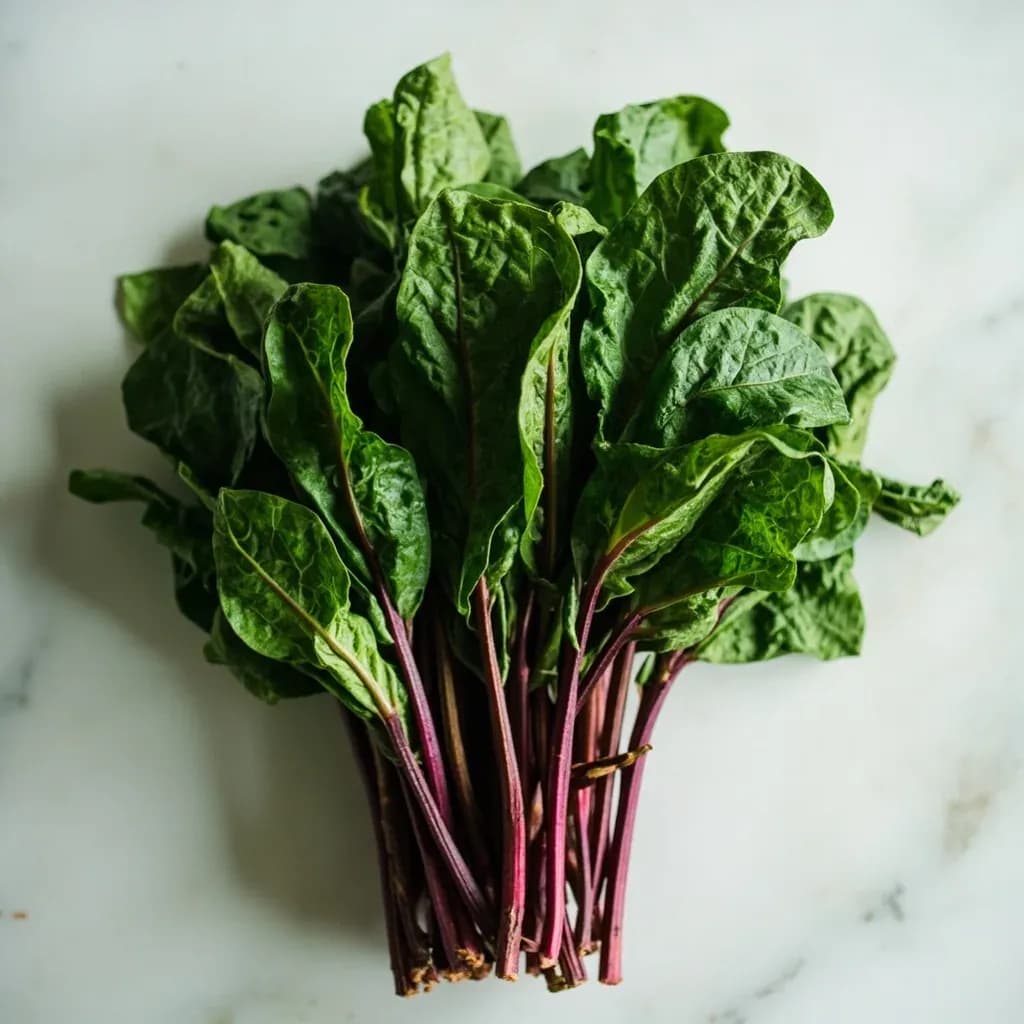
Produce
Malabar Spinach
Thick-leaved tropical climbing green, slightly mucilaginous, for curries and stir-fries.
Malabar spinach is a heat-loving climbing vine with thick, glossy, succulent leaves used as a leafy green in South and Southeast Asian cooking. When cooked it has a mild, earthy flavor and a slightly mucilaginous quality that thickens curries, dals, and stir-fries. It thrives in hot climates where true spinach struggles, making it a popular warm-weather substitute.
Malabar spinach—Basella alba or Basella rubra—is a climbing tropical green from the Basellaceae family, native to the Indian subcontinent and Southeast Asia. Despite its name, it bears no botanical relation to true spinach (Spinacia oleracea). What makes it invaluable in the kitchen is its heat tolerance: while true spinach turns bitter and bolts above 75°F, Basella thrives in summer warmth, making it the reliable green for hot-climate cooks and markets. Its thick, fleshy leaves and succulent stems hold their structure through cooking in ways true spinach cannot, and the plant climbs 6–10 feet when given support, producing abundantly through warm months.
The defining trait of Malabar spinach is the mucilaginous slime it releases when cooked—a gelatinous, viscous quality prized in many Asian cuisines as a natural thickener and textural element, much like okra. This slime develops from the leaf's polysaccharides and becomes more pronounced with longer cooking and in older leaves. The flavor is mild and slightly earthy, less acidic than true spinach, which means it takes on seasonings well without dominating a dish.
The red-stemmed variety (B. rubra) is ornamental and attractive in fresh preparations but turns an unappetizing gray-green when cooked—use the green-stemmed B. alba when cooked appearance matters. Both varieties are excellent sources of vitamins A and C, iron, and calcium, with notably higher vitamin A than true spinach.
- Measured in
- g
- Storage
- Fridge
Types & varieties
White or green Malabar spinach—green stems, bright green leaves, milder flavor, most common in commerce; recommended for cooked dishes where color matters
Red-stemmed variety—deep purplish-red stems and leaf veins, slightly more ornamental; comparable flavor to the green variety but turns gray-green when cooked
Understanding and Managing the Slime
Malabar spinach's mucilaginous quality is the trait that divides cooks: prized as a thickener and textural element in South Asian and Southeast Asian cuisines, it is often viewed as a flaw by Western cooks unfamiliar with the vegetable. The slime is not a sign of spoilage—it is the natural pectin-like polysaccharides (galactose, rhamnose, and uronic acids) in the leaf cell walls releasing into the cooking liquid. Older leaves produce more slime. The slime thickens soups, curries, and dal preparations naturally without the need for added starches or cream.
- Cook briefly (2–3 minutes) over high heat to minimize slime while preserving the leaf's structure
- Add an acidic ingredient—tamarind, tomato, lime juice, or raw mango—to notably reduce viscosity
- Use young, tender leaves: they are less mucilaginous and more pleasant in texture
- In stir-fries, add Malabar spinach last to a hot wok and toss just until wilted
- The slime is desirable in dal and curry preparations where body and thickness are welcome
Buying and Selecting
Look for bright, firm leaves with no yellowing or wilt. The stems should be supple and moist, not dry or woody. For B. rubra, vivid red coloring indicates freshness. Avoid leaves with brown spots, torn edges, or a slimy feel before cooking—this indicates age or damage. In tropical markets, Malabar spinach is often sold in large bunches with the climbing stems intact; strip the leaves from the tougher stems for cooking, keeping only the young tender tip sections of stem.
- Select small to medium leaves for the best texture; large mature leaves are tougher and more intensely slimy
- Check the leaf undersides for insects or debris—thick leaves trap pests in their folds
- Buy from a source with high turnover; Malabar spinach deteriorates quickly once harvested
- For fresh use in rolls or salads, B. rubra's red stems make an attractive garnish; for cooking, stick with green-stemmed B. alba
Common uses
Tips & pitfalls
- Harvest or buy young, tender leaves—older, larger leaves become tough and more intensely mucilaginous
- If slime is unwanted: cook briefly (2–3 minutes) over high heat, or add a touch of tamarind or tomato—acidity reduces viscosity
- Do not overcook—unlike true spinach, Malabar spinach holds its structure and can become overly gelatinous if subjected to long simmers
- Wash thoroughly; the thick leaves trap sand and grit in their folds—rinse leaf by leaf under running water
- When stir-frying, add to a hot wok last, just until wilted, to preserve color and prevent sogginess
- Tear rather than chop for dressings or fresh use to preserve texture in raw applications
- In hot climates where true spinach bolts, Malabar spinach is the reliable summer green substitute—plant it against a trellis for easy harvesting
- Use only young tender stems in cooking; older woody stems should be discarded or stripped of leaves only
- Refrigerate unwashed in a loose plastic bag with a dry paper towel and use within 1–2 days for best quality—the leaves do not hold well like hardy brassicas
Nutrition
Energy
96 kJ · per 100 g
Where the calories come from
Protein
2.9g
6% DV
Carbs
3.6g
1% DV
Fat
0.4g
1% DV
Fiber
2.2g
8% DV
Sugars
0.4g
of which
Sodium
79mg
3% DV
Source · USDA FoodData Central · Spinach, raw
View on FDC →In the shops
Matched grocery products
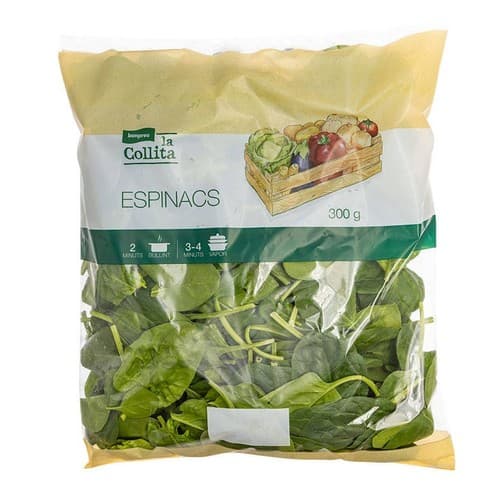 €1.29
€1.29Spinach
LA COLLITA · kg · Bonpreu
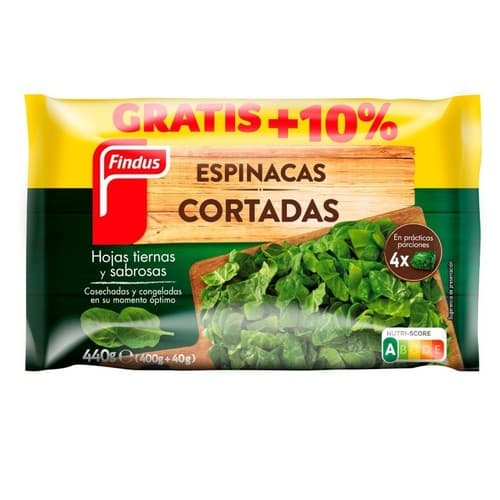 €2.89
€2.89Cut Spinach
FINDUS · kg · Bonpreu
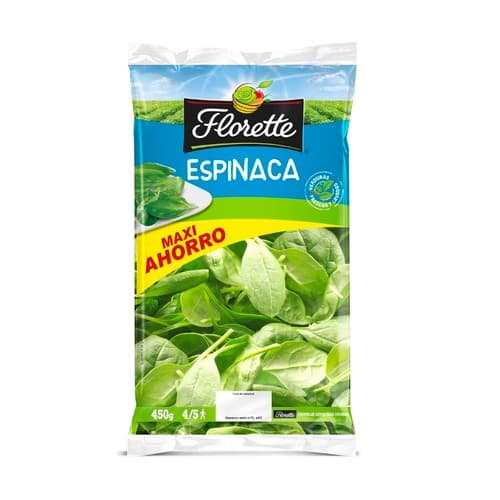 €2.59
€2.59Maxi Spinach
FLORETTE · kg · Bonpreu
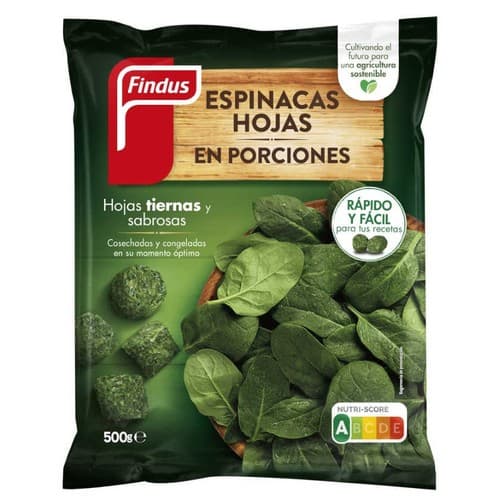 €2.99
€2.99Leaf Spinach
FINDUS · kg · Bonpreu
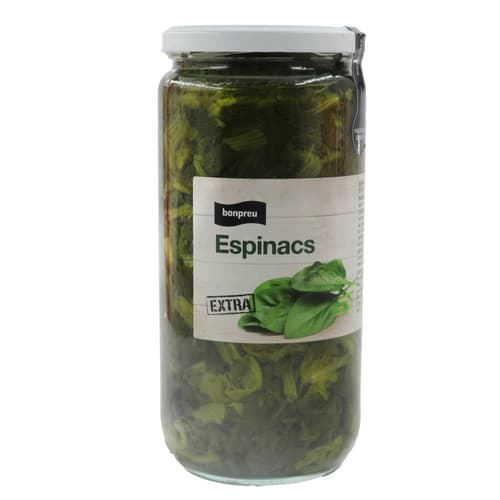 €1.55
€1.55Extra Spinach
BONPREU · kg · Bonpreu
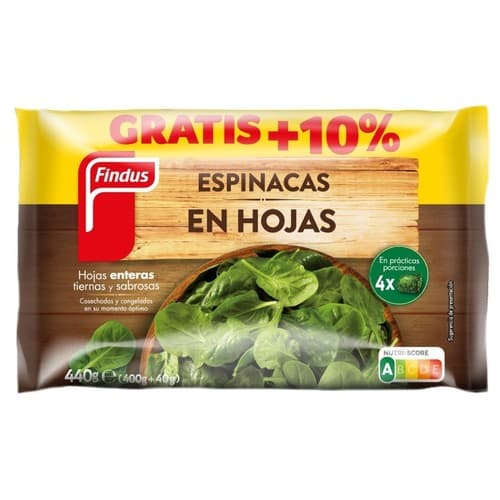 €2.89
€2.89Spinach Leaves
FINDUS · kg · Bonpreu
Good to know
- Scientific Name
- Basella alba (green) and Basella rubra (red-stemmed)
- Family
- Basellaceae (not related to true spinach, Spinacia oleracea)
- Origin
- Indian subcontinent and Southeast Asia—India, Sri Lanka, Bangladesh, Indonesia, Malaysia, Philippines
- Also Known As
- Ceylon spinach, Indian spinach, gui, vine spinach, Malabar nightshade, pui saag, Mayalu
- Growing Conditions
- Tropical and subtropical; thrives in heat and humidity; frost-sensitive; climbs 6–10 feet with support
- Season
- Warm months (summer through early autumn in temperate zones); available year-round in tropical markets
- Flavor
- Mild and slightly earthy; less acidic than true spinach; takes on seasonings well
- Plant Parts Used
- Leaves and young tender stems; flowers and berries are edible but rarely used in cooking
- Texture
- Thick, fleshy, succulent; becomes mucilaginous (slimy) when cooked—similar to okra
- Storage
- Refrigerate unwashed in a loose plastic bag with a dry paper towel; use within 1–2 days for best quality
- Nutritional Highlight
- Excellent source of vitamins A and C, iron, calcium, and antioxidants; notably higher in vitamin A than true spinach
Substitutes
- True Spinach (Spinacia oleracea) — Not a textural match—lacks the mucilaginous quality—but works in cooked dishes; reduce cooking time significantly as true spinach wilts much faster than Malabar spinach
- Water Spinach (Ipomoea aquatica / kangkung) — Similar thick, moisture-retaining leaves; comparable cooking behavior in Southeast Asian stir-fries and soups; slightly milder flavor
- Amaranth Leaves (Amaranthus) — Good for curries and stir-fries; less slime, slightly earthier flavor; comparable cooking time and yield; widely available in South Asian markets
Pairs with
Also called
Pui Shak · Ceylon Spinach · Basella
Related

Tomato
Juicy, sun-sweet fruit for sauces, salads, and slow-cooked depth

Yellow Onion
The aromatic backbone of soups, sofritos, and braises

Garlic
Pungent cloves that perfume nearly every savory dish

Lemon
Bright, acidic citrus that wakes up almost any dish

Potato
Humble, hearty staple — roast, mash, fry, or boil

Carrot
Sweet, crunchy root — raw, roasted, or the base of a sofrito

Cucumber
Cool, crisp, and watery — for salads, pickles, and tzatziki

Lettuce
Crisp leaves for salads, wraps, and a fresh crunch