Dairy & Eggs
Obatzda (Cheese Spread)
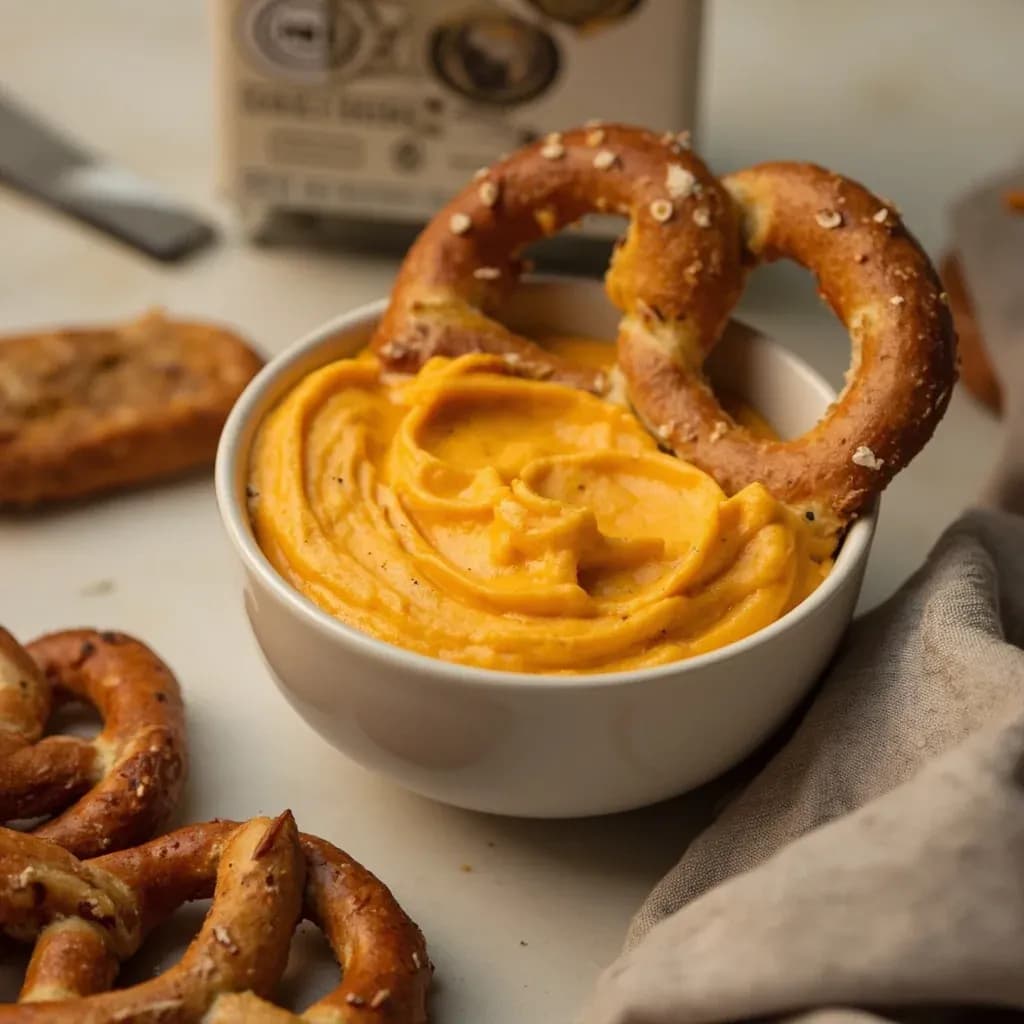
Bavarian beer-garden cheese spread of mashed Camembert, butter, and paprika, scooped with pretzels.
Obatzda is a Bavarian cheese spread made by mashing ripe Camembert or Brie with soft butter, paprika, caraway, and onions. It is creamy, tangy, and richly orange from the paprika, and is a classic beer-garden snack served with pretzels and radishes. It is prepared fresh rather than aged.
Obatzda is a traditional Bavarian cheese spread made by mashing together very ripe Camembert with butter, paprika, onions, and seasonings until a rough, deliberately inhomogeneous paste forms. It emerged in Munich beer gardens in the early twentieth century as a practical solution for using cheese that had ripened past the point of salability—nearly liquid at its center—transforming what would otherwise be waste into one of Bavaria's most beloved accompaniments. The dish follows traditional Bavarian production standards; only spreads made with Bavarian Camembert and Bavarian butter may be marketed as authentic Bavarian Obatzda. Commercial beer garden versions often contain additives, but homemade is markedly superior in aroma and flavor depth. The texture is intentionally rough and chunky, achieved by hand-mashing with a fork rather than processing, and the flavor is pungently aromatic, tangy from the fermented cheese, and balanced by the richness of butter and the warmth of paprika. It is traditionally served at room temperature on Bavarian pretzels, rye bread, or alongside raw radishes, always with a glass of wheat beer. The spread should be served the day it reaches room temperature and keeps refrigerated for five to seven days.
- Measured in
- g
- Storage
- Fridge
Allergens
Types & varieties
Classic Bavarian version with sweet paprika and raw onions
Made with a splash of Bavarian beer for added depth
Uses hot paprika (Paprika scharf) for a spicier result
Substitutes chives for raw onion for a milder, finer flavor
Made with a fresh cream cheese base; less traditional but common variant
Choosing the Right Camembert
The quality of your Obatzda depends almost entirely on the Camembert. It must be very ripe—pressing gently on the rind should leave a deep indentation, and the interior should be soft, even slightly runny. Underripe Camembert will not mash into a proper spread and yields a bland, insufficiently pungent result. Ask your cheesemonger for Camembert specifically for eating raw if necessary; supermarket Camembert is often too young. The aromatic, ammonia-tinged funk of properly ripe cheese is not a flaw—it is the flavor foundation of the entire spread.
- Test ripeness by pressing the rind; it should give way easily
- The interior should be nearly liquid when the cheese is ripe
- Avoid any Camembert with off smells beyond the expected pungency
- If only underripe cheese is available, let it ripen at room temperature for 1–2 days
The Hand-Mashing Technique
Mechanical mixing destroys Obatzda's character. A food processor or stand mixer will render the spread too smooth and homogenize the butter, eliminating the textural contrast that defines the dish. The traditional method uses a fork pressed against the side of the bowl in a rocking motion, breaking the Camembert into irregular pieces and incorporating the butter in streaks and patches rather than a uniform blend. Some cooks prefer a potato masher for slightly faster work, but the fork remains the reference technique.
- Work with a fork in a rocking motion against the bowl's side
- Leave visible streaks and chunks of cheese and butter
- Stop when the texture is rough and inhomogeneous
- Never use a food processor or blender
Common uses
Tips & pitfalls
- Use Camembert at peak ripeness—it should be very soft, nearly runny at the center; underripe cheese will not mash properly and yields a bland result
- Bring cheese and butter to room temperature before mixing; cold ingredients produce a grainy, uneven texture
- Mash by hand with a fork rather than using a food processor—some texture is essential and overworking destroys character
- Add paprika gradually and taste as you go; flavor intensifies as it rests
- Let the finished Obatzda rest refrigerated at least 2 hours, preferably overnight, before serving to allow flavors to meld
- If the mixture seems too stiff, thin with a small amount of beer or cream, not milk
- Use a coarse, grainy paprika (Königspaprika) rather than fine powder for authentic texture and color
- Dice onions very finely or use a microplane; large onion chunks are unpleasant in the spread
- Season generously with white pepper—it is the traditional backbone spice
Nutrition
Nutrition
No USDA FoodData Central match for Obatzda (Cheese Spread) yet. We surface a per-100 g profile once a generic whole-food entry is matched and verified.
In the shops
Matched grocery products
No matched grocery products for Obatzda (Cheese Spread) yet.
Good to know
- Origin
- Bavaria, Germany; popularized in Munich beer gardens, early 20th century
- Etymology
- Bavarian dialect 'Obazda' meaning 'mixed' or 'made from leftovers'
- Primary cheese
- Ripe Camembert (should be very soft, almost liquid at center)
- Key seasonings
- Sweet or hot paprika, raw onion or chives, caraway seed, salt, white pepper
- Fat content
- High; butter typically equals one-third to one-half the weight of the cheese
- Texture
- Rough, slightly chunky; never completely smooth
- Storage
- Refrigerate in airtight container up to 5–7 days
- Serving temperature
- Room temperature for best flavor and spreadability
Substitutes
- Cream cheese + Camembert blend — Mix 2 parts very ripe Camembert with 1 part full-fat cream cheese to approximate the flavor and spreadability
- German Bonifaz cheese — A processed cheese spread sometimes used commercially; acceptable but not traditional
- Brie + butter + paprika — Less aromatic than Camembert but workable; use a thin-edged Brie for better flavor penetration
- Mascarpone + aged Gouda — Poor substitute; lacks the pungency and funk of ripe Camembert
Pairs with
Also called
obatzda · obazda · bavarian cheese spread
Related

Whole Milk
Rich, full-fat milk for drinking, coffee, sauces, and baking
Butter
Golden fat for searing, baking, and finishing a sauce
Yogurt
Tangy, creamy culture for breakfast, sauces, and marinades
Cheddar Cheese
Sharp, melty cheese for sandwiches, gratins, and grating
Skim Milk
Fat-free milk for lighter drinking, coffee, and cooking
Heavy Cream
Rich cream that whips, enriches sauces, and sets ganache

Sour Cream
Tangy, thick cream for dolloping, baking, and dips
Mozzarella
Soft, milky cheese that melts into stretchy pizza pulls