Proteins
Cured Charcuterie
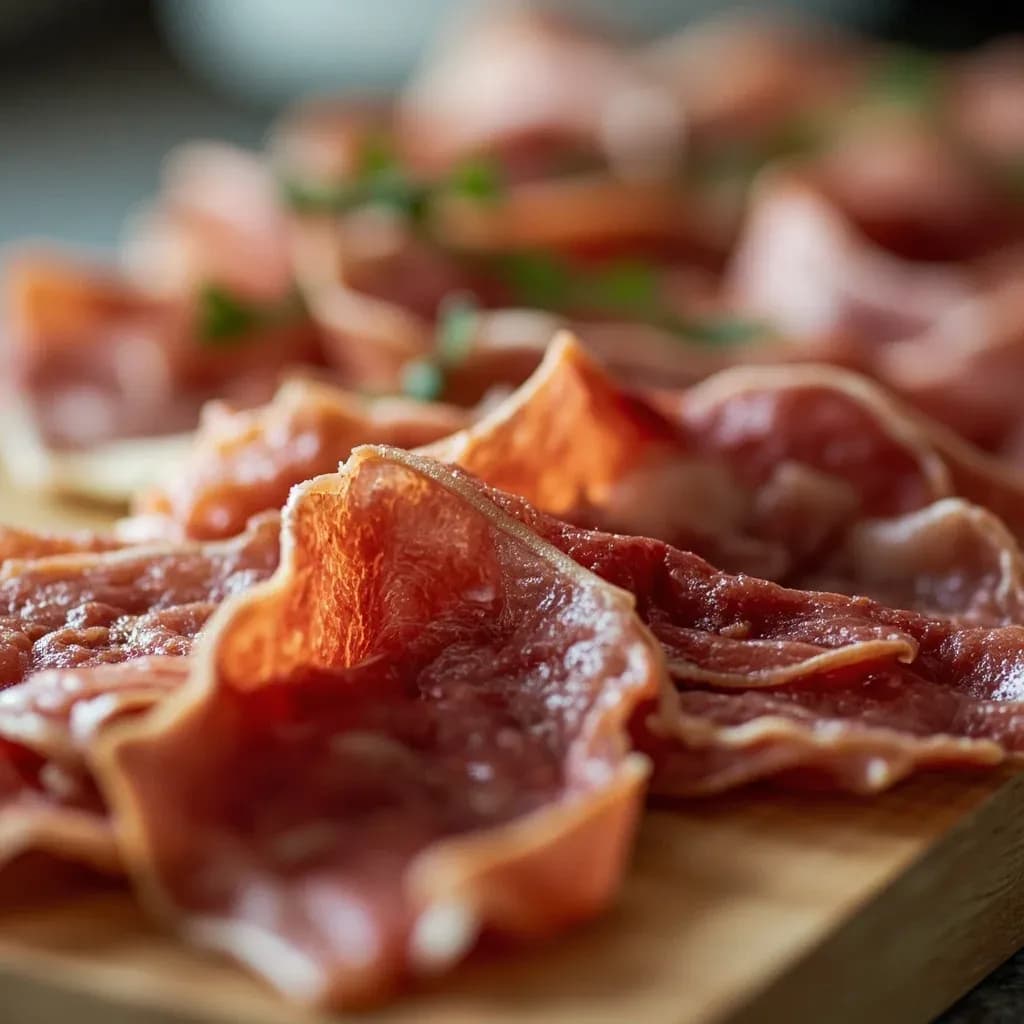
An assortment of dry-cured meats like prosciutto and salami for boards.
Cured charcuterie refers to an assortment of dry-cured and fermented meats such as prosciutto, salami, and coppa. These are salted and air-aged to preserve them and develop deep, concentrated flavor, then sliced thin for antipasti and charcuterie boards. The Italian and French traditions both prize the silky texture of long-aged cuts.
Cured charcuterie encompasses any meat preserved through salt, smoke, or fermentation—a craft formalized in 15th-century France, though its roots reach deep into Mediterranean antiquity. The term derives from "charcutier," the French pork-butcher, reflecting pork's central role in the tradition. At its core, charcuterie transforms perishable protein into stable, flavorful products through the controlled application of salt, time, and often smoke or bacterial fermentation. The curing process extracts moisture and alters protein structure, developing concentrated, complex flavors impossible to achieve with fresh meat alone. Most whole-muscle cuts like prosciutto and coppa are ready to serve cold; they are safe to eat raw-style due to the controlled salt content and drying process, which inhibit pathogen growth.
Two structural categories define the craft. Whole-muscle cuts—prosciutto, jamón, coppa, guanciale, bresaola—preserve the original muscle architecture, yielding nuanced, complex flavors that vary by cut, animal diet, and aging time. Comminuted products like salami, mortadella, and chorizo are ground, emulsified, or stuffed into casings, then fermented and dried; they offer consistent texture and often bolder, spicier seasoning. This distinction matters in the kitchen: whole-muscle cuts reward careful slicing and thoughtful presentation, while comminuted products excel when you need reliable, portionable slices or crumbles.
The quality spectrum is vast. A prosciutto di Parma aged 12 months in Emilia-Romagna cellars shares a category with mass-market deli sliced ham, but they are fundamentally different products. Read ingredient lists: the finest charcuterie contains only meat, salt, and time. Nitrates and nitrites—used to stabilize color and inhibit pathogens—are present even in traditional products, often derived naturally from celery or sea salt rather than synthetic sodium nitrite. Price reflects aging time, animal genetics, diet, and production scale. Spanish jamón ibérico de bellota, from acorn-fed Iberian pigs aged 36 months or longer, commands premium prices for its extraordinary marbling and nutty-sweet depth.
- Measured in
- g
- Storage
- Fridge
Types & varieties
Italian dry-cured ham, minimum 12 months aged, Protected Designation of Origin
Spanish acorn-fed Iberian pig ham; categories include bellota (acorn-fed), recebo (partially acorn-fed), and bodega (cellar-aged)
Spanish mountain-cured ham from white pigs; typically 12–18 months aging
Coarsely ground, fermented, and dry-aged; includes Genoa, Soppressata (sweet and hot), Calabrese, Hungarian Winter, and saucisson sec
Dry-cured pork shoulder or neck, stuffed in casing; medium-fat, mild and slightly sweet
Dry-cured pork loin; leaner than coppa, mild and delicate flavor
Cured pork jowl; key ingredient in amatriciana and carbonara; not smoked
Cured pork belly; rolled (arrotolata) or flat (stesa); affumicata denotes smoked
Cured pork back fat, typically rubbed with herbs; very mild, used as a finish
Dry-cured, lean beef (sometimes game); sliced thin, served raw-style
Coarsely ground, emulsified Bologna-style; contains visible fat cubes; Italy's version of baloney
Spanish or Mexican; cured with smoked paprika (pimentón); Spanish chorizo is ready to eat; Mexican typically requires cooking
Whole-Muscle versus Comminuted Cuts
Understanding this fundamental divide guides both purchasing and usage decisions. Whole-muscle cuts preserve the original muscle structure—the butcher's cuts, the intact shoulder, the entire ham. The resulting product expresses the specific cut's character: the fat cap of a coppa, the deep marbling of a pork jowl (guanciale), the lean intensity of a beef tenderloin (bresaola). Flavor development happens slowly through the cut, so the interior reflects exterior aging conditions. These cuts are typically sliced to order at specialty counters, and quality varies dramatically with the producer's technique and aging duration.
Comminuted products—salami, mortadella, spreads—begin with ground or emulsified meat. The grinding process homogenizes texture and distributes fat evenly, creating consistent slices regardless of where you cut. Fermentation introduces controlled bacterial activity, developing acidity and complex flavor compounds over days or weeks. The result is more aggressive, standardized seasoning and a product engineered for reliable performance. This is not a quality judgment—good mortadella is magnificent—but an understanding that comminuted charcuterie prioritizes different qualities than whole-muscle cuts. When a recipe calls for guanciale as a flavor base, it expects that specific cut's fat composition and texture, not a generalized cured pork product.
- Whole-muscle cuts: prosciutto, jamón, coppa, lonzo, guanciale, pancetta, bresaola, lardo
- Comminuted products: salami, mortadella, chorizo, saucisson sec, summer sausage
- Whole-muscle offers more nuanced, variable flavor tied to cut and aging; comminuted offers consistent texture and bolder seasoning
- Match the product type to the application: nuanced flavors for boards and finishing, aggressive flavors for cooking impact and sandwiches
Selecting and Assessing Quality
When purchasing sliced charcuterie from a counter rather than pre-packaged, ask for the slicing date and observe the product carefully. Cured pork should display a spectrum from pink to deep rose, with white fat distributed naturally rather than smeared. Grayish meat indicates staleness or improper storage, but do not rely on color alone to judge quality—nitrates and nitrites, even naturally occurring ones from celery juice or sea salt, create the characteristic pink hue that indicates proper curing rather than spoilage.
Uniform color throughout a slice indicates consistent curing. In whole-muscle cuts, you should see the natural architecture of the muscle—grain lines, marbling patterns, the demarcation between fat cap and lean. Ragged edges or compressed, mushy texture suggests improper slicing or handling. For pre-packaged products, read the ingredient list: short is better. Meat, salt, and time. If you see a paragraph of additives, emulsifiers, and flavor enhancers, you are looking at an industrial product designed for shelf stability rather than culinary excellence. Whole-muscle cuts from reputable producers (look for the crown-brand mark on prosciutto di Parma rinds, the black hoof stamp on good jamón ibérico) represent the craft at its highest expression.
- Ask for the slicing date when purchasing from a counter
- Good cured pork is pink to deep rose with white fat; gray indicates staleness
- Short ingredient lists indicate traditional products; avoid those with long additive lists
- Look for producer marks: the Parma crown on prosciutto, black hoof on jamón ibérico
- Uniform color throughout indicates proper curing; uneven coloring suggests problems
Common uses
Tips & pitfalls
- Bring cold cuts to room temperature for 20–30 minutes before serving; cold fat does not release aroma or flavor
- Slice whole-muscle cuts perpendicular to the muscle fibers for the most tender texture; a very sharp knife or deli slicer produces clean, paper-thin slices
- Use a deli slicer or very sharp knife; ragged tearing damages the delicate fat structure and ruins the mouthfeel
- Slice only what you need; once exposed to air, sliced product oxidizes and dries faster than whole pieces
- Store whole-muscle cuts wrapped tightly in plastic wrap, then in a sealed bag with as much air removed as possible
- Never judge quality by color alone—nitrates and nitrites, even naturally occurring ones, create the characteristic pink hue
- Whole-muscle cuts have more complex, nuanced character than pre-sliced salami from supermarket packages
- Slice paper-thin for wrapping around fruit or vegetables; slice thicker for sandwiches where texture and mouthfeel matter
- Avoid pale, mushy, or slimy sliced products from deli counters; these indicate improper cold chain or excessive handling
- Spanish chorizo is ready to eat; Mexican chorizo typically requires cooking—check the product type before use
Nutrition
Nutrition
No USDA FoodData Central match for Cured Charcuterie yet. We surface a per-100 g profile once a generic whole-food entry is matched and verified.
In the shops
Matched grocery products
No matched grocery products for Cured Charcuterie yet.
Good to know
- Primary protein
- Pork (also beef, game, poultry in specialty products)
- Curing methods
- Dry-curing with salt, wet-curing/brining, smoking, fermentation, fat-coating (larding)
- Origin
- Mediterranean Europe (France, Italy, Spain); formalized as a craft in 15th-century France
- Ready to eat
- Most whole-muscle cuts (prosciutto, jamón, coppa) are ready to serve cold; check label for specific products
- Storage (whole, uncut)
- Cool, dry place; once sliced, refrigerate in airtight wrap
- Shelf life (sliced)
- 2–3 weeks refrigerated, tightly wrapped; freeze for longer storage
- Typical ingredients
- Meat, salt, time; higher-quality products contain minimal additives
Substitutes
- Prosciutto — Substitute with any dry-cured ham (Serrano, Bayonne ham, Schinken)
- Salami — Substitute with summer sausage, Lebanon bologna, or soppressata for non-authentic applications
- Guanciale — Substitute with unsmoked pancetta; note the fat content and texture differ slightly
- Pancetta — Substitute with slab bacon (rendered and crisped if the recipe calls for cooked pancetta); not suitable for raw-style applications
- Bresaola — Substitute with lean beef jerky (though texture differs) or air-dried beef if available
- Coppa — Substitute with capicola or leaner salami; flavor profile differs but functions similarly
Pairs with
Also called
Prosciutto/Salami assortment · Salumi · Cold Cuts
Appears in these dishes

Related
Egg
The kitchen's everything ingredient — bind, leaven, enrich, or fry
Chicken Breast
Lean, quick-cooking white meat for everyday dinners

Ground Beef
Versatile minced beef for burgers, ragù, tacos, and meatballs
Pork Loin
Lean, tender roasting cut that stays juicy with care

Salmon
Rich, rosy fish that roasts, grills, or cures beautifully

Egg White
Pure protein that whips to airy peaks for meringue and more

Egg Yolk
Rich, golden yolk for custards, mayonnaise, and pasta

Quail Egg
Tiny, speckled eggs for garnishing and elegant bites