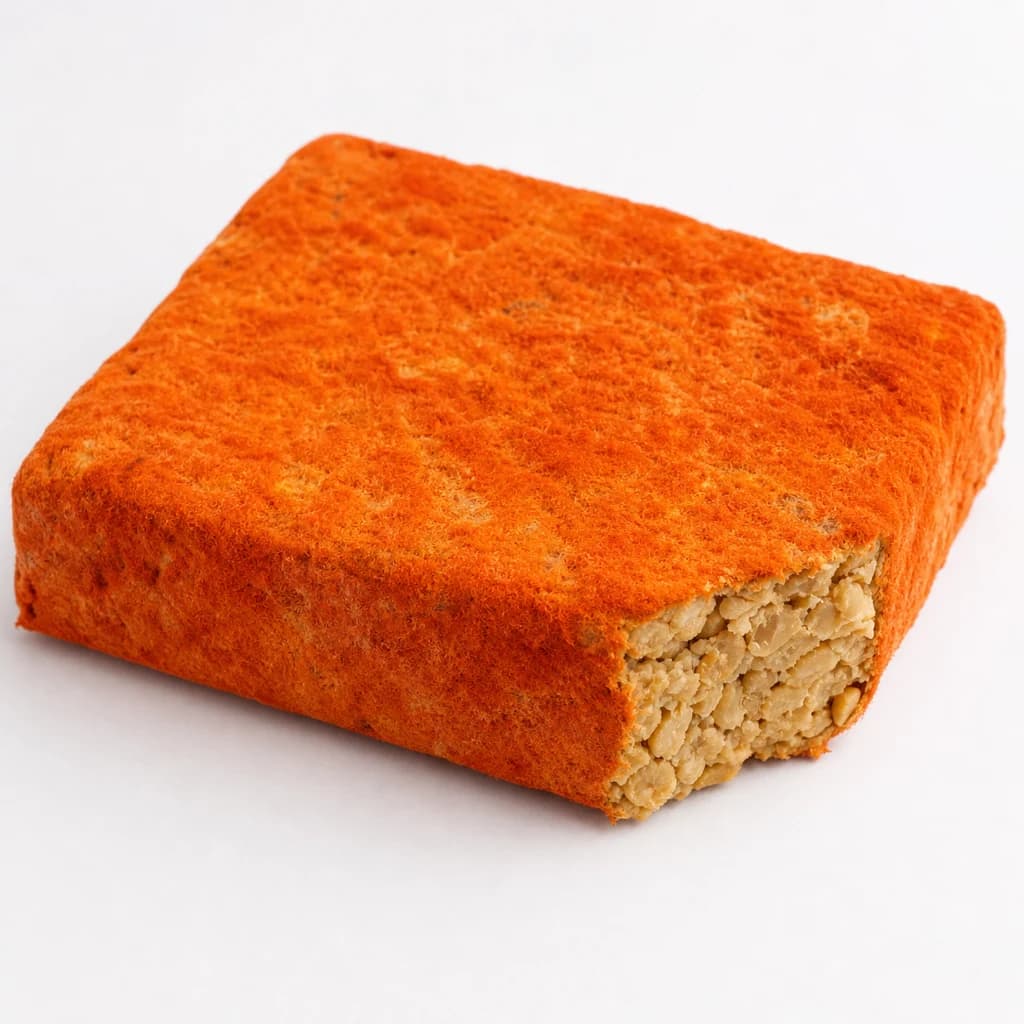
Natural form
A whole oncom cake showing its characteristic orange-mold-covered surface and firm pressed texture.
Shows the reader the intact cake form, distinctive mold color, and compressed block shape that define uncut oncom.
Proteins
Oncom
Indonesian fermented press-cake of peanut or soy, similar to tempeh, sliced and fried.
Oncom is a fermented food from West Java, Indonesia, made by inoculating peanut press-cake or soybean residue with mold until it knits into a firm cake. It is sliced and fried, crumbled into sambals, or wrapped in banana leaf. It has a savory, slightly nutty and earthy flavor and is a traditional protein source.
Oncom is a fermented cake of Indonesian origin, primarily produced in West Java's Sundanese cuisine, made from either peanut press-cake (bungkil kacang) — the residue left after peanut oil extraction — or soy pulp (ampas tahu), the wet remainder of tofu production. Unlike tempeh, which uses exclusively soybeans bound by Rhizopus mold, oncom embraces both waste streams of other food industries, making it an economical and ecologically sound product. The fermentation employs Neurospora intermedia (giving oncom kacang its signature red-orange speckled surface) or Rhizopus oligosporus, producing a cake that is denser, more intensely flavored, and slightly bitter compared to tempeh. The texture holds together firmly when sliced and resists crumbling in high-heat cooking. Historically sidelined outside Java by tempeh's international fame, oncom deserves recognition as a sophisticated fermentation in its own right — the Neurospora-produced variety develops a distinctive nutty, earthy, mildly funky character that deepens considerably with longer fermentation, and the process increases digestibility and B-vitamin availability just as with other mold-fermented legumes.
- Measured in
- g
- Storage
- Fridge
Allergens
Types & varieties
Made from peanut press-cake; the characteristic red-orange speckled surface comes from Neurospora mold growth; the most common and widely available variety.
Black oncom produced from soy pulp; darker coloring develops with fermentation; carries a slightly stronger, more assertive flavor than the yellow variety.
Yellowish oncom made from soy pulp; milder and less intense than the black variety; a good introduction for those new to oncom.
The Neurospora Difference
The presence of Neurospora intermedia sets oncom kacang apart from tempeh in both appearance and flavor. This orange bread-mold (Neurospora crassa, a close relative, is the famous genetic model organism) produces visible reddish spores on the cake's surface during fermentation. The mold contributes a subtle sweetness and intensifies the nuttiness of the peanut base while creating the characteristic color that signals proper fermentation. When you see an evenly orange-speckled surface, you know the fermentation progressed correctly.
- Neurospora produces visible orange spores; Rhizopus-based fermentation appears white to gray
- The orange color deepens as fermentation continues — check for even coverage before buying
- Smell the cut surface: a pleasant mushroomy, earthy aroma indicates good fermentation; ammonia or sourness means it has gone bad
Common uses
Tips & pitfalls
- Select firm, evenly colored cakes without any gray, green, or slimy patches — these indicate spoilage or improper fermentation
- Always cook oncom thoroughly before serving; while fermentation reduces some anti-nutrients, raw consumption carries risk of foodborne illness
- For frying: slice 1–1.5 cm thick, pat completely dry with paper towels, and fry at 160–170°C until deep golden and crispy on both sides
- To reduce bitterness present in some batches: soak slices in lightly salted water (about 1 tsp per cup) for 10–15 minutes before cooking
- Freeze fresh oncom in portioned freezer bags; thaw slowly in the refrigerator overnight, never on the counter at room temperature
- For grilling: slice thin (5–8 mm), score the surface in a crosshatch pattern to increase caramelization surface area, and brush with kecap manis halfway through cooking
- The red-orange color on oncom kacang intensifies the longer fermentation continues — use your nose as well as your eyes; it should smell pleasantly aromatic, never rank or sour
- Oncom is primarily a cottage-industry product — if sourcing from traditional markets, buy from vendors with high turnover to ensure freshness
Nutrition
Energy
1418 kJ · per 100 g
Where the calories come from
Protein
7g
14% DV
Carbs
44.3g
16% DV
Fat
15.2g
19% DV
Fiber
1g
4% DV
Sodium
339mg
15% DV
Source · USDA FoodData Central · approx. Cake, coffeecake, cheese
View on FDC →In the shops
Matched grocery products
No matched grocery products for Oncom yet.
Good to know
- Origin
- West Java, Indonesia (Sundanese cuisine)
- Primary Materials
- Peanut press-cake (bungkil kacang) or soy pulp (ampas tahu)
- Fermentation Agent
- Rhizopus oligosporus or Neurospora intermedia mold
- Signature Color
- Peanut oncom: reddish-orange from Neurospora; Soy oncom: pale yellow to black
- Flavor Profile
- Earthy, nutty, mildly funky; more intense than tempeh with subtle bitterness
- Texture
- Dense, firm cake that slices cleanly; holds shape when fried or grilled
- Shelf Life
- Refrigerate 3–5 days; freeze up to 1 month
- Nutritional Value
- Good plant protein source; fermentation improves digestibility and B-vitamin content
Substitutes
- Tempeh — The most direct substitute; has a firmer texture and milder flavor. Soak briefly in warm water or broth if too firm, then proceed with identical frying or grilling techniques.
- Fermented okara — Soy pulp (okara) fermented at home following a similar process produces a less dense but acceptable substitute when oncom is unavailable.
Pairs with
Also called
Fermented Press Cake
Related

Egg
The kitchen's everything ingredient — bind, leaven, enrich, or fry

Chicken Breast
Lean, quick-cooking white meat for everyday dinners

Ground Beef
Versatile minced beef for burgers, ragù, tacos, and meatballs

Pork Loin
Lean, tender roasting cut that stays juicy with care

Salmon
Rich, rosy fish that roasts, grills, or cures beautifully

Egg White
Pure protein that whips to airy peaks for meringue and more

Egg Yolk
Rich, golden yolk for custards, mayonnaise, and pasta

Quail Egg
Tiny, speckled eggs for garnishing and elegant bites