Ready to use
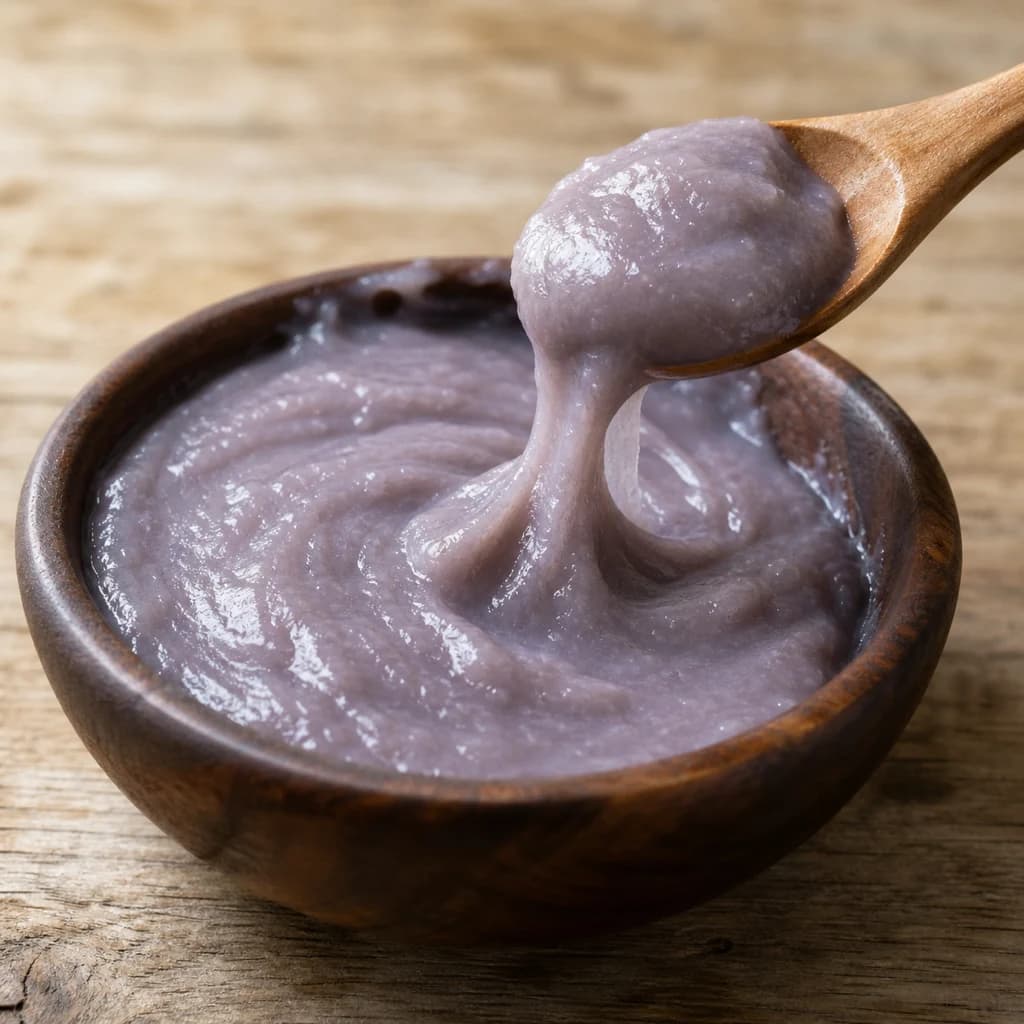
Fresh poi served in a wooden bowl, a smooth lavender-grey paste ready to eat.
Shows the defining texture, color, and serving form that most readers will encounter first.
Produce
Poi
Hawaiian staple of pounded, fermented taro with a smooth, tangy paste texture.
Poi is a traditional Hawaiian staple made from steamed taro corm that is pounded with water into a smooth, sticky paste. It is eaten fresh and mild or aged a few days to develop a tangy, sour flavor from fermentation. It accompanies dishes like kalua pig and lomi salmon at a luau.
Poi is the cooked and pounded corm of the taro plant (Colocasia esculenta), reduced to a smooth paste with water and left to ferment naturally. Unlike any other starch, poi is designed to be eaten in a state of gentle fermentation—a process that develops its characteristic tangy, mildly sour notes within hours of preparation. The texture ranges from thick enough to cling to your fingers to thin enough to drink, graded by the traditional "one-finger," "two-finger," and "three-finger" system that refers to how many fingers you can dip into it before the poi runs off.
What distinguishes poi from mashed potatoes or other root vegetable purées is this living, evolving quality. Fresh poi is mildly sweet; by day two or three it develops pleasant acidity; by day four or five it can be sharply sour. This is not spoilage—it is the intended flavor development. The starches in taro are more easily digestible after fermentation, which is why poi has historically served as a weaning food for Hawaiian infants and remains valued for its gentle digestibility. Commercial poi is often pasteurized to slow fermentation, but traditional freshly pounded poi continues to change daily.
The taro plant itself is sacred in Hawaiian culture, believed to be the physical form of Hāloa, the ancestral father of the Hawaiian people, making poi far more than a foodstuff—it is a connection to Hawaiian identity, land stewardship, and generational knowledge. The traditional method uses a stone pounder (pōhaku) on a wooden board (papa); modern blenders and food processors produce perfectly acceptable results for home preparation.
- Measured in
- g
- Storage
- Fridge
Types & varieties
Thickest consistency; clings to fingers when dipped; traditional for infants and elders
Medium consistency; most common for everyday eating
Runniest; poured or drunk; popular at luaus and celebrations
Traditional cultivar noted for fine texture and mild flavor; increasingly rare
Made from a red-taro cultivar; deeper purple color with slightly sweeter taste
Often pasteurized or refrigerated fresh; sold in plastic bags or sealed containers
The Fermentation Factor
Unlike nearly every other starch in the world, poi is intentionally fermented from the moment it is made. Natural lactic acid bacteria present on the taro and in the water begin consuming sugars immediately. At room temperature (70°F+), this process accelerates rapidly—a batch can sour noticeably within 8–12 hours. This is why poi-making traditionally happened early in the morning and why immediate refrigeration is critical. The degree of sourness is a matter of personal preference, not quality. Some Hawaiians actively seek out aged poi for its sharper flavor, while others prefer it fresh and mildly sweet.
- Refrigeration below 40°F slows fermentation significantly but does not stop it entirely
- Frozen poi thaws with a slightly altered texture but remains safe and flavorful
- Over-sour poi is not ruined—many people prefer it at this stage
Raw Taro Warning
The oxalate crystals in raw taro corms cause an intense itching and burning sensation in the mouth and throat. All taro must be cooked thoroughly—boiling, steaming, or baking—before pounding. Traditional Hawaiian preparation involves peeling, boiling the corm until completely tender (a fork slides in effortlessly), then pounding while hot. The cooking process neutralizes the calcium oxalate and transforms the starch into something that can be easily digested.
- Never consume raw taro in any form
- Cook taro until completely soft throughout
- Wear gloves when handling raw taro to avoid skin irritation
Common uses
Tips & pitfalls
- Always keep poi refrigerated below 40°F; it ferments rapidly at room temperature and can become overly sour within hours
- Fresh poi is mildly sweet—use or consume within 2–3 days before fermentation makes it tangy
- Never leave poi unrefrigerated, especially in warm climates; the fermentation accelerates dangerously
- When freezing, portion into airtight containers or freezer bags; thaw overnight in the refrigerator
- If poi becomes overly sour, it is not spoiled—many Hawaiians prefer aged poi—but the texture may become gummy
- Do not attempt to make poi from sweet potato, ube, or other root vegetables—the starch composition and flavor are fundamentally different
- Commercial poi in vacuum-sealed bags is often pasteurized and has a longer shelf life but milder flavor than freshly pounded
- Serve poi at room temperature for the most authentic texture and flavor—cold poi from the fridge can taste flat
Nutrition
Energy
469 kJ · per 100 g
Where the calories come from
Protein
0.4g
1% DV
Carbs
27.2g
10% DV
Fat
0.1g
0% DV
Fiber
0.4g
1% DV
Sugars
0.4g
of which
Sodium
12mg
1% DV
Source · USDA FoodData Central · Poi
View on FDC →In the shops
Matched grocery products
No matched grocery products for Poi yet.
Good to know
- Made from
- Cooked taro (Colocasia esculenta) corm, pounded with water
- Origin
- Hawaiian Islands; central to Native Hawaiian cuisine for over 1,000 years
- Flavor
- Mildly sweet when fresh; develops tangy, mildly sour notes as fermentation progresses
- Color
- Pale lavender to deep purple, depending on taro variety
- Traditional equipment
- Stone pounder (pōhaku) on a wooden board (papa); modern blenders acceptable
- Consistency grades
- "One-finger" (thickest), "two-finger," "three-finger" (thinnest/runniest); indicates water ratio added during pounding
- Storage
- Refrigerate immediately; keeps 5–10 days fresh; freezes well for several months
- Fermentation
- Naturally ferments at room temperature within hours; refrigeration slows but does not stop it
- Cultural significance
- Sacred plant in Hawaiian tradition; poi represents the literal ancestor (Hāloa, the first Hawaiian)
Substitutes
- Mashed sweet potato — Closest in texture but lacks the distinct taro flavor and the cultural significance; use in non-traditional contexts only
- Taro flour paste — Reconstituted with water; workable substitute for thickening but does not replicate the traditional eating experience
- Fufu (West African) — Similar sticky paste texture from cassava; different flavor entirely
- Glutinous rice paste — Comparable sticky consistency; acceptable in modern fusion cooking but not as a true culinary substitute
Pairs with
Also called
Pounded Taro · Poi
Related
Tomato
Juicy, sun-sweet fruit for sauces, salads, and slow-cooked depth
Yellow Onion
The aromatic backbone of soups, sofritos, and braises
Garlic
Pungent cloves that perfume nearly every savory dish
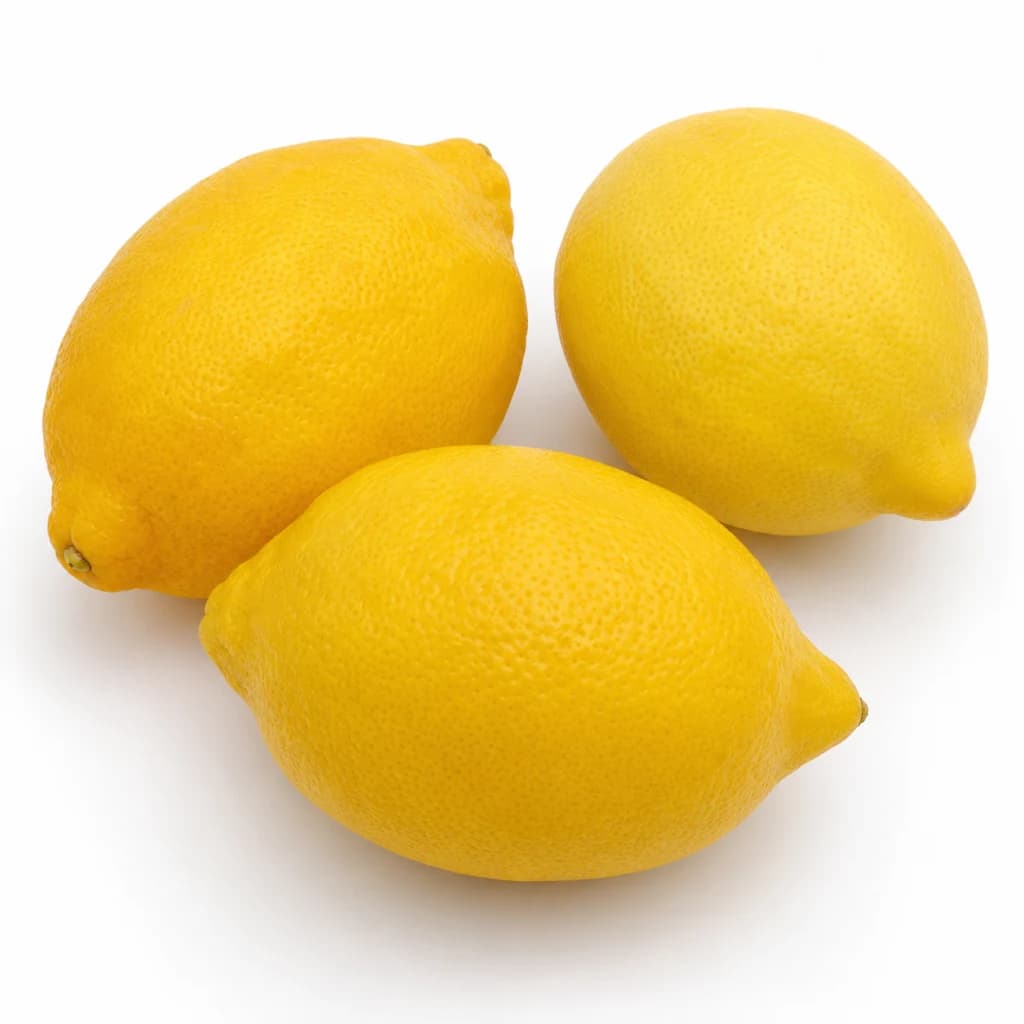
Lemon
Bright, acidic citrus that wakes up almost any dish
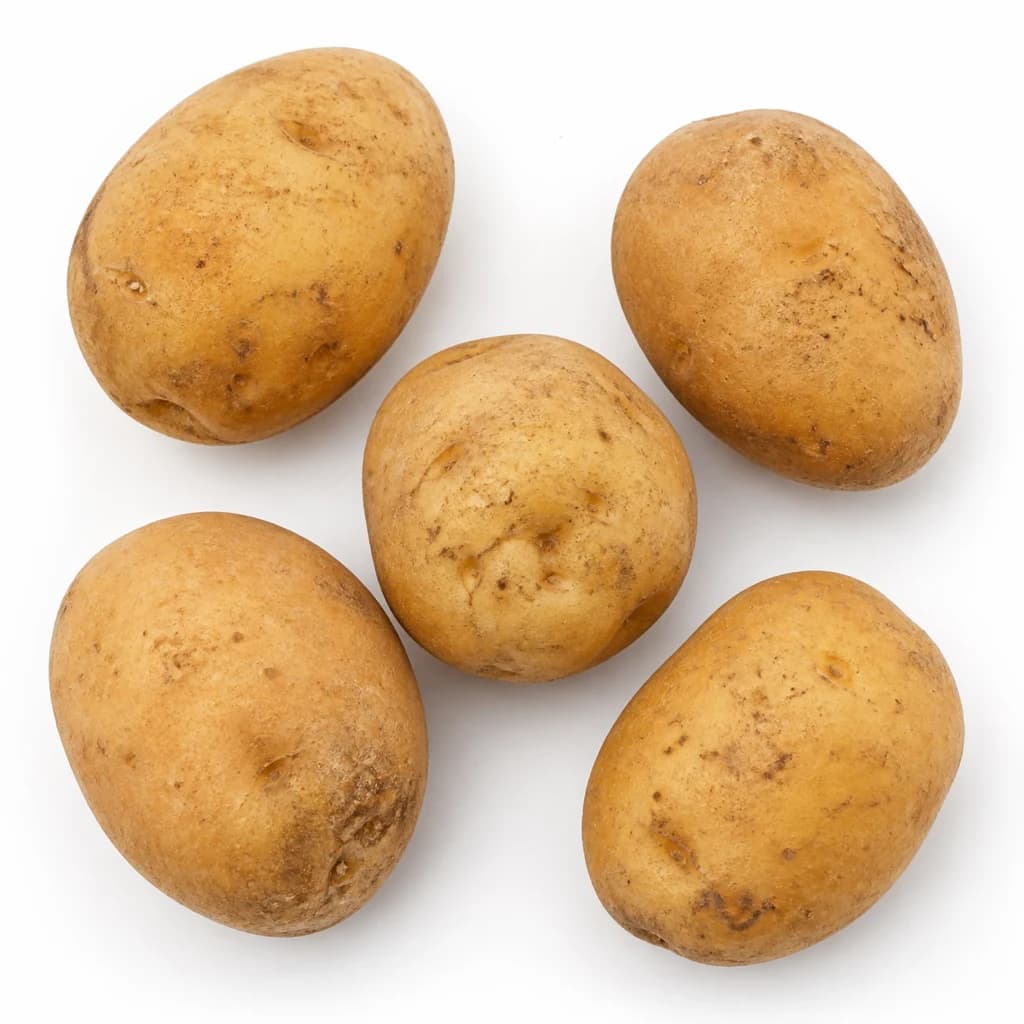
Potato
Humble, hearty staple — roast, mash, fry, or boil
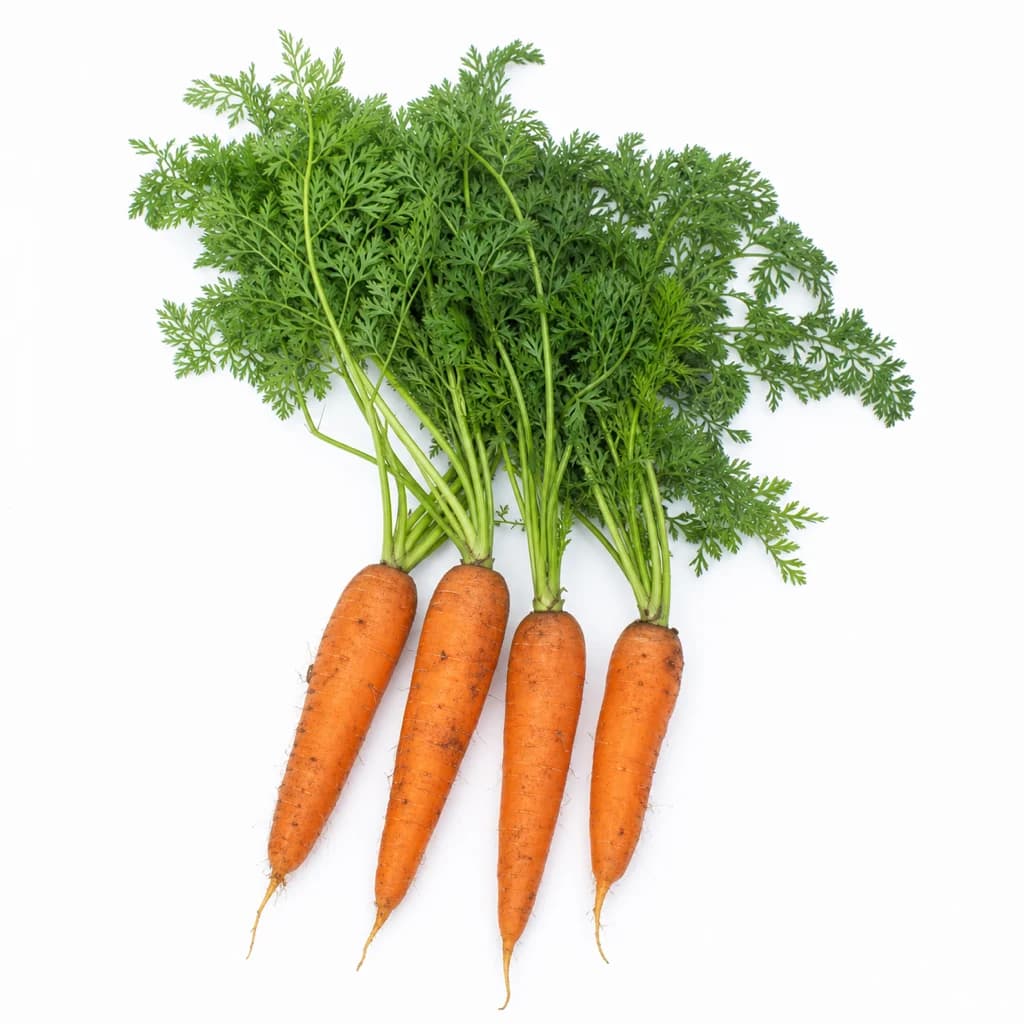
Carrot
Sweet, crunchy root — raw, roasted, or the base of a sofrito
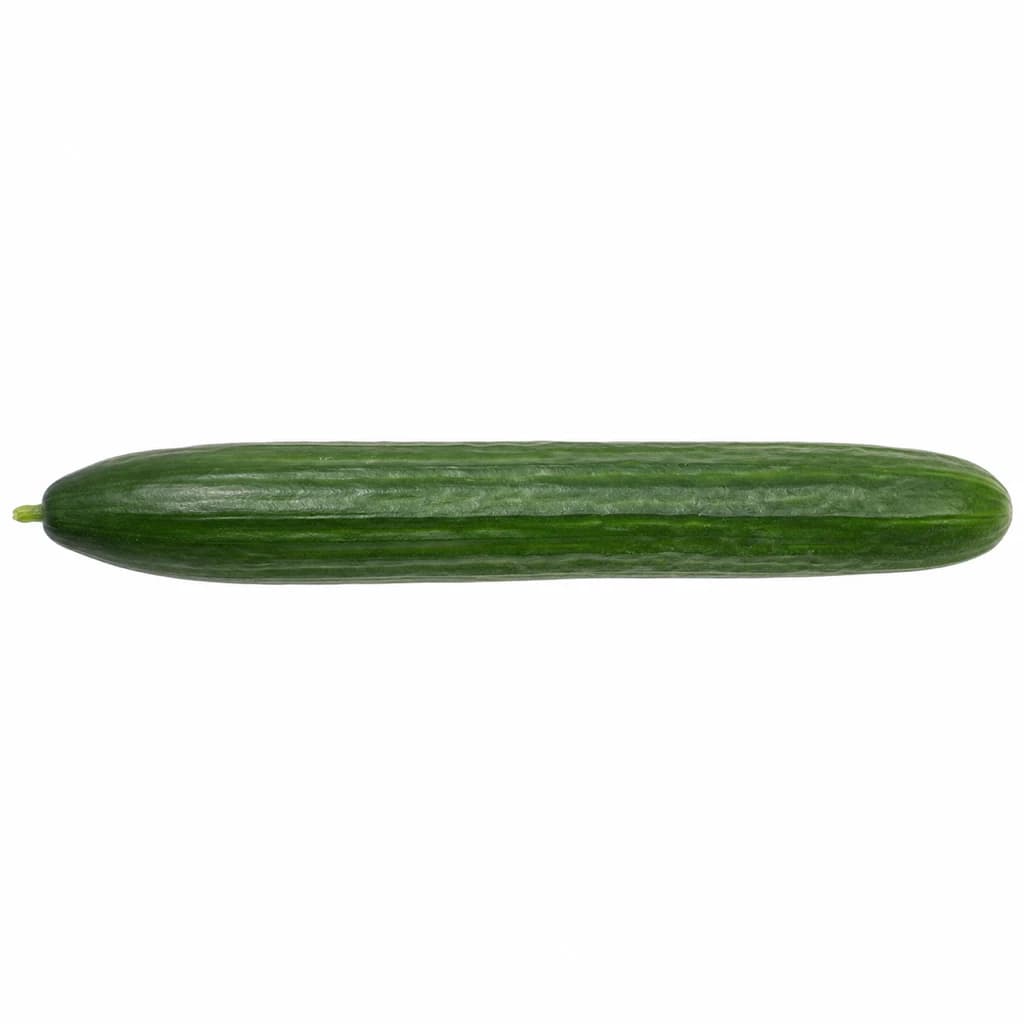
Cucumber
Cool, crisp, and watery — for salads, pickles, and tzatziki

Lettuce
Crisp leaves for salads, wraps, and a fresh crunch