Proteins
Boston Butt (Pork Shoulder)
Fatty, well-marbled upper shoulder that turns meltingly tender with long low heat; the cut for pulled pork, carnitas and braises. Tough if cooked fast.
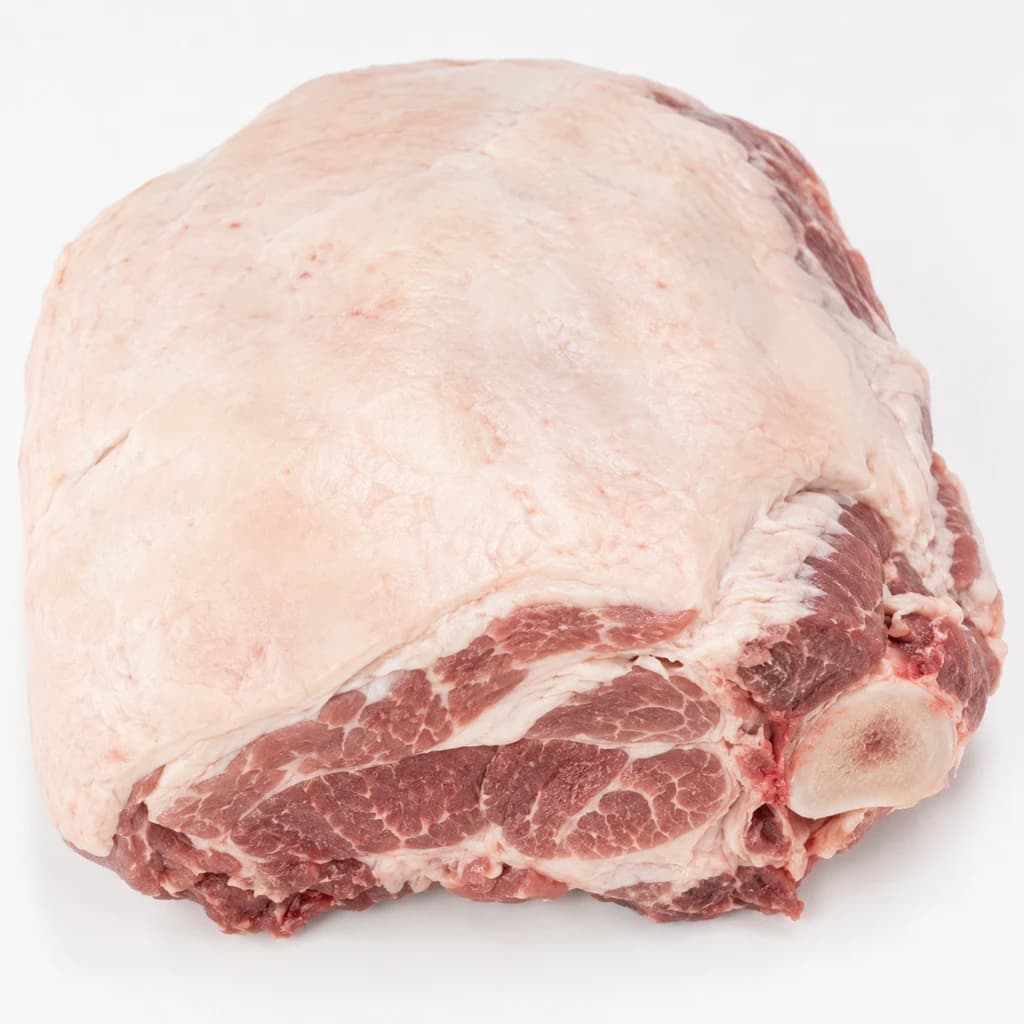
Boston butt is the upper portion of the pork shoulder primal, cut from above the picnic shoulder and containing the blade bone (scapula) and a dense cross-section of muscles — most prominently the serratus ventralis, the rhomboideus, and the prized latissimus dorsi, better known as the money muscle. Despite the geographic name, the cut has no real connection to Boston the city; the term comes from 18th- and 19th-century New England butchery, where shoulders were packed and shipped in large casks called 'butts' (a butt being a roughly 126-gallon barrel). The cut runs 5 to 10 pounds typically, with 20–30% raw fat and heavy seams of intramuscular collagen, which is exactly why it behaves the way it does in the kitchen. Cook it hot and fast and the collagen tightens into chew; cook it low and slow past 195°F (90°C) and that same collagen dissolves into gelatin, basting the meat from within and producing the silky, shreddable texture behind pulled pork, carnitas, and long braises. The fat cap and marbling are functional, not ornamental — they are the engine of flavor and mouthfeel, and the reason this cut rewards patience more than almost any other in the pig.
- Measured in
- g
- Storage
- Refrigerate
Find it in
Types & varieties
The classic barbecue cut; the blade bone adds flavor, bastes the interior as it cooks, and signals doneness when it wiggles loose
Skinned, deboned, rolled and netted; easier to cube or slice for braises but loses some bark and bone-driven flavor
Boston butt left attached to the picnic shoulder, 12–18 lb; the standard in competition barbecue
The whole latissimus dorsi running along the back of the butt; a single oval muscle that stays juicier than surrounding tissue and is prized for competition presentation
Cured and cold-smoked Boston butt, a traditional Appalachian preservation; sliced and served cold or pan-fried
Boneless butt tied into a uniform loaf; cooks evenly and slices cleanly for plated service
The Stall, and Why 195°F Is the Real Target
Every pitmaster learns the same lesson the hard way: a Boston butt cooked to 165°F (74°C) feels done and looks done, and it is anything but. Between roughly 150°F and 170°F, evaporative cooling on the surface pulls the rate of temperature climb to a near halt — this is the so-called stall — and the meat's internal temperature can sit for hours while the bark darkens and sets. Worse, at 165°F the collagen has only partially melted; the meat shreds reluctantly and tastes dry even though it is anything but lean. Push through. The collagen-to-gelatin conversion only completes between 190°F and 205°F, and it is that final climb that turns a chewy shoulder into something you can pull apart with a fork. Plan on a 30–60 minute rest loosely tented with foil after the meat comes off, during which the internal temperature typically rises another 5–10°F and the juices redistribute through the muscle.
- The stall typically occurs between 150°F and 170°F and can last 1–3 hours — do not panic and do not crank the heat.
- Wrapping in foil or butcher paper after the bark sets (usually 160–170°F internal) can speed the finish and push through the stall faster, at the cost of a softer bark.
- Pulling at 165°F is the single most common pulled-pork mistake; the meat will be tough, stringy, and frustratingly dry-tasting.
- Resting is not optional — juices need time to reabsorb, and carryover cooking finishes the job the oven started.
Bone-In vs. Boneless, and the Case for the Money Muscle
Bone-in butts are a little harder to slice and trim, and they are worth it. The blade bone acts as a heat sink and a flavor reservoir, and the connective tissue surrounding it contributes extra gelatin as it renders. Boneless butts are the right call for braises where you want clean cubes, for restaurants that need uniform portions, and for cooks who cannot find a bone-in option. The money muscle — the latissimus dorsi that runs along the dorsal surface of the butt — is its own animal: a single, oval muscle that resists overcooking better than the surrounding tissue. In competition barbecue it is often separated from the rest of the butt and cooked on a higher rack so the bark stays crisp while the interior remains strikingly moist. At home, you can mimic this by removing the money muscle and cooking it next to (rather than inside) the rest of the butt, then slicing it across the grain for plated presentations.
Common uses
Tips & pitfalls
- Do not stop cooking at 165°F — that is the stall, not the finish. Push to 195°F+ so collagen fully melts into gelatin.
- Trim the fat cap to roughly ¼ inch: enough to render and baste, not so much that rub and smoke cannot reach the meat.
- Buy bone-in when the recipe allows; the blade bone adds flavor, moisture, and a built-in doneness signal.
- Spritz with apple juice, cider vinegar, or water only after the bark has set (after about 1.5–2 hours), or the surface turns gummy and the rub washes off.
- Rest 30–60 minutes loosely tented with foil before pulling — the meat reabsorbs juices and finishes cooking another 5–10°F.
- Reserve the crunchy bark and fold it back into the pulled meat at the end, or it disappears into the shreds and you lose textural contrast.
- Pull against the grain for short, bite-sized shreds suited to sandwiches; pull with the grain for long strands for plating or Cuban-style presses.
- If you skip a rub, salt the meat 12–24 hours ahead and refrigerate uncovered — a dry brine seasons deeply and dries the surface for better bark.
- For competition-style results, separate the money muscle and cook it on its own rack so the bark stays crisp and the interior stays juicy.
- Injecting with a 50/50 apple juice and cider vinegar brine (plus salt and a little Worcestershire) helps thicker butts finish moister.
Nutrition
Energy
552 kJ · per 100 g
Where the calories come from
Protein
18.7g
37% DV
Carbs
0g
0% DV
Fat
5.7g
7% DV
Fiber
0g
0% DV
Sugars
0g
of which
Sodium
65mg
3% DV
Source · USDA FoodData Central · approx. Pork, fresh, shoulder, (Boston butt), blade (steaks), separable lean only, raw
View on FDC →In the shops
Matched grocery products
 €3.92
€3.92Pork Shoulder
BONPREU DE L'ERA · ud · Bonpreu
 €35.00
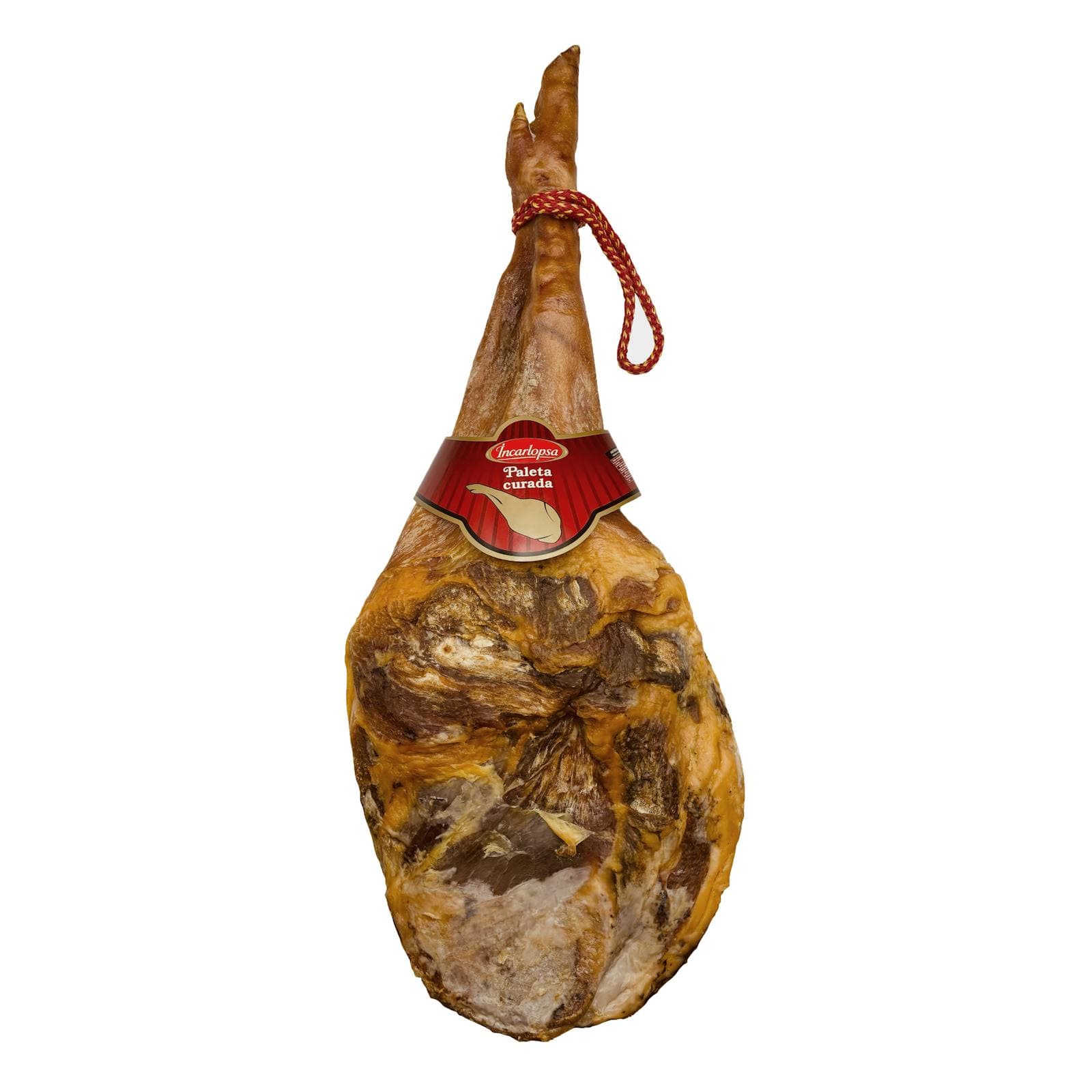
Cured Pork Shoulder
Incarlopsa · 4 kg · Mercadona
 €8.91
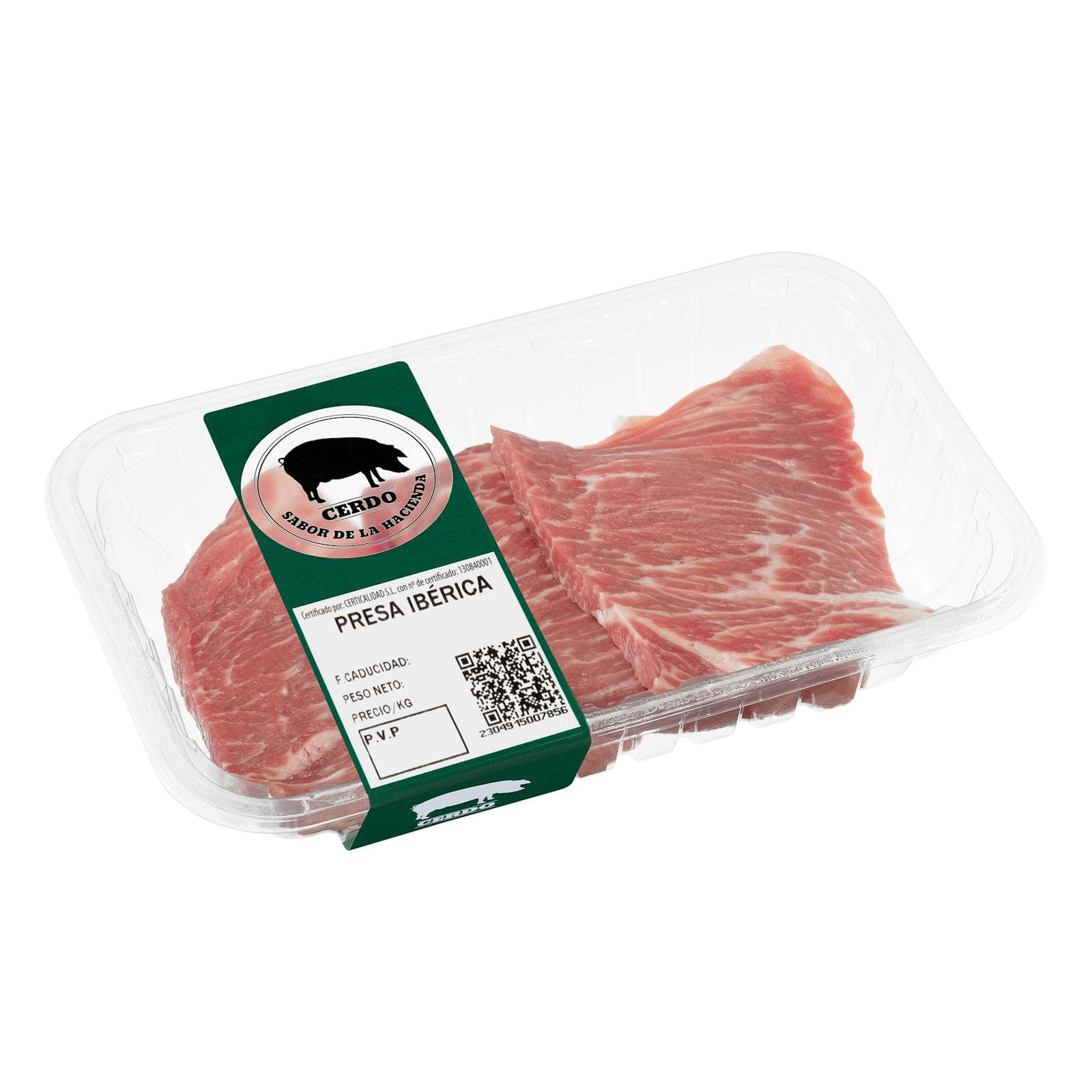
€8.91Iberian Pork Shoulder
330 g · Mercadona
 €13.30
Iberian Pork Shoulder
FINURA DE IBÉRICO · ud · Bonpreu
 €3.98
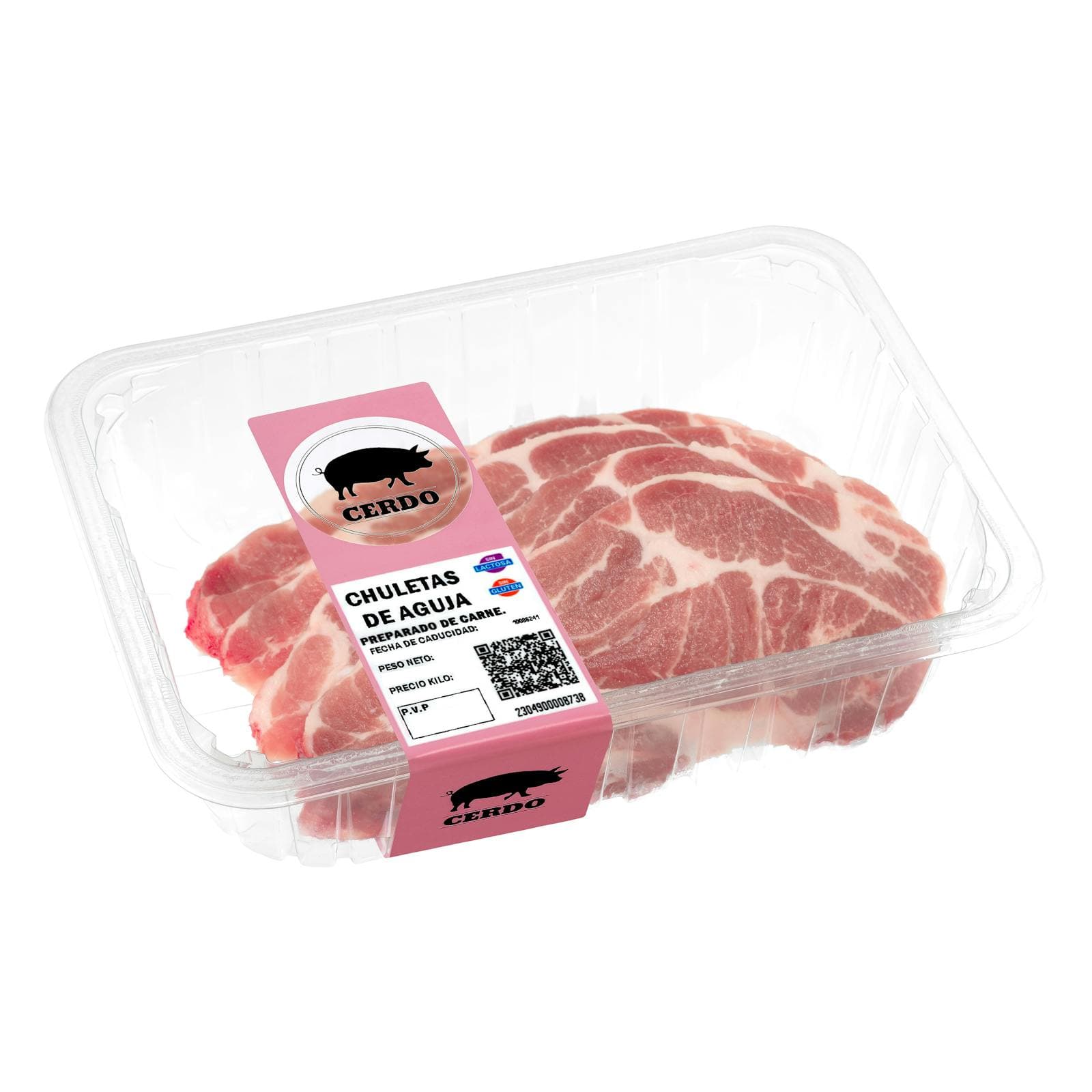
€3.98Pork Blade Chops
750 g · Mercadona
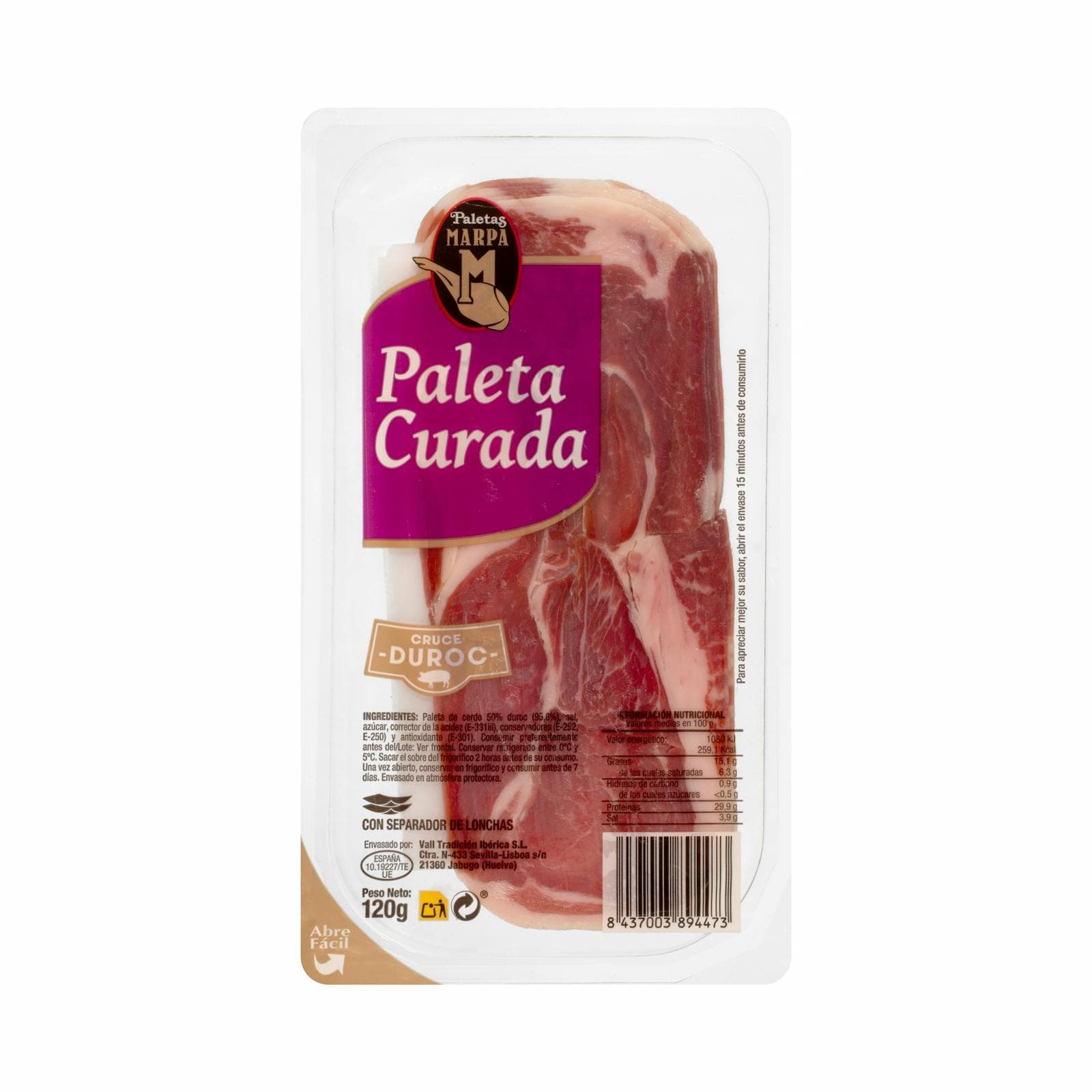 €2.50
€2.50Cured Pork Shoulder Slices
Paletas Marpa · 120 g · Mercadona
Good to know
- Primal cut
- Upper shoulder, above the picnic shoulder (NAMP #407 bone-in, #406A boneless)
- Weight range
- Typically 5–10 lb (2.3–4.5 kg); packer-style shoulders with picnic attached run 12–18 lb or more
- Fat & collagen
- 20–30% raw fat with heavy intramuscular connective tissue — the source of both flavor and silky texture when fully rendered
- Target internal temperature (pulled)
- 195–205°F (90–96°C); probe should slide in like room-temperature butter
- Target internal temperature (sliced)
- 170–180°F (77–82°C) for whole-muscle service such as money muscle or braised-and-sliced applications
- Cooker temperature
- 225–275°F (107–135°C), low and slow, roughly 1.5–2 hours per pound at 250–275°F
- Cooked yield
- Approximately 60% of raw weight when fully rendered and pulled
- Doneness signal
- Blade bone wiggles freely in the roast and a probe meets no resistance; the meat visibly pulls back from the bone
- Storage (raw)
- Refrigerate 2–3 days; freeze up to 6 months if vacuum-sealed
- Storage (cooked)
- Refrigerate 3–4 days; freeze 2–3 months
Substitutes
- Picnic shoulder — The lower half of the shoulder primal; similar fat and collagen profile, but more skin and external fat, and slightly longer cooking times
- Beef chuck roast — Same low-and-slow logic, yields shredded beef instead of pork; works in crossover dishes like Carolina-style beef BBQ
- Lamb shoulder — Suitable for spice-forward braises with cumin, cinnamon, and dried chili, though the gamier flavor will read very differently
- Pork loin roast — Only a substitute if sliced thin and cooked to medium — far too lean for true pulled pork
- Pork belly — Higher fat, lower yield, and will not shred cleanly; works in confit or braise applications where texture is flexible
Pairs with
Also called
Boston butt · pork butt · pork shoulder butt · blade shoulder · pulled pork roast