
Natural form
A whole roasted pork belly slab showing the crackling skin, fat, and meat layers.
Shows the unmistakable three-layer structure — crackling skin, white fat, and pink meat — that defines siu yuk before cutting.
Proteins
Roast Pork Belly (Siu Yuk)
Cantonese roast pork belly with crackling crisp skin over tender, fatty meat.
Roast pork belly is a Cantonese specialty of slow-roasted pork belly with a signature shatteringly crisp crackling skin over layers of juicy fat and meat. It is chopped into bite-size pieces and served over rice, in noodles, or as part of a roast-meat platter. The skin is dried and salted before roasting to achieve the crackle.
Siu Yuk is the Cantonese term for whole-roasted pork belly distinguished by its shatteringly crisp, bubbled skin—a feature so prized that a properly executed crackling is considered the mark of a skilled siu mei cook. The dish belongs to the broader family of siu mei (燒味, "roasted flavors"), the iconic roasted meats that define Cantonese and Hong Kong culinary identity. Unlike char siu, which is marinated and hung, or white cut pork, which is poached, siu Yuk is dry-roasted at high heat with the skin exposed, allowing it to blister and separate from the fat beneath. The meat itself is rubbed with five-spice, soy, and Shaoxing wine, yielding savory-sweet, umami-rich flesh that contrasts sharply with the salty-sweet snap of the crackling. In Hong Kong and Guangdong, premium siu mei shops roast whole bellies hanging on hooks in specialized brick ovens; the crackling should audibly snap when broken. At the table, it is traditionally presented skin-side up on a platter with a small cup of Chinese mustard alongside steamed jasmine rice.
- Measured in
- g
- Storage
- Fridge
Types & varieties
Rubbed with five-spice powder, white pepper, and sea salt on the meat side; the traditional Cantonese preparation.
Skin brushed with maltose syrup or dissolved rock sugar before roasting; yields extra-caramelized, glossy crackling.
Skin treated with a vinegar-and-salt wash or spray before roasting; promotes maximum bubble and snap texture.
Reflects Macanese culinary influence; produces a slightly sweeter, more complex flavor profile than Cantonese preparations.
A poached rather than roasted variant; skin may be briefly torched or seared, served with garlic oil—technically a different dish but related in spirit.
Common uses
Tips & pitfalls
- The single most important step: dry the skin thoroughly. Place the scored pork skin-side up on a rack, uncovered, in the refrigerator for 12–24 hours, or use a fan at room temperature for 2–3 hours until the skin appears matte and leathery—this is non-negotiable for proper crackling.
- Score the skin in a tight 1-cm diamond crosshatch pattern, cutting through to the fat but never into the meat. Uniform depth ensures even bubble formation across the entire surface.
- Season the meat side only—rub five-spice powder, white pepper, light soy sauce, and Shaoxing wine into the flesh. Keep all wet marinade away from the skin; moisture is the enemy of crispness.
- Prick the skin all over with a dedicated pork-skin pricker or the tip of a large needle at 2–3 mm intervals before roasting. This releases steam and fat trapped beneath the surface, creating the characteristic bubbled texture.
- Roast skin-side UP at 200°C (400°F) for the first 60–75 minutes. Never cover the pork or tent with foil at any point—steam will immediately soften the skin and ruin the crackling.
- Increase to 220–230°C (425–450°F) only for the final 10–15 minutes if the skin has not fully bubbled. Monitor constantly; crackling can go from perfect to burnt in under five minutes.
- At the 45-minute mark, mist the skin with a spray bottle containing diluted white vinegar (2 parts water to 1 part vinegar) for extra crispiness and brightness.
- Rest the pork 10–15 minutes before slicing. Cutting too early causes juices to escape, leaving the meat dry and the crackling less satisfying. Save the rendered fat—it is excellent for frying rice or vegetables.
Nutrition
Energy
2167 kJ · per 100 g
Where the calories come from
Protein
9.3g
19% DV
Carbs
0g
0% DV
Fat
53g
68% DV
Fiber
0g
0% DV
Sugars
0g
of which
Sodium
32mg
1% DV
Source · USDA FoodData Central · approx. Pork, fresh, belly, raw
View on FDC →In the shops
Matched grocery products
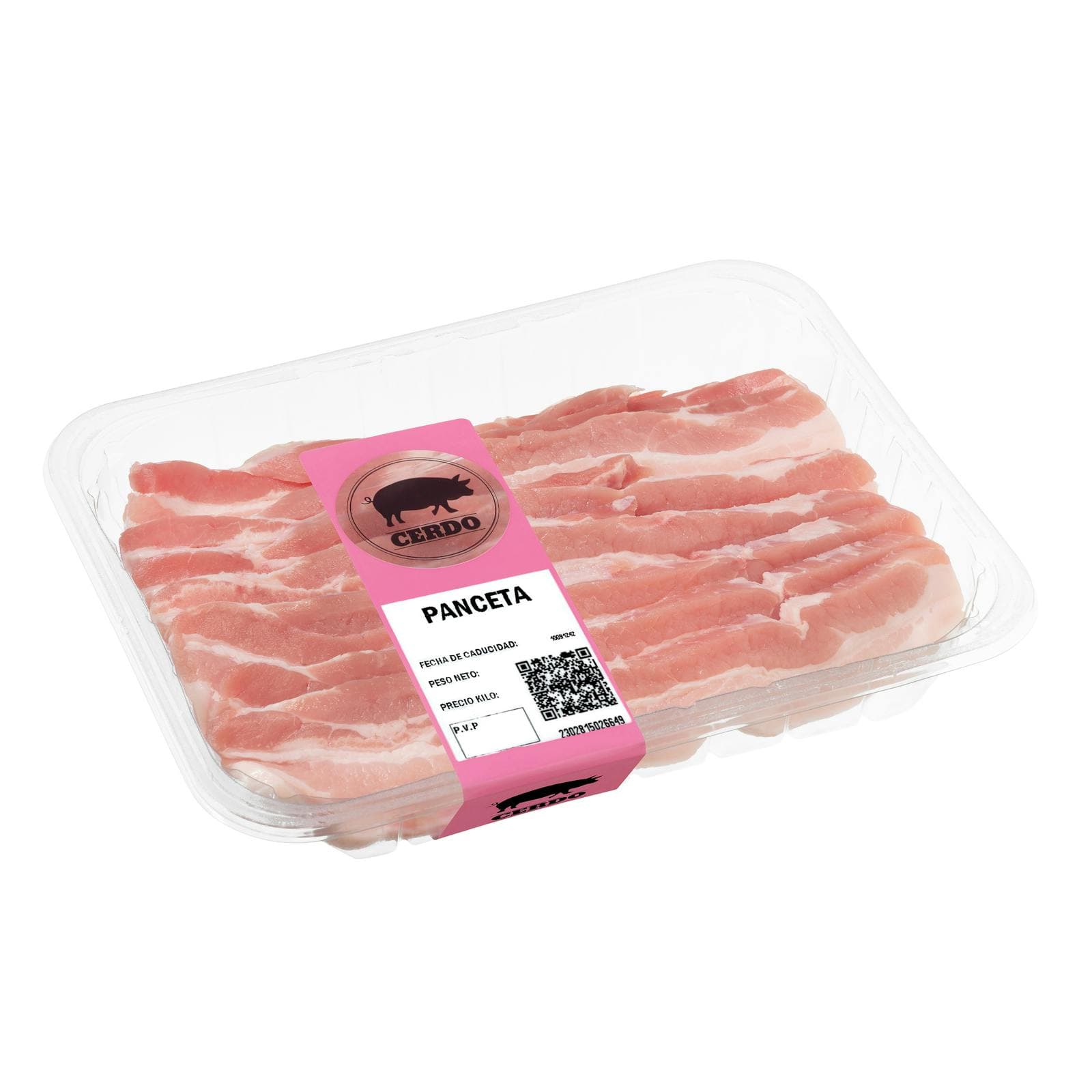 €3.24
€3.24Pork Belly
590 g · Mercadona
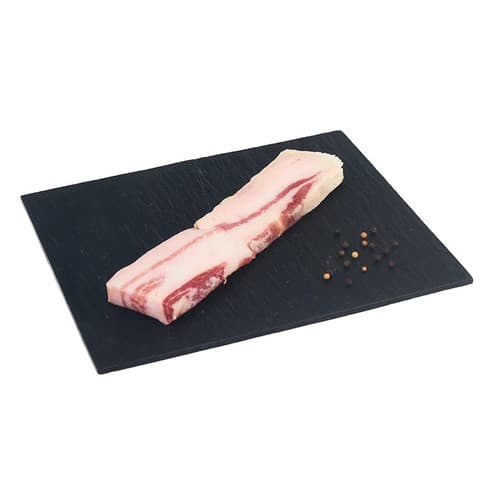 €2.36
€2.36Iberian Pork Belly
BONPREU · ud · Bonpreu
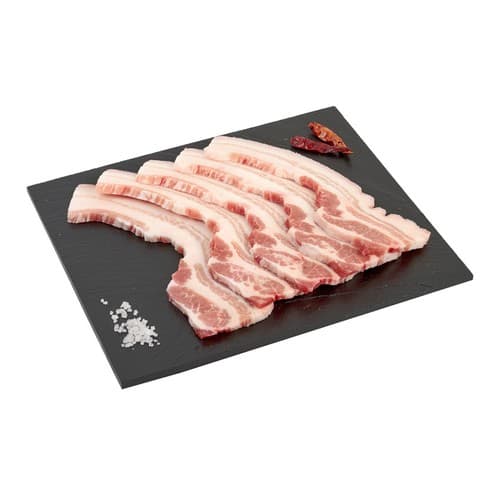 €0.75
€0.75Pork Belly 50% Duroc
BONPREU DE L'ERA · ud · Bonpreu
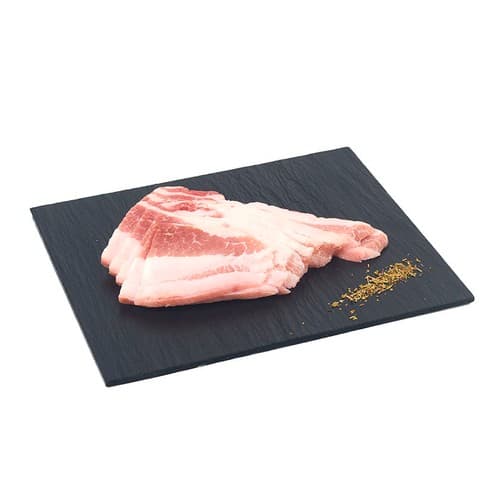 €1.24
€1.24Pork Belly 100% Duroc
BONPREU DE L'ERA · ud · Bonpreu
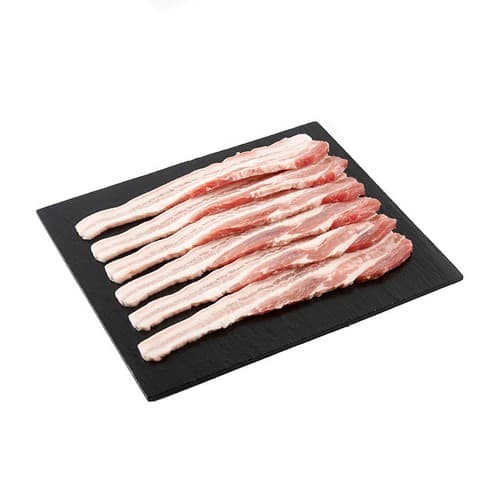 €3.49
€3.49Fresh Pork Belly Slices
BONPREU · kg · Bonpreu
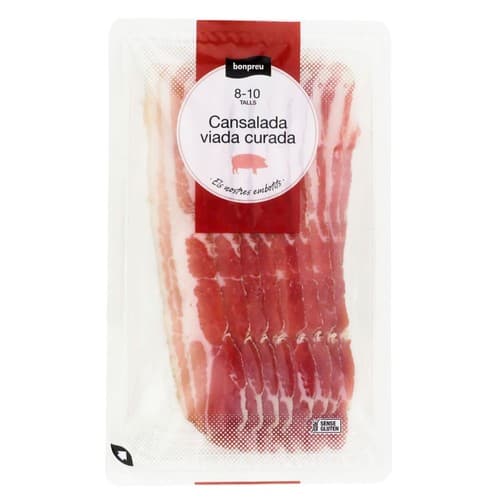 €1.99
€1.99Cured Pork Belly Bonpreu
BONPREU · kg · Bonpreu
Good to know
- Origin
- Guangdong Province, China; iconic to Cantonese and Hong Kong cuisine
- Primary Flavor
- Savory-sweet, umami-rich with salty-sweet crackling
- Texture
- Bubbly, shatteringly crisp skin over tender, fatty meat
- Typical Weight
- 1.5–3 kg (3–6.5 lb) whole belly slab
- Cooking Method
- High-heat dry roasting, 200°C (400°F)
- Active Prep Time
- 30–45 minutes (scoring, seasoning, glazing)
- Total Cook Time
- 90 minutes–2 hours depending on thickness
- Difficulty
- Moderate; skin preparation is the critical factor
- Shelf Life
- 3–4 days refrigerated; crackling is best same-day
Substitutes
- Chinese Char Siu — Uses marinated pork shoulder or belly with a sweet red glaze; lacks crackling and has a softer, stickier texture.
- Crispy Pork Belly (Restaurant Style) — Often starts with parboiling or pressure cooking before roasting; produces similar crackling with a shorter overall time.
- Roast Duck — Different fat profile and savory-sweet flavor but serves the same role in siu mei combinations and banquet presentations.
- Korean Samgyeopsal Gui — Grilled pork belly brushed with sesame oil and soy; skin is not rendered crisp in the same high-heat manner.
Pairs with
Also called
燒肉 · Siu Yuk · Crispy Pork Belly
Related

Egg
The kitchen's everything ingredient — bind, leaven, enrich, or fry

Chicken Breast
Lean, quick-cooking white meat for everyday dinners

Ground Beef
Versatile minced beef for burgers, ragù, tacos, and meatballs

Pork Loin
Lean, tender roasting cut that stays juicy with care

Salmon
Rich, rosy fish that roasts, grills, or cures beautifully

Egg White
Pure protein that whips to airy peaks for meringue and more

Egg Yolk
Rich, golden yolk for custards, mayonnaise, and pasta

Quail Egg
Tiny, speckled eggs for garnishing and elegant bites