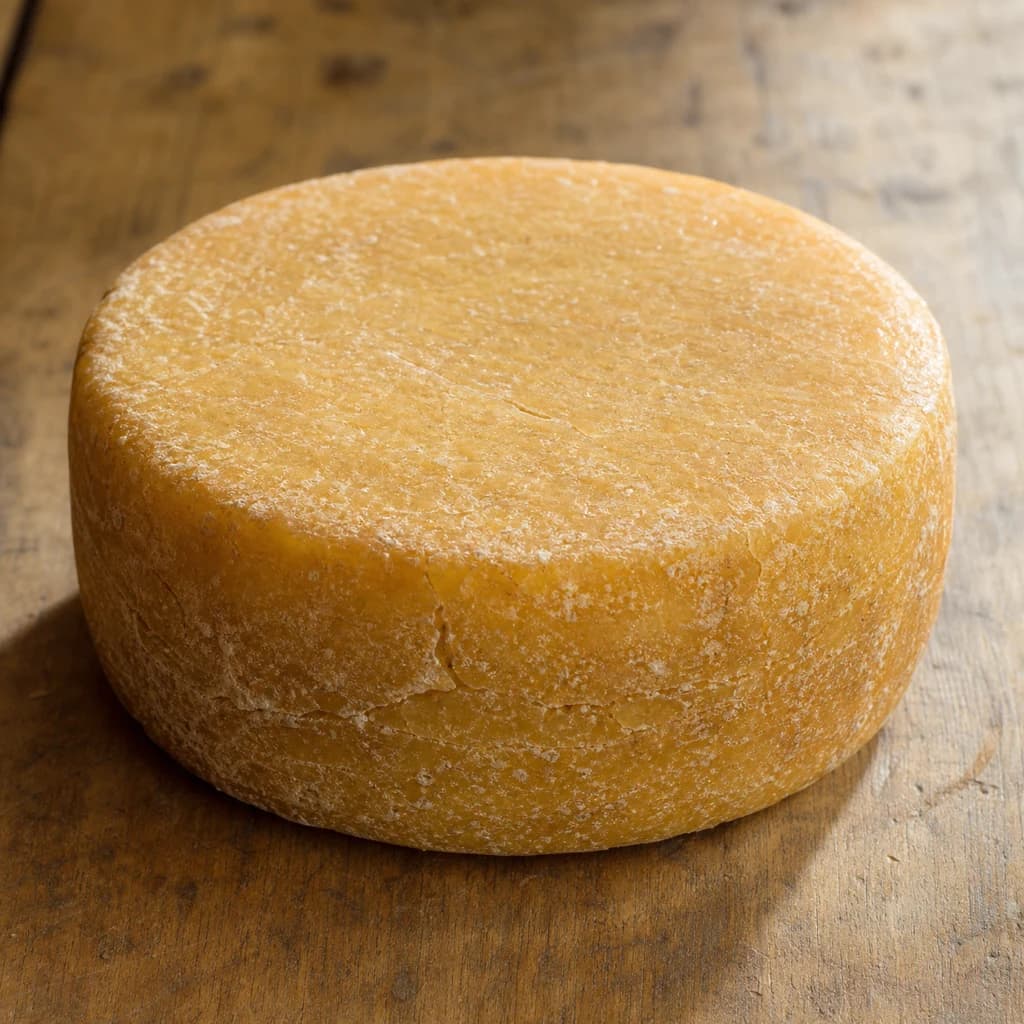
Natural form
A whole wheel of aged Rumi cheese showing its dry, pale golden rind.
Establishing the cheese in its whole, uncut form helps readers recognize it at market or in storage.
Dairy & Eggs
Rumi Cheese
Egyptian hard aged cow's-milk cheese with a sharp, salty, tangy bite.
Rumi is a hard, aged Egyptian cheese made from cow's (or buffalo) milk, aged for months to years to develop a sharp, salty, tangy flavor and firm crumbly texture. It is sliced for breakfast with bread, grated over dishes, or eaten as a table cheese. Longer aging gives it an increasingly pungent, peppery character.
Rumi is Egypt's most widely produced hard cheese and a cornerstone of Egyptian home cooking and street food culture. Made primarily from cow's milk in the Nile Delta region—particularly the Behira governorate—the cheese is dry-salted or brined, then aged for three to six months to develop its characteristic sharp, tangy bite. The name "Rumi" means "Roman" in Arabic, a nod to the Byzantine-era cheese-making traditions that gave birth to this style. Unlike many aged cheeses that soften with time, Rumi becomes denser and more crumbly as it matures; a six-month-aged wheel will shatter under a cheese plane and must often be broken by hand or hammered into shards. This behavior makes it a singular ingredient: it melts differently than younger Rumi, grates differently than a true Parmesan, and seasons dishes with an assertively salty, savory depth that few other hard cheeses can replicate. Artisanal versions, still made in small Delta dairies using traditional curd pressing and dry-salting, coexist with industrially produced wheels; quality varies considerably between producers, and imported Egyptian Rumi found in Middle Eastern groceries may differ markedly from domestic Middle Eastern dairy versions available elsewhere.
- Measured in
- g
- Storage
- Fridge
Allergens
Types & varieties
Milder, more supple texture; holds its shape better; better for slicing and melting
Sharper, saltier, and crumbly; ideal for grating over dishes and crumbling into soups and stews
Infused with thyme, oregano, or nigella seeds; regional specialty versions with added complexity
Made with buffalo milk; slightly richer and creamier than standard cow's milk versions
Rumi in Egyptian Culinary Tradition
Rumi occupies the same pantry position in Egyptian cooking that Parmigiano-Reggiano holds in Italian kitchens—a foundational savory seasoning that appears daily in everything from street food to family table. It is grated over koshari, Egypt's beloved national dish of rice, lentils, and pasta, where its sharp saltiness cuts through the starchy richness. It is crumbled into foul medames, the ancient fava bean stew eaten at virtually every Egyptian breakfast table, adding texture and depth to the humble dish. The cheese is also served simply at table: torn into pieces alongside pita, olives, and fresh vegetables, where its assertiveness stands on its own. Understanding Rumi as a seasoning agent rather than a standalone cheese will guide you toward its most authentic uses.
- Koshari without Rumi is simply starch; the cheese makes it sing
- Foul medames is the classic context—crumble it in at the table, not during cooking
- Table Rumi is meant to be strong; don't be timid with it
Buying and Storing Rumi
Rumi is sold in Middle Eastern grocery stores and some specialty cheese shops; availability outside Egypt varies by region. Look for a wheel or block with a firm rind—if the exterior feels tacky or the cheese emits a sour, ammonia-like smell when first unwrapped, it may be past its prime or improperly stored. Once opened, rewrap tightly in plastic wrap and store in the refrigerator away from strong-smelling foods; Rumi absorbs odors readily and will take on off-flavors from nearby ingredients. A whole wheel will keep for months refrigerated, though grated or crumbled portions should be used within a few weeks for best quality. If your aged Rumi has become extremely hard and difficult to work with, do not attempt to force it with a knife—wrap it in a clean cloth and tap it firmly with a kitchen hammer to create workable shards for cooking.
- Test the rind before buying; it should feel dry and firm, not sticky
- Never store Rumi unwrapped or near onions, garlic, or strongly scented foods
- Use a hammer or mallet on fully aged wheels—never risk chipping a knife blade
Common uses
Tips & pitfalls
- Always grate on a fine microplane or box grater; aged Rumi is dense and requires sharp tools to avoid frustration
- Bring to room temperature 20–30 minutes before serving or cooking to develop full flavor and aroma
- Season dishes lightly when cooking with Rumi; it is naturally very salty and will dominate a dish if added in excess
- Add late in cooking when melting or incorporating into sauces to prevent it from becoming rubbery or losing its sharp character
- Break off pieces rather than cutting with a knife when the cheese is very aged and crumbly; a clean break yields better texture
- If the cheese becomes too hard to grate, wrap in cloth and tap with a kitchen hammer to create usable shards for soups, stews, or salads
- Store away from strong-smelling foods as it absorbs odors easily—a common mistake that ruins the cheese's clean, sharp flavor
- Taste before using in a new dish; salt levels vary significantly between producers, so adjust seasoning accordingly
Nutrition
Energy
1628 kJ · per 100 g
Where the calories come from
Protein
25.6g
51% DV
Carbs
1.6g
1% DV
Fat
31.1g
40% DV
Fiber
0g
0% DV
Sugars
1.6g
of which
Sodium
800mg
35% DV
Source · USDA FoodData Central · approx. Cheese, fontina
View on FDC →In the shops
Matched grocery products
No matched grocery products for Rumi Cheese yet.
Good to know
- Origin
- Egypt, primarily the Nile Delta region, particularly Behira governorate
- Milk Type
- Primarily cow's milk; sometimes buffalo milk or a blend
- Aging
- Typically 3–6 months; longer aging yields sharper, saltier, more crumbly cheese
- Texture
- Hard, firm, slightly granular; becomes crumbly when fully aged
- Color
- Natural pale yellow to golden interior; often with a darker rind
- Flavor
- Sharp, salty, tangy, savory; intensifies significantly with aging
- Salt Content
- High; a brine or dry-salted cheese
- Form
- Wheel, block, or loaf form; often with a waxed or cloth-coated rind
- Shelf Life
- Refrigerated, tightly wrapped; keeps several months
Substitutes
- Pecorino Romano — Closest flavor match; sharper and saltier; Italian hard sheep's milk cheese, excellent for grating
- Kasseri — Turkish-style semi-hard to hard cheese with similar tangy sharpness; good melting properties
- Aged Parmesan (Parmigiano-Reggiano) — Similar texture and umami depth; slightly less tangy but reliable and widely available
- Jarlsberg — Norwegian wheel cheese; milder but workable in a pinch for melting applications
Pairs with
Also called
Mish (Aged Fermented Cheese) · Roumy Cheese
Related

Whole Milk
Rich, full-fat milk for drinking, coffee, sauces, and baking
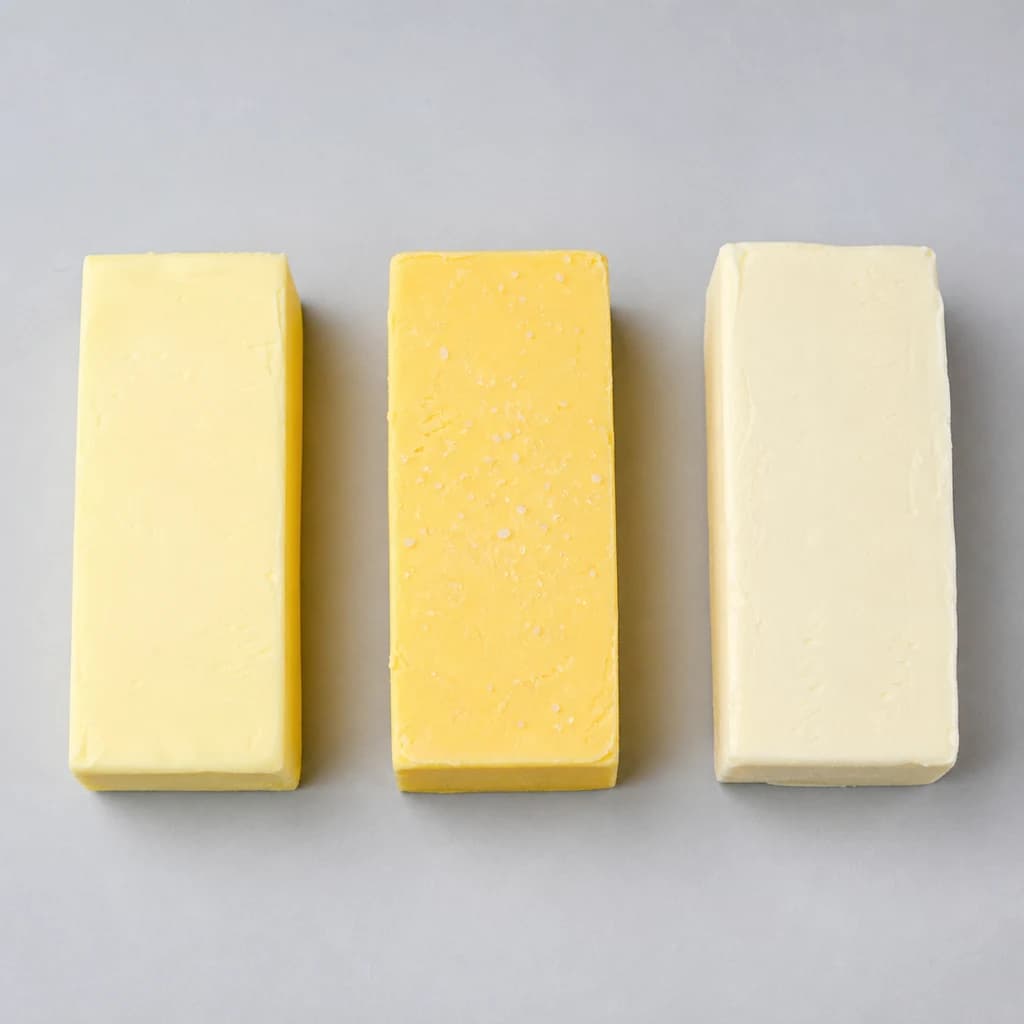
Butter
Golden fat for searing, baking, and finishing a sauce
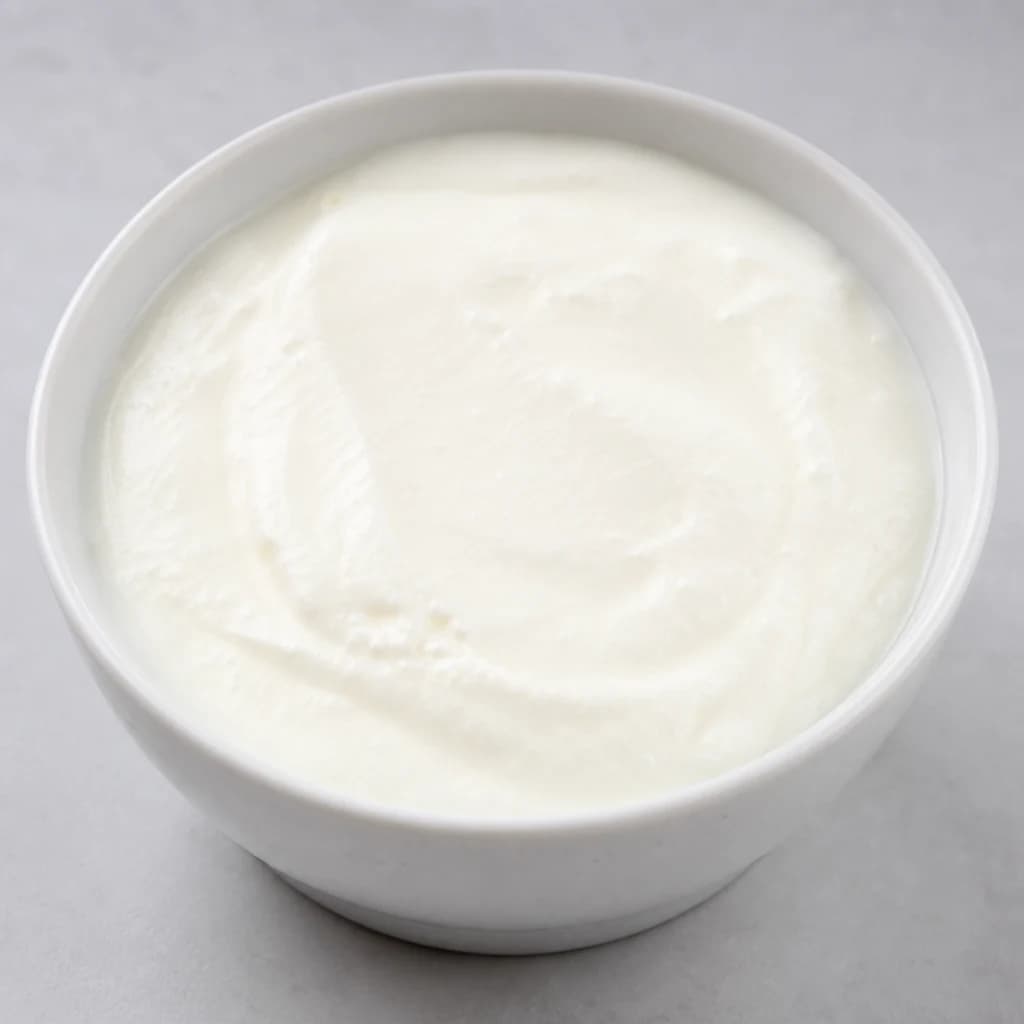
Yogurt
Tangy, creamy culture for breakfast, sauces, and marinades
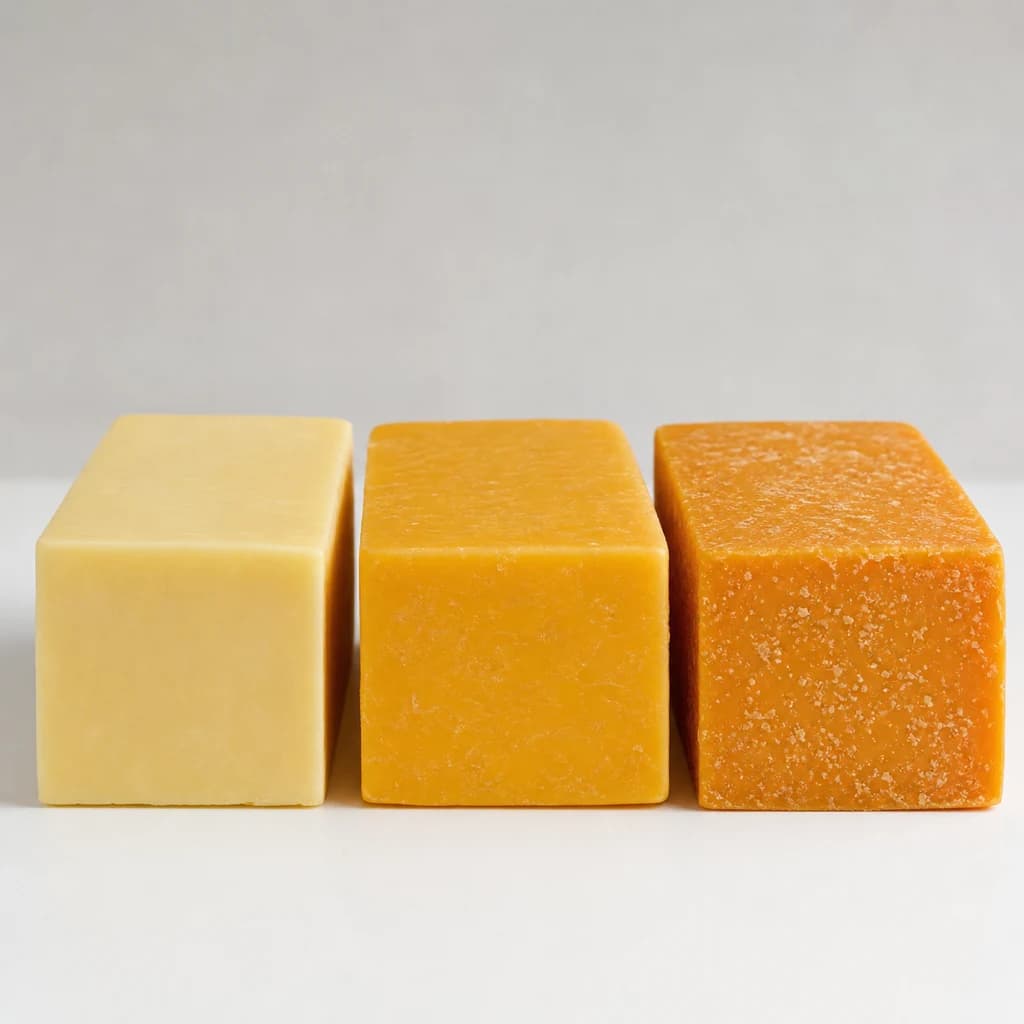
Cheddar Cheese
Sharp, melty cheese for sandwiches, gratins, and grating

Skim Milk
Fat-free milk for lighter drinking, coffee, and cooking
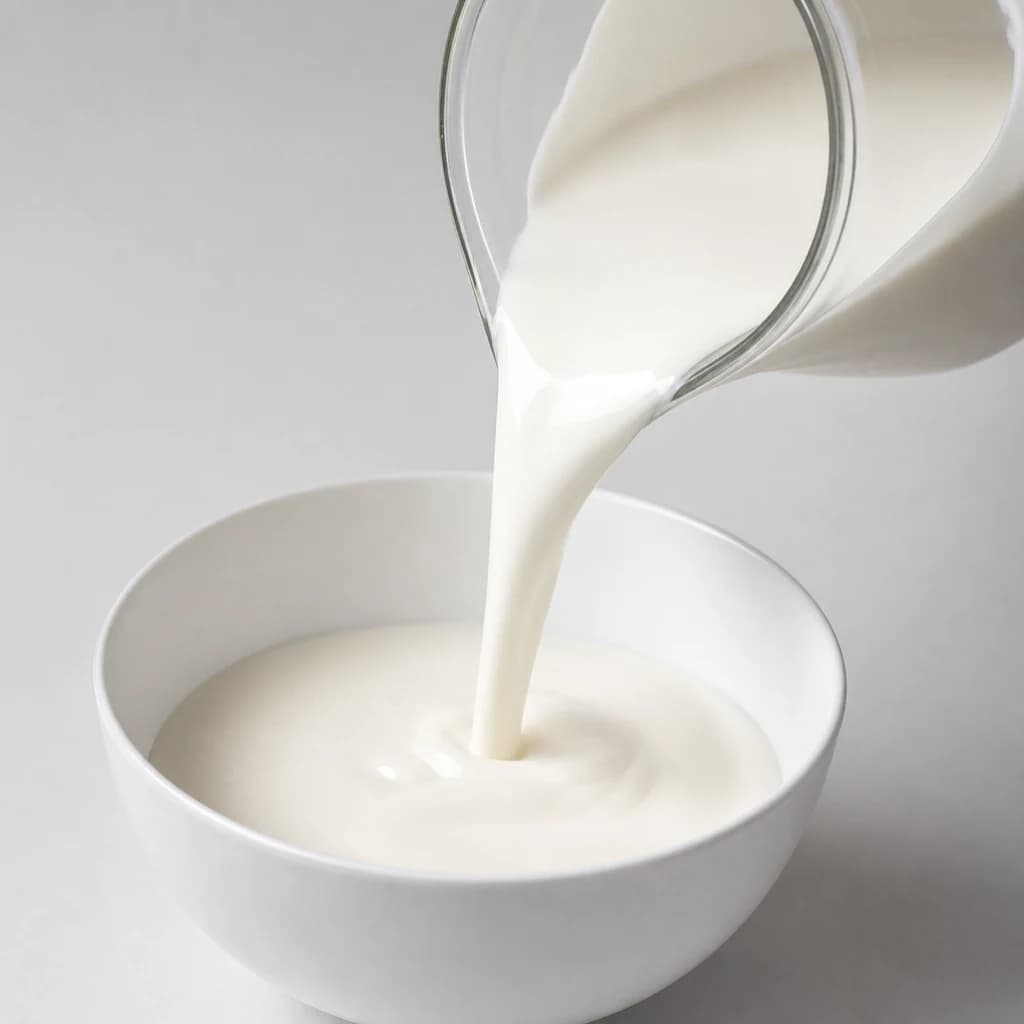
Heavy Cream
Rich cream that whips, enriches sauces, and sets ganache

Sour Cream
Tangy, thick cream for dolloping, baking, and dips
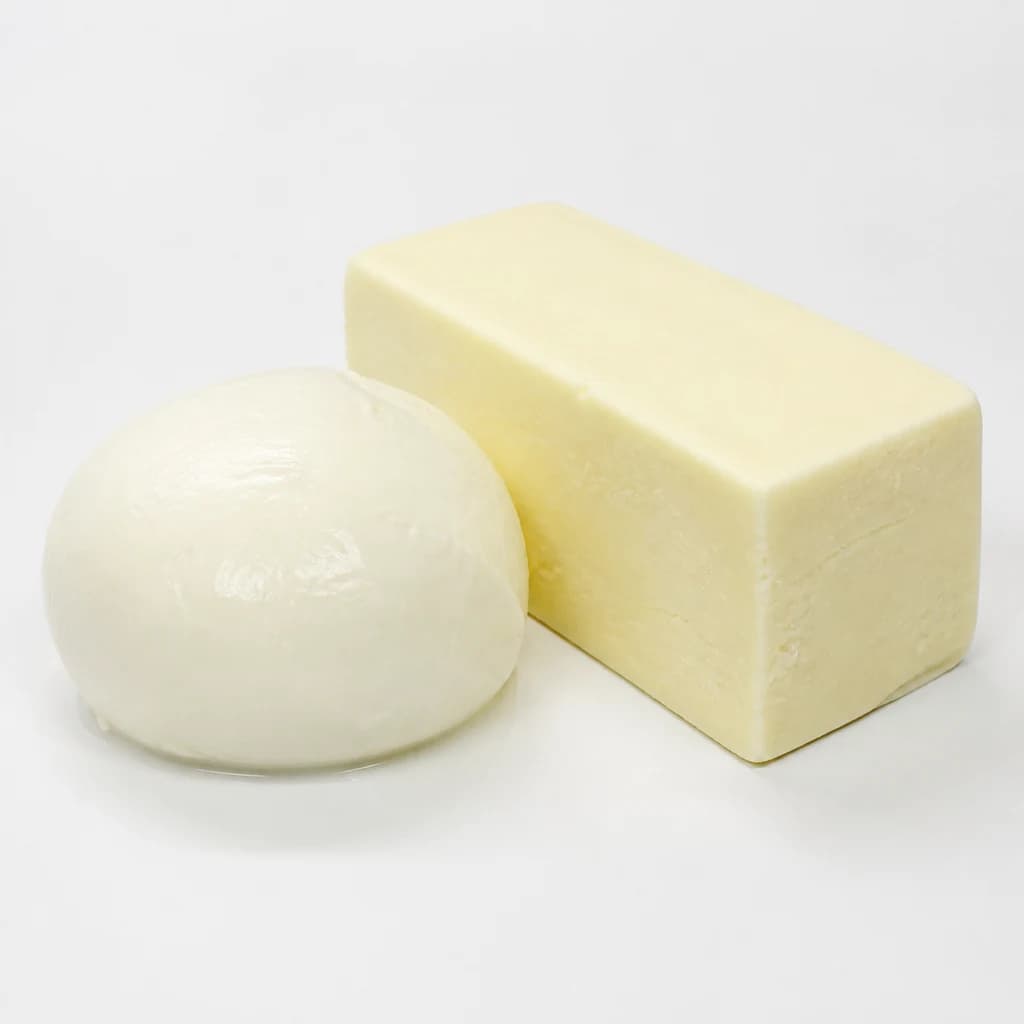
Mozzarella
Soft, milky cheese that melts into stretchy pizza pulls