Proteins
Sprat (Kilu)
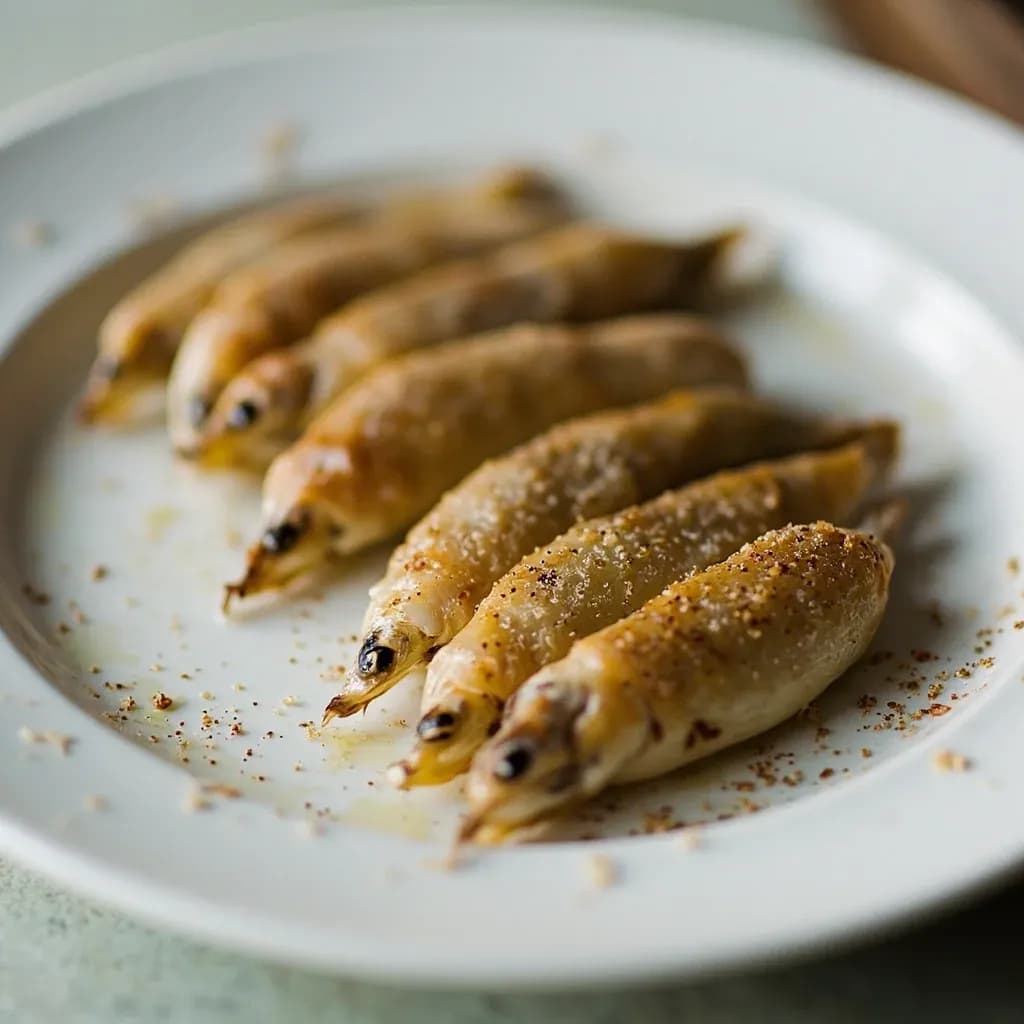
Small oily Baltic fish smoked, salted or spiced into the classic kiluvõileib.
Sprats are small, oily forage fish in the herring family, central to Baltic and Scandinavian cooking. In Estonia (kilu) they are salted and spiced for kiluvõileib open sandwiches, while elsewhere they are smoked and tinned in oil. Rich and intensely flavored, they are eaten whole including the soft bones.
Sprat is a small pelagic fish of the herring family, caught across the North Atlantic, the North Sea, the Black Sea, and the Mediterranean, but most familiar to Northern European cooks in its Baltic form — Estonian kilu, Latvian brētliņas, Lithuanian šprotai, Swedish skarpsill. The Baltic fish runs small (8–14 cm, market weight 10–25 g) and is unusually oily, with body fat climbing through late summer and peaking around 8–14% in autumn. That oil is the point: sprat is almost always encountered preserved rather than fresh — smoked, dry-salted, spiced in a vinegar-and-spice brine, or canned in oil or tomato sauce. The bones are fine enough to eat whole once the fish has been smoked or heat-processed, and the flesh breaks into soft, dense flakes that carry smoke and salt deeply.
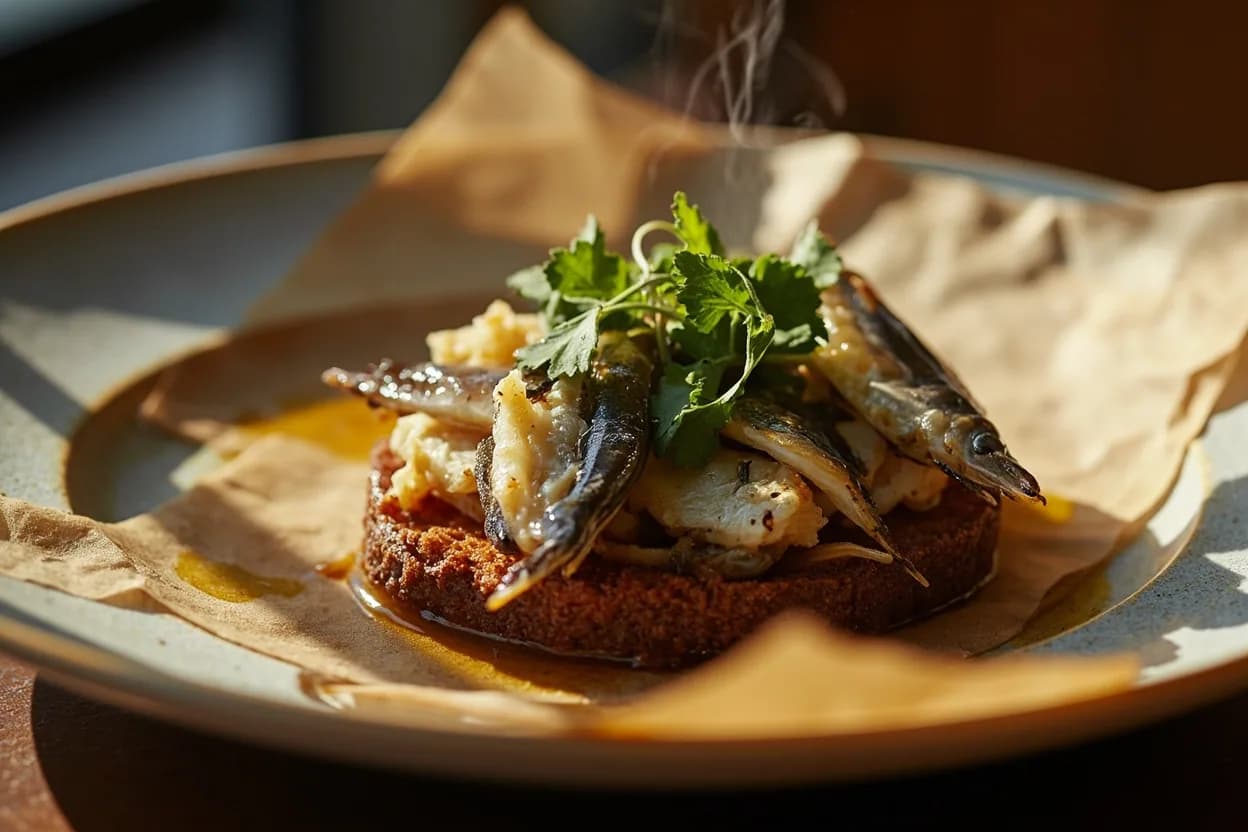
In the kitchen, treat sprat as a flavor concentrate rather than a centerpiece protein. A few fillets on dark rye with butter do more than a plate of the same fish dressed up. The Baltic tradition is dense: kiluvõileib — buttered rye, sprats, sliced hard-boiled egg, dill, and often a curl of red onion — is the everyday shorthand for Estonian coastal cooking and appears on Independence Day and Christmas Eve tables. The broader practice of Baltic herring and sprat fishing and traditional preservation was inscribed on UNESCO's Representative List of the Intangible Cultural Heritage of Humanity in 2023, jointly nominated by Estonia, Finland, Latvia, and Sweden. Outside the Baltics, Finland, and the former USSR, the most accessible form is the small flat tin of sprats in oil or tomato sauce — once a Soviet pantry icon and now a specialty import sold at Nordic delis and well-stocked grocers.
Sprat behaves like other oily small pelagics: the fat carries flavor, the texture is soft and forgiving, and a little goes a long way. Acid and sharpness — lemon, raw onion, horseradish, pickled cucumber — keep it from feeling greasy. Dense sourdough or dark rye soaks up the oil without going soggy, and fresh herbs (dill above all, then chives and parsley) brighten the finish. Hot-smoked and canned sprats need no further cooking; cold-smoked and salted sprats are also typically eaten as they come, with maybe a light vinaigrette.
- Measured in
- g
- Storage
- Fridge
Allergens
Types & varieties
Cold-smoked Baltic sprats; firm, silky flesh and delicate smoke; the classic 'on rye with butter' style.
Hot-smoked sprats; softer texture and a more pronounced smoke; ready to eat as they come.
Dry-salted or brine-salted whole sprats, sold semi-preserved; rinse briefly and dress before serving.
Spiced brined sprats — vinegar, sugar, bay leaf, allspice, black pepper, onion; tangy and slightly sweet, the iconic 'sprat on rye'.
Canned sprats in oil or in tomato sauce; shelf-stable pantry staple across the Baltics and the former USSR.
Buying and quality cues
Most cooks will buy sprats preserved, not fresh. Whether you are choosing a tin of vürtsikilu or a jar of hot-smoked fillets, the markers of a good product are similar: the fish should look intact rather than mushy, and the oil or brine should be clear. Acrid or chemical smoke notes, cloudy packing oil, or broken fish suggest poor handling or overlong storage.
- In tinned sprats, the oil should be clear and golden (or the tomato sauce bright and unseparated); flesh should hold together when you lift it out, not disintegrate.
- For whole smoked sprats, look for glossy, unbroken skin and a clean smoke aroma — not acrid, not papery.
- For soolakilu, the fish should smell of clean salt, not ammonia or extreme sourness; the brine should be lightly cloudy at most.
- Check the catch or pack date where listed; smoked sprats are best within 2–3 months, canned sprats keep 6–18 months unopened at cool ambient.
Building the classic kiluvõileib
The Baltic open-faced sprat sandwich is a template as much as a recipe. The proportions matter: a sturdy slice of dark rye, a thin layer of good salted butter, a single layer of 4–6 whole sprats, one or two thin slices of hard-boiled egg, a curl of red onion, and a sprig of dill. From that base you can move in either of two directions — toward the smørrebrød tradition (rye, butter, sprats, horseradish, pickled cucumber, raw onion) or toward a French-leaning tartine (toasted sourdough, crème fraîche, lemon zest, chives). Either way, restraint is the rule: sprats lead, and the supporting cast exists to cut their richness.
- Slice the egg with a sharp serrated knife so the rounds lie flat beside the fish rather than crumbling.
- Overlap the sprats head-to-tail in a single layer; do not pile them or the bread will tear and the salt will concentrate.
- Dress with raw onion, lemon, or pickled cucumber only at the last moment so the bread does not go wet.
How it behaves in the kitchen
Sprat is soft, oily, and already cooked by the time it reaches you. Treat it as a finishing ingredient, not something to braise or sear. A few fillets warm slightly from room temperature and release their oil into bread, potatoes, or eggs; heated further and they break down. The exception is pâté, where you actually want the fish to dissolve into cream cheese, sour cream, or butter.
- Texture: fine, soft flakes; small bones soften during smoking and canning and are safe to eat whole.
- Fat: carries smoke and salt into whatever it touches — the single biggest flavor lever in any sprat dish.
- Salt: usually already present in significant amounts; taste before adding more salt to a dish.
- Acidity: required for balance — lemon, vinegar, raw onion, or pickled cucumber should always be within reach.
Common uses
Tips & pitfalls
- Take tinned or smoked sprats out of the fridge 15–20 minutes before serving; cold fat firms up and masks the flavor.
- Save the oil from canned sprats — it carries smoke and salt and is ideal for dressing boiled potatoes or sautéing onions.
- Drain and gently pat smoked sprats dry before plating; wet fish will water down a slice of rye.
- Rinse heavily salted soolakilu briefly under cold water and pat dry before dressing, or the salt will dominate everything else.
- Balance the fat with acid — a squeeze of lemon, sliced raw onion, or a slice of pickled cucumber keeps the sandwich from feeling greasy.
- Eat the small bones; they soften during smoking or canning and are a key source of calcium. Pick out only the heads on whole fish.
- Do not overstack the open sandwich: 4–6 whole sprats per slice is plenty — more and the bread tears, the salt concentrates, and the fish overwhelms the bread.
- Avoid strong competing flavors such as smoked paprika or blue cheese; sprats should lead the dish, not fight for it.
Nutrition
Nutrition
No USDA FoodData Central match for Sprat (Kilu) yet. We surface a per-100 g profile once a generic whole-food entry is matched and verified.
In the shops
Matched grocery products
No matched grocery products for Sprat (Kilu) yet.
Good to know
- Scientific name
- Sprattus sprattus (Baltic population: S. s. balticus)
- Family
- Clupeidae — the same family as herring, sardine, and anchovy
- Local names
- Kilu (Estonian), brētliņas (Latvian), šprotai (Lithuanian), kilka (Russian), skarpsill (Swedish)
- Typical size
- 8–14 cm; market weight 10–25 g
- Peak season
- Caught year-round, with the richest fat content from September to November
- Fat content
- Roughly 8–14% body fat, climbing through late summer and autumn
- Cultural status
- Centerpiece of Estonian, Latvian, Lithuanian, and Finnish coastal food; UNESCO Intangible Cultural Heritage (jointly with herring fisheries), inscribed 2023
- Signature dish
- Estonian kiluvõileib — open-faced rye sandwich with butter, sprats, hard-boiled egg, and dill, served on Independence Day (Feb 24) and Christmas Eve
Substitutes
- Smoked Baltic herring (suitsuräim) — Closest match in flavor and use; larger and meatier, but the same smoky-brine character. Use about one fillet per two sprats.
- Smoked sardines — A good smoky substitute; bigger and firmer — flake into similar portions on rye.
- Marinated anchovies (boquerones) — Work in salads and on toast, but the flavor is fresher and less smoky; reduce added salt elsewhere in the dish.
- Salted anchovies (oil-packed) — Much saltier and more pungent — use sparingly and rinse briefly first.
- Smoked whitebait or small smoked sardines — Similar size and intensity; good for canapés and tartines.
- Herring rollmops — Acid-led alternative; tangier and not smoky, but works well on rye with onion when a sprat-style sandwich is wanted.
Pairs with
Also called
Kilu · Brisling · Baltic Sprat
Appears in these dishes
Related

Egg
The kitchen's everything ingredient — bind, leaven, enrich, or fry

Chicken Breast
Lean, quick-cooking white meat for everyday dinners

Ground Beef
Versatile minced beef for burgers, ragù, tacos, and meatballs

Pork Loin
Lean, tender roasting cut that stays juicy with care

Salmon
Rich, rosy fish that roasts, grills, or cures beautifully

Egg White
Pure protein that whips to airy peaks for meringue and more

Egg Yolk
Rich, golden yolk for custards, mayonnaise, and pasta

Quail Egg
Tiny, speckled eggs for garnishing and elegant bites