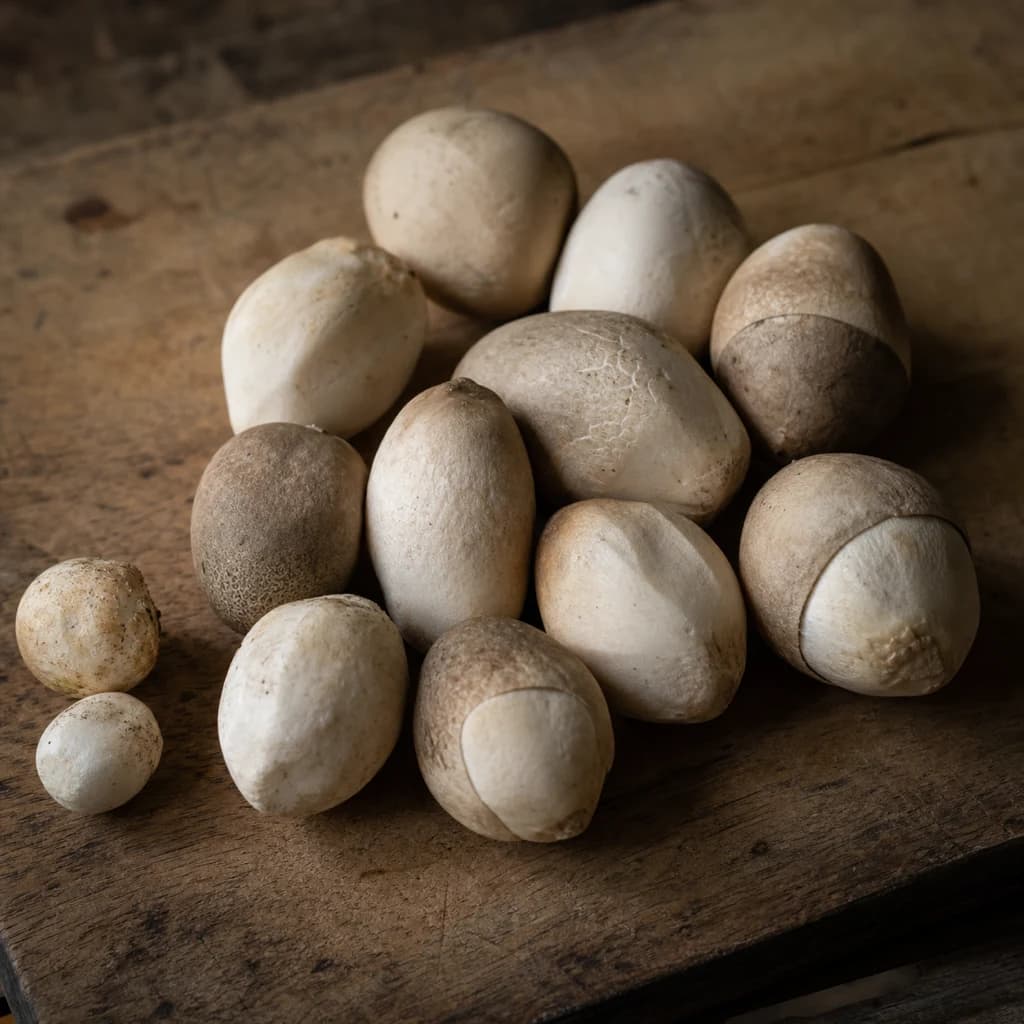
Natural form
Fresh straw mushrooms in their intact egg-like veil, whole and uncut on a wooden surface.
Shows the mushroom's most distinctive feature — the closed, rounded veil giving it an egg-like shape — so readers can identify fresh specimens at market.
Produce
Straw Mushroom (Het Fang)
Small egg-shaped Asian mushrooms with a tender bite, common in stir-fries, curries, and tom yum.
Straw mushrooms are small, pale-to-brown mushrooms grown on rice straw, often picked young while still enveloped in a rounded veil that gives them an egg-like shape. Soft and slippery with a mild, earthy taste, they are a Southeast and East Asian staple in stir-fries, Thai curries, and tom yum, and are widely sold canned. Fresh ones are highly perishable and used quickly.
Straw mushrooms (Volvariella volvacea), called het fang (เห็ดฟาง) in Thai, are small egg-shaped fungi native to Southeast Asia. They grow rapidly in hot, humid tropical conditions on beds of rice straw—hence the English name. The cap ranges from dark grayish-brown to olive-brown; the stem is cream to pale gray, and a cup-like volva surrounds the base. When young, the cap remains closed and ovoid; it opens as the mushroom matures. The flesh is tender with a silky quality when cooked, though the stem can retain slight chewiness. Their flavor is mild and earthy with a faint nuttiness, more subtle than button or cremini mushrooms, making them excellent at absorbing surrounding flavors rather than asserting themselves. Fresh straw mushrooms are rarely found outside Southeast Asia due to extreme perishability; canned specimens in brine or water are the global standard. In Thai, Vietnamese, and southern Chinese kitchens, they are indispensable in soups, curries, and stir-fries, prized for soaking up bold broths and sauces while contributing delicate texture. Their natural affinity for the hot-sour-salty flavor profile of Southeast Asian cooking makes them a cornerstone ingredient in that culinary tradition.
- Measured in
- g
- Storage
- Fridge
Types & varieties
Paler cap; considered premium; slightly more delicate flavor and texture
Most common commercial variety; slightly stronger earthy flavor
Sourcing Fresh vs. Canned
Fresh straw mushrooms are a Southeast Asian market staple and rarely survive export due to perishability. When you do find them fresh, smell is your best quality indicator—fresh ones have a mild, clean, earthy scent. Avoid any with slippery surfaces or ammonia-like odors, which indicate spoilage. Canned straw mushrooms are universally available and, while slightly softer in texture, perform admirably in most applications. For recipes where texture matters more—stir-fries, stuffings—choose canned whole specimens rather than sliced, which tend to break apart more easily.
- Canned mushrooms: look for firm, intact caps with no discoloration in the brine
- Rinse canned mushrooms briefly to reduce sodium and brine flavor unless the recipe uses the liquid
- Fresh: choose closed caps that feel firm and heavy for their size
Common uses
Tips & pitfalls
- For fresh mushrooms, choose firm, closed caps; avoid any with slippery surfaces or strong ammonia smell
- Fresh straw mushrooms cook in minutes—add them toward the end of cooking to prevent them from becoming mushy
- If using canned, rinse briefly to reduce sodium and brine taste, unless the recipe specifically uses the liquid
- When stir-frying, high heat and short cooking time preserve their tender bite better than prolonged braising
- In curries and soups, they absorb surrounding flavors readily; add them 5–10 minutes before serving
- Common mistake: overcooking, which turns them soft and bland—watch timing closely
- Another common mistake: using expired fresh mushrooms; they spoil quickly and develop off-flavors that can ruin a dish
- When buying canned, shake the can gently—if you hear rattling, the mushrooms may be broken or softened
Nutrition
Energy
134 kJ · per 100 g
Where the calories come from
Protein
1.5g
3% DV
Carbs
6.9g
2% DV
Fat
0.5g
1% DV
Fiber
3.8g
14% DV
Sugars
1.2g
of which
Sodium
9mg
0% DV
Source · USDA FoodData Central · approx. Mushrooms, Chanterelle, raw
View on FDC →In the shops
Matched grocery products
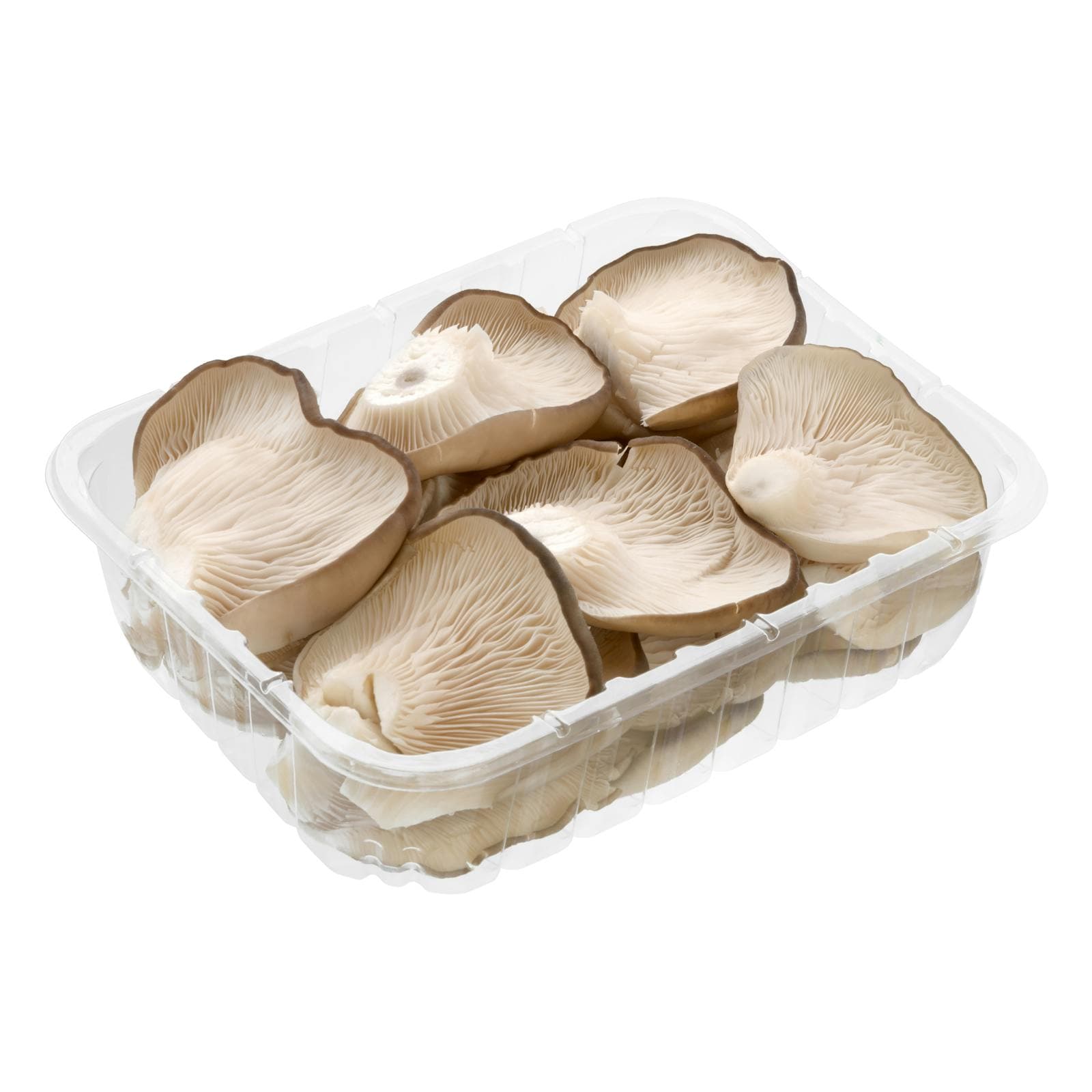 €2.05
€2.05Mushrooms
250 g · Mercadona
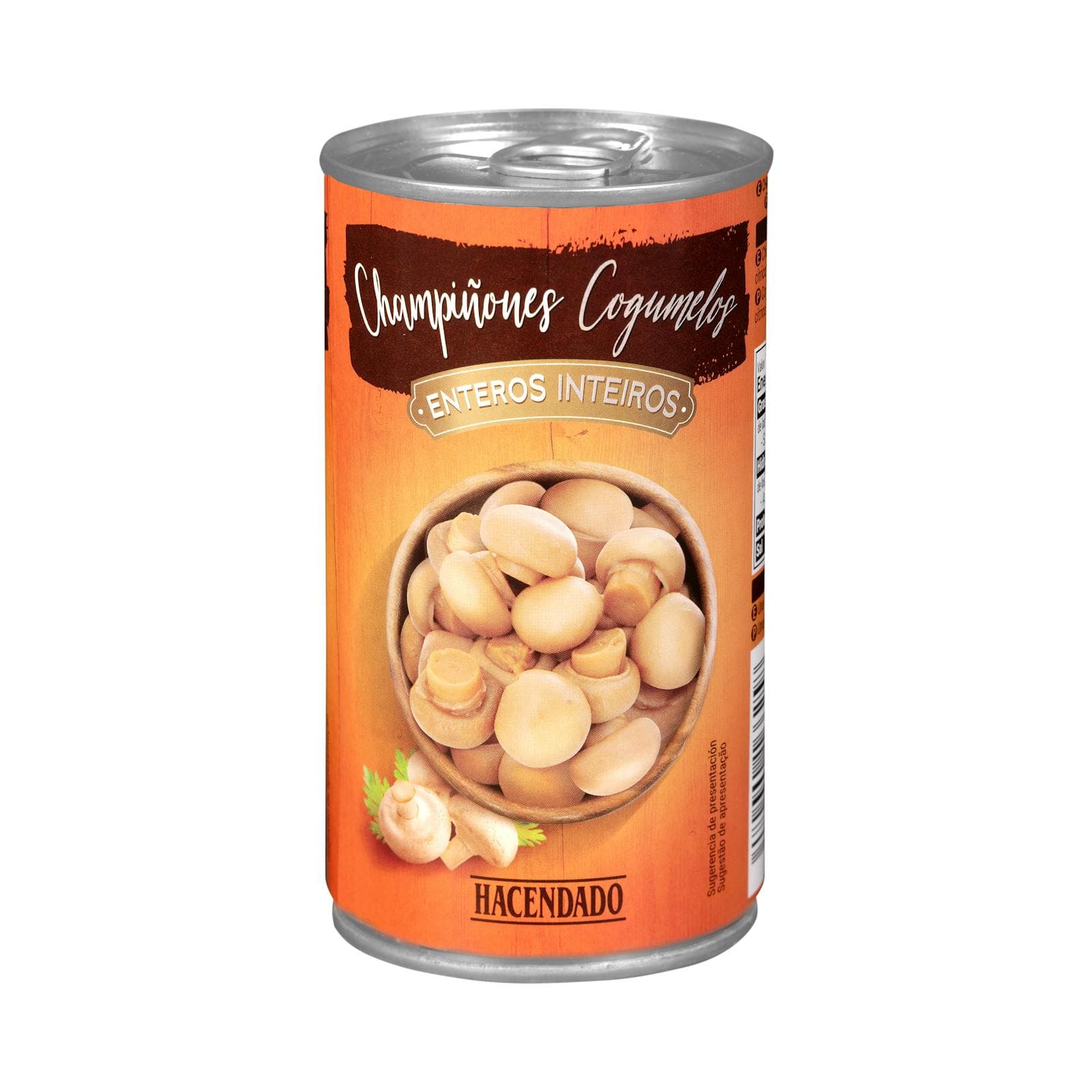 €1.45
€1.45Whole Mushroom
Hacendado · 355 g · Mercadona
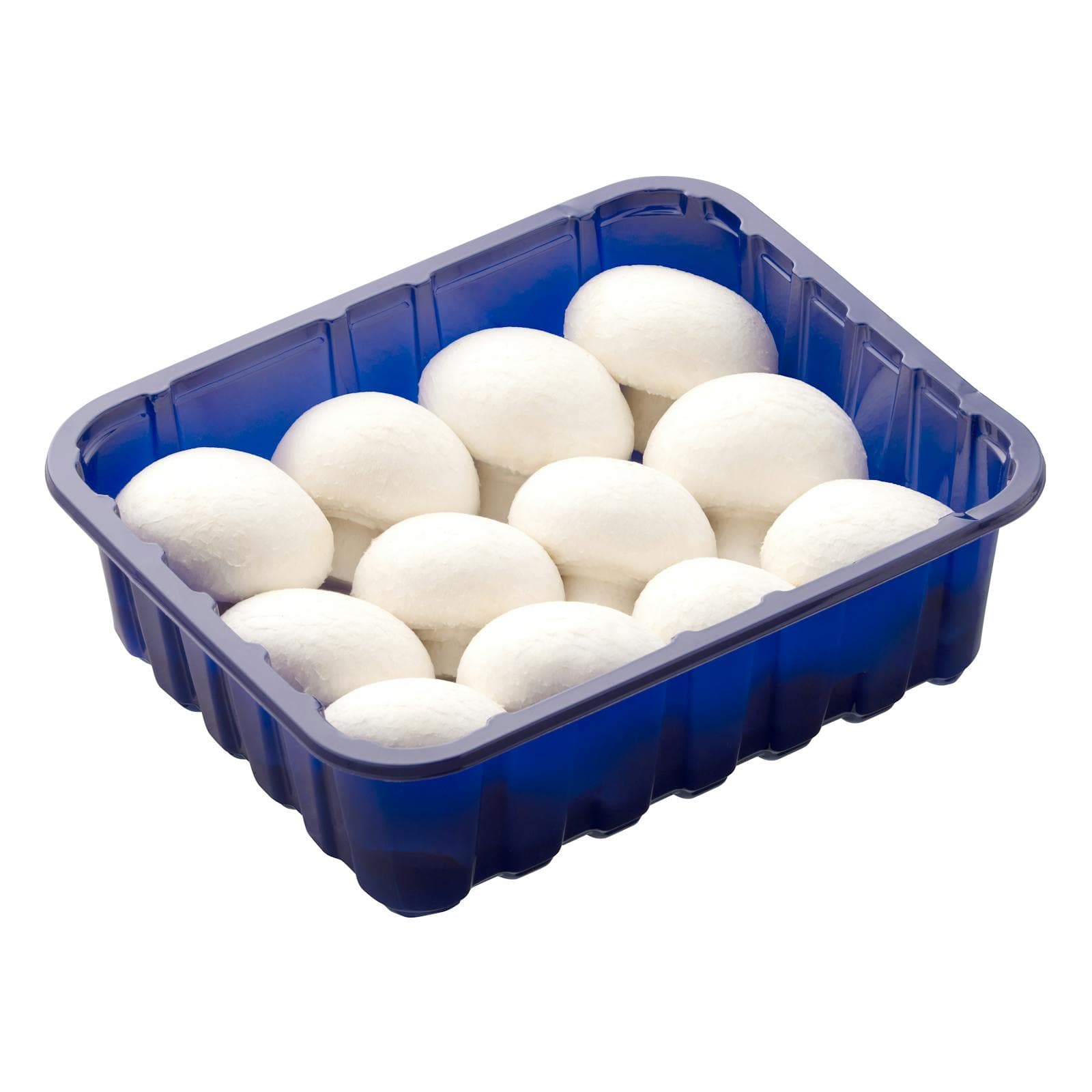 €1.50
€1.50White Mushrooms
300 g · Mercadona
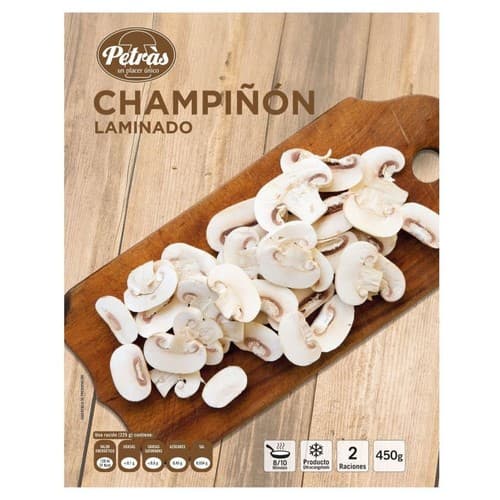 €1.99
€1.99Sliced Mushrooms
PETRAS · kg · Bonpreu
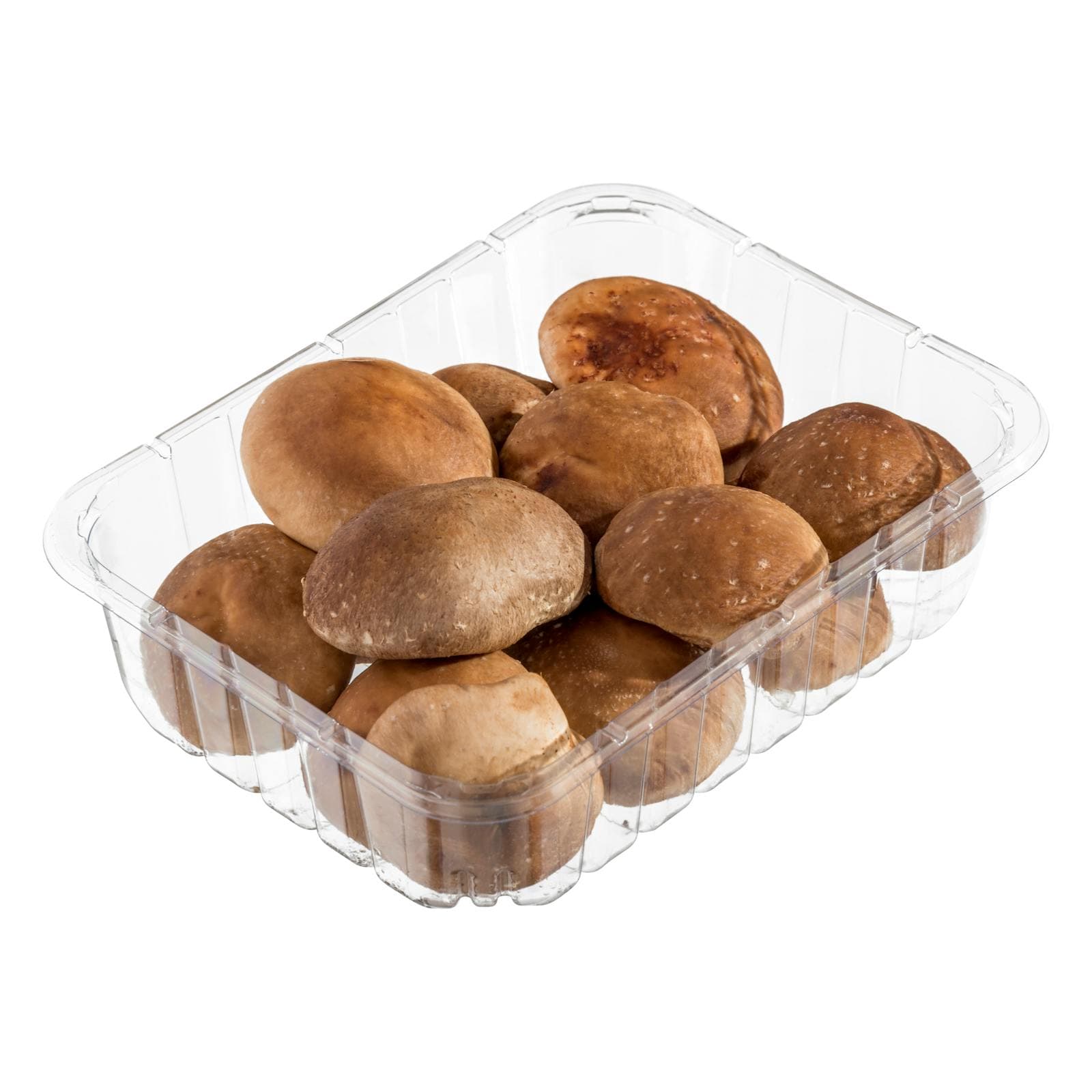 €3.96
€3.96Shiitake Mushrooms
300 g · Mercadona
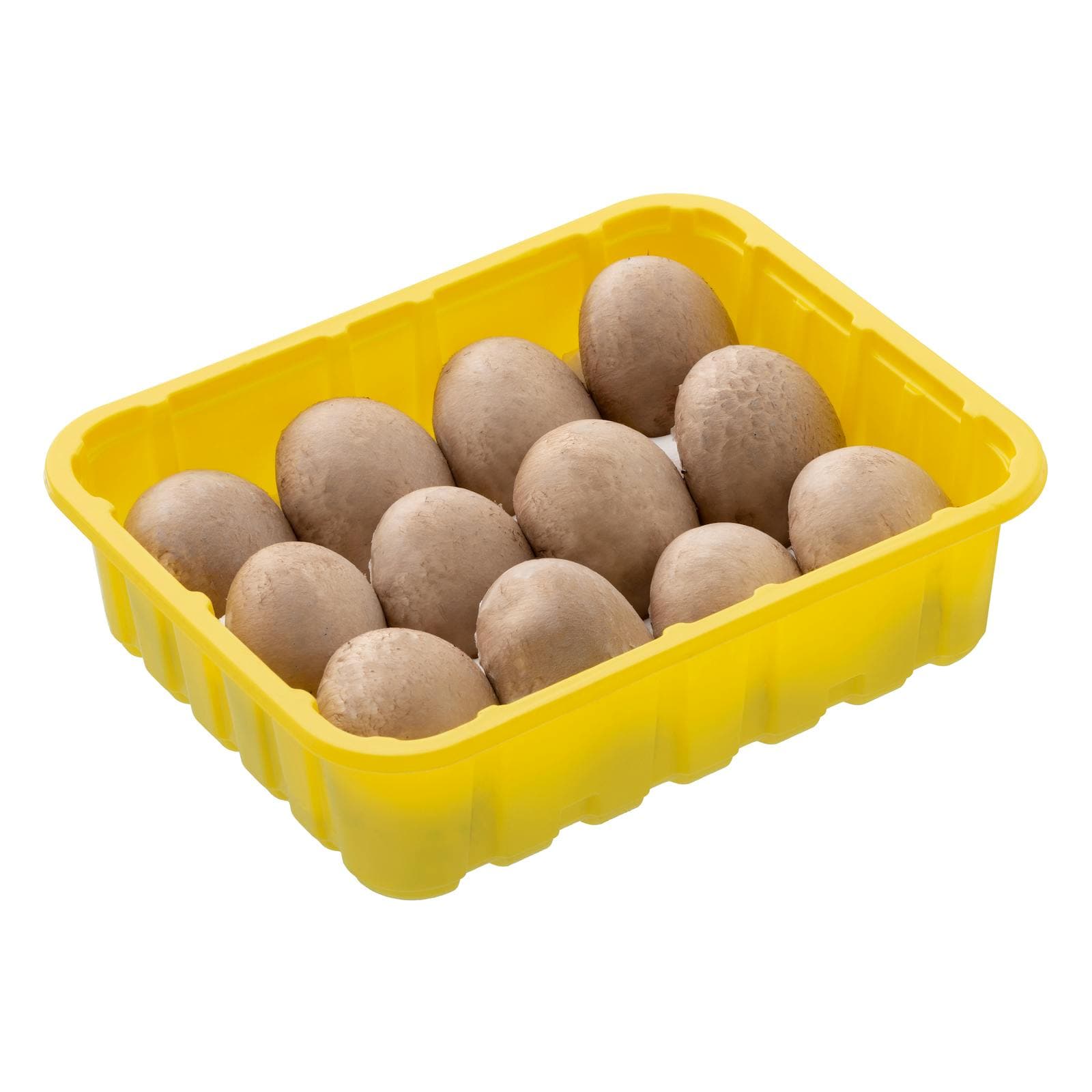 €2.16
€2.16Portobello Mushrooms
300 g · Mercadona
Good to know
- Scientific name
- Volvariella volvacea
- Origin
- Southeast Asia: Thailand, Vietnam, southern China, Indonesia, Philippines
- Growing medium
- Rice straw, banana leaves, cotton waste, or palm oil waste
- Growing conditions
- Hot, humid tropical climate; 30–35°C; thrives during rainy season
- Typical size
- 2–5 cm diameter; 5–10 cm tall when mature
- Shape
- Egg-shaped when young; cap expands and opens with age
- Color
- Dark grayish-brown to olive-brown cap; cream to pale gray stem; volva (cup) at base
- Texture
- Tender with silky quality when cooked; stem can retain slight chewiness
- Flavor
- Mild, earthy, faintly nutty; subtle compared to button mushrooms
- Available forms
- Fresh (most common in Asia); canned whole or sliced in brine or water (global)
- Shelf life (fresh)
- Refrigerate; use within 1–2 days
- Shelf life (canned)
- Unopened: 1–2 years; once opened, refrigerate and use within 2–3 days
- Nutrition
- Good source of protein, B vitamins (niacin, riboflavin), iron, potassium; low in calories
- Cultivation history
- Cultivated in China since at least the 18th century; expanded across Southeast Asia in the 20th century
Substitutes
- Oyster mushrooms (larger, torn) — Closest texture match; flavor is slightly more pronounced
- Button mushrooms (small whole) — Milder flavor; texture is firmer but acceptable in soups and stir-fries
- Enoki mushrooms — For soups; different texture but similar delicate size
- Canned button mushroom pieces — Convenient substitute in curries and stir-fries, though flavor differs
Pairs with
Also called
Het Fang · Volvariella Volvacea · Paddy Straw Mushroom
Appears in these dishes
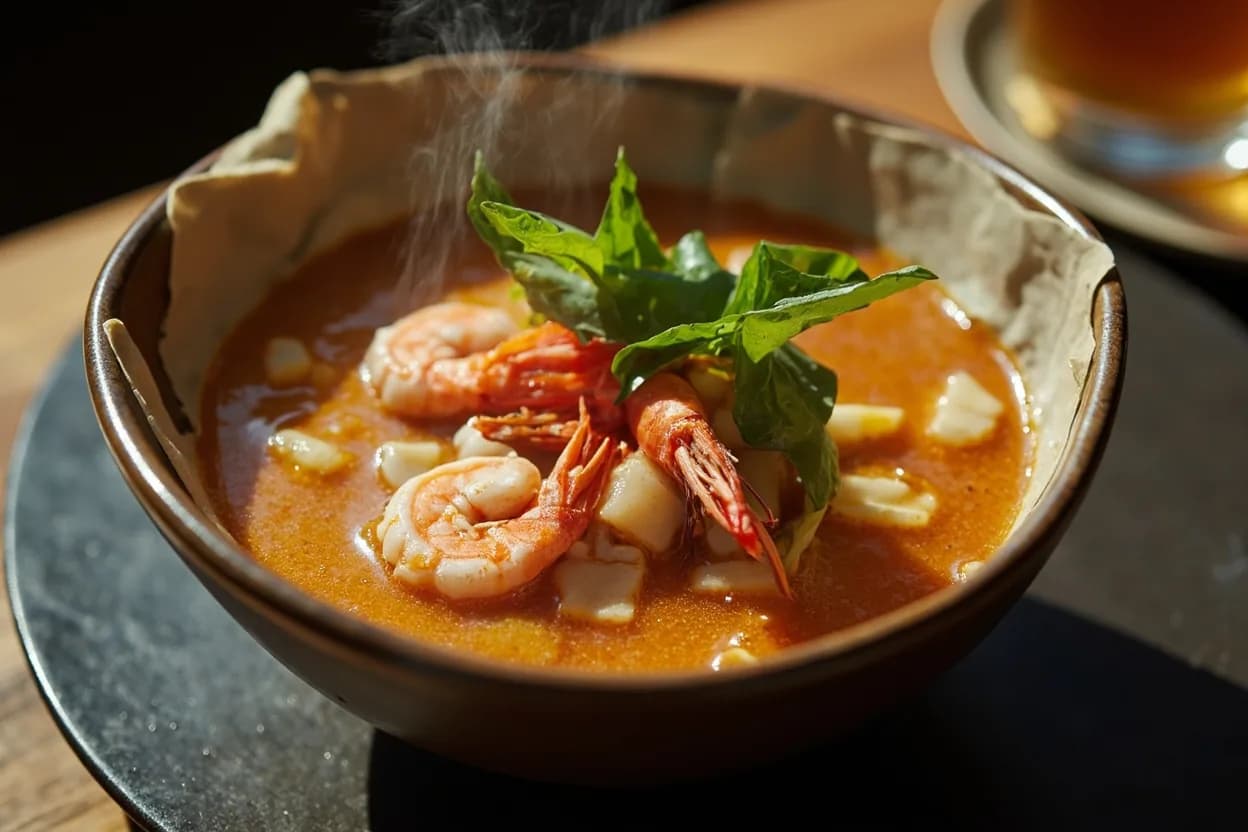
Related
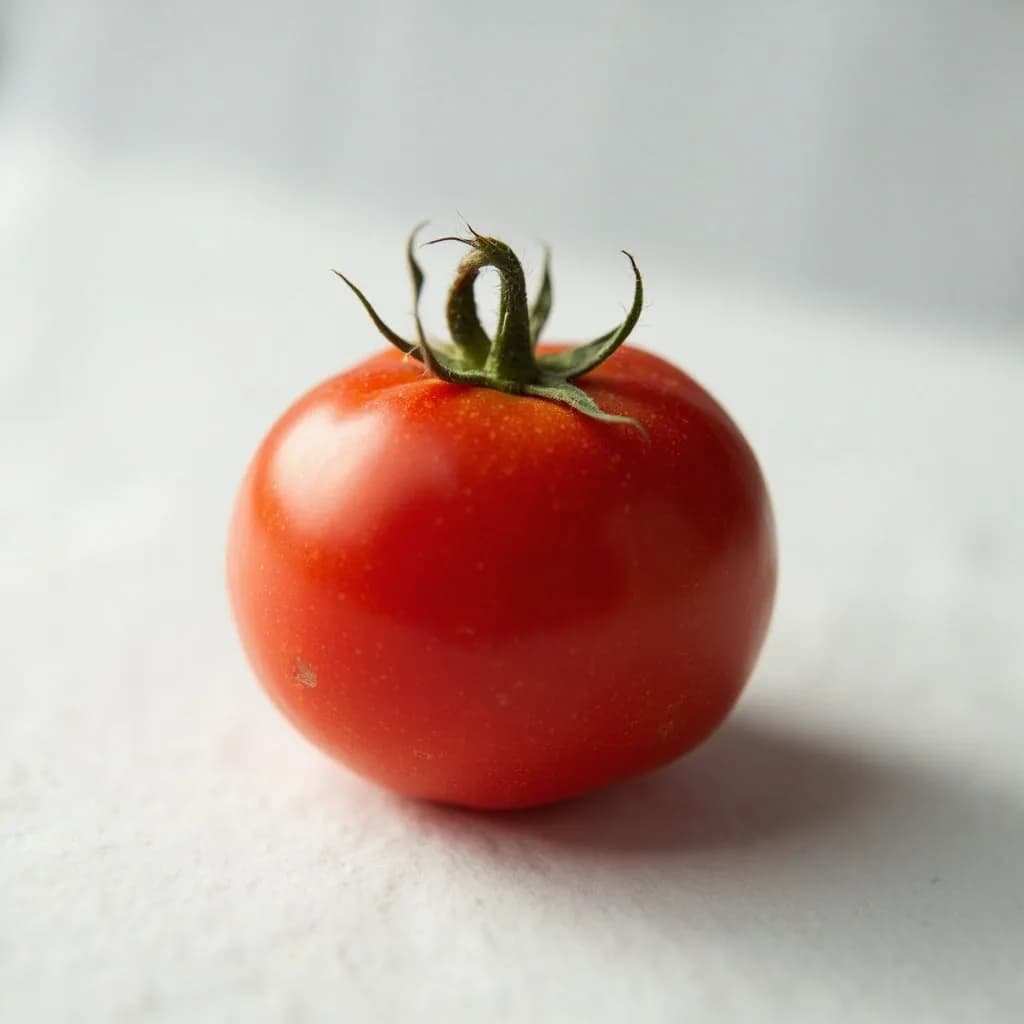
Tomato
Juicy, sun-sweet fruit for sauces, salads, and slow-cooked depth
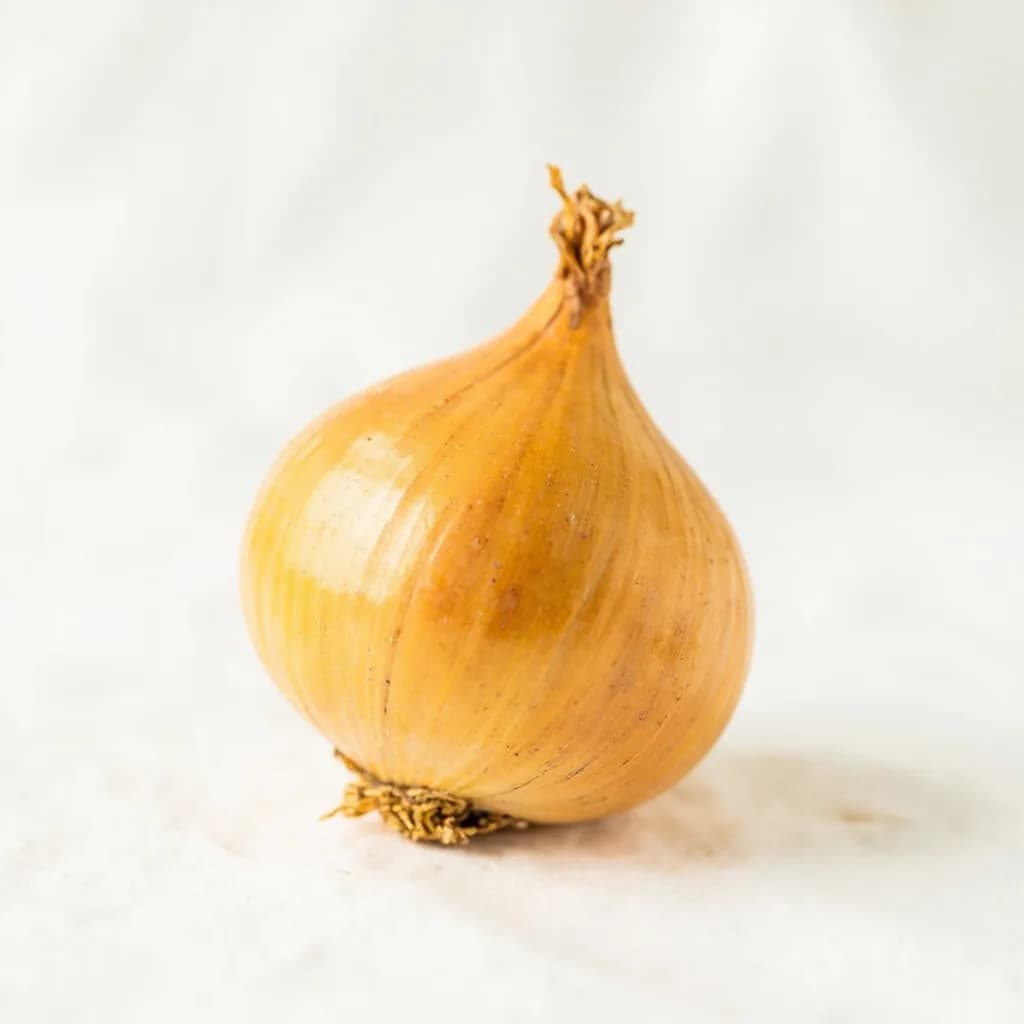
Yellow Onion
The aromatic backbone of soups, sofritos, and braises
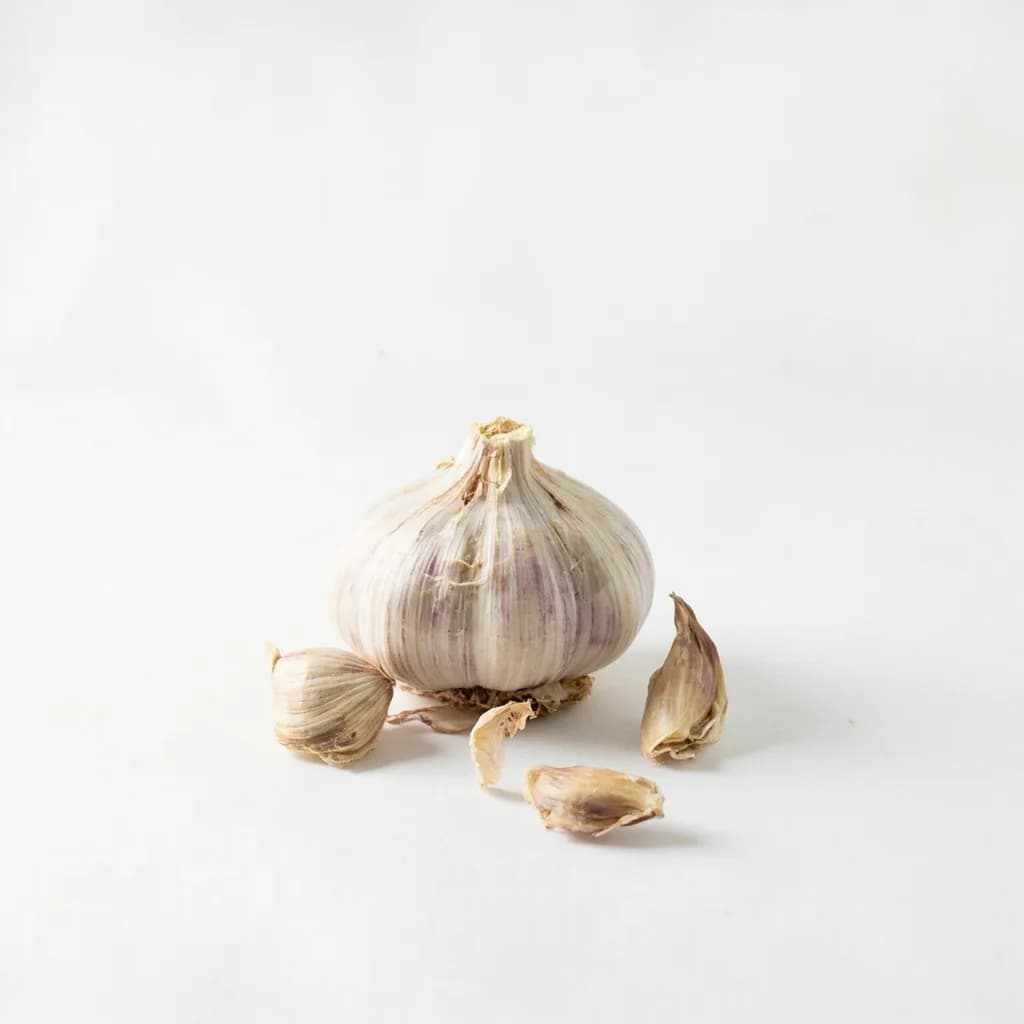
Garlic
Pungent cloves that perfume nearly every savory dish
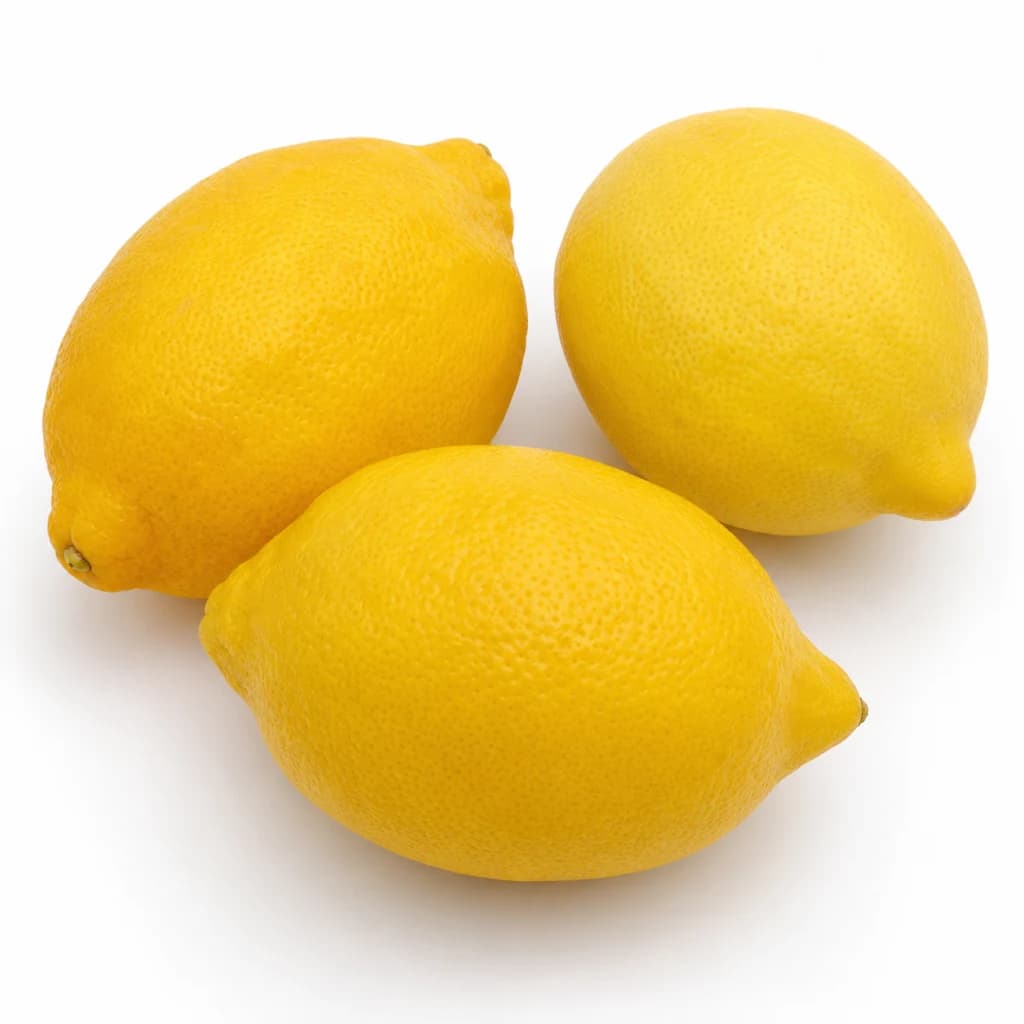
Lemon
Bright, acidic citrus that wakes up almost any dish
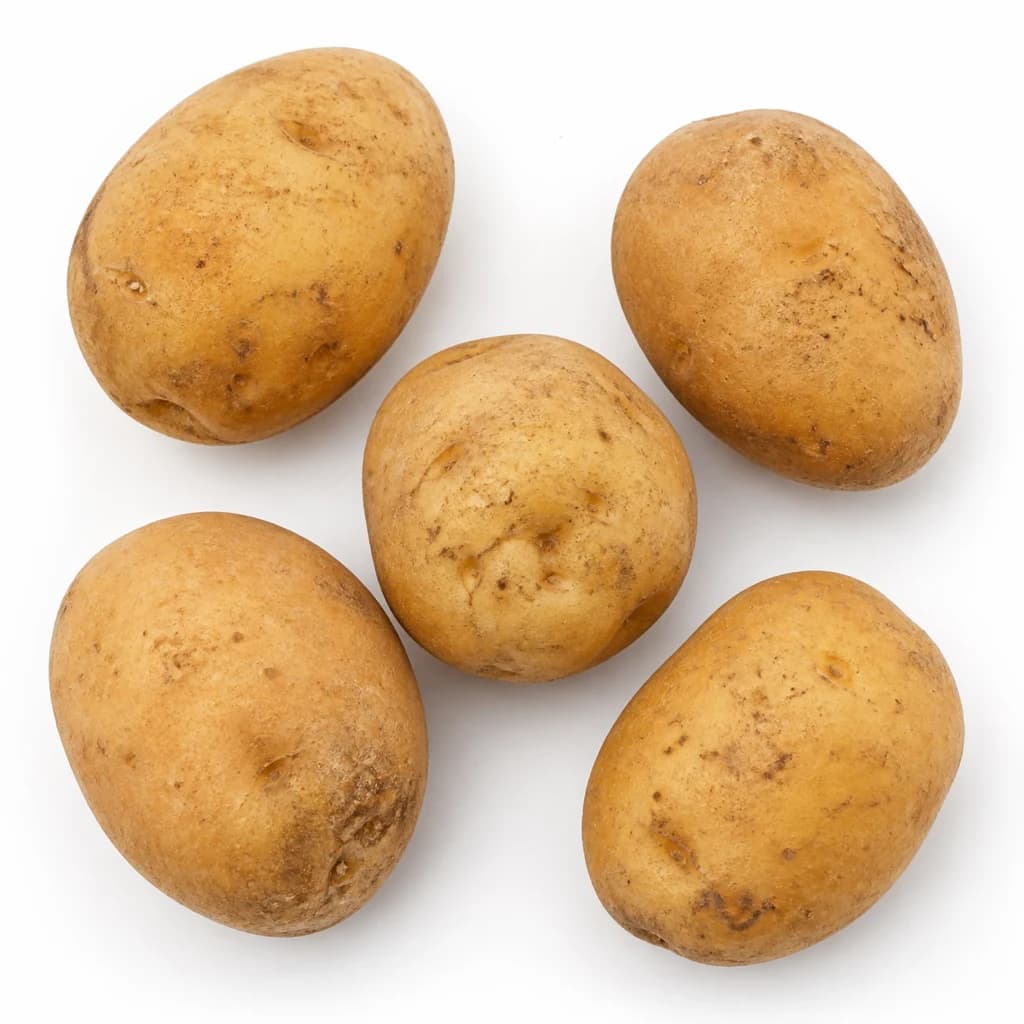
Potato
Humble, hearty staple — roast, mash, fry, or boil
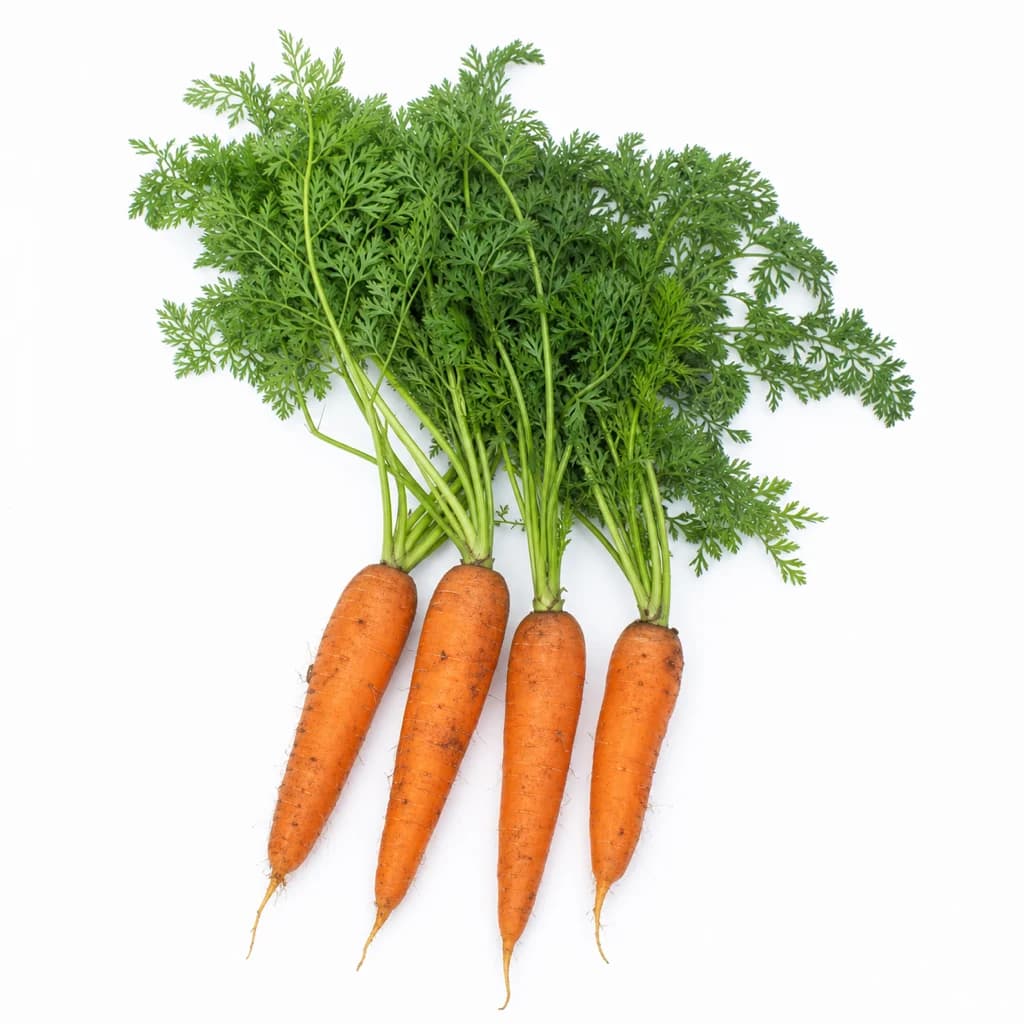
Carrot
Sweet, crunchy root — raw, roasted, or the base of a sofrito
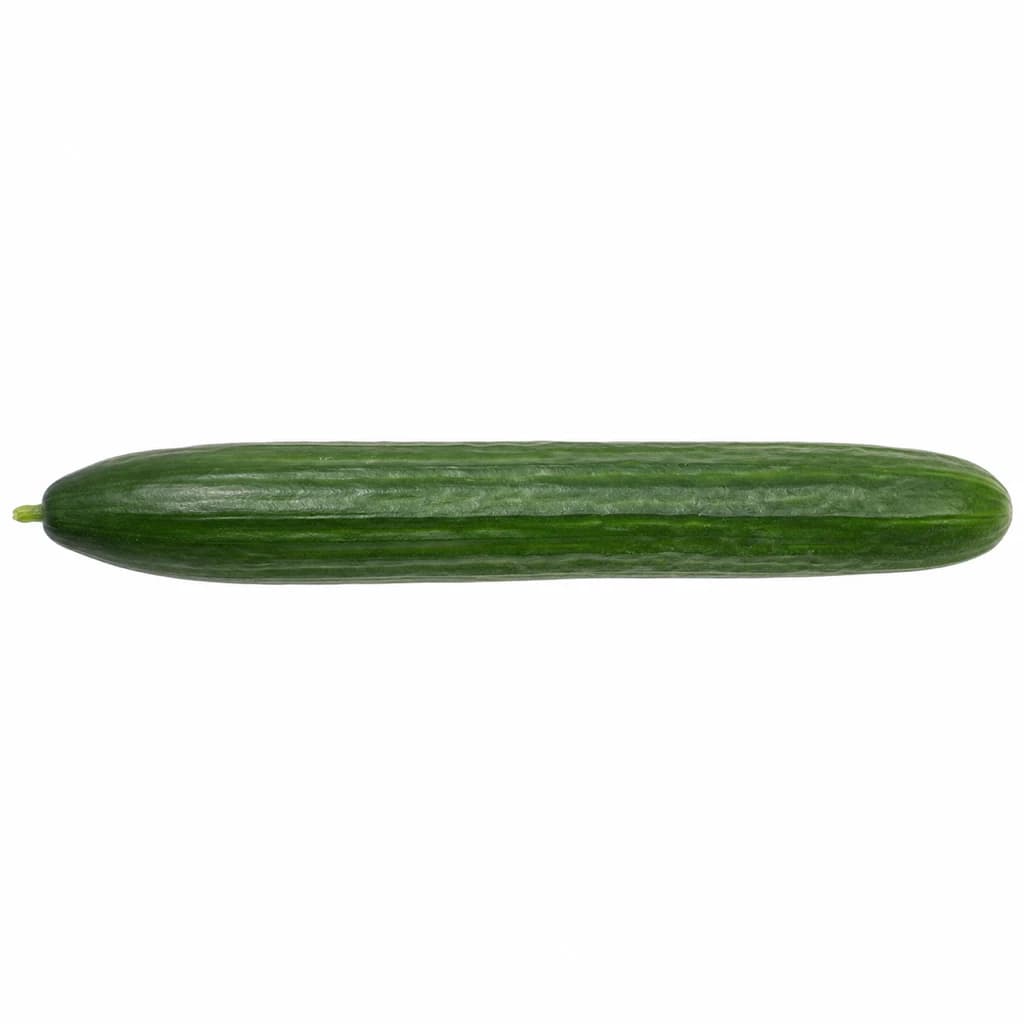
Cucumber
Cool, crisp, and watery — for salads, pickles, and tzatziki

Lettuce
Crisp leaves for salads, wraps, and a fresh crunch