Dairy & Eggs
Västerbotten Cheese
Sharp, granular Swedish hard cheese aged over a year, with crystalline crunch and a strong bittersweet bite.
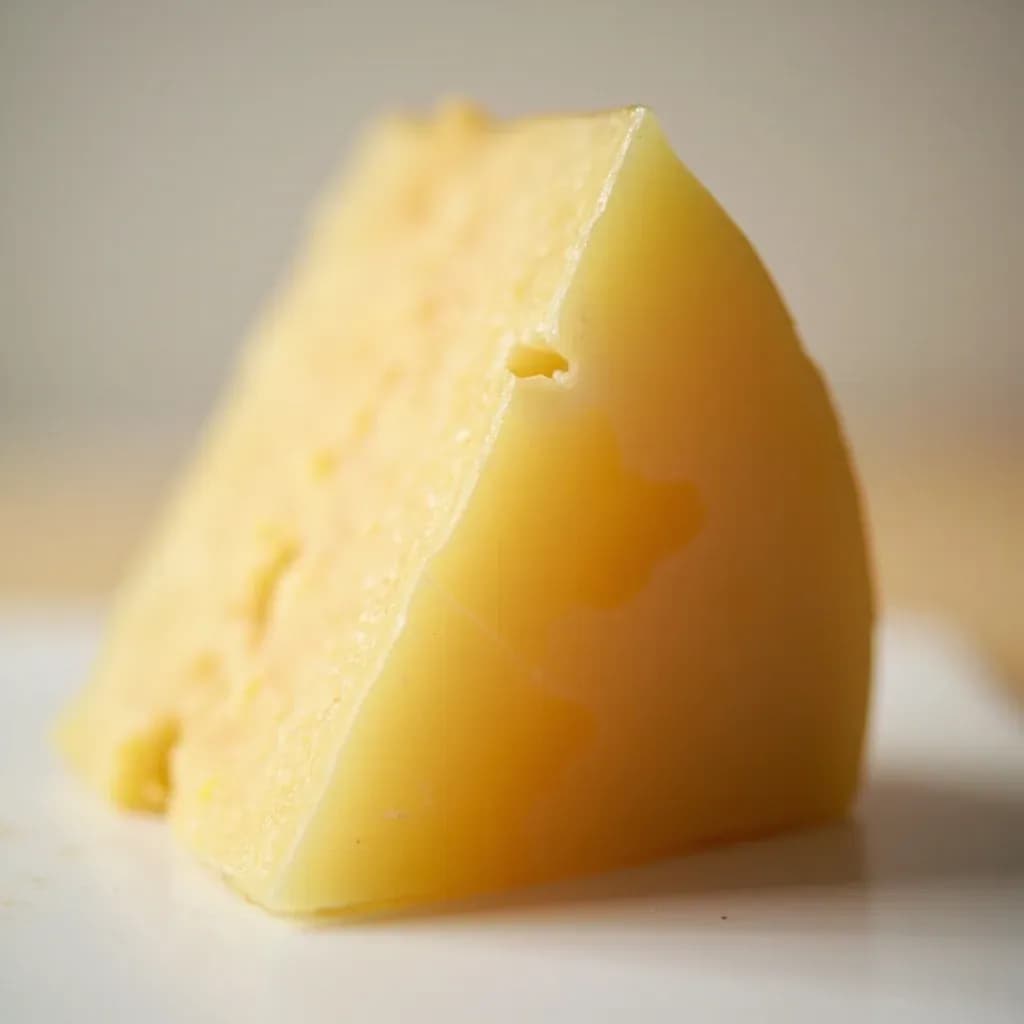
Västerbottensost is a hard, granular cow's-milk cheese from northern Sweden, matured for at least 12 months. It has a strong, salty, bittersweet flavor with crunchy tyrosine crystals, often compared to a sharp Parmesan. It is a centerpiece of Swedish summer dishes, especially the savory Västerbotten cheese pie served with crayfish.
Västerbotten cheese is Sweden's most celebrated hard cheese, produced exclusively in and around Burträsk in Västerbotten County. What distinguishes it from other hard cheeses is its granular, almost sand-like texture — the result of a broken-curd production method rather than the pressed-curd technique used for Parmesan or Gruyère. This granular structure is also what creates its signature tyrosine crystals during aging, small pockets of crystallized amino acids that crunch pleasantly on the palate. Aged a minimum of 12 months under PDO regulations, commercial wheels typically reach 14–18 months, while premium reserve versions are aged 24 months or beyond. The extended aging drives off moisture, concentrates protein breakdown, and builds the cheese's unmistakable intensity: sharp, pungent, and almost bittersweet at first bite, with deep nutty and faintly fruity undertones that linger. The flavor is assertive — this is not a subtle cheese, and that assertiveness is precisely what makes it central to Swedish cooking. Despite limited regional production, Västerbotten accounts for a disproportionately large share of Swedish cheese consumption, a testament to its cultural status. The cheese is sold in large 12–14 kg wheels (approximately 30 cm diameter), typically sliced from the wheel at the counter or sold in pre-cut wedges wrapped in cloth or wax. Bring it to room temperature before serving — cold suppresses both aroma and the full range of its flavor.
- Measured in
- g
- Storage
- Fridge
Allergens
Types & varieties
PDO-protected original from Burträsk, aged minimum 12 months, made by the original dairy cooperative. This is the standard you will encounter at most counters.
Aged 18–24+ months with more pronounced crystallization and deeper, more complex flavor. Slightly harder to find and more expensive, but worth seeking out for the cheese board.
Why the texture matters
The granular, broken-curd texture is not an accident — it is fundamental to how Västerbotten behaves in cooking. Where Parmesan shaves in smooth ribbons, Västerbotten fractures into irregular, sandy shards. When melted, this texture disperses more evenly through sauces and fillings rather than pulling in rubbery sheets. When grated, it produces a coarser, more irregular powder that integrates differently into doughs and toppings. Understanding this helps you adapt recipes: if a dish calls for fine Parmesan shavings, Västerbotten will not deliver the same visual effect, but it will deliver far more flavor impact.
- Use a rasp grater or the large holes of a box grater — the irregular shreds are intentional
- When melting into sauces, the granular structure resists clumping if you add it off the boil and stir gently
- In pastry or bread dough, the coarser shreds distribute unevenly, creating pockets of concentrated cheese flavor
What makes the crystals
Tyrosine crystals — those small white flecks you see scattered through aged Västerbotten — are a sign of proper, extended aging. They form when casein proteins break down over time into their component amino acids, which then crystallize. The longer the aging, the more pronounced and plentiful the crystals. These crystals are not just textural; they carry concentrated umami and a slight bitterness that balances the cheese's salt and sharp acidity. When you see abundant crystals, you are looking at a properly aged, high-quality wheel. Commercial wheels aged 14–18 months show moderate crystal formation; premium reserve wheels show it prominently throughout the interior.
- Visible crystals are a quality marker — insist on seeing the cut face before buying a whole wedge
- Crystals can be crushed between your fingers as you eat; they add a pleasant textural complexity on the cheese board
- Avoid wheels with a uniformly smooth, rubbery interior — they are underaged and will lack the characteristic bite
Common uses
Tips & pitfalls
- Bring cheese to room temperature 30–60 minutes before serving to fully release aroma and flavor — cold dramatically mutes its intensity
- Use the large holes of a box grater or a rasp; the granular texture produces irregular shreds that clump more than Parmesan, which is normal
- Look for visible tyrosine crystals (small white flecks) as a quality indicator of proper aging — their presence confirms sufficient protein breakdown
- When melting into sauces, use moderate heat and stir frequently; excessive heat causes the granular protein matrix to tighten and turn grainy
- On a cheese board, pair with condiments that balance its saltiness: lingonberry jam, floral honey, or fig preserves cut through the bite effectively
- Common mistake: substituting young, mild cheeses — nothing captures Västerbotten's intensity; if unavailable, use properly aged Parmesan or extra-sharp aged cheddar, and add a pinch of salt to approximate Västerbotten's assertiveness
- Västerbottenspaj is traditionally served warm, which softens the cheese's sharp bite and melds it with the buttery rye crust — don't serve it cold
- Avoid buying pre-grated Västerbotten: bagged grated cheese loses freshness and aroma within days, and anti-caking agents impair melting quality — grate from the wedge only
Nutrition
Energy
1628 kJ · per 100 g
Where the calories come from
Protein
25.6g
51% DV
Carbs
1.6g
1% DV
Fat
31.1g
40% DV
Fiber
0g
0% DV
Sugars
1.6g
of which
Sodium
800mg
35% DV
Source · USDA FoodData Central · approx. Cheese, fontina
View on FDC →In the shops
Matched grocery products
No matched grocery products for Västerbotten Cheese yet.
Good to know
- Origin
- Västerbotten County, Sweden — specifically the village of Burträsk (PDO protected since 2012)
- Milk
- Cow's milk, historically with small additions of sheep or goat milk
- Aged
- Minimum 12 months; commercial typically 14–18 months; premium reserve 24+ months
- Texture
- Firm and granular, with tyrosine crystals that crunch distinctly
- Flavor
- Sharp and pungent, bittersweet with nutty depth and faint fruit notes
- Color
- Pale to medium yellow, darkening toward the natural rind
- Rind
- Natural rind; wheels are cloth-wrapped or waxed during aging
- Production
- Limited to a handful of producers in the Burträsk region only
Substitutes
- Aged Parmesan (24+ months) — Closest match for intensity and crystalline texture; use 1:1 but Parmesan is milder, so add a pinch of salt to approximate Västerbotten's assertiveness
- Aged Extra-Sharp Cheddar — More accessible substitute with sharp, complex flavor; aged English or Vermont varieties work best, though they lack Västerbotten's granular crunch
- Grana Padano — More affordable option with similar granular texture; use slightly more as it is less pungent
- Svecia (aged Swedish cheese) — Traditional Swedish alternative, though typically milder and less complex in flavor
- Aged Gouda (18+ months) — Comparable texture and caramel-nutty notes; look specifically for versions with visible crystals
Pairs with
Also called
västerbotten · vasterbotten · västerbottensost
Related

Whole Milk
Rich, full-fat milk for drinking, coffee, sauces, and baking
Butter
Golden fat for searing, baking, and finishing a sauce
Yogurt
Tangy, creamy culture for breakfast, sauces, and marinades
Cheddar Cheese
Sharp, melty cheese for sandwiches, gratins, and grating
Skim Milk
Fat-free milk for lighter drinking, coffee, and cooking
Heavy Cream
Rich cream that whips, enriches sauces, and sets ganache

Sour Cream
Tangy, thick cream for dolloping, baking, and dips
Mozzarella
Soft, milky cheese that melts into stretchy pizza pulls