Baking
Rye Bread
Dense, tangy bread made with rye flour, central to Northern and Eastern European tables.
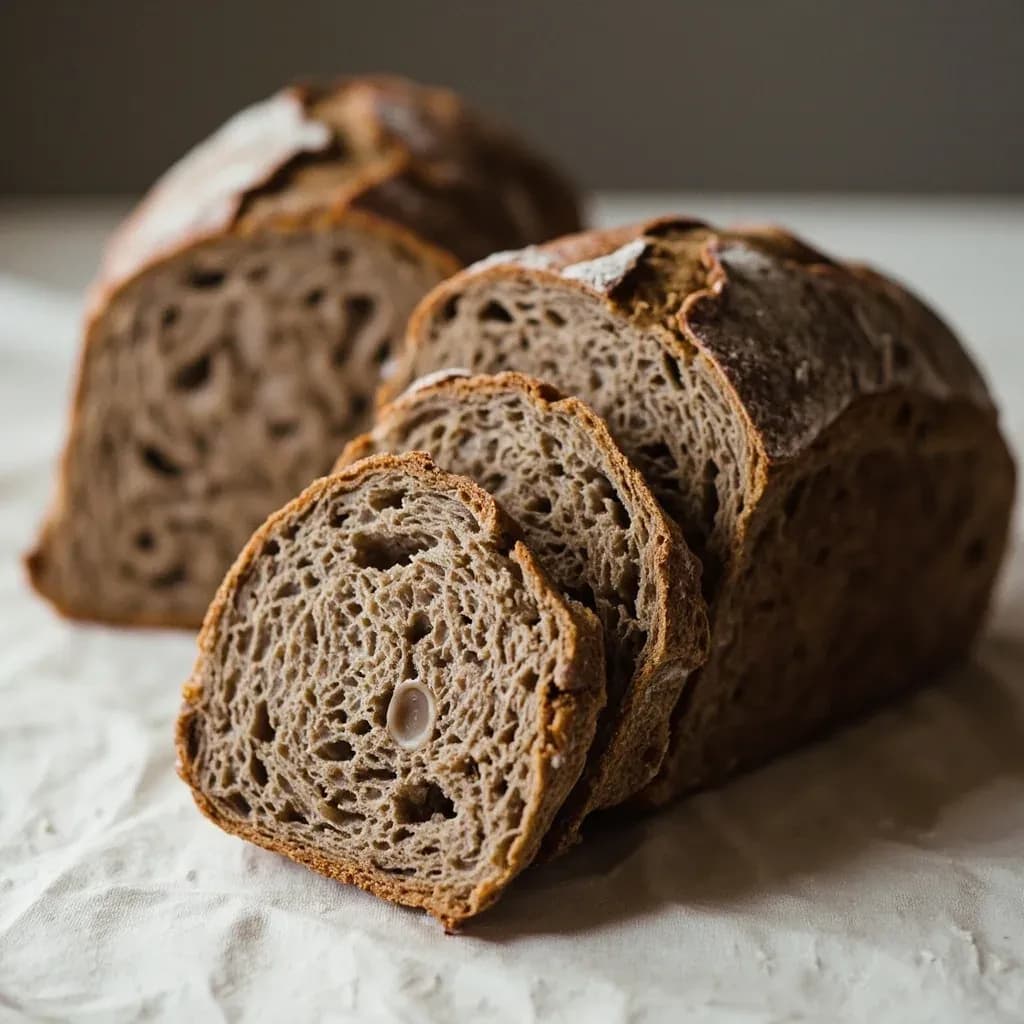
Rye bread is baked with rye flour, often blended with wheat and leavened with sourdough, giving it a dense crumb and tangy, earthy flavor. It is a staple across Germany, Scandinavia, and the Baltics, sliced for open-faced sandwiches (smørrebrød) and eaten with cured fish, cheese, and meats. Dark rye and pumpernickel are the deepest, longest-baked styles.
Rye bread is a category of breads made partially or wholly from rye grain, characterized by a dense, compact crumb and a distinctive tangy, slightly sour flavor that deepens with darker flours. Unlike wheat bread, rye contains minimal gluten-forming proteins—its structure comes instead from arabinoxylans and pentosans that form a sticky, viscous paste when hydrated, plus starch gelatinization during baking. This makes rye bread inherently denser and more compact than wheat loaves, with a moist, often almost cake-like interior in traditional versions.
The leavening of true rye bread relies on sourdough fermentation. Commercial yeast can be used but typically requires a preferment to develop the complex flavor and acceptable texture that rye demands. The acids produced during fermentation—primarily lactic and acetic acid—do double duty: they contribute the characteristic tang and act as natural preservatives, giving rye bread a longer shelf life than wheat equivalents. Long baking at low temperatures, as in traditional pumpernickel, caramelizes the abundant sugars in rye, producing the deep mahogany to near-black crust that has made rye bread a culinary icon across Northern and Eastern Europe.
Rye bread occupies a central place in the cuisines of Germany, Poland, Russia, Scandinavia, and the Baltic states, as well as Jewish-American deli culture. It ranges from the buttery, seeded loaves of Scandinavian rugbrød to the dense, caraway-scented Jewish deli rye, and the virtually black, 24-hour-baked Westphalian pumpernickel. Understanding rye bread means understanding a bread that behaves fundamentally differently from wheat—requiring different techniques, different expectations, and offering different rewards.
- Measured in
- piece
- Storage
- Pantry
Allergens
Types & varieties
Coarse, dark, extremely dense; traditionally baked 16–24 hours at low heat; uses whole rye kernels and sourdough. American versions often include molasses and cocoa for color.
American adaptation; dark color from molasses, coffee, or cocoa; medium-dense texture; often baked in loaf pans.
Made with white or medium rye flour; milder flavor, slightly lighter texture; common in commercial sandwich breads.
Swirled combination of rye and wheat doughs; visually distinctive; mild rye flavor with wheat softness.
Classic deli bread; typically medium-dense with caraway seeds; iconic for pastrami and corned beef sandwiches.
Dense, sourdough rye loaf; long fermentation (12–24 hours); coarse-textured; served buttered with toppings.
Sourdough-based; often includes barley or wheat flour; tangy, moist crumb; traditionally baked as round loaves.
Sour, dark; often contains a small percentage of wheat flour for improved rising; caraway optional.
True artisan version; whole rye grains, sourdough, long baking; intensely malty-sweet flavor.
Rye Flour vs. Wheat Flour: The Fundamental Difference
The composition of rye flour is fundamentally unlike wheat flour. Wheat contains gliadin and glutenin, proteins that form an elastic gluten network when hydrated and worked—this network traps gas and creates the open, airy crumb of a baguette or sandwich loaf. Rye contains almost no these gluten-forming proteins. Instead, rye is rich in arabinoxylans and pentosans, complex carbohydrates that dissolve in water to create a thick, sticky paste. This paste provides some structure but behaves nothing like gluten—it has no elasticity, cannot trap gas efficiently, and becomes gummy when overworked.
Because of this, rye bread cannot be kneaded the way wheat bread is. Excessive mixing or aggressive kneading breaks down the starches and arabinoxylans, producing a dense, rubbery, unappealing crumb. Instead, rye bread relies on three things for structure: the gelatinization of starch during baking (which sets the crumb), sourdough fermentation (which produces acids that strengthen the dough and develop flavor), and firm shaping to prevent spreading. The baker working with rye must understand that patience and gentle handling replace the vigorous kneading of wheat bread.
- Do not knead rye dough aggressively—mix just until combined
- Rye dough should feel sticky and wet, not firm and elastic like wheat dough
- Long, cold fermentation develops flavor and structure better than short, hot fermentation
Choosing and Buying Rye Bread
When purchasing commercial rye bread, the gap between true artisan versions and mass-produced imposters is enormous. Many supermarket "rye" breads are simply white sandwich loaves colored with caramel, cocoa, or food dye—they have none of the tangy flavor, dense texture, or keeping quality of real rye. Look for bread with visible whole grains or seeds, a tight and heavy feel, and an ingredient list that begins with rye flour and includes sourdough starter. Avoid breads that list "rye flavor" or food coloring among their first ingredients.
The best commercial rye breads come from Jewish delis, German bakeries, or Scandinavian grocery stores. True pumpernickel has almost no distinction between crust and crumb—the entire loaf is dark, moist, and densely packed with whole kernels. If the bread slices easily into light, fluffy pieces with a thin crust, it is not genuine rye bread. For the best quality, seek out these specialized sources rather than standard supermarket shelves.
Common uses
Tips & pitfalls
- Hydration matters: rye flour absorbs significantly more liquid than wheat flour—expect 70–85% hydration versus 60–70% for wheat breads
- Use a sourdough starter when possible: rye's native acids and enzymes produce better flavor and structure with wild fermentation
- Add a preferment (poolish or biga) when using commercial yeast: this develops flavor complexity and improves crumb
- Do not over-knead: excessive mixing develops a sticky, gummy texture in rye dough due to rye's arabinoxylan starches
- Shape tightly: rye dough lacks wheat gluten's elasticity, so firm shaping prevents flat, spread-out loaves
- Score the dough before baking: shallow diagonal cuts allow steam to escape and control oven spring
- Bake in a covered vessel (Dutch oven, covered pan) or with steam: prevents the dense crumb from drying out during baking
- Rye bread benefits from extended cooling: allow 1–2 hours before slicing to let crumb set properly
- Store cut-side down or wrapped in linen: the crust breathes and prevents the crumb from becoming rubbery
- Common mistake: expecting rye bread to rise as much as wheat—it will always be denser; judge success by even crumb, not height
Nutrition
Energy
1084 kJ · per 100 g
Where the calories come from
Protein
8.5g
17% DV
Carbs
48.3g
18% DV
Fat
3.3g
4% DV
Fiber
5.8g
21% DV
Sugars
3.9g
of which
Sodium
603mg
26% DV
Source · USDA FoodData Central · Bread, rye
View on FDC →In the shops
Matched grocery products
No matched grocery products for Rye Bread yet.
Good to know
- Primary flour
- Rye flour (light, medium, dark, or whole grain)
- Gluten content
- Low—rye lacks the gluten-forming proteins gliadin and glutenin; structure comes from arabinoxylans and starch gelatinization
- Leavening
- Typically sourdough starter; commercial yeast requires a preferment for best flavor and texture
- Flavor profile
- Tangy, mildly sour, earthy; depth increases with darker flours; natural sweetness caramelizes during long baking
- Origin
- Northern and Eastern Europe—Germany, Poland, Russia, Scandinavia, Baltic states, Netherlands
- Shelf life
- 2–3 days at room temperature; up to 3 months frozen; natural preservatives extend keeping quality versus wheat bread
- Key uses
- Scandinavian smørrebrød, German open-faced sandwiches, Jewish deli culture, Russian zakuski
- Baking difficulty
- Intermediate—requires attention to hydration and fermentation; rye dough behaves fundamentally differently from wheat dough
Substitutes
- Whole wheat sourdough bread — Provides comparable density and tang; works as a sandwich base or with charcuterie. Lacks rye's earthiness—add a splash of vinegar to mimic the tang.
- Pumpernickel bagels — Dense, dark; acceptable for deli sandwiches where the specific flavor is not critical.
- Sturdy whole wheat artisan loaf — Similar density when using a robust loaf; lacks the tangy sourness—add a spoonful of sourdough starter to the dough or use a preferment with a touch of vinegar.
Pairs with
Also called
Roggenbrot · Dark Rye Bread · Rupjmaize · Pumpernickel-style · Pumpernickel
Appears in these dishes



Related

All-Purpose Flour
The do-anything flour for bread, cakes, sauces, and dredging

Bread Flour
High-protein flour for chewy, well-risen breads
Whole Wheat Flour
Nutty, whole-grain flour for hearty breads and bakes
Cake Flour
Fine, low-protein flour for tender, delicate cakes
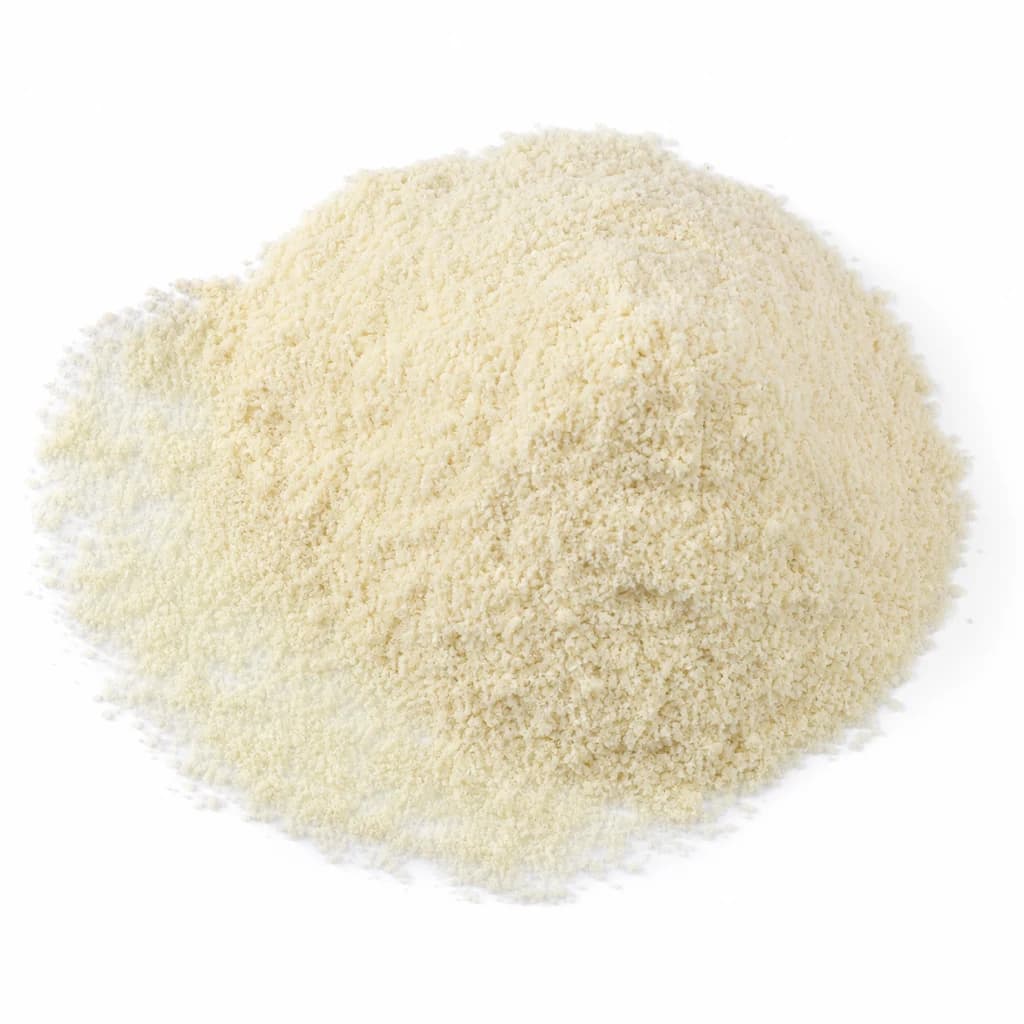
Almond Flour
Nutty, gluten-free flour for macarons and tender bakes

Baking Powder
All-in-one leavener for fluffy cakes, pancakes, and biscuits

Baking Soda
Pure leavener that needs acid to lift — and tenderize
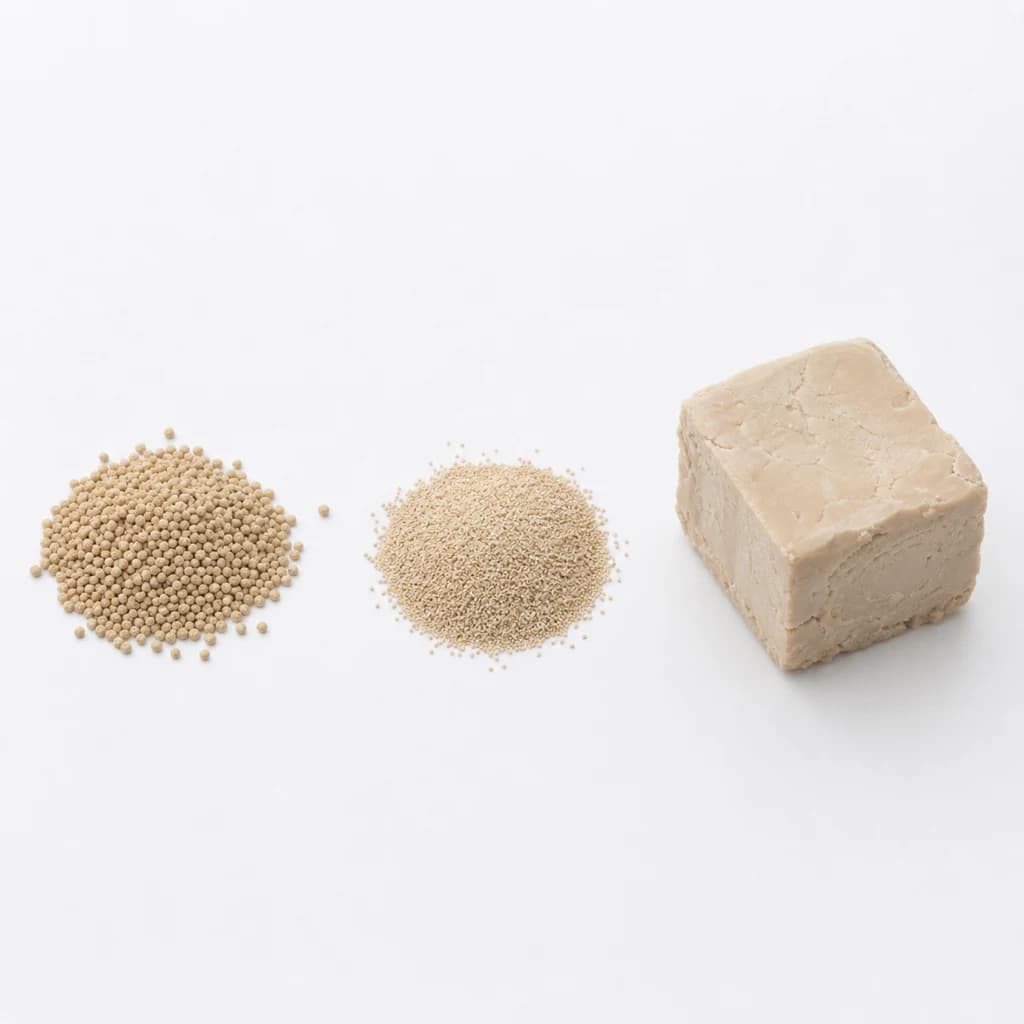
Yeast
Living leaven that makes bread rise and dough come alive