
Natural form
A raw whole chicken, bone-in and skin-on, showing the complete bird ready for preparation.
Shows the reader exactly what a raw whole chicken looks like before any preparation, establishing its complete form and scale.
Proteins
Whole Chicken
The entire bird — roasted, poached, or jointed for countless dishes worldwide.
A whole chicken includes all cuts on the carcass, making it versatile and economical. It is roasted, spatchcocked, poached for stock, or broken down into parts for frying and braising across virtually every cuisine. Roasting whole yields crisp skin and juicy meat, while the carcass makes rich stock.
The whole chicken is the foundational protein of Western cooking — a single bird offering two distinct muscle groups that behave differently under heat and yield dramatically different textures when cooked correctly. The breast is white meat, lower in fat and collagen, and reaches its best texture (juicy and yielding) at 150–155°F, after which carryover heat brings it to the safe 165°F. The thighs and drumsticks are dark meat, higher in fat and connective tissue, and benefit from temperatures of 170–175°F to fully break down collagen into silky gelatin. This temperature gap is the central challenge of whole-bird cooking and the reason why spatchcocking — removing the spine and flattening the bird — has become essential technique: it exposes both breast and thighs to direct heat simultaneously, eliminating the longest cooking gradient in poultry.
A 4–5 lb broiler/fryer (6–8 weeks old) is the most practical household size, serving four comfortably and roasting in 60–75 minutes. Beyond the meat, the giblets packed inside the cavity — liver, heart, gizzard, and neck — are too often discarded but are essential for proper stock, gravy, or a separately sautéed garnish with intensity far beyond the meat itself. Jointing is a fundamental skill: the bird breaks into two wings, two drumsticks, two thighs, and two breast halves (eight pieces), with the backbone, spine, and sternum reserved for stock. Master this breakdown and you have unlocked both the whole bird and every cut it contains.
The bird's versatility is matched by its variability. Conventional commercial chickens (Cornish Cross) dominate for consistent size and mild flavor, but heritage breeds (Delaware, Plymouth Rock, Sussex) offer denser meat and more pronounced chicken flavor — at the cost of longer cooking. The capon, a castrated male bird 8–10 months old, is extravagantly tender and well-marbled, ideal for occasions where richness is the goal. Free-range and organic labels affect husbandry and may yield marginal differences in texture and flavor but do not fundamentally alter cooking technique; the real variables are age and breed, which determine moisture retention and flavor intensity.
- Measured in
- g
- Storage
- Refrigerate
- Shelf life
- 2 days
Find it in
Types & varieties
Dominant commercial breed; fast-growing, broad-breasted, 4–7 lbs; mild flavor, moist if not overcooked
Slow-growing (Delaware, Plymouth Rock, Sussex, Dorking); denser meat, more intense flavor; require longer cooking; often 5–8 lbs live weight to 4–6 lbs ready-to-cook
Castrated male chicken; 8–10 months old, 10–12 lbs; extremely tender, well-marbled, high fat; traditional French preparation
Very young chicken, 3–5 weeks old, 1–1.5 lbs; delicate flavor, cooks in 30–45 minutes; often split and grilled or roasted
Not a breed — a preparation removing the backbone and flattening the bird; enables faster, more even cooking with crisper skin
Chickens with access to outdoors; slightly firmer texture, marginally more flavorful; no strict USDA definition, varies by producer
Fed certified organic feed, no synthetic additives; must also be free-range; similar eating quality to other well-raised birds when cooked properly
Understanding the Temperature Gap
The breast and thighs are fundamentally different muscles with different optimal temperatures. Breast meat, being lean and containing fast-twitch fibers, loses moisture and becomes chalky if cooked much past 150–155°F — it is tender and juicy at that range, and carryover heat brings it to the safe 165°F. Thigh meat, rich in slow-twitch fibers and connective collagen, needs 170–175°F for that collagen to fully convert to gelatin, yielding fork-tender dark meat. A whole bird roasted traditionally creates this conflict: breast done means overcooked dark meat; thighs tender means dry breast. Spatchcocking resolves this by exposing both to direct heat. Alternatively, starting the bird breast-side down in a covered Dutch oven, then finishing breast-up, gives thighs a head start while protecting the breast from direct heat.
- Breast best at 150–155°F (carries to 165°F)
- Thighs need 170–175°F for collagen breakdown
- Probe the thigh near the bone, not touching bone, for accurate reading
- Spatchcock eliminates the temperature gradient problem
Breaking Down a Whole Chicken
Jointing a chicken is a foundational technique that multiplies your options. With sharp kitchen shears or a heavy knife, work through the bird systematically. First, remove each wing by cutting through the shoulder joint. Next, separate the leg by cutting through the hip joint — you can then split the leg into drumstick and thigh by cutting through the knee joint. For the breasts, run the knife along one side of the sternum, following the rib cage, then flip the bird and repeat on the other side; you can leave the breast halves bone-in or remove the bone for supremes. The backbone, sternum, and ribs go into the stock pot. Practice on a few birds and the process takes under five minutes.
- Wings: cut through the shoulder joint
- Legs: cut through the hip joint, then split at the knee
- Breasts: follow the rib cage along each side of sternum
- Reserve all bones and trim for stock
Common uses
Tips & pitfalls
- Bring chicken to room temperature 45–60 minutes before cooking — a cold bird in a hot oven creates a steep temperature gradient between exterior and interior, leading to uneven doneness.
- Season aggressively with salt, including the cavity and under the skin. Salt penetrates muscle tissue osmotically and denatures proteins, measurably improving both flavor and texture — a 3–4 lb bird needs at least 1 teaspoon kosher salt, more if using fine salt.
- Truss or don't, but understand the tradeoff: trussing compacts the bird for even shape and appearance but forces breast and thighs into close contact, often overcooking the breast before thighs are done. For birds over 5 lbs, leave untrussed for better air circulation.
- The two-stage temperature method works reliably: start at 425–450°F for 15–20 minutes to brown the skin, then reduce to 350°F for the remainder. Alternatively, reverse-sear at 250°F until nearly done, then blast at high heat for crispy skin.
- Use a probe thermometer in the thickest part of the thigh (near the bone, not touching bone) — it will signal when the bird is done without opening the oven repeatedly.
- Rest the bird 10–20 minutes tented loosely with foil. Muscle fibers relax and reabsorb juices driven toward the center during cooking; skipping rest means significant liquid loss on the cutting board.
- For the crispiest skin: pat the bird thoroughly dry, leave uncovered in the refrigerator for several hours or overnight, and rub with fat (butter or oil) just before roasting — moisture is the enemy of browning.
- Common mistake: opening the oven door frequently to check — each opening drops oven temperature significantly and extends cooking time unpredictably.
Nutrition
Energy
598 kJ · per 100 g
Where the calories come from
Protein
17.4g
35% DV
Carbs
0g
0% DV
Fat
8.1g
10% DV
Fiber
0g
0% DV
Sugars
0g
of which
Sodium
60mg
3% DV
Source · USDA FoodData Central · approx. Chicken, ground, raw
View on FDC →In the shops
Matched grocery products
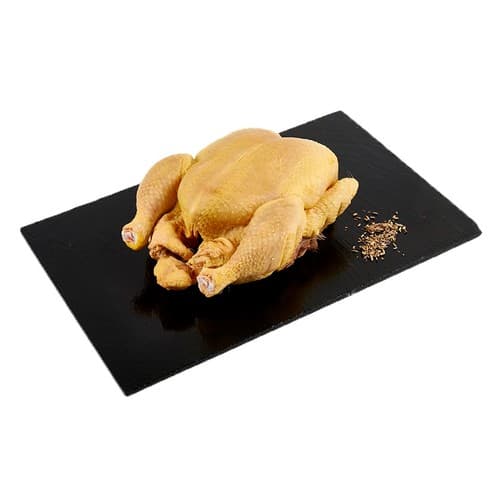 €6.30
€6.30Whole Chicken
BONPREU · ud · Bonpreu
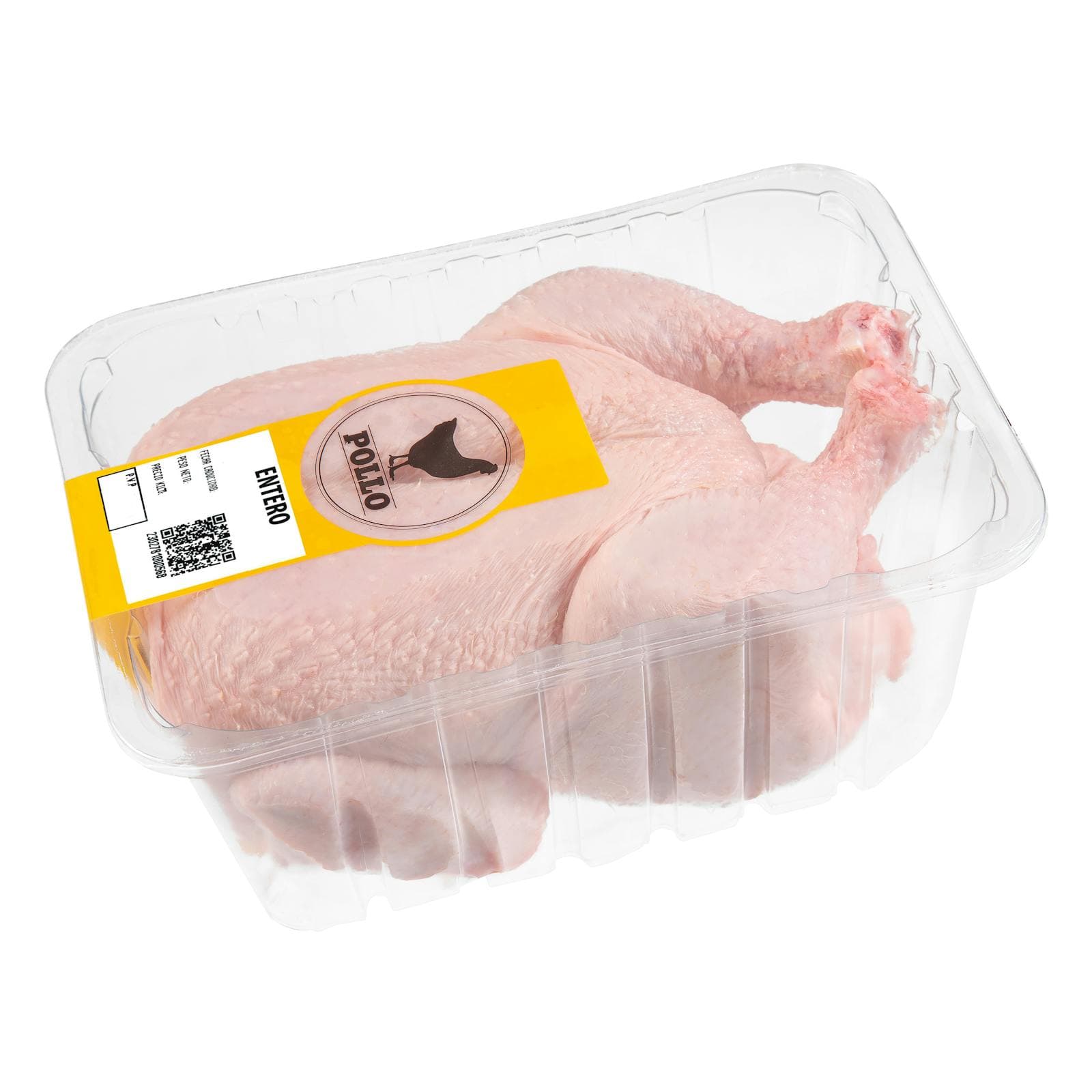 €6.44
€6.44Whole Chicken
1.84 kg · Mercadona
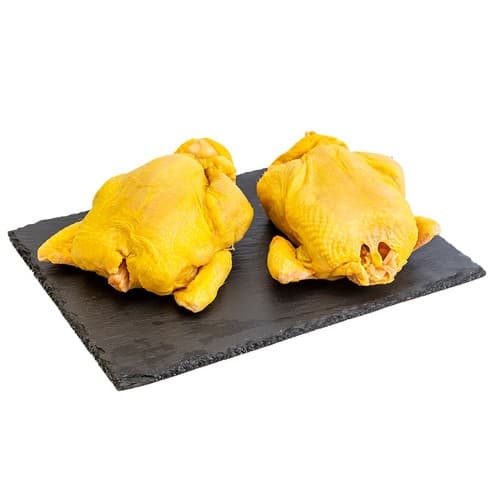 €7.49
€7.49BONPREU Lot of 2 Whole Chickens
BONPREU · kg · Bonpreu
Good to know
- Type
- Poultry (Gallus gallus domesticus)
- USDA Grades
- Grade A (clean appearance, well-shaped, most common); Grade B (minor defects, often processed); Grade C (more defects, typically for further processing)
- Common Sizes
- Broiler/Fryer 3.5–5 lbs (6–8 weeks); Roaster 5–10 lbs (8–12 weeks); Stewing Hen any weight, 10+ months old, ideal for broth
- Meat Yield
- Approximately 50–60% meat after cooking and bone removal; whole muscle portions (breasts) ~35% of weight
- Safe Internal Temp
- 165°F (74°C) throughout. Breast is best at 150–155°F (resting carries it to 165°F); thighs benefit from 170–175°F for collagen breakdown.
- Shelf Life
- Raw: 1–2 days refrigerated; cooked: 3–4 days. Frozen: up to 12 months at 0°F (−18°C)
- Protein
- ~27g protein per 100g cooked meat
- Fat Content
- Breast ~3% fat; thigh ~9%; skin adds significant fat to any preparation
- Domestication Origin
- Southeast Asia/Indian subcontinent, approximately 8,000 years ago
Substitutes
- Turkey Breast, Whole (boneless) — Leaner, larger scale; requires different timing; can be difficult to source whole bone-in
- Duck, Whole — Much richer, darker, fattier meat; skin renders differently; requires longer cooking for breast portions
- Pheasant, Whole — Leaner, more gamey; dries out easily; best braised or wrapped in caul fat; smaller yield
- Quail, Whole (multiple) — Game bird, intensely flavored; very fast cooking; requires multiple birds to equal one chicken
Pairs with
Also called
pollo entero · Frozen Chicken · Whole Bird
Appears in these dishes
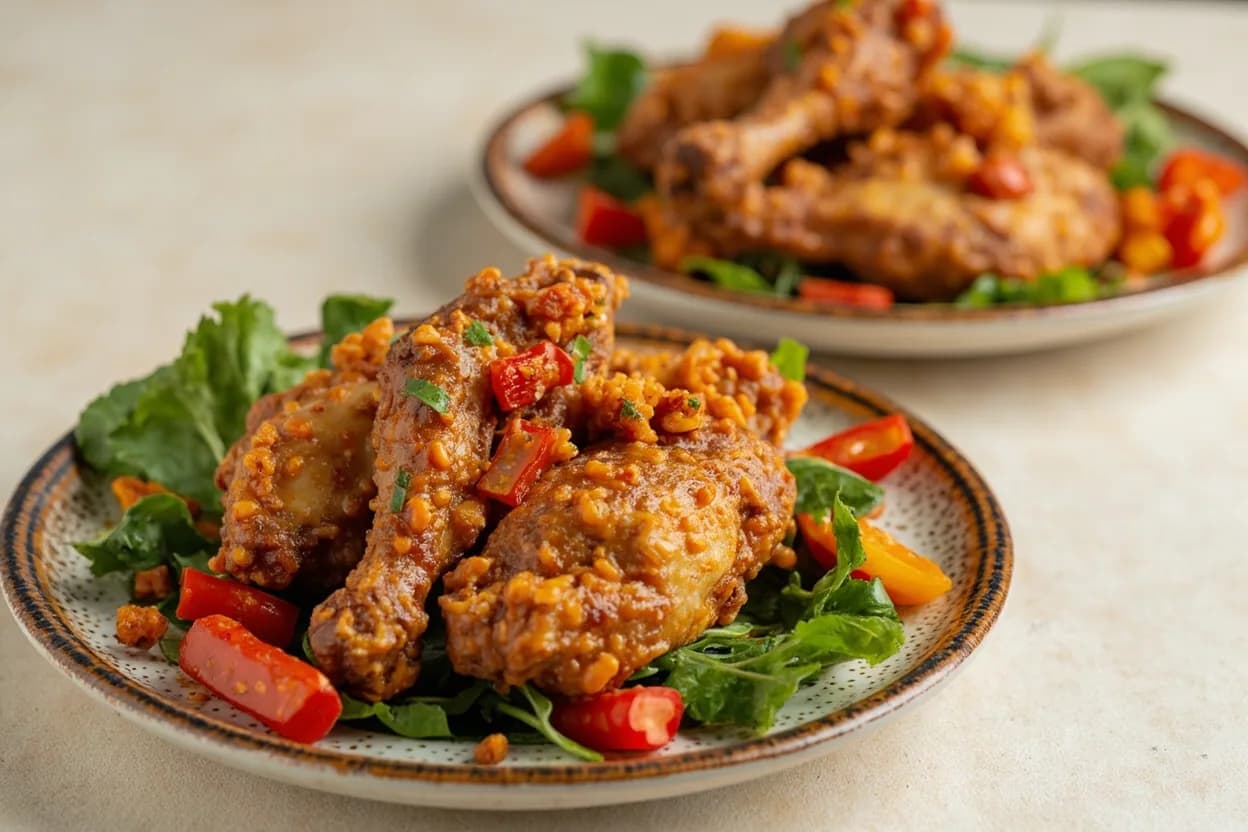
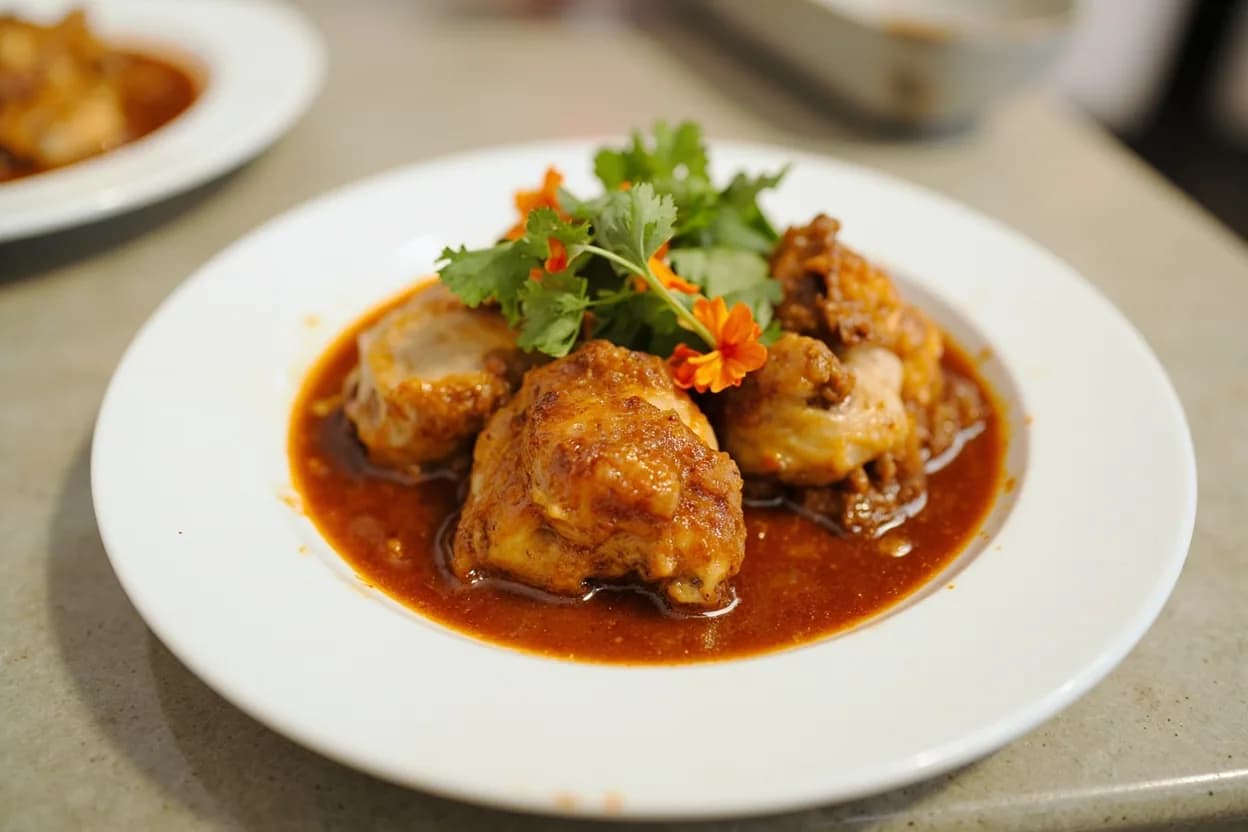
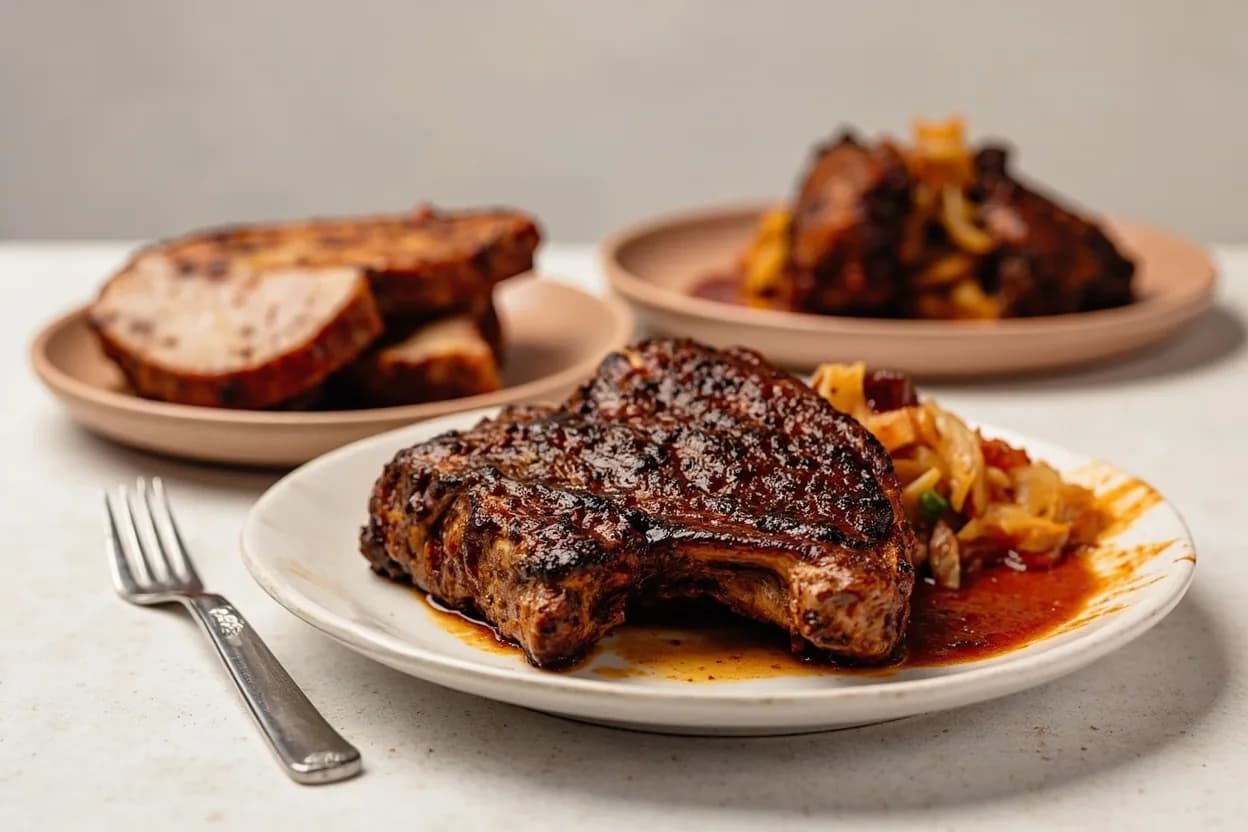
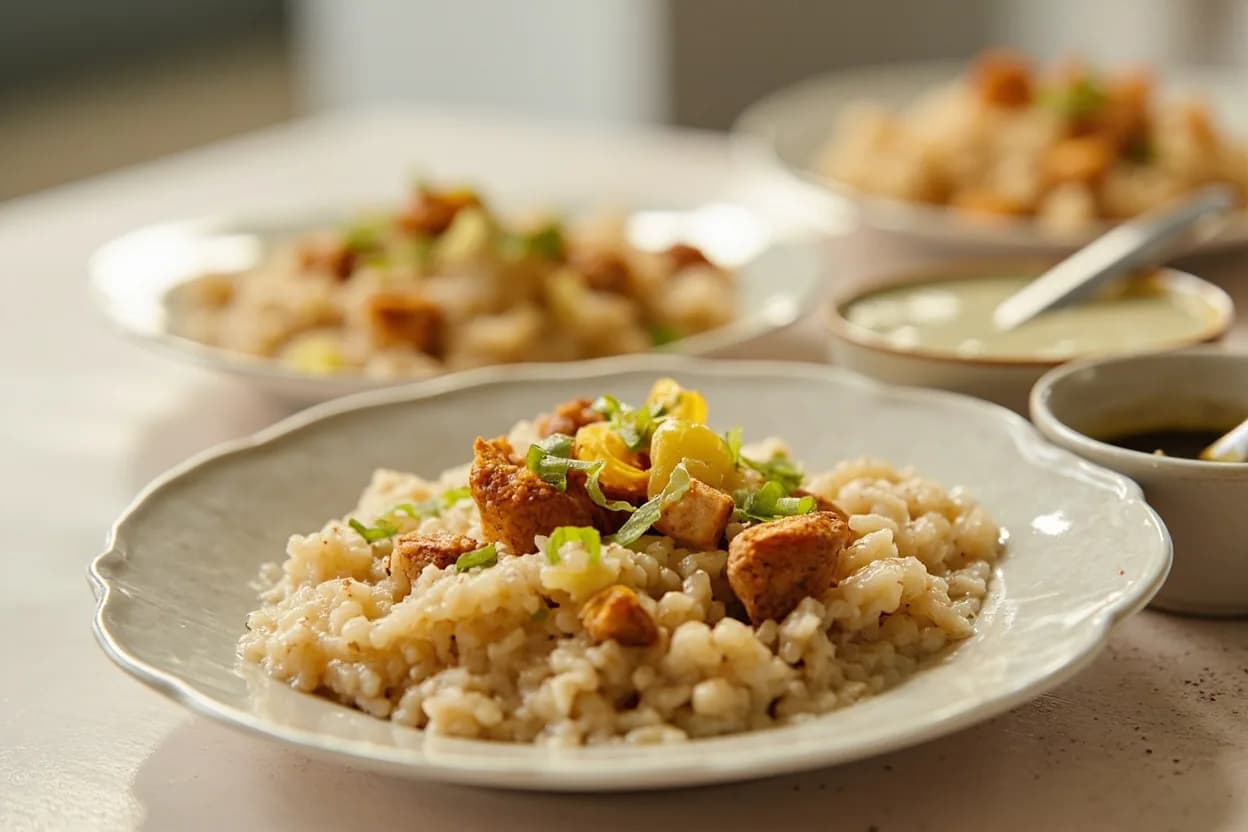
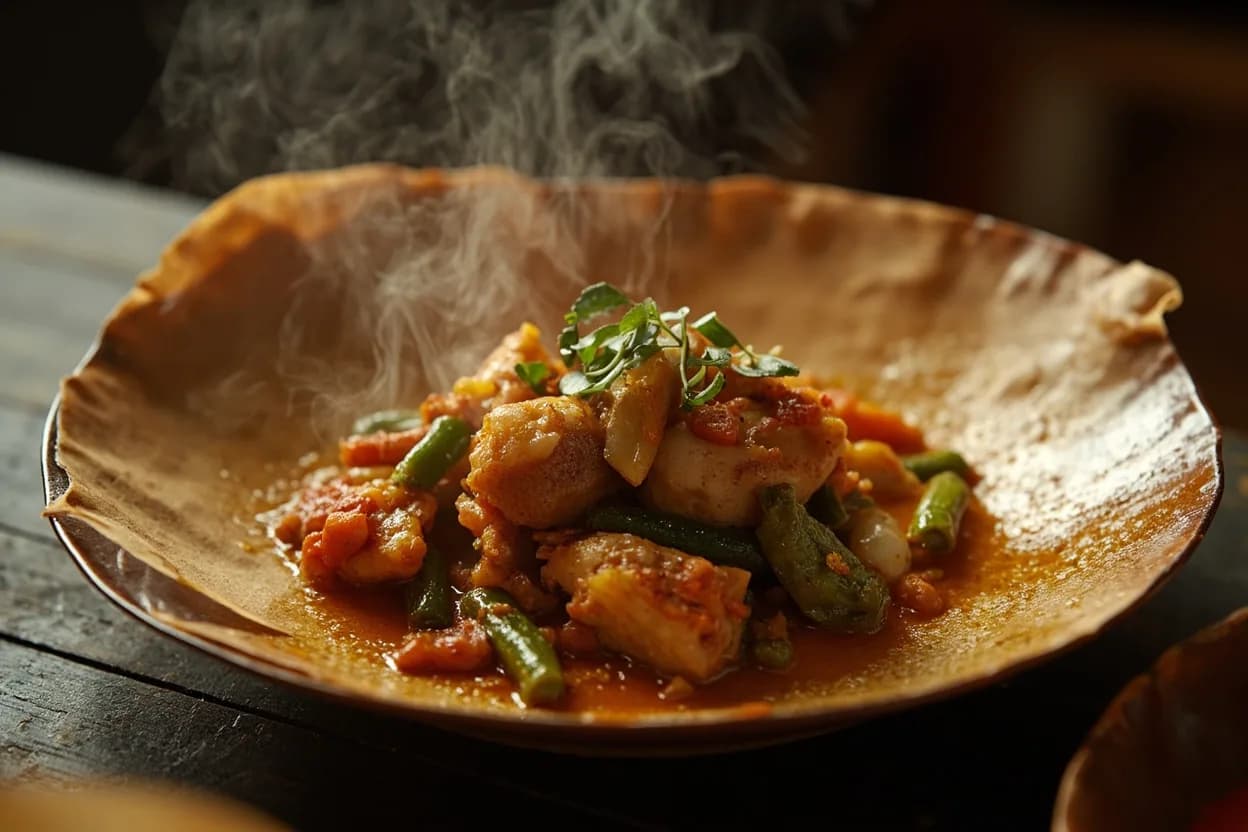
Related

Egg
The kitchen's everything ingredient — bind, leaven, enrich, or fry

Chicken Breast
Lean, quick-cooking white meat for everyday dinners

Ground Beef
Versatile minced beef for burgers, ragù, tacos, and meatballs

Pork Loin
Lean, tender roasting cut that stays juicy with care

Salmon
Rich, rosy fish that roasts, grills, or cures beautifully

Egg White
Pure protein that whips to airy peaks for meringue and more

Egg Yolk
Rich, golden yolk for custards, mayonnaise, and pasta

Quail Egg
Tiny, speckled eggs for garnishing and elegant bites