Spices
Yellow Mustard Seed
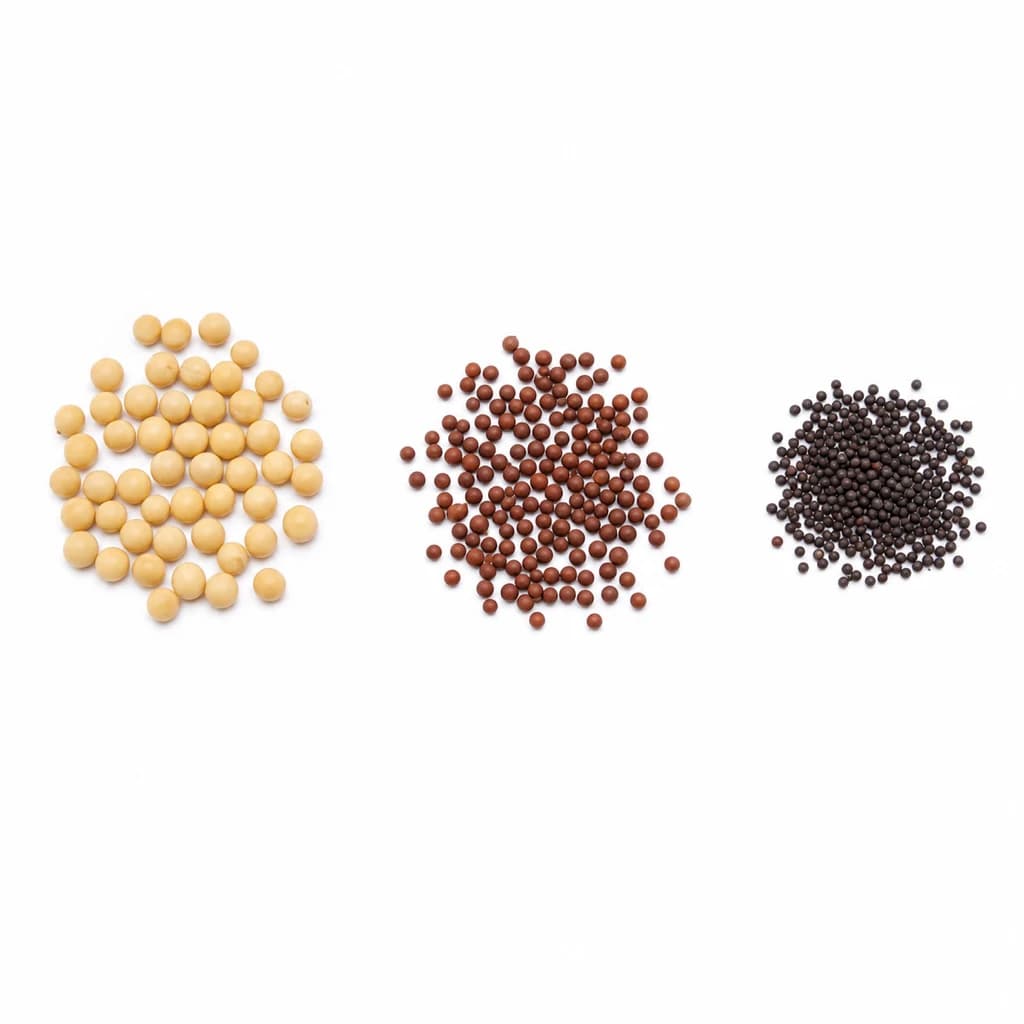
Mildest mustard seed, tangy rather than hot. The base of American yellow mustard and pickling brines; whole seeds add pop and gentle bite to vegetables and chutneys.
Yellow mustard seed — almost always Sinapis alba, though cooks and grocers routinely call it yellow and white interchangeably — is the mildest of the three mustard seeds that earn shelf space in a working kitchen. Botanically a member of the Brassicaceae, it carries sinalbin as its dominant glucosinolate, the precursor that breaks down into a gentle, tangy pungency rather than the nose-clearing heat of brown (Brassica juncea) or black (Brassica nigra) seed. That mildness is the reason it dominates American-style yellow mustard and most home pickling brines: it delivers clean, broad acidity and a savory bite without overwhelming the food it seasons.
In practice, yellow mustard is functionally two ingredients. Whole seed, dropped into brine or bloomed in hot oil, releases its character slowly, lending texture and a quiet, building tang to pickles, chutneys, and the opening crackle of a South Indian tadka. Ground into a fine flour, it becomes the backbone of prepared mustards, mayonnaise, cheese sauces, and dry rubs, where it thickens, emulsifies, and contributes a soft warmth that lets other spices (turmeric, paprika, coriander) speak clearly. The pungency in either form only develops once the seed is cracked and hydrated; dry, intact seeds in a sealed jar are nearly flavorless, and prolonged heat will cook the bite out entirely.
Treat it accordingly: whole seed as a long-keeping, two-to-three-year pantry staple, and ground flour as a fast-fading aromatic best bought in small amounts and replenished often. Toast it briefly in a dry pan, bloom it in warm vinegar, or soak the flour in cold water before acidifying — each method tames the raw bitterness and brings forward the earthy, almost hay-like sweetness underneath.
- Measured in
- tsp
- Storage
- Store Whole In An Airtight Container Away From Light & Heat
Find it in
Suits
Types & varieties
The standard intact seed; mild, round, pale — the form for pickling, brining, and tempering
Coarsely broken seed that releases flavor faster than whole while keeping visible texture in rubs and pickles
Finely milled seed; the base of American yellow mustard, dry mustard powder, and many prepared mayonnaises
Typically Sinapis alba blended with a touch of turmeric or hotter Brassica juncea for a sharper, brighter bite
Same seed milled traditionally for a coarser, more aromatic condiment; a hallmark of Canadian mustard makers
Heat, hydration, and how yellow mustard actually tastes
Almost every mistake cooks make with yellow mustard comes from misunderstanding how its flavor is unlocked. The seed's glucosinolates are locked inside intact cells, sealed off from the enzymes that turn them into the sharp, volatile compounds we smell and taste. Water — or any aqueous liquid, including vinegar and wine — is the trigger that brings enzyme and substrate together. That is why dry, toasted whole seeds taste nutty and quiet rather than hot, and why a spoonful of ground mustard whisked straight into a hot pan loses its character within a minute or two.
Practical consequences follow. If you want pop in a pickle, give the seeds at least a day in the brine to fully hydrate and swell, so they can release their flavor and aroma into the surrounding liquid. If you want the savory depth of prepared mustard, the ground seed should be soaked in cold water for ten minutes before vinegar is introduced; the cold start allows the enzymatic reaction to proceed and mellows the harshest notes. And if you want the grassy, hay-like fragrance of tempered seed in a tadka, the whole seeds go into hot oil for thirty to sixty seconds, just long enough to pop and color, never to brown. Both yellow and brown seeds turn acrid and bitter if scorched; yellow simply has less pungency to lose in the first place.
- Hydration unlocks pungency; dry seed alone is nearly flavorless
- Acid slows the enzymatic conversion, so acidifying before hydration can mute the final bite
- Heat above a gentle simmer cooks bite out within minutes
- Cold-water soak before vinegar produces a rounder, less harsh prepared mustard
Whole seed vs. ground: when to reach for which
The form you buy dictates what the seed can do. Whole seed keeps for years and is the right choice for any application where the seed itself is part of the texture — pickling brines, whole-seed rubs for ham or salmon, the crackling tempering at the start of a dal, and chutneys where you want pops of flavor as the eater bites down. Ground flour trades longevity for speed: it disperses into sauces, dressings, and batters where whole seed would feel gritty or stay raw, and it is the only practical choice for homemade yellow mustard, deviled-egg filling, or a cheese sauce where you want the mustard to thicken as well as flavor. Buy whole in bulk for the pantry; buy ground in small jars and replace it twice a year.
Common uses
Tips & pitfalls
- Bloom whole seeds in warm vinegar or wine before grinding to soften them and tame raw bitterness — a few minutes is enough.
- Toast whole seeds in a dry skillet over medium heat for thirty to sixty seconds until fragrant; never let them brown, or they turn acrid and bitter.
- For homemade yellow mustard, soak ground seed in cold water for ten minutes before whisking in vinegar; the cold start produces a rounder, less harsh condiment.
- Add a pinch of turmeric (and optionally paprika) if you want the bright, sunny color of commercial American yellow mustard — the seed alone is paler.
- Buy whole seed in bulk for the pantry and ground flour in small jars; pre-ground mustard loses its pungency within a few months, whole seed keeps for years.
- Crush whole seed just before using — with the flat of a knife, in a mortar, or a quick pulse in a spice grinder — for the brightest flavor in rubs and dressings.
- When pickling, yellow seed delivers clean tang without the aggressive nasal burn of brown or black; reach for it when you want pickle flavor, not pickle heat.
- For sharper mustard, blend yellow seed with a smaller portion of brown or black seed rather than escalating yellow alone — yellow simply cannot get much hotter.
Nutrition
Energy
372 kJ · per 100 g
Where the calories come from
Protein
4.1g
8% DV
Carbs
17.3g
6% DV
Fat
0.5g
1% DV
Sodium
1mg
0% DV
Source · USDA FoodData Central · approx. Seeds, lotus seeds, raw
View on FDC →In the shops
Matched grocery products
No matched grocery products for Yellow Mustard Seed yet.
Good to know
- Botanical name
- Sinapis alba, commonly sold as yellow or white mustard seed
- Family
- Brassicaceae (mustard family, crucifers)
- Seed size
- Round, 1.5–2.5 mm, pale straw to golden yellow
- Flavor profile
- Mildly pungent, tangy, earthy — the gentlest of the three main mustard seeds
- Key compound
- Sinalbin, with trace sinigrin; converts to mild pungency when the seed is cracked and hydrated
- Heat behavior
- Pungency only develops on hydration; sustained cooking dissipates the bite
- Shelf life (whole)
- 2–3 years stored cool, dark, and airtight
- Shelf life (ground)
- Best within 6 months; aroma fades quickly once milled
- Oil yield
- Roughly 30% fixed oil, pressed in some cuisines for mustard oil
Substitutes
- Brown mustard seed (Brassica juncea) — Use about 75% of the volume by measure; noticeably hotter and more aromatic, so adjust to taste
- Black mustard seed — Strongest of the three; use roughly half the volume and taste before adding more
- Prepared yellow mustard — Roughly 1 teaspoon replaces 1 teaspoon ground yellow mustard in liquid-heavy dishes like dressings and cheese sauces
- Dijon mustard — Best stand-in when you need smooth, emulsified heat rather than whole-seed texture in a sauce or glaze
- Horseradish powder — Different character, but a similar sharp tang in brine or cream-based sauces
- Wasabi powder — Pungent cousin that works in dressings but lacks mustard's earthy, savory base
Pairs with
Also called
white mustard seed · yellow mustard seeds