Spices
Brown Mustard Seed
Sharper, pungent mustard seed used in Dijon and Indian cooking. Crack the heat by crushing into vinegar; whole seeds turn nutty when popped in hot oil.
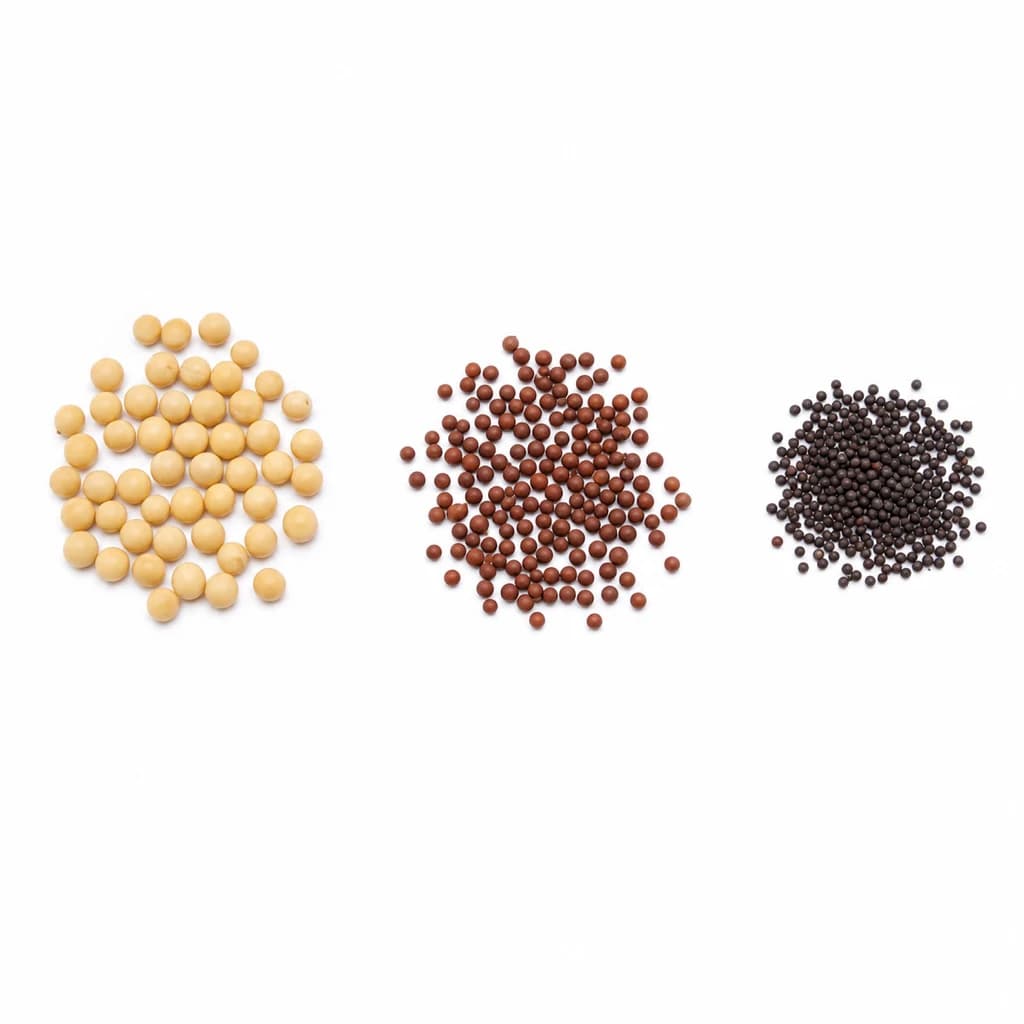
Brown mustard seed is the small, reddish-brown seed of Brassica juncea, the same plant cultivated across the Himalayas, the Gangetic plain, and northern China for more than four millennia. It is sharper and more pungent than the pale yellow seed (Sinapis alba) that fills American mustard bottles, and more approachable than the now-rare black seed (Brassica nigra) that once defined classical Dijon. In practical terms, brown is the workhorse pungent seed of Indian, Bengali, Nepali, Ethiopian, Chinese, and northern European cooking — the seed you reach for when yellow tastes polite and black is unavailable or too aggressive.
The seed's character is governed by a single volatile compound, allyl isothiocyanate, which forms only when an enzyme (myrosinase) meets the seed's glucosinolates in the presence of liquid. Dry seed in a jar is almost odorless; crack it under water or vinegar and the sinus-clearing burn arrives within seconds. This dual personality is the key to using it well. Bloomed briefly in hot oil, as in an Indian tadka, the seed releases a nutty, aromatic warmth with only a fraction of the harshness. Soaked and ground into wine or verjuice, as in Dijon, it delivers the slow, lingering heat that defines European whole-grain mustards.
In the kitchen, brown mustard seed behaves like a small bundle of concentrated flavor that needs the right trigger. It pops audibly in oil at around 350°F/175°C in under 30 seconds, which is both a signal that it is ready and a warning that it will scorch within moments if left. Ground seed is roughly twice as pungent as the same volume of whole seed, and the powder loses its volatile oils within months. Treat it as a fresh spice: buy whole, store cool and dark, and crack or grind just before use whenever the dish depends on its full bite.
- Measured in
- tsp
- Storage
- Store Whole In An Airtight Container Away From Light & Heat
Find it in
Suits
Types & varieties
The standard small, dark brown seed of Indian tempering, pickles, and Bengali shorshe fish curries. Strong, sharp aroma when bloomed in oil.
Larger and lighter brown than Indian rai; the basis for Chinese mustard paste and the brine used to pickle mustard greens. Often sold as Oriental mustard.
Cultivated in the Ethiopian highlands; similar pungency to Indian rai and a traditional component of shiro and berbere spice blends.
Seed harvested from the cutleaf Brassica juncea greens common in southern U.S. and Asian cooking; a milder juncea variant used in southern-style greens and quick pickles.
The Science of the Bite
The pungency of brown mustard is not a static property locked inside the seed — it is a reaction. Inside each seed, glucosinolates (primarily sinigrin) sit in one compartment and the enzyme myrosinase sits in another. As long as the seed is dry and whole, the two never meet. The moment you crack, grind, or chew the seed and introduce water, vinegar, or wine, myrosinase cleaves the glucosinolates and liberates allyl isothiocyanate — the same compound that makes wasabi and horseradish feel like a small controlled fire on the sinuses.
This is why two techniques produce two completely different results. Blooming whole seeds in hot oil heats them well above the boiling point of water; the enzyme is partly deactivated and the volatile oils escape as aroma rather than heat. You get the nutty, savory fragrance of tadka without the throat-searing burn. By contrast, grinding the seed and mixing it with cold liquid keeps the enzyme fully active, and the longer the paste sits, the deeper and more rounded the heat becomes — which is why a 48-hour-old mustard tastes markedly different from one eaten straight from the blender. Acid (vinegar, wine, verjuice) slows the reaction and stabilizes the final flavor, while neutral liquids like water or beer let it run faster and produce a sharper, more fleeting burn.
- Dry, intact seed is nearly odorless — crack it before you can smell it.
- Heat well above 140°F/60°C begins to deactivate myrosinase, which is why toasting and hot-oil blooming mellow the bite.
- Acid slows the enzymatic reaction, which is why all long-lived prepared mustards contain vinegar or wine.
- Resting ground mustard for 24–48 hours at room temperature deepens and rounds out the heat.
Tempering (Tadka) Mastery
Tempering — heating whole spices in fat until they release their aroma — is the single most common application of brown mustard seed, and the easiest place to ruin a dish. The window between perfectly nutty and acridly burnt is short, so the technique is more about attention than recipe.
- Heat oil or ghee to about 350°F/175°C; a small test mustard seed should sizzle and pop on contact.
- Bloom slower spices first — cumin, coriander, fenugreek — then add mustard seed last because it burns fastest.
- Cover the pan with a splatter screen or lid; the seeds jump and can stain skin, clothing, and stovetops.
- Pour the tempered oil and seeds over the dish within moments of popping to stop the cooking.
- For a rounder flavor, dry-toast the seeds in a skillet for 1–2 minutes before adding them to hot oil.
Common uses
Tips & pitfalls
- Bloom seeds in oil over medium heat; if the oil smokes before the seeds pop, it is too hot and the mustard will turn acrid.
- Cover the pan when popping — the seeds jump vigorously and can stain skin and surfaces.
- Dry-toast whole seeds in a skillet for 1–2 minutes before grinding to unlock a nutty depth; un-toasted seed gives a raw, one-note sharpness.
- Soak whole seeds in warm water or vinegar for 10–15 minutes to mellow the harsh bite before grinding into smooth mustard.
- Grind just before use; pre-ground mustard powder loses its volatile oils within months.
- Layer brown with yellow mustard seed for graduated heat: yellow burns the front of the mouth, brown lingers in the sinuses.
- For prepared mustard, blend cracked seeds 1 part to 2 parts liquid (wine, vinegar, or beer) and rest 24–48 hours for the flavor to mature.
- Store whole seeds away from the stove and direct sunlight; heat and light degrade allyl isothiocyanate quickly.
- Don't substitute black mustard seed 1:1 — it is markedly hotter; start at roughly two-thirds the amount by volume.
Nutrition
Energy
372 kJ · per 100 g
Where the calories come from
Protein
4.1g
8% DV
Carbs
17.3g
6% DV
Fat
0.5g
1% DV
Sodium
1mg
0% DV
Source · USDA FoodData Central · approx. Seeds, lotus seeds, raw
View on FDC →In the shops
Matched grocery products
No matched grocery products for Brown Mustard Seed yet.
Good to know
- Botanical name
- Brassica juncea
- Color
- Tan to reddish-brown; smaller and darker than yellow mustard seeds
- Size
- About 1.5–2 mm in diameter, roughly spherical
- Flavor profile
- Sharp and pungent with a nutty undertow when toasted; less harsh than black seed, more biting than yellow
- Active compound
- Allyl isothiocyanate, released when crushed seed contacts liquid
- Origin
- Foothills of the Himalayas and northern India; cultivated for over 4,000 years
- Major producers
- Canada (world's largest), Nepal, India, China, Russia, Ukraine, Czech Republic, Germany, France
- Heat tolerance
- Seeds pop in 15–30 seconds at 350°F/175°C; burn and turn bitter quickly thereafter
- Storage
- Whole seeds keep 1–2 years airtight in a cool, dark place; ground seeds lose potency within 6 months
- Yield note
- 1 tablespoon whole yields about 1 tablespoon ground; grinding roughly doubles perceived pungency
Substitutes
- Yellow mustard seed — Milder and slightly larger; use about 1.5× the volume. Best for pickling and seasoning blends where sharpness is not critical.
- Black mustard seed — More pungent than brown; use roughly two-thirds the amount. Ideal when you want maximum heat, particularly in South Indian cooking.
- Mustard powder (Colman's) — 1 teaspoon powder ≈ 1 tablespoon whole brown seeds. Already toasted and ground; mix with a splash of water before using in tempering.
- Prepared Dijon mustard — 1 tablespoon Dijon ≈ 1 teaspoon brown seeds plus a splash of vinegar; best in dressings and marinades, not in oil-popping.
- Crushed mustard flakes — Quick pantry stand-in for whole seeds when you want texture without popping; toast briefly in oil to release aroma.
Pairs with
Also called
brown mustard seeds · oriental mustard seed