Tying & Fastening
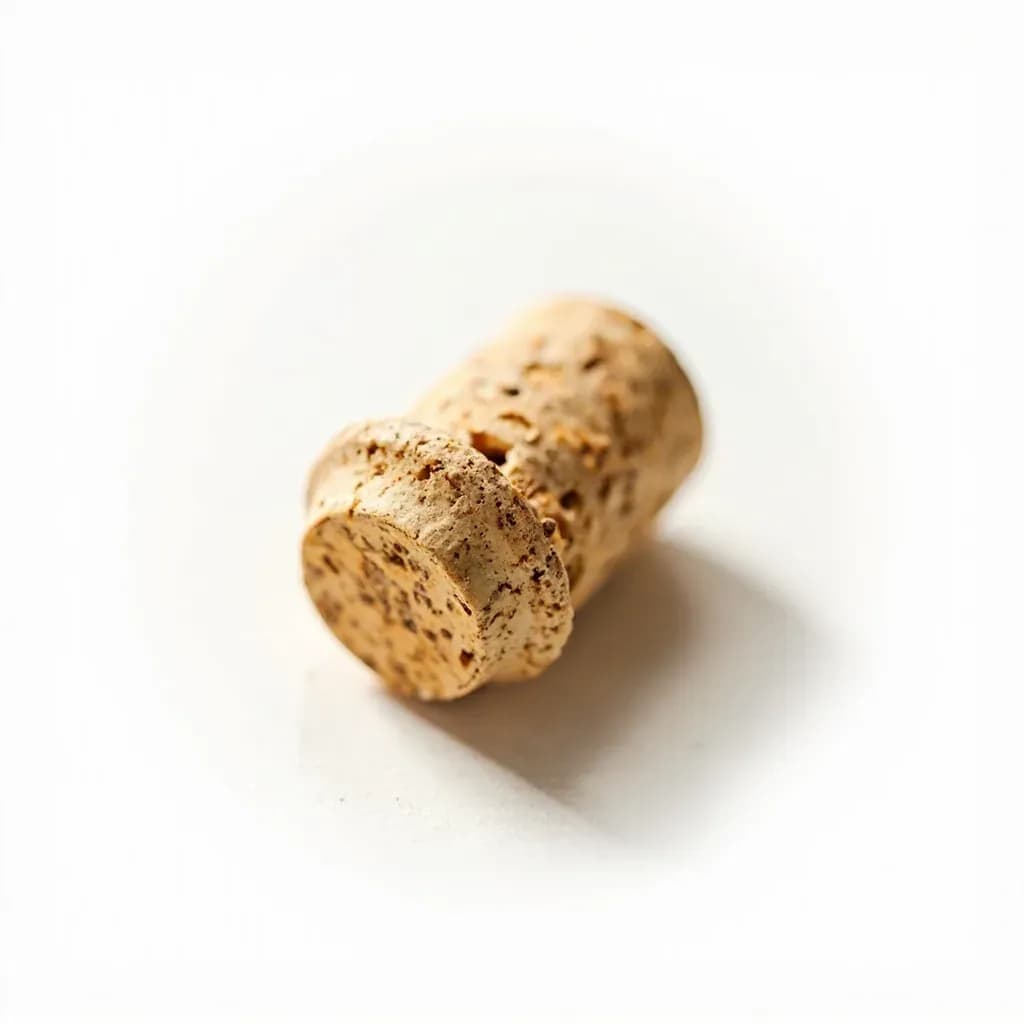
Wine Cork
Cork stopper that reseals bottles and doubles as a handy kitchen plug or holder.
A wine cork is a cylindrical natural or synthetic stopper that seals wine and other bottles. In the kitchen it reseals an opened bottle, plugs decanters and oil cruets, and is repurposed to hold skewers or steady a knife edge. Natural cork lets a tiny amount of air through over time, while synthetic corks give a tighter, consistent reseal.
A wine cork is the cylindrical stopper cut from the bark of the cork oak (Quercus suber), grown almost exclusively in the western Mediterranean. Portugal alone produces roughly half of the world's supply, and the bark is harvested without felling the tree — it regenerates every nine to twelve years for well over a century. Cork's honeycomb of fourteen-sided, air-filled cells makes it one of the lightest solid materials in everyday use, and the suberin, lignin, and waxy polysaccharides in its walls give it elasticity, fire resistance, and a naturally antimicrobial surface.
Those properties translate into a surprising range of kitchen uses long after the cork has been pulled. The same low thermal conductivity that buffers wine from temperature swings makes a cork an effective trivet; the slight compressibility that seals a bottle becomes a non-slip grip on a stubborn jar lid or a soft buffer on a cabinet door. Natural and agglomerated corks tolerate heat up to roughly 200 °C before they char, and they burn slowly without releasing toxic halogen gases — handy in a wood-fired oven or fireplace.
For cooks, the practical distinction is between real cork (natural or agglomerated) and synthetic plastic corks, which behave very differently once they leave the bottle. Natural cork can be sliced, glued, pinned, and reused dozens of times; synthetic corks have no business near high heat and lack the sliceable, reusable character of real cork.
Alternatives
Types & varieties
Single piece punched from premium bark; traditional choice for still wines; visually uniform and the most expensive grade.
Natural cork whose surface pores have been filled with a cork-and-glue mixture for a smoother finish; purely cosmetic.
Granulated cork particles bonded with food-safe adhesive; inexpensive, common on entry-level wines, and a good choice for fire starters and shavings.
Agglomerated body capped with one or two discs of natural cork; used when seal integrity matters, including some sparkling wines.
Larger, wider cork assembled from a cylinder plus discs; compresses into the characteristic mushroom shape after bottling under pressure.
Plastic or elastomer stopper designed to mimic cork; uniform and TCA-free, but not suitable for high-heat kitchen uses.
Short, stubby cork topped with a decorative cap of wood, ceramic, plastic, or metal; used on spirits, olive oil, vinegar, and decanters.
Mushroom cork topped with a metal cage (muselet) and foil capsule; the cork itself is usually agglomerated or technical.
Cork as Buffer, Spacer, and Soft Fastening
In the tying-and-fastening context, cork's value is that it compresses slightly, grips frictionally, and protects surfaces from impact and heat. Sliced into rounds, it becomes a soft spacer or pad; whole, it becomes a plug or a sleeve.
- Cabinet and drawer buffers: cut 5–8 mm slices and pin or glue them where doors meet the frame to silence slamming and protect the finish.
- Chair and stool leg pads: slice cross-sections 8–10 mm thick and glue to the bottom of furniture legs to stop scraping on tile or hardwood.
- Countertop and shelf protectors: lay a row of sliced rounds under small appliances, knife blocks, or cutting boards to absorb vibration and prevent scratches.
- Jar-lid and bottle-cap grippers: wrap a whole cork in a dish towel to multiply friction when breaking a stubborn vacuum seal; cork's grain grips metal and glass better than bare cloth.
- Cord and tool-handle sleeves: slice lengthwise and slip over a thin handle or cord to add a soft, non-slip grip.
- Knife-edge guard: slice a cork lengthwise, lay the blade between the halves with the grain running along the blade, and wrap with tape or a rubber band for safe drawer storage.
Slicing and Shaping Cork
Cork cuts cleanly with the right tool and motion. A serrated bread knife is the most reliable choice; a straight chef's knife tends to crush the bark and leave ragged edges. Score a shallow guideline first, then saw through with steady, light pressure. For thin uniform rounds, a small hand miter saw or a sharp utility knife guided by a strip of wood as a fence works well. Sand cut faces lightly on fine sandpaper to remove loose granules before gluing.
Stripping and Deodorizing Corks for Reuse
Before putting a pulled cork into service in the kitchen, neutralize the residual wine odor and surface stains.
- Remove any foil, plastic, or cage from used corks.
- Soak for 30 minutes in warm water with two tablespoons of baking soda.
- Rinse under running water, then air-dry standing upright on a wire rack for at least 24 hours until the cores feel completely dry.
- Store in a jar or basket sorted by size; reserve natural one-piece corks for structural jobs and agglomerated corks for shavings and fire starters.
Common uses
Tips & pitfalls
- Reserve natural one-piece corks for structural jobs such as trivets and knife guards, and use agglomerated corks for fire starters or shavings — bonded corks burn more predictably.
- Slice cork with a serrated bread knife in a sawing motion; a straight chef's knife tends to crumble the bark and crush the cells.
- Never put whole corks in the dishwasher — prolonged heat and moisture will swell and fracture them. Hand-wash briefly and air-dry standing up.
- To eliminate residual wine smell before kitchen reuse, soak corks for 30 minutes in a solution of baking soda and warm water, then air-dry completely.
- For a non-slip trivet, glue corks with the porous cut face down — it grips counters better than the smooth printed top.
- Never rely on a used wine cork to reseal a wine bottle for long-term storage; it has already compressed and will not reform a tight seal. Use a vacuum stopper instead.
- When using corks as knife guards, orient the grain along the blade length so a sharp edge cannot slip out of the slit.
- Synthetic corks are not safe for high-heat kitchen uses; they can melt or off-gas. Choose natural or agglomerated cork for trivets and fire-starting.
Good to know
- Material
- Bark of the cork oak (Quercus suber); also available in agglomerated and synthetic forms
- Standard Size
- Approximately 24 mm diameter × 44 mm length for still wine; 31 mm × 47–49 mm for sparkling
- Heat Resistance
- Naturally fire-retardant; chars slowly above ~200 °C and does not release toxic halogen gases
- Thermal Conductivity
- Very low — an effective insulating trivet or pot rest
- Antimicrobial
- Suberin resists bacteria, mold, and mildew growth on the cork surface
- Reusability
- Single-use for sealing a wine bottle, but reusable for dozens of kitchen tasks after removal
- Density
- Roughly 0.12–0.24 g/cm³ — one of the lightest solid materials in common use
- Sustainability
- Cork oaks are not felled; bark regenerates and is re-harvested every 9–12 years for over 150 years
Also called
wine cork · cork stopper · bottle cork
Related

Skewers
Thread meat and vegetables for kebabs and grilling

Toothpicks
Pin rolls shut and test cakes for doneness

Kitchen Twine
Food-safe string for trussing roasts and tying bundles

Butcher Paper
Breathable wrap for resting barbecue and storing meat
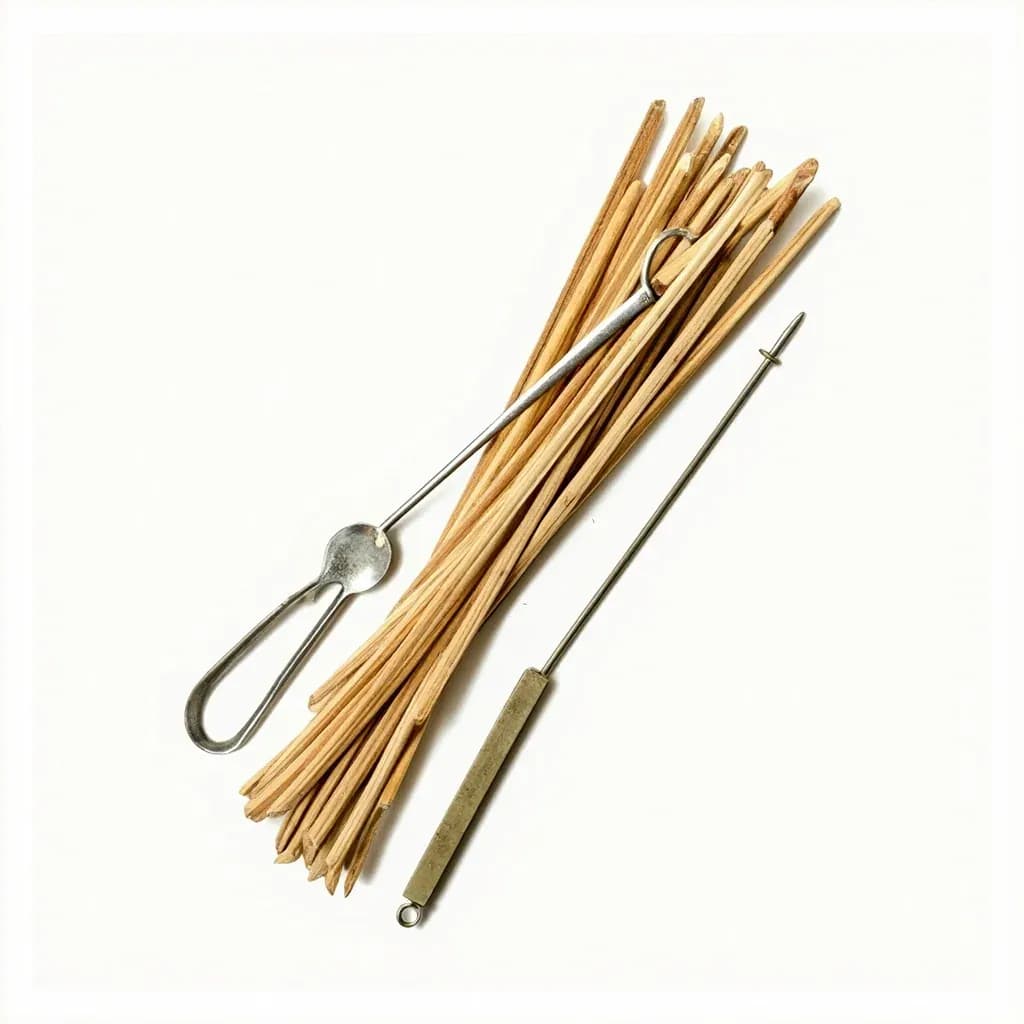
Skewer (Metal / Wooden / Bamboo)
Thin pointed rod that threads meat and vegetables for grilling, roasting, or testing doneness.
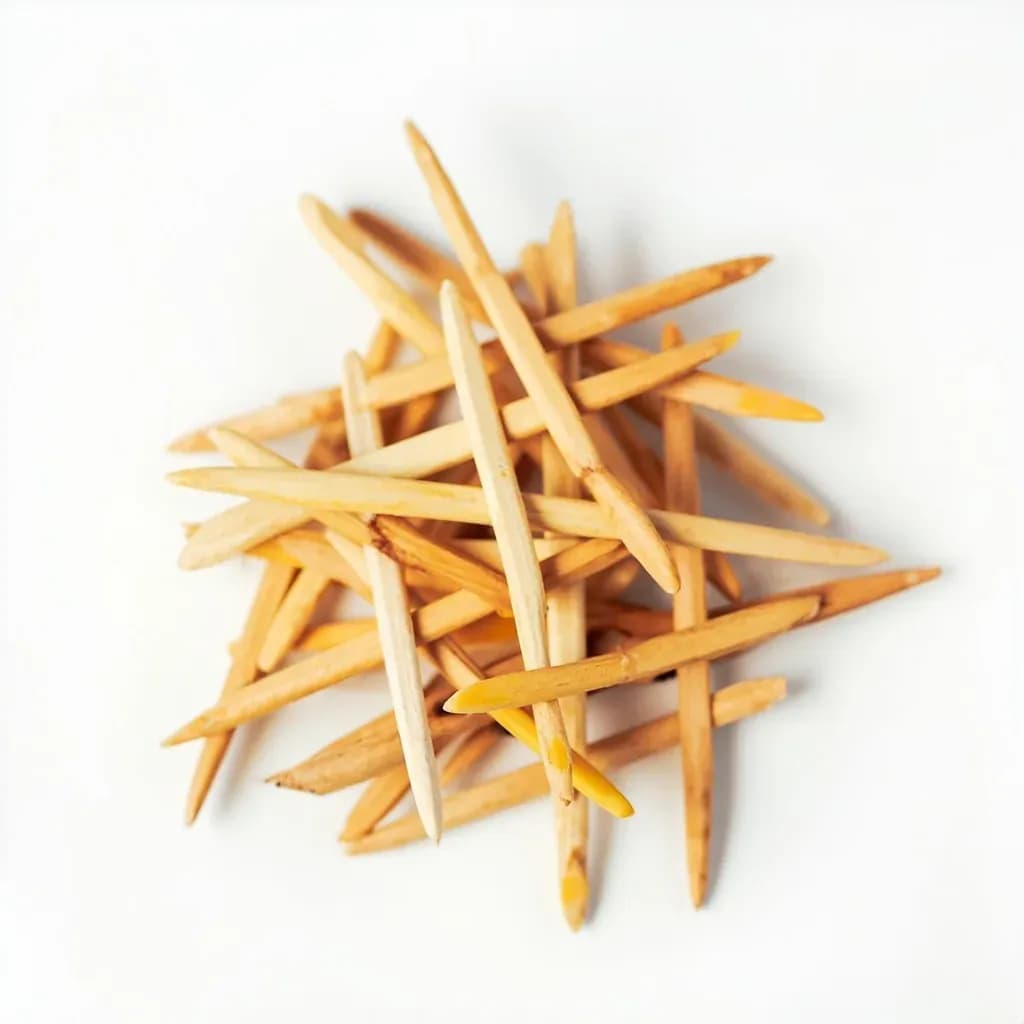
Toothpick
Small pointed wooden pick that pins rolled food shut and tests baked goods for doneness.
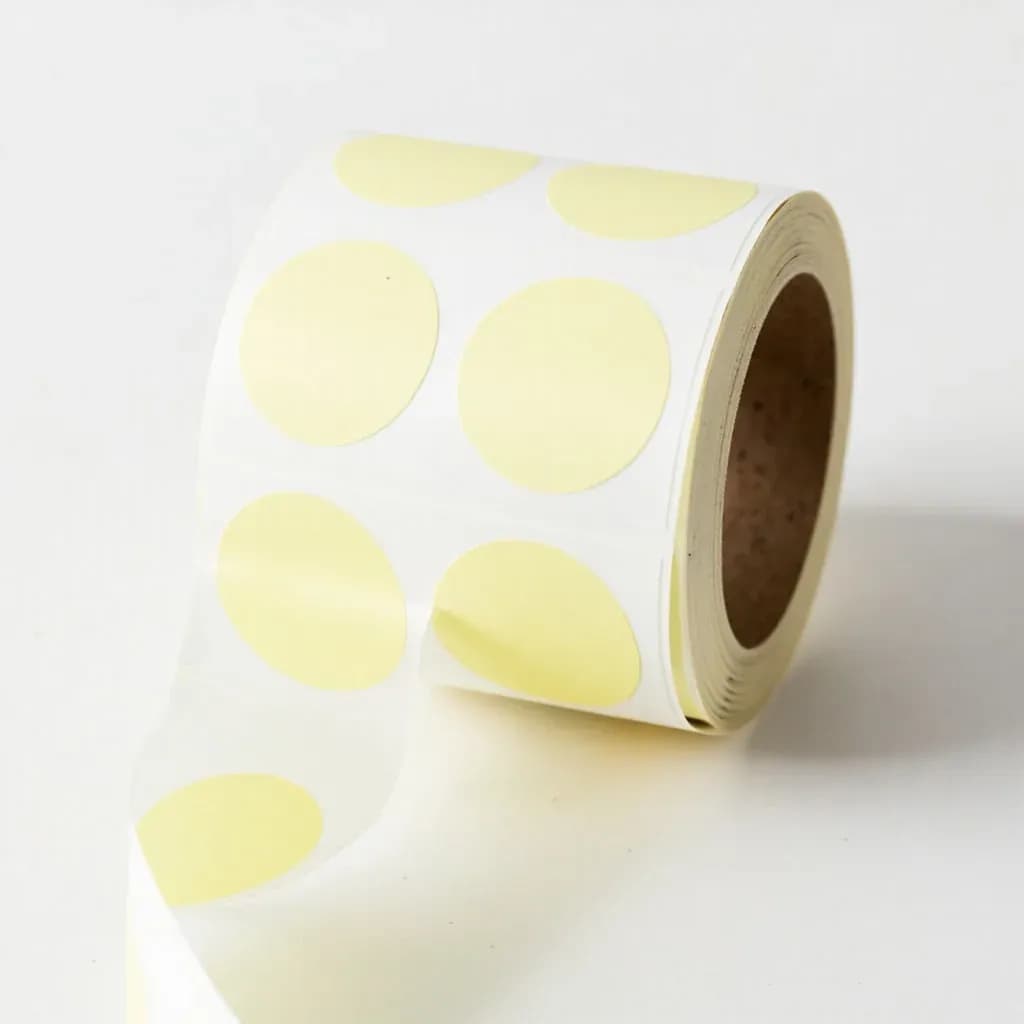
Food Storage Label (Day-Dot)
Stick-on label marking date, contents, or batch info for safe stock rotation.
Labeling Tape
Write-on tape for marking containers with contents and dates, peeling off cleanly later.