 Argentine
Medium · Hot
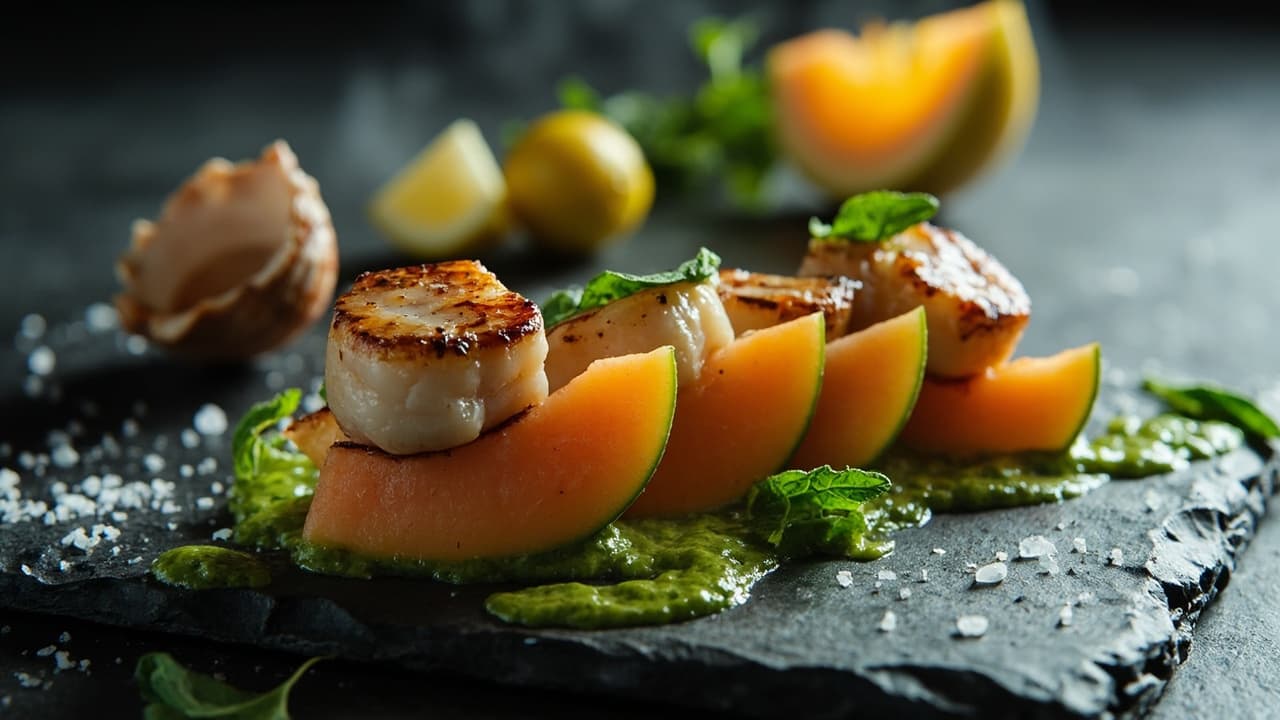
Fire-Blistered Scallop Bites with Cantaloupe and Mint
Caramelized scallops kissed by open flame, their sweet brininess tempered by cool cantaloupe and a bright mint-oil finish. A study in fire and fresh.

Prep
10 min
Cook
12 min
Total
22 min
Method
1
Halve the cantaloupe, scoop out seeds, and slice into half-moon wedges roughly the same thickness as the scallops. Set aside on a plate.
2
3
Pat the scallops completely dry with kitchen paper — moisture is the enemy of blister. Season generously with salt on both flat sides.
4
Place a heavy cast-iron skillet directly over the hottest part of your grill or the highest flame on your stovetop. Let it scream for 3-4 minutes until it just begins to smoke.
5
Lay the scallops in the dry skillet without crowding. Listen for the sear — you want that aggressive hiss. Cook 90 seconds per side, until the edges are deeply golden and caramelized with charred spots. Do not move them.
6
Flip once using tongs and repeat on the second side. The scallops should feel firm with a slight resistance when pressed. Remove from heat immediately.
7
Char the cantaloupe wedges directly on the grill for 60-90 seconds per side — you want blackened edges and warm fruit, not cooked-through softness. Remove and keep warm.
8
Strain the mint oil through a fine sieve, pressing the leaves to extract all that green, garlicky fat. Discard the garlic clove.
9
10
Arrange the warm cantaloupe wedges on a dark slate or platter. Nestle the blistered scallops alongside. Spoon the mint oil generously over everything. Finish with a final pinch of flaky salt.
A
Nutri-Score
Excellent balance
A–E · lower is better · score -1
Calories
224
per serving
High in protein · 22gLow sugar · 2gLow saturated fat · 2g
Protein
22g
Carbs
9g
Fat
12g
Sat. fat
2g
Fiber
3g
Sugar
2g
Sodium
899mg
Dairy FreeGluten FreePescatarianRefined Carb Free
Nutri-Score is a general nutritional-balance guide, not medical or dietary advice.
Flavor Profile
6
Umami
3
Sweet
5
Salty
2
Sour
1
Bitter
0
Spicy
Textures
CrispyJuicyTender
Aromas
HerbalPungentSmoky
Kitchen Equipment
Primary Tool
Cast Iron SkilletCast Iron SkilletGrillTongsChef KnifeCutting BoardFine SievePlateSmall BowlSpoonZesterMixing BowlPaper Towels
Techniques
Safety & Storage
Cooking Temperature
Cast-iron skillet must reach screaming hot temperatures (exceeding 400°F) before adding scallops. The aggressive sear on both sides (90 seconds per side) is critical for proper caramelization and food safety. Undercooked scallops pose a risk.
Cross Contamination
Raw scallops can harbor bacteria and pathogens. Use separate cutting boards, plates, and utensils for raw and cooked scallops. Never place cooked scallops on plates that held raw product. Wash hands thoroughly after handling raw scallops.
Storage
Scallops are highly perishable and must be refrigerated at 40°F or below until ready to cook. Use within 1-2 days of purchase. Do not leave at room temperature for more than 2 hours total during prep and cooking.
High Risk Population
Pregnant individuals, elderly, young children, and immunocompromised persons should only consume scallops that are fully cooked to an internal temperature of 145°F. Raw or undercooked shellfish poses significant risk of foodborne illness.
Allergen Warning
This dish contains scallops (mollusk shellfish). Even trace amounts from cross-contamination can cause severe reactions in allergic individuals. Inform guests of shellfish content before service.
Equipment Safety
Placing a screaming-hot cast-iron skillet over open flame (grill or stovetop) presents burn and flare-up risks. Use long-handled tongs for all manipulations. Ensure skillet handle is not over open flame to prevent handle temperatures exceeding safe touch limits.
Handling
Scallops must be patted completely dry before high-heat cooking — moisture creates steam instead of sear and can cause oil splatter. Remove any visible abductor muscle (tough side muscle) before cooking for optimal texture.
Shelf Life
Prepared mint oil with garlic should be used immediately or refrigerated. Discard any leftover mint oil that has been at room temperature for more than 2 hours. Fresh lemon zest in oil creates a low-acid environment where C. botulinum spores can potentially grow.
Pro Tips
Technique
Listen to the sear, not the clock. When the scallops hit that screaming cast iron, you'll hear the hiss change from aggressive to gentle—that's when you know the caramelization is complete and it's time to flip. Trust your ears.
Substitution
If cantaloupe is not in season, honeydew makes a fine substitute—same sweet resistance against the flame, just slightly more subtle. The mint oil remains the soul of the dish regardless.
From the chef
Sweet ocean brininess, deep char, and cool cantaloupe — this dish lives in the tension between fire and freshness. The scallops need a screaming-hot dry pan and ninety seconds of patience per side; move them and you lose the crust. Char the cantaloupe on the same grill until the edges blacken and the fruit warms without softening. Then the mint oil — steeped with garlic, strained bright green, finished with lemon zest — pulls everything together like a cool breeze cutting through the heat of the fire.
TagsLive FireCharredBlisteredGrilledScallopsSeafoodSummerEntertainingQuickCast IronMintCitrus
AllergensMollusks
Source: generated · June 13, 2026