Heat & Fire
Char-Grilling
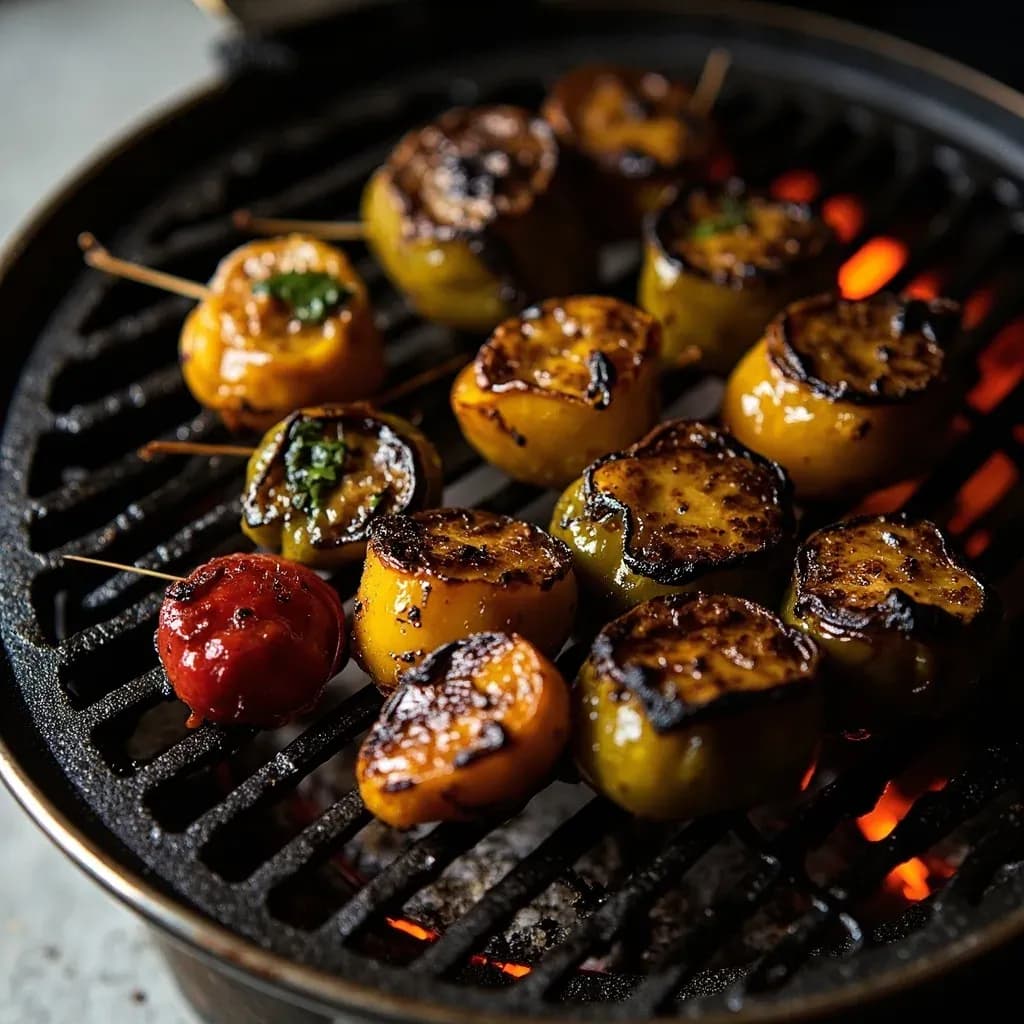
Grilling over high heat to deliberately blacken and char the food's surface.
Char-grilling cooks food over intense direct heat until the surface develops dark, slightly bitter char marks and blistered spots. The high heat triggers Maillard browning and caramelization, adding smoky depth to meats, vegetables, and peppers. Controlled charring builds flavor, while excessive burning turns acrid, so cooks balance heat and timing.
Char-grilling is the deliberate application of fierce, direct radiant heat to a food's surface until it blackens — a controlled burn that produces the brittle, smoky crust prized in cuisines from Argentine asado to Japanese robatayaki. The black layer is real flavor chemistry: surface proteins and sugars undergo the Maillard reaction while the outermost layer pyrolizes into carbon, releasing bitter, smoky, and roasted notes that no gentler cooking method can match. It is distinguished from everyday grilling by intensity and intent — the cook is choosing to let the exterior carbonize, not merely brown — and from low-and-slow barbecue, which seeks smoke penetration and connective-tissue breakdown rather than surface char.
Success rests on three things: dry fuel burning at grate temperatures of 500–700 °F (260–370 °C), a clean and lightly oiled cooking surface, and food that is dry on the outside so heat transfers straight into a sear instead of boiling off surface moisture. The technique favors high-fat foods (whose rendered drippings feed small, useful flare-ups) and sturdy vegetables, and it punishes inattention — once a steak is blackened through to the muscle, both flavor and texture are lost. Treat the char as an accent, not a destination: a thin, brittle carbon crust over a properly cooked interior is the goal.
- Difficulty
- Easy
Types & varieties
Japanese hearth grilling over binchotan or high-grade charcoal; food skewered, rested, and brushed with tare.
Argentine and Uruguayan grilling over hardwood embers, often on a parilla cross-bar, with large cuts dominating.
Brazilian/Portuguese skewered grilling (espeto) over wood or charcoal, finished with rock salt and garlic.
Japanese skewered poultry grilled over binchotan, traditionally finished with tare or salt.
Korean table-side grilling over charcoal; marinated short ribs (galbi), pork belly (samgyeopsal), and shellfish seared at the table or on a domed griddle.
Beef over post oak or mesquite embers; hard sear, brief cooking, minimal sauce.
Peruvian skewered beef heart marinated in vinegar and ají panca, grilled over charcoals.
Small, high-heat Japanese tabletop grilling; intense char, very short cook times.
How to do it
- 1
Choose and prepare the fuel
Fill a chimney starter with hardwood lump charcoal (or a roughly 70/30 lump-to-flavor-wood mix for aroma). Light the bottom and wait 15–20 minutes until the coals are evenly ignited and covered with a thin gray-ash skin.
- 2
Set up two zones
Pour the lit coals to one side of the grill for a hot sear zone and leave the other side empty as a cooler finish-and-recovery zone. The grate directly over the coals should feel almost too hot to hold a hand above — roughly 500–700 °F.
- 3
Clean and oil the grate
Scrub the grate with a wire brush while it heats. Just before cooking, fold a paper towel, grip it with long tongs, dip it in a neutral oil, and wipe the grate to lay down a thin nonstick film.
- 4
Prepare the food
Pat proteins and vegetables thoroughly dry. Season with salt (and optionally pepper, oil, and aromatics) up to an hour ahead. For vegetables, a light coat of oil helps conduct heat and char evenly.
- 5
Sear without moving
Lay the food on the hottest part of the grate perpendicular to the bars to maximize contact. Do not press, nudge, or flip until a deep brown-to-black crust releases naturally from the metal — usually 2–4 minutes depending on thickness.
- 6
Flip once and manage flare-ups
Turn the food with long tongs or a spatula (never a fork, which pierces and loses juice). If flames flare, slide the food to the cooler zone briefly, then return. Apply glazes, butters, or herb brushes only after the initial crust has formed, so sugars do not scorch.
- 7
Finish, rest, and serve
Move thicker cuts to the cooler side to finish to target internal temperature; check with an instant-read thermometer. Transfer to a board or warm plate, rest 5–10 minutes for meats, and serve with the charred side up to preserve the crust.
- 8
Maintain the fire
Add fresh coals or wood chunks as the bed cools, typically every 25–35 minutes. Re-oil the grate before each new batch. When finished, close the vents to extinguish, and clean the grate while it is still warm.
The science of char
Char is not a single thing but the overlap of three reactions that turn a wet, pale surface into a brittle, dark crust. The Maillard reaction — amino acids and reducing sugars combining above roughly 285 °F (140 °C) — produces hundreds of aromatic compounds and the brown melanoidin polymers behind a seared steak's savory depth. Pyrolysis, the thermal breakdown of those compounds under intense heat, drives off volatile tars and leaves a carbon skeleton at the surface. Rendered fats dripping onto coals vaporize and re-deposit on the food as smoke, layering yet more aroma. The line between a great char and a bitter one is thin: ash-coated flames licking the food produce a harsh, alkaline bitterness, while a clean grate and brief contact time give a toasty, almost coffee-like flavor. Aim for a black veneer no thicker than a sheet of paper over a properly cooked interior.
Choosing fuel and wood
Hardwood lump charcoal is the workhorse of char-grilling because it burns hotter and cleaner than briquettes, with fewer binders and far less ash. Briquettes are steadier and longer-lasting, useful for extended sessions. Wood chunks or splits added to the coal bed shape aroma: post oak is neutral and beef-friendly (Texas style), hickory layers a bacon-like depth, mesquite is bold but turns acrid if overused, and fruitwoods (apple, cherry, peach) lend sweetness to poultry and pork. Avoid softwoods (pine, fir, spruce) — their resins deposit harsh turpentine notes. Build the fire with a chimney starter; lighter fluid contaminates fuel with petroleum off-notes that no amount of char will mask.
Common uses
Tips & pitfalls
- Pat the food completely dry before it hits the grate; surface moisture is the main enemy of crust and the main cause of pale, steamed food.
- Oil the food, not the grate ahead of time — oil on a cold grate burns off, while oil on the food conducts heat and reduces sticking once seared.
- Build a two-zone fire: a hot coal bed for searing and a cooler empty side to finish thick cuts or recover from flare-ups.
- Use a chimney starter and avoid lighter fluid, which leaves petroleum off-notes that taint the food no matter how hot the fire burns.
- Wait for a thin gray ash on the coals before cooking; flames licking the food ash the char and turn it bitter.
- Leave the food alone once it hits the grate — resist pressing and limit flips to one for a clean, well-defined sear.
- Salt steaks 40 minutes to an hour ahead so the surface dries and seasons deeply; salting right before cooking pulls moisture to the surface and steams the crust.
- Treat char as a flavor accent, not a goal — blackened-to-the-bone is wasted food and creates harsher bitter compounds, so trim, do not carbonize.
Good to know
- Heat source
- Burning hardwood lump charcoal, charcoal briquettes, hardwood, or a hybrid of wood and charcoal; gas grills can approximate the heat but not the combustion flavor.
- Grate temperature
- Typically 500–700 °F (260–370 °C) at the cooking grate; surface sear can momentarily exceed 750 °F.
- Core chemistry
- Driven by the Maillard reaction and pyrolysis of surface proteins, sugars, and fats, producing melanoidins, bitter/smoky notes, and visible carbonization.
- Acquired compounds
- Heavy charring generates heterocyclic amines (HCAs) and polycyclic aromatic hydrocarbons (PAHs); surface char is a flavor choice, not a safety goal.
- Typical session
- 20–45 minutes to bring a fire to cooking temperature, then 3–6 minutes per side for most steaks and vegetables, longer for bone-in or thick cuts.
- Difficulty
- Moderate; success depends on fire management more than on the food itself.
- Fuel choice
- Hardwood lump burns hotter and cleaner than briquettes; briquettes give steadier, longer heat; flavor woods (oak, hickory, mesquite, fruitwoods) layer aroma.
- Origin
- Open-fire cooking predates recorded history; the modern kettle grill is associated with George Stephen's 1952 Weber design; deliberate char as flavor is documented in Japanese robatayaki, Argentine asado, Korean gogi-gui, and American barbecue traditions.
- Storage
- Keep charcoal and kiln-dried hardwood dry; lump loses vigor and smokes poorly when stored damp.
Also called
charbroiling
Dishes that rely on it
Related

Sear
Blast the surface hot for a deep-browned, savory crust

Sauté
Cook quickly in a little fat over lively heat, tossing as you go

Stir-Fry
Toss bite-sized pieces over roaring heat for fast, smoky cooking

Pan-Fry
Crisp food in a shallow layer of hot fat, turning once or twice

Deep-Fry
Submerge in hot oil for an all-over crackling crust

Roast
Cook uncovered in dry oven heat for browned edges and tender centers

Bake
Cook with steady, surrounding oven heat — the soul of bread and pastry

Broil
Hit food from directly above with fierce overhead heat