Heat & Fire
Vegetable Roasting (Asado)
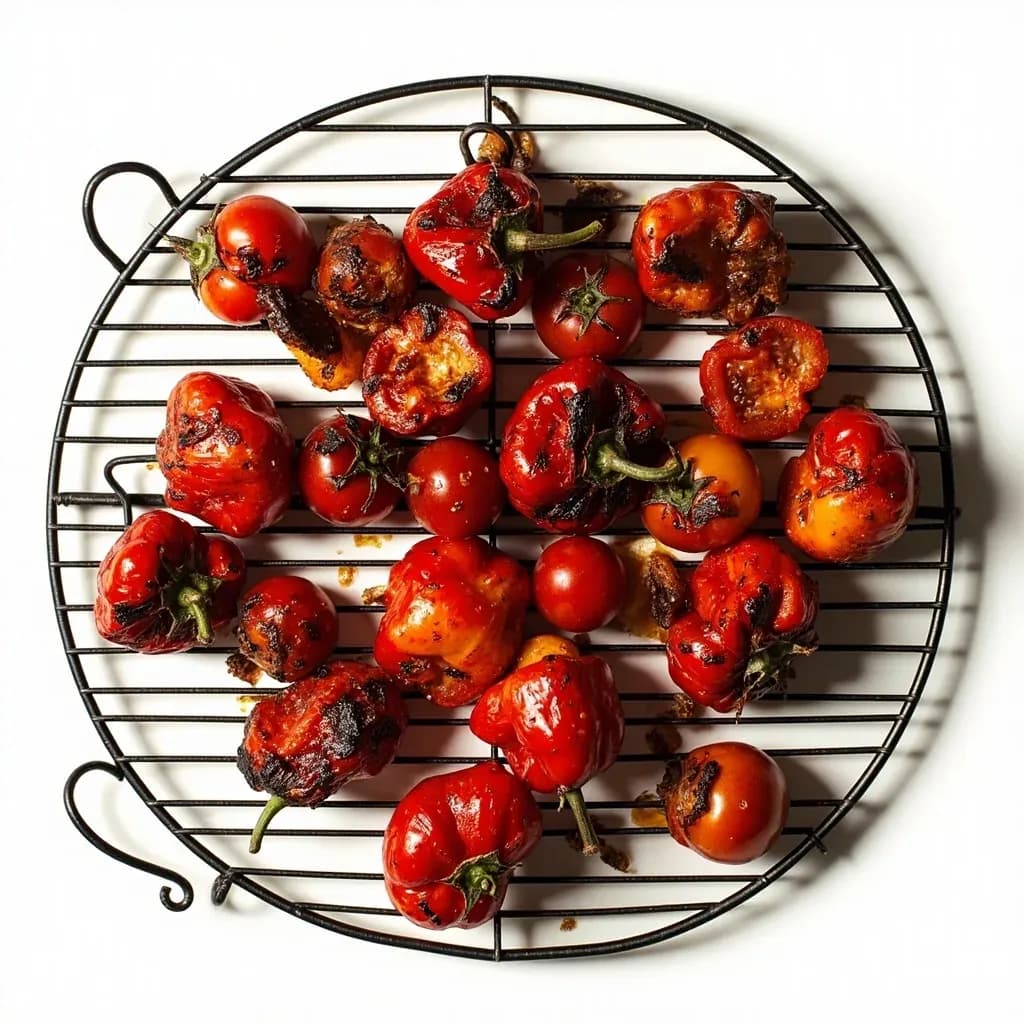
Roasting whole vegetables over coals or in dry heat to char skins and concentrate sweetness.
Vegetable roasting cooks whole or cut vegetables in dry heat, over coals, on a comal, or in an oven, until their skins blister and char and their sugars caramelize. The charring is then often peeled away to reveal smoky, sweet flesh, as with roasted peppers, tomatoes, and chiles for salsas. Direct fire (asado-style) adds a deep smoky note that an oven cannot fully replicate.
Vegetable roasting in the asado tradition is the plant-side counterpart of Argentine and Uruguayan grill cookery: whole or large pieces of produce are exposed to the radiant heat of hardwood embers — and sometimes buried in them — until the skin chars to black, the flesh collapses into something custard-soft, and the natural sugars caramelize into a smoky-sweet intensity that oven roasting rarely reaches. The defining element is the fire itself: a deep bed of glowing grey hardwood coals (not flame) gives off radiant heat that blisters the cuticle, drives off 25–35% of the vegetable's weight in water, and lays down a thin layer of Maillard browning and smoke that becomes the flavor. This is why a roasted pepper from the parrilla tastes different from one charred under a broiler — the embers produce gentler, more penetrating heat, and the option of burying vegetables al rescoldo lets them essentially steam in their own moisture inside a husk or skin for a long, smoky bake.
Beyond flavor, the technique is built around an easy physical trick: char the skin completely, then steam the vegetable in a covered bowl so the blackened cuticle slips away from the flesh underneath. Once peeled, the flesh is dressed simply — coarse salt, good olive oil, sometimes lemon or chimichurri — and folded into sauces, salads, empanadas, or served alongside the meat as the natural vegetable course of an asado. The same method shows up across the Mediterranean and Latin America as escalivada in Catalonia, tatemado in Mexico, and légumes à la braise in Provence, all of which depend on the same principle of whole-vegetable ember roasting.
In a modern kitchen the results can be approximated under a hot broiler or in a 250°C / 480°F convection oven, but you lose two things: the smoky absorption that gives the flesh its color, and the option of the rescoldo, where a potato or ear of corn cooks slowly buried in ash for a flavor nothing else replicates. Where a grill is available, hardwood lump is the closest substitute for the real fire.
- Difficulty
- Easy
Types & varieties
Vegetables set directly on the grill grate over embers; even charring on all sides, the workhorse method for peppers, onions, tomatoes, and eggplant.
Buried in the hot ashes beside or under the fire; traditional for potatoes, sweet potatoes, corn in the husk, and whole heads of garlic — slow, smoky, very tender, with a flavor nothing else replicates.
Skewered or wedged into a cross-shaped iron rack so the vegetable sits upright in the fire; classic for large bell peppers and whole onions that need hands-off rotation.
Wrapped in foil with a splash of oil and salt and tucked into the embers; used for denser items (potatoes, squash, fennel) that need trapped steam to soften through.
Held briefly over open flame to blister the skin, then finished in the embers; common for green onions and large green peppers.
Cooked in the residual heat of a wood-fired adobe oven after bread or meat comes out; gentler, slightly smoky, more oven-like in character.
How to do it
- 1
Build the fire and wait for embers
Light hardwood and let it burn down to a deep bed of glowing grey coals with no active flame, about 45–60 minutes. Rake into an even layer, or into a ring around the meat area to leave a cooler edge for slow items.
- 2
Select and prep the vegetables
Choose firm, unblemished produce. Wipe dry; do not oil, salt, or pierce soft vegetables (peppers, tomatoes, eggplant). Pierce dense roots (potato, whole onion, whole garlic head) once or twice so steam can escape. Leave stems on peppers and husks on corn.
- 3
Position the vegetables
Place peppers, onions, tomatoes, eggplant, and zucchini directly on the grill grate, or wedged into a cruz. Bury potatoes, sweet potatoes, corn, and garlic in the embers al rescoldo, or wrap them in foil and tuck into the ash. Arrange denser items closer to the hottest embers.
- 4
Turn and monitor
Rotate soft vegetables every 5–10 minutes with tongs so all sides char evenly. For al rescoldo items, probe with a skewer after about 20 minutes — it should slide in with little resistance when the flesh is tender.
- 5
Pull at the right doneness
Soft vegetables: when the skin is fully blackened, slack, and starting to split, and the flesh collapses under gentle pressure — typically 10–20 min on the grill (a la parrilla) or 6–10 min buried in coals (al rescoldo). Dense vegetables: when a skewer penetrates the center without resistance — 30–75 min in embers or foil. Pull them just before they reach ideal texture; carryover heat finishes them.
- 6
Steam to loosen skins
Transfer hot vegetables to a covered bowl, pot, or paper bag and let them steam for 10 minutes. The charred skins will then pull away cleanly from the flesh without any rinsing.
- 7
Peel and seed
Strip skins by hand or with a paring knife. Split peppers and tomatoes and scrape out the seeds. Scoop flesh from eggplants and squash with a spoon. Avoid rinsing — it dilutes the smoky flavor.
- 8
Season and serve
Tear or slice the flesh, dress with coarse salt and a thread of good olive oil, and add lemon or chimichurri if you like. Serve warm or at room temperature as a side to grilled meat, or use as the base for sauces, salads, empanadas, or sandwiches.
Fire management
The single most important variable is the state of the fire. You want a deep bed of glowing grey hardwood coals — poker-hot, ashed over, with no active flame — typically 45 to 60 minutes after lighting. Flames blacken the outside long before the inside cooks and deposit bitter soot on the skin. Rake the embers into an even layer, or into a ring around the meat area if you're cooking alongside an asado, and reserve a cooler zone on the edge for slower-finishing items like squash. Hardwood only: resinous softwoods such as pine or eucalyptus leave bitter deposits on the skin and should be avoided.
- Build the fire 45–60 minutes ahead; you need ash-grey embers, not flame.
- Use hardwood — quebracho, algarrobo, oak, hickory, or mesquite. Avoid pine and eucalyptus.
- Rake embers into an even layer or a ring around the meat.
- Reserve a cooler edge of the fire for slower-cooking dense vegetables.
Working without a fire pit
In a modern kitchen, broiler and oven approximations can get you most of the way. The trick is to reproduce the two things the embers give you: thin, even char on the skin and enough smoke-heat penetration to soften the flesh. A broiler set 4–6 inches from the element, with the door cracked, gives the closest char; finish peppers and tomatoes in a covered pot to steam off the skins. A 250°C / 480°F convection oven, fan on, with a halfway turn, handles dense roots and squash in foil. You will lose the smoke and the rescoldo option, but the sweet, concentrated flavor of the flesh still comes through if the vegetables are cooked until properly collapsing.
- Broiler: rack 4–6 inches from element, door cracked, turn halfway.
- Convection oven: 250°C / 480°F, fan on, turn halfway for even browning.
- Steam roasted vegetables in a covered pot or paper bag for 10 minutes to loosen skins.
- Accept that smoke and ash-buried cooking cannot be fully replicated indoors.
Skin and flesh: why char matters
The charred skin is not decoration — it is the mechanism. Heat bursts the cell walls under the cuticle, loosens the peel from the flesh, and traps smoke compounds against the surface. Under-charring is the most common mistake: if the skin stays red or brown instead of going fully black and blistered, it will not slip off, and the flesh underneath will taste vegetal and raw rather than sweet and smoky. Aim for a skin that looks ruined. The flesh beneath should be custard-soft and almost jammy, with a visible smoky layer just under the charred skin where the smoke compounds have settled. Once steamed in a covered bowl, the skin pulls away cleanly with fingers or a paring knife, and the flesh is ready to be torn, sliced, or puréed.
- Aim for fully black, blistered, collapsing skin — under-charring ruins the flavor.
- Steaming after roasting is what lets the skin slip off; skip the rinse, which dilutes flavor.
- The flesh should be custard-soft, with a thin smoky layer just under the skin.
- Seed peppers and tomatoes only after peeling, not before.
Common uses
Tips & pitfalls
- Build the fire at least 45–60 minutes ahead so you have a deep bed of grey, ashen embers — not flames. Open flame blackens outside before the inside cooks.
- Use only hardwood; resinous softwoods like pine or eucalyptus deposit bitter compounds on the skin.
- Do not oil vegetables before grilling — oil drips into the fire, flares, and gives a sooty off-flavor. Oil only after peeling.
- Salt after cooking, never before. Salt pulls moisture out of raw vegetables by osmosis and prevents proper charring.
- Char peppers, eggplants, and tomatoes until the skin is completely black and blistered. Under-charring makes peeling a chore and leaves a vegetal flavor.
- Pierce dense roots (potato, sweet potato, whole onion) once or twice so steam can escape and they don't burst in the coals.
- When cooking al rescoldo, mark the burial spot and probe with a skewer — potatoes and corn are easy to lose in the ash.
- Steam peeled vegetables in a covered bowl or paper sack for 10 minutes after roasting; the skins slip off and the smoky flavor is retained. Do not rinse under cold water — it dilutes flavor.
- Cook peppers whole with the stem on as a handle; it makes turning on the grill and peeling much easier.
- Pull vegetables off the heat just before they reach ideal texture — carryover heat will finish them in the steaming bowl.
Good to know
- Origin
- Argentinian and Uruguayan gaucho tradition; the practice of burying vegetables in the embers (al rescoldo) dates to pampa horsemen cooking alongside asado de carne.
- Heat source
- Hardwood embers glowing grey rather than flaming — quebracho, algarrobo, or espinillo in the Río de la Plata tradition; oak, hickory, or mesquite work elsewhere.
- Typical vegetables
- Bell peppers, eggplants, onions in skin, tomatoes, whole garlic heads, zucchini, chayote, winter squash (zapallo), corn in husk, potatoes, sweet potatoes, fennel.
- Core effect
- Dry heat chars skins black, drives off water (25–35% weight loss), and concentrates sugars via Maillard browning and caramelization of the flesh.
- Doneness cues
- Skin fully blackened and collapsing; flesh yielding to a knife or skewer; juice running when pierced; steam billowing when cut.
- Seasoning tradition
- Coarse salt (sal gruesa) added after cooking, a thread of olive oil, and optionally lemon or chimichurri — never salted or oiled before the fire.
- Cooking times
- Soft vegetables (peppers, tomatoes): 10–20 min on the grill (a la parrilla) or 6–10 min buried in coals (al rescoldo). Dense roots and squash: 30–75 min in embers or foil.
- Related cuisines
- Catalan escalivada, Mexican tatemado, Chilean pebre, Provençal légumes à la braise, North African meshwi.
Also called
Asado · Vegetable Roasting · Fire-Roasting Vegetables
Related

Sear
Blast the surface hot for a deep-browned, savory crust

Sauté
Cook quickly in a little fat over lively heat, tossing as you go

Stir-Fry
Toss bite-sized pieces over roaring heat for fast, smoky cooking

Pan-Fry
Crisp food in a shallow layer of hot fat, turning once or twice

Deep-Fry
Submerge in hot oil for an all-over crackling crust

Roast
Cook uncovered in dry oven heat for browned edges and tender centers

Bake
Cook with steady, surrounding oven heat — the soul of bread and pastry

Broil
Hit food from directly above with fierce overhead heat