 Basque
Medium · Hot
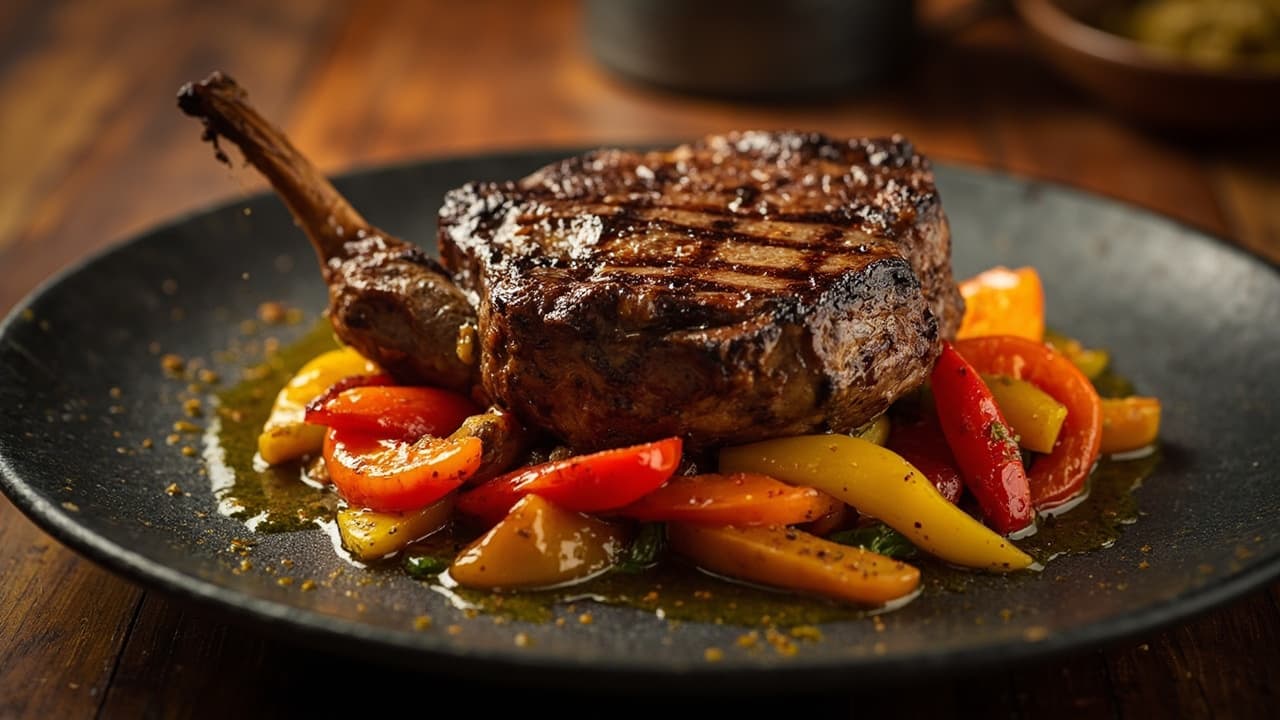
Txuleta a la Brasa con Pimientos y Vinagreta Picante
Basque-style bone-in ribeye charred over live embers, rested over slow-roasted peppers, finished with a sharp, fiery vinaigrette that wakes up every bite of beef.
Prep
30 min
Cook
25 min
Rest
5 min
Total
1h
Method
Preparar la Vinagreta Picante
asar los Pimientos
2
Place the whole bell peppers directly over the charcoal or gas flame. Turn with tongs as the skin blackens and blisters evenly on all sides, about 8-10 minutes total.
3
Transfer the charred peppers to a bowl and cover tightly with plastic wrap. Let steam for 10 minutes until the skin loosens.
Grillar la Txuleta
5
Remove the beef steaks from the refrigerator 20 minutes before cooking. Season aggressively with salt and black pepper. Brush lightly with olive oil.
6
Place the steaks over the hot embers or in a cast iron skillet over high heat. Sear without moving for 4-5 minutes per side for medium-rare, adjusting to your preferred doneness.
7
Transfer to a cutting board and rest uncovered for 5 minutes. The juices must redistribute.
Emplatado
8
Arrange the sliced pimientos as a bed on each plate or on a large serving platter. Place the rested txuleta on top of the peppers.
9
Drizzle the vinaigrette generously over the steaks and peppers. Serve immediately while the meat is still warm.
B
Nutri-Score
Good balance
A–E · lower is better · score 2
Calories
680
per serving
Source of protein · 32gLow sugar · 6g
Protein
32g
Carbs
10g
Fat
58g
Sat. fat
8g
Fiber
3g
Sugar
6g
Sodium
1379mg
Gluten FreeDairy FreePaleoWhole30Heart HealthyLow CarbAnti InflammatoryHigh ProteinOmega 3 Target
Nutri-Score is a general nutritional-balance guide, not medical or dietary advice.
E
Environmental impact
Very high impact
A–E · lower is better · includes estimates
kg CO2e
23
per serving
ECarbonCEU all-round· carbon sets the grade
Water
1.4m³
Land
454Pt
Runoff
0.3g P
Beef steak (bone-in ribeye chops) drives 99% of this recipe’s estimated footprint.
Carbon from Poore & Nemecek 2018; water, land & runoff from Agribalyse — modelled averages for comparing recipes, not a measurement of your groceries.
Flavor Profile
7
Umami
4
Sweet
6
Salty
4
Sour
1
Bitter
5
Spicy
Textures
CharredTenderSilky
Aromas
SmokyHerbalPungent
Kitchen Equipment
Primary Tool
GrillGrillCast Iron SkilletTongsChef KnifeCutting BoardMixing BowlWhiskPlastic WrapKitchen TowelServing PlatterTongs
Counter FootprintMedium
Techniques
Safety & Storage
Cooking Temperature
Beef must reach appropriate internal temperature. For medium-rare, aim for at least 130°F. Use a meat thermometer to verify doneness as color alone is unreliable. Undercooked beef poses risk of foodborne illness.
Handling
Raw beef steaks should be handled with clean utensils and hands. Wash hands thoroughly with soap and water for at least 20 seconds after handling raw meat before touching other ingredients or surfaces.
Cross Contamination
Grill or cast iron skillet used for txuleta may have been used for other proteins containing allergens. Clean cooking surfaces thoroughly between different protein types. Use separate cutting boards for raw meat.
Storage
Leftover txuleta must be refrigerated within 2 hours of cooking. Store in airtight containers at 40°F or below. Consume within 3-4 days. Reheat to 165°F before serving.
High Risk Population
Young children, elderly, pregnant individuals, and immunocompromised persons should ensure beef is cooked to well-done (160°F) and avoid consuming raw garlic in vinaigrette.
Live ember cooking presents burn risk. Maintain safe distance from open flame. Use long-handled tongs for turning steaks. Allow grill to cool completely before disposal of embers.
Pro Tips
Technique
Let the beef rest uncovered for the full five minutes—I mean it. The juices must find their home before the knife touches the bone, or you lose everything to the cutting board.
Substitution
No white vinegar? A squeeze of lemon gives brightness without the clean punch you want. Do not reach for balsamic—that is a different conversation entirely.
From the chef
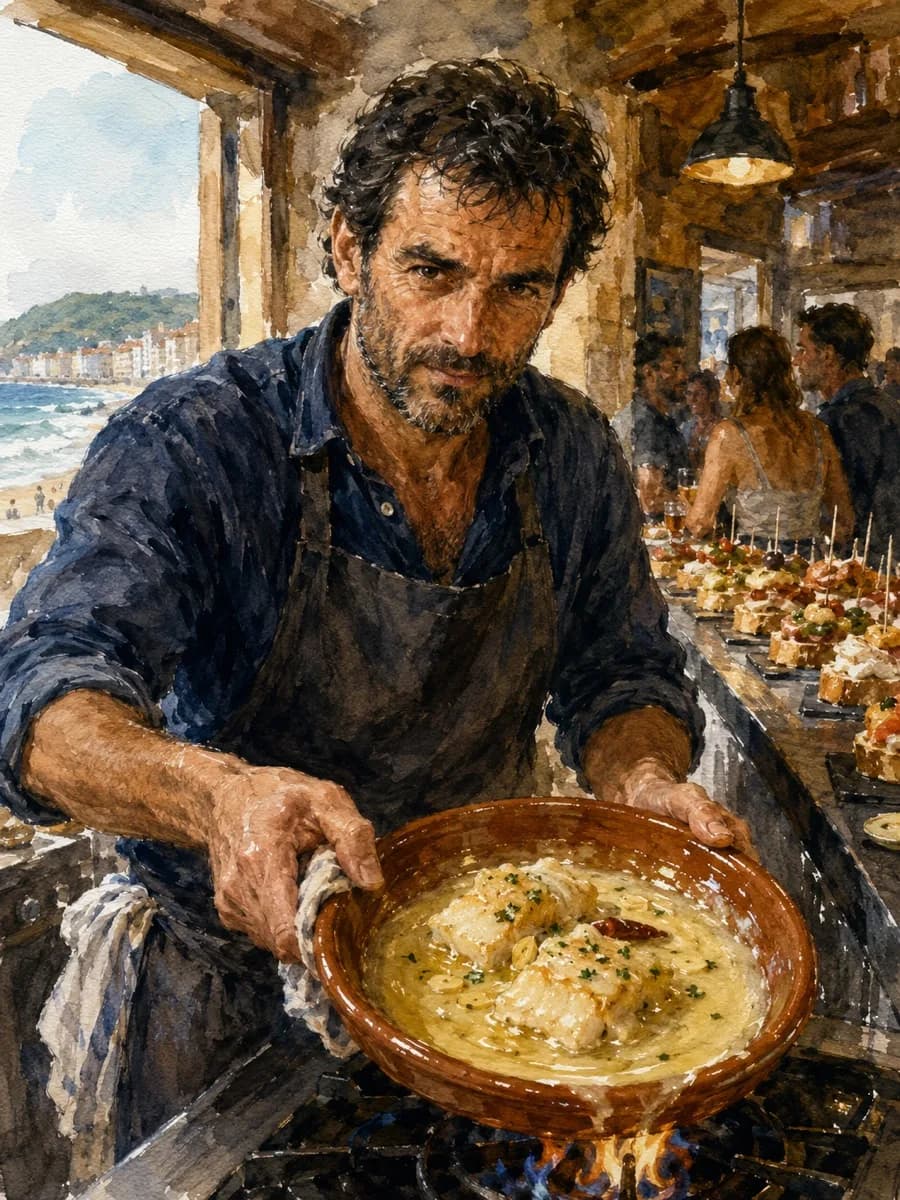
In Donostia, the txuleta is not just a steak—it is a ceremony. I watched my elders at the sidrería rest these bone-in chops over embers while peppers blackened beside them, and that charred intimacy between fire, meat, and sweet pepper is what I am giving you today. The vinaigrette is my rule: a sharp Atlantic acidity to wake up every fiber of that beef, because in the Basque country, we do not let good meat speak quietly.
TagsBasque CuisineGrilled SteakCharcoal GrilledSpanishBone In RibeyePeppersVinaigrette
Source: generated · June 10, 2026