 Thai
ThaiMedium · Hot
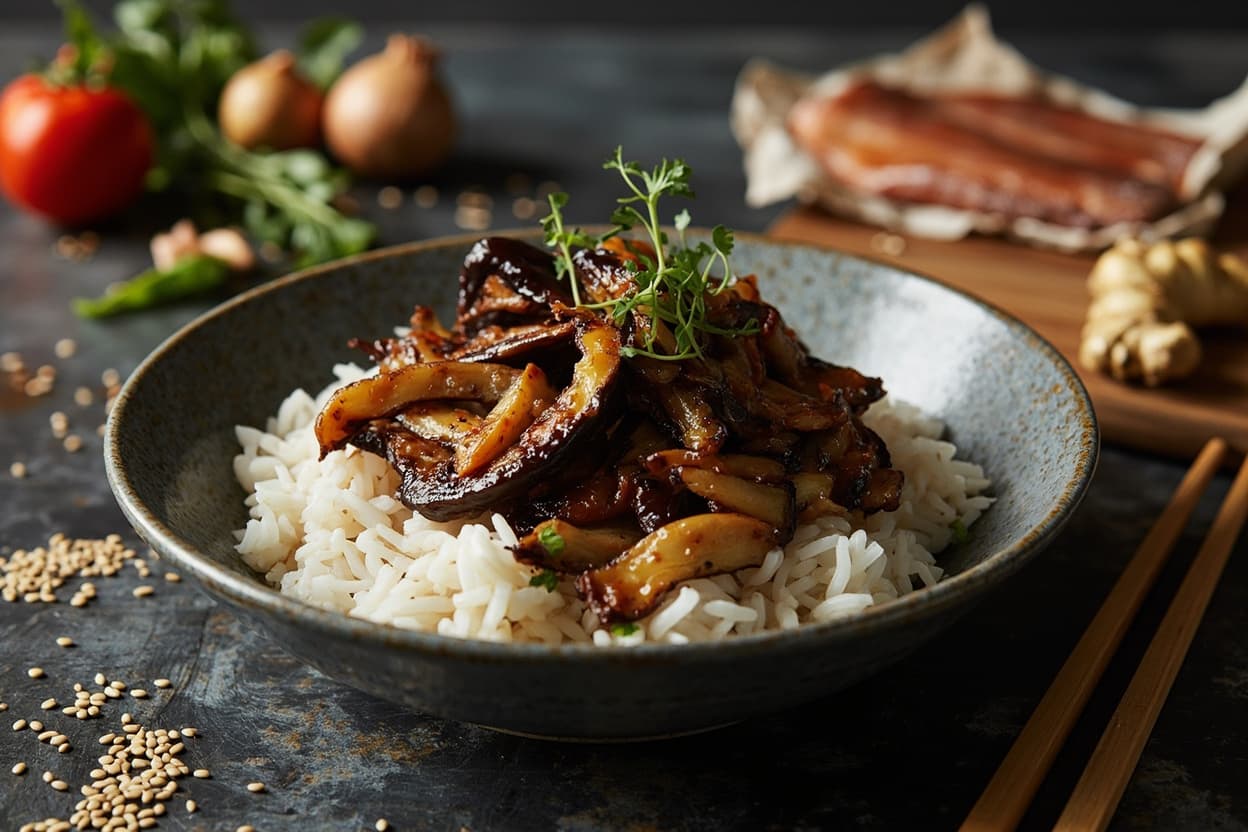
Charred Soy-Glazed Eggplant Rice Bowl
Think of eggplant as a sponge engineered by nature to absorb flavor — get it blistered and caramelized over high heat, then hit it with soy sauce and ginger and it drinks in every bit of that savory depth. The sugars in the glaze char at the edges the way a good burger crust does, building umami on top of umami. Served over white rice with a scatter of sesame seeds, it is a complete, grounding meal that makes the case for vegetables without having to argue.

Prep
10 min
Cook
30 min
Total
40 min
Method
Start the Rice
1
Rinse white rice under cold water until water runs clear, about 30 seconds.
2
Transfer to rice cooker with 2.5 cups water and cook on normal setting until fluffy, about 25 minutes.
Make the Glaze
3
Mince garlic and grate ginger using a mortar and pestle or microplane until you have a fine paste.
Char the Eggplant
5
Slice eggplant lengthwise, then cut into half-moon pieces about 1-inch thick.
6
Toss eggplant with sunflower oil and salt in a large bowl until evenly coated.
7
Heat a wok or large cast-iron skillet over high heat until smoking, about 3 minutes.
8
9
10
Flip eggplant and repeat, cooking until flesh is tender and all sides are blistered, 2-3 more minutes.
Grade pending
Nutri-Score
Estimated nutrition
Grade pending · 100% ingredient coverage
Calories
660
per serving
Low saturated fat · 2g
Protein
12g
Carbs
124g
Fat
14g
Sat. fat
2g
Fiber
9g
Sodium
1333mg
Vivo??Heart HealthyAnti InflammatoryHigh FiberBalanced
Nutri-Score is a general nutritional-balance guide, not medical or dietary advice.
B
Environmental impact
Low impact
A–E · lower is better · includes estimates
kg CO2e
0.7
per serving
BCarbonAEU all-round· carbon sets the grade
Water
1.8m³
Land
18Pt
Runoff
0.06g P
White Rice drives 68% of this recipe’s estimated footprint.
Carbon from Poore & Nemecek 2018; water, land & runoff from Agribalyse — modelled averages for comparing recipes, not a measurement of your groceries.
Flavor Profile
7
Umami
4
Sweet
6
Salty
2
Sour
1
Bitter
2
Spicy
Textures
CrispyTenderSoftChewy
Aromas
SmokySavoryNuttyCitrus
Kitchen Equipment
Primary Tool
WokCounter FootprintMedium
Safety & Storage
Cooking Temperature
Heat wok or cast-iron skillet until smoking (approximately 400°F/200°C) before adding eggplant to achieve proper charring and prevent steaming.
Handling
Use long-handled tongs or spatula when flipping eggplant in the hot wok to prevent burns from splattering oil and hot surfaces.
Cross Contamination
Use separate cutting boards for raw eggplant and prepared glaze ingredients, and wash hands thoroughly between handling different components.
Storage
Store leftover rice and glazed eggplant separately in airtight containers in the refrigerator within 2 hours of cooking; consume within 3-4 days.
High Risk Population
Eggplant belongs to the nightshade family; individuals with nightshade sensitivities may experience digestive discomfort.
Pro Tips
Technique
Don't crowd your wok—that steam is the enemy of char. Think of it like parking spots at a concert; every piece of eggplant needs its own space to develop that deep caramelization we want. Work in batches if you must.
Equipment
A cast iron works beautifully here if you don't have a wok, but whatever you use, let it get genuinely smoking hot before adding eggplant. I mean, let it smoke for real—that's your char being born.
Substitution
If miso paste is calling your name, swap in a tablespoon for part of the soy sauce in the glaze. It adds this deep fermented complexity that makes the dish taste like it's been cooking all day, when really you've only been at it for 40 minutes.
From the chef
Growing up, my American friends thought eggplant was just that purple sponge that absorbed everything and tasted like nothing. I knew they were missing out. This charred eggplant changed minds at every dinner party I hosted—it has that bacon energy, where high heat creates these deep, caramelized flavors that make people ask 'what did you put in this?' The answer is patience and a screaming-hot wok. Trust me, once you nail that blistered char, you'll never steam eggplant the same way again.
TagsWeeknight DinnerGluten FreeVeganHigh UmamiOne Bowl
AllergensSoySesame
Source: generated · May 30, 2026