 Galician
Medium · Hot
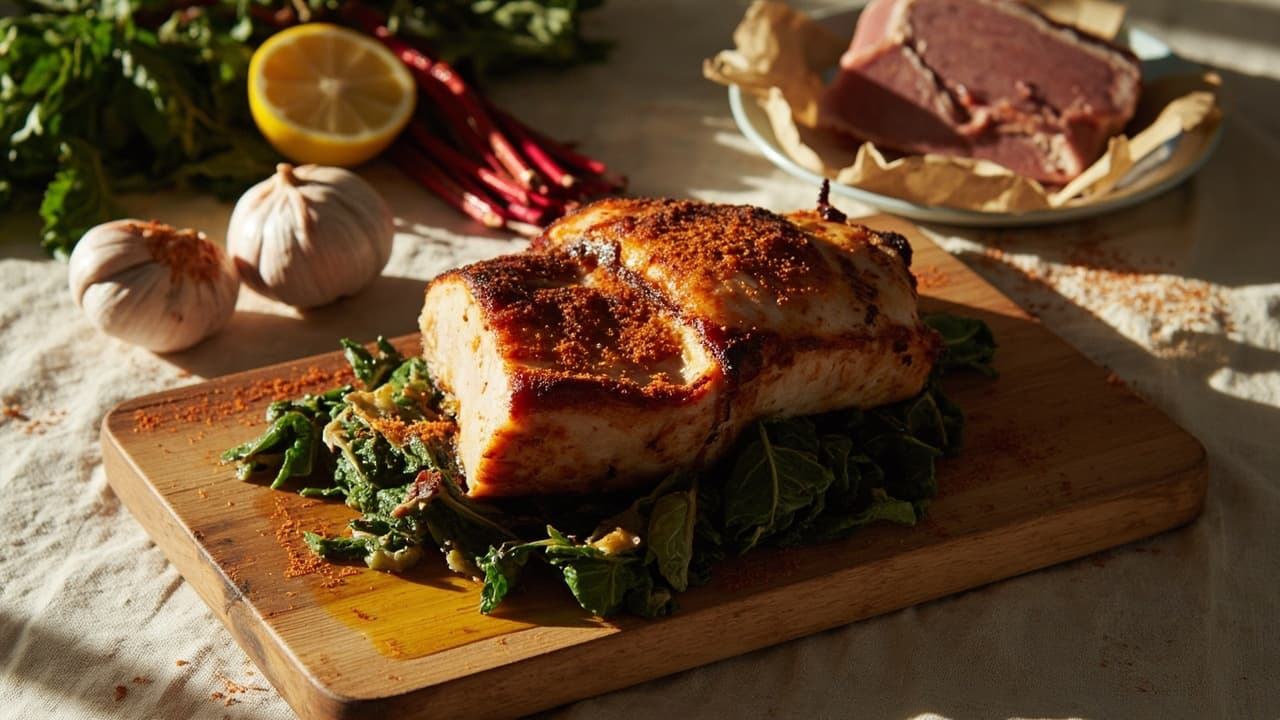
Pork Belly and Chard Roast with Garlic and Paprika
Slow-roasted pork belly with caramelized edges, draped over wilted chard scented with garlic and smoked paprika, finished with a generous pour of good olive oil. A proper Galician Sunday dish, the kind that fills the house with warmth.
Prep
20 min
Cook
2h 50m
Rest
10 min
Total
3h
Method
Prep the pork belly
1
Crush the garlic with the flat of your knife and mix with paprika, salt, black pepper, and 3 tablespoons olive oil. Rub this all over the pork belly, getting it into the scores and under the skin.
Slow roast the pork belly
2
Roast pork belly at 150°C (300°F) for 2-2.5 hours until very tender and nearly falling apart. Then increase oven to 220°C (425°F) and roast for another 20 minutes until the skin is crisp and deeply golden. Remove and let rest for 10 minutes.
Cook the chard
3
Heat 4 tablespoons olive oil in a large skillet or frying pan over medium heat. Add the garlic cloves whole and cook until golden, about 2 minutes. Add chard stems first and cook 4 minutes, then add leaves. Season with salt and toss until wilted but still bright.
Plate and finish
4
Dust the top with a pinch more paprika and a squeeze of lemon. Serve immediately with crusty bread to soak up the juices.
Grade pending
Nutri-Score
Estimated nutrition
Grade pending · 100% ingredient coverage
Calories
1495
per serving
Protein
24g
Carbs
13g
Fat
151g
Sat. fat
40g
Fiber
4g
Sugar
3g
Sodium
2366mg
Gluten FreeDairy FreePaleoKeto FriendlyWhole30Cardiovascular ConcernsWeight ManagementDiabetes FriendlyAnti InflammatoryHigh ProteinLow CarbBalanced Fat
Nutri-Score is a general nutritional-balance guide, not medical or dietary advice.
Grade pending
Environmental impact
Estimated footprint
Grade pending · 100% ingredient coverage
kg CO2e
3.0
per serving
Water
1.5m³
Runoff
0.2g P
Pork belly, skin-on drives 92% of this recipe’s estimated footprint.
Carbon from Poore & Nemecek 2018; water, land & runoff from Agribalyse — modelled averages for comparing recipes, not a measurement of your groceries.
Flavor Profile
8
Umami
4
Sweet
6
Salty
2
Sour
2
Bitter
5
Spicy
Textures
CrispyTenderSilkySucculent
Aromas
SmokyHerbalFattyMeaty
Kitchen Equipment
Primary Tool
Roasting PanCounter FootprintMedium
Techniques
Safety & Storage
Cooking Temperature
Pork belly must reach an internal temperature of at least 63°C (145°F) to ensure food safety. Use a meat thermometer inserted into the thickest part to verify doneness before serving.
Cross Contamination
Raw pork belly can harbor harmful bacteria. Use separate cutting boards and utensils for raw meat. Wash hands thoroughly with soap and water after handling raw pork before touching other ingredients or surfaces.
Storage
Cool pork belly and chard separately within 2 hours of cooking. Refrigerate in airtight containers at 4°C (40°F) or below. Consume within 3-4 days for best quality and safety.
Handling
Use oven mitts when handling the hot Dutch oven or roasting pan. The pan and rack will be extremely hot after roasting at 220°C (425°F). Allow adequate cooling time before cleaning or storing.
High Risk Population
This dish contains pork belly which should be thoroughly cooked. Pregnant women, elderly individuals, and those with compromised immune systems should ensure pork reaches safe internal temperatures throughout.
Pro Tips
Technique
Score the pork belly skin deeply but don't cut into the meat — this lets the fat render properly and gives you that crackling that's worth getting out of bed for.
Substitution
No chard? Kale works, though you'll want to strip the stems and give it a few more minutes. Spinach would be too delicate — this dish wants something that holds its shape.
From the chef
Pork belly wants time, and this dish gives it that. It goes into a low oven for two and a half hours, the fat slowly rendering down into something golden and yielding, the paprika and garlic rubbed deep into the scores. When the heat climbs at the end, the skin crisps like it means it. The chard goes straight into the drippings — stems first, then leaves — and wilts down in minutes, picking up all that smoky, porky warmth. A squeeze of lemon at the end cuts through the richness. Honest food, and plenty of it.
TagsGalicianSlow RoastedPork BellySunday DinnerMediterranean
Source: generated · June 10, 2026