 Spanish
Medium · Hot
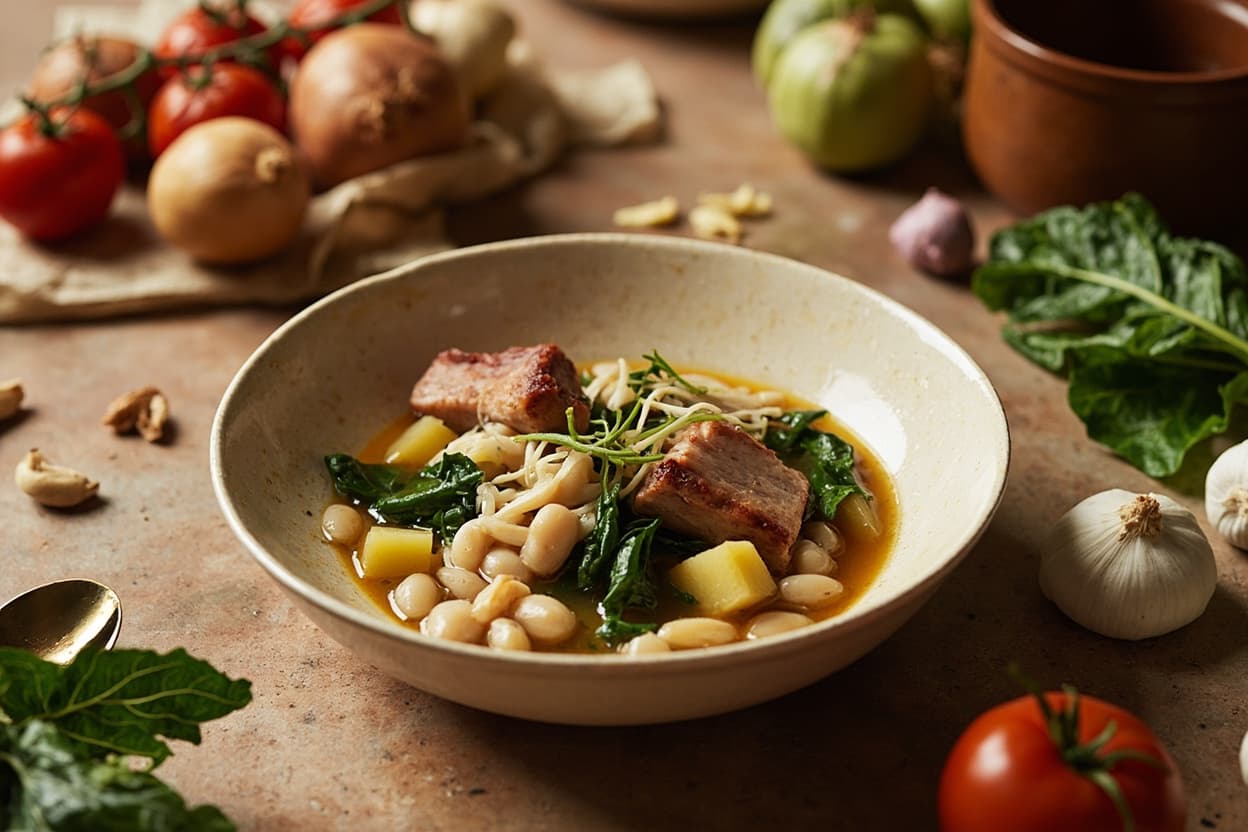
Caldo Gallego with Chard and Pork Belly
A pot built for cold weather: white beans and pork belly coaxed together over a low flame, the fat rendering slowly into the broth until it turns rich and opaque. Potato and chard go in toward the end, absorbing the pork's warmth without losing their own character. Garlic threads through it all, quiet and persistent.
Prep
20 min
Cook
1h 35m
Total
1h 55m
Method
Building the broth base
1
Place the pork belly chunks in a large Dutch oven over medium heat. Cook until the fat renders and the pieces turn golden, about 8 minutes. Remove the pork and set aside.
2
Add the diced onion to the pot with the pork fat. Cook slowly, stirring with a wooden spoon, until soft and translucent, about 10 minutes. Add the sliced garlic and cook 2 minutes more until fragrant.
3
Stir in the smoked paprika and let it bloom in the fat for 30 seconds. The kitchen will smell like the feira on a Sunday morning.
Simmering the stew
4
Return the pork belly to the pot. Add the soaked and drained white beans. Pour in enough water to cover everything by about 5 centimeters. Bring to a boil, then reduce to a gentle simmer.
5
Let the broth simmer uncovered for 45 minutes, skimming any foam that rises. Season with salt and black pepper.
Adding the chard and finishing
7
Add the chard stems first and cook for 5 minutes. Then fold in the chopped chard leaves. Let everything wilt together into the golden broth.
8
C
Nutri-Score
Fair balance
A–E · lower is better · score 7
Calories
806
per serving
High in saturated fat · 15gCalorie-dense · 806 kcalSource of protein · 26gLow sugar · 3g
Protein
26g
Carbs
56g
Fat
54g
Sat. fat
15g
Fiber
8g
Sugar
3g
Sodium
1150mg
Gluten FreeDairy FreeMediterraneanWhole30Paleo FriendlyHeart HealthyDiabetes FriendlyAnti InflammatoryGut FriendlyLow InflammatoryHigh FiberHigh ProteinBalanced MacrosIron Rich
Nutri-Score is a general nutritional-balance guide, not medical or dietary advice.
C
Environmental impact
Moderate impact
A–E · lower is better · includes estimates
kg CO2e
1.3
per serving
CCarbonAEU all-round· carbon sets the grade
Water
0.5m³
Runoff
0.1g P
Pork belly, cut into chunks drives 80% of this recipe’s estimated footprint.
Carbon from Poore & Nemecek 2018; water, land & runoff from Agribalyse — modelled averages for comparing recipes, not a measurement of your groceries.
Flavor Profile
7
Umami
4
Sweet
5
Salty
1
Sour
2
Bitter
4
Spicy
Textures
TenderSilkyHearty
Aromas
SmokyEarthyPorkyHerbal
Kitchen Equipment
Techniques
Safety & Storage
Cooking Temperature
Ensure pork belly reaches a minimum internal temperature of 145°F (63°C) to eliminate pathogens. The long simmer helps but verify with a probe thermometer.
Storage
Cool stew rapidly after cooking and refrigerate within 2 hours. Store in airtight containers for up to 4 days refrigerated, or freeze for up to 3 months.
Cross Contamination
Use separate cutting boards and utensils for raw pork. Sanitize all surfaces and hands thoroughly after handling raw pork belly before touching other ingredients.
Handling
When handling raw pork, minimize time at room temperature. Keep pork refrigerated until ready to cook, and return pork to refrigerator promptly after portioning.
High Risk Population
Leftover stew should be reheated to at least 165°F (74°C) before serving, especially when serving to elderly, immunocompromised, pregnant individuals, or young children.
Pro Tips
Technique
Let the pork belly render in its own fat until it turns golden on all sides. That caramelized porky sweetness is what builds the soul of the broth, so don't rush it or drain off the fat.
Substitution
No fresh chard? Collard greens do beautifully here, and in the inland villages they sometimes swap half the beans for crumbled chorizo—though my grandmother would never admit to that heresy.
From the chef
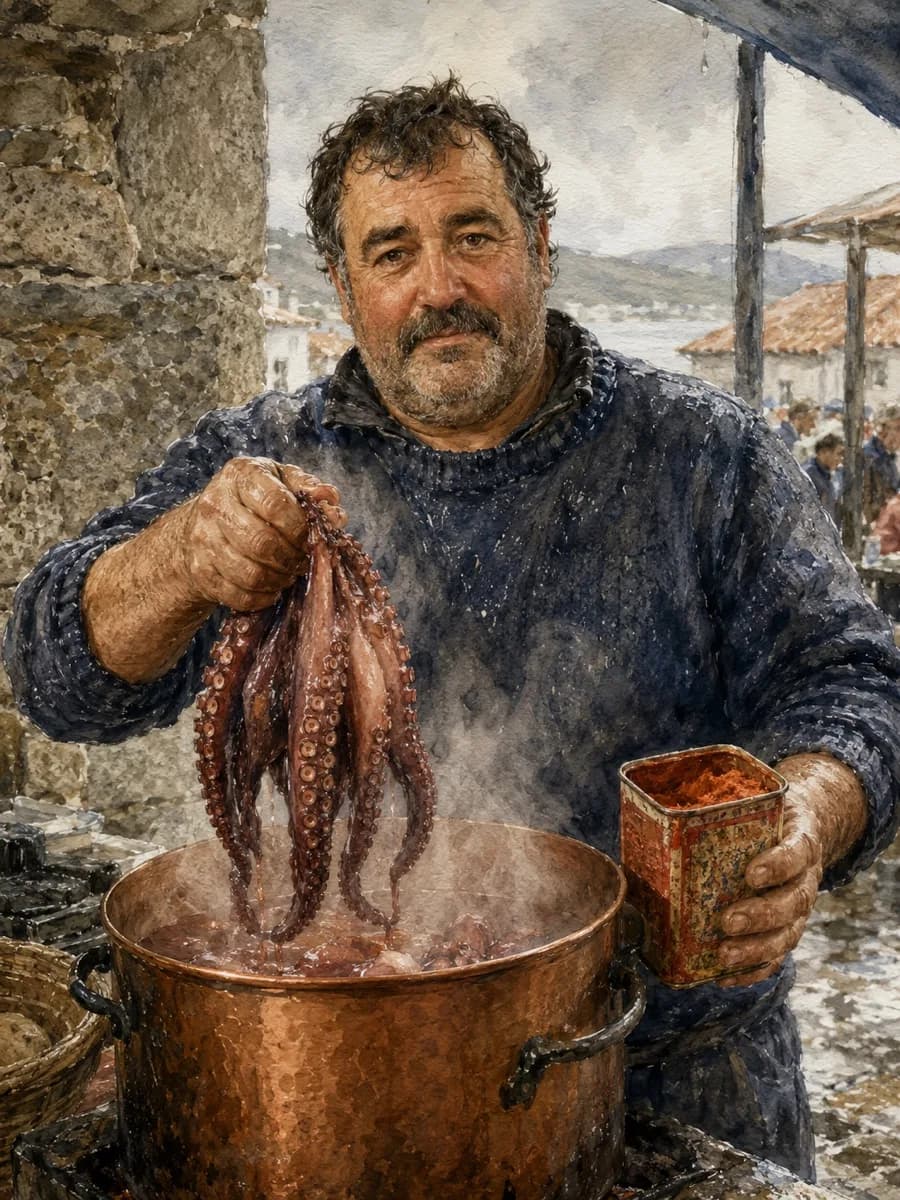
This is the pot my grandmother would leave on the stones of the outdoor hearth overnight, letting the beans and pork belly get to know each other slow, the way good things do. When I was a boy she'd say Anxo, stir it once and walk away, which is basically the whole philosophy. Now when the rain comes off the Atlantic and the house smells like smoked paprika and rendered pork fat, I know we've come home.
TagsPork BellyWhite BeansChardSmoked PaprikaHeartyOne PotSlow CookedTraditional
Source: generated · May 30, 2026