 German
Medium · Hot
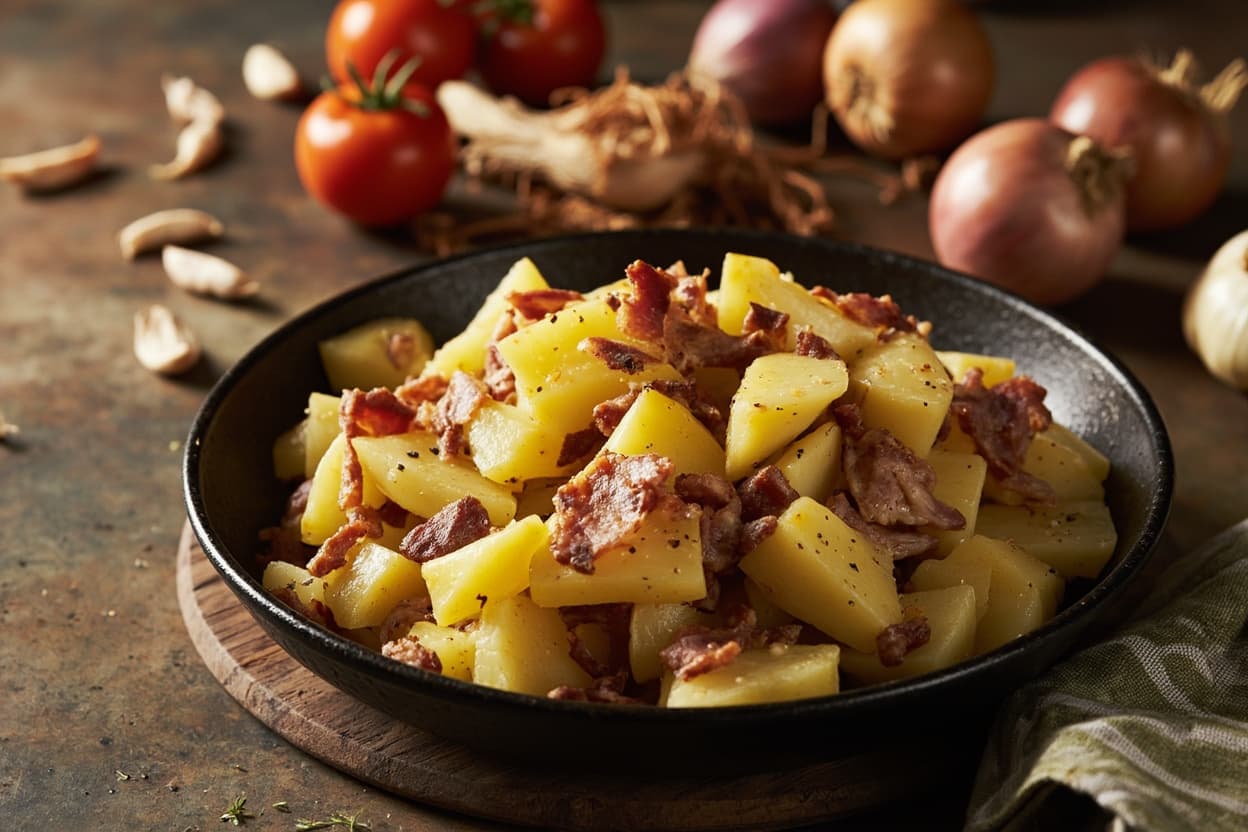
Warm Bacon and Mustard Potato Salad
Potatoes sliced while still hot so they drink up the dressing — bacon fat rendered out, red wine vinegar sharpening it, mustard tying it together over softened onion. No mayonnaise, never cold, and no apology for either. My Oma made it this way and she was right.

Prep
15 min
Cook
30 min
Total
45 min
Method
Boil the Potatoes
Crisp the Bacon
2
While potatoes cook, cut the bacon into 1cm pieces. Cook in a large skillet over medium heat until crispy and the fat renders, about 8 minutes. Remove bacon with a slotted spoon and reserve the fat in the pan.
Build the Warm Dressing
3
Slice the yellow onion thinly. In the same skillet with the bacon fat over medium-low heat, sauté the onion until softened, about 4 minutes.
4
Whisk together the mustard, olive oil, white vinegar, salt, and black pepper in a small bowl until emulsified.
Combine and Serve
5
A
Nutri-Score
Excellent balance
A–E · lower is better · score -2
Calories
544
per serving
Source of protein · 24gLow sugar · 4g
Protein
24g
Carbs
40g
Fat
32g
Sat. fat
6g
Fiber
6g
Sugar
4g
Sodium
1186mg
Gluten FreeDairy FreeWeight ManagementGeneral WellnessHigh ProteinBalanced Macros
Nutri-Score is a general nutritional-balance guide, not medical or dietary advice.
B
Environmental impact
Low impact
A–E · lower is better · includes estimates
kg CO2e
0.8
per serving
BCarbonAEU all-round· carbon sets the grade
Water
0.5m³
Land
36Pt
Runoff
0.1g P
Bacon drives 74% of this recipe’s estimated footprint.
Carbon from Poore & Nemecek 2018; water, land & runoff from Agribalyse — modelled averages for comparing recipes, not a measurement of your groceries.
Flavor Profile
7
Umami
2
Sweet
6
Salty
3
Sour
1
Bitter
4
Spicy
Textures
CrispyTender
Aromas
SmokyHerbal
Kitchen Equipment
Primary Tool
Large SkilletCounter FootprintMedium
Techniques
Safety & Storage
Cooking Temperature
Serve immediately while warm. If storing for later consumption, reheat to an internal temperature of at least 165°F (74°C) to ensure food safety.
Cook bacon to an internal temperature of at least 145°F (63°C). While the recipe specifies cooking until crispy (about 8 minutes), using a food thermometer ensures complete doneness.
Cross Contamination
Use separate cutting boards and utensils for raw bacon and potatoes. Avoid contact between raw meat and ready-to-eat foods during preparation.
Storage
Refrigerate any leftovers within 2 hours in an airtight container. Bacon and potato dishes are prone to bacterial growth if left at room temperature.
Shelf Life
Consume refrigerated leftovers within 3-4 days. Discard if any off odors, discoloration, or slimy texture develops.
High Risk Population
This dish contains pork (bacon) and mustard. Individuals with pork allergies or mustard allergies should avoid this dish entirely.
Handling
Use caution when handling the cast-iron skillet and bacon fat. The fat remains extremely hot after cooking. Use tongs or heat-resistant utensils to combine ingredients and prevent grease splatters.
Pro Tips
Technique
Do not overcook your potatoes. They should hold their shape when you toss them — you want texture and bite, not a bowl of mashed cubes.
Substitution
If yellow mustard is not available, use a good Dijon, but reduce the quantity by half — it is sharper and will overpower the dish.
Reheating
This salad is best served immediately while warm. If you must reheat, add a splash of water to the pan and toss gently over medium heat until steaming.
From the chef
This is the potato salad from my Oma's kitchen above the Gasthaus — dressed warm, never cold, never touched by mayonnaise. The bacon fat sizzling in the pan, the sharp mustard cutting through the richness, the parsley just thrown on at the end. This is not a side dish. This is a statement of how things should be done.
TagsBaconPotatoWarm DressingNo MayonnaiseHeartySavory
AllergensMustard
Source: generated · May 30, 2026