 French
Medium · Hot
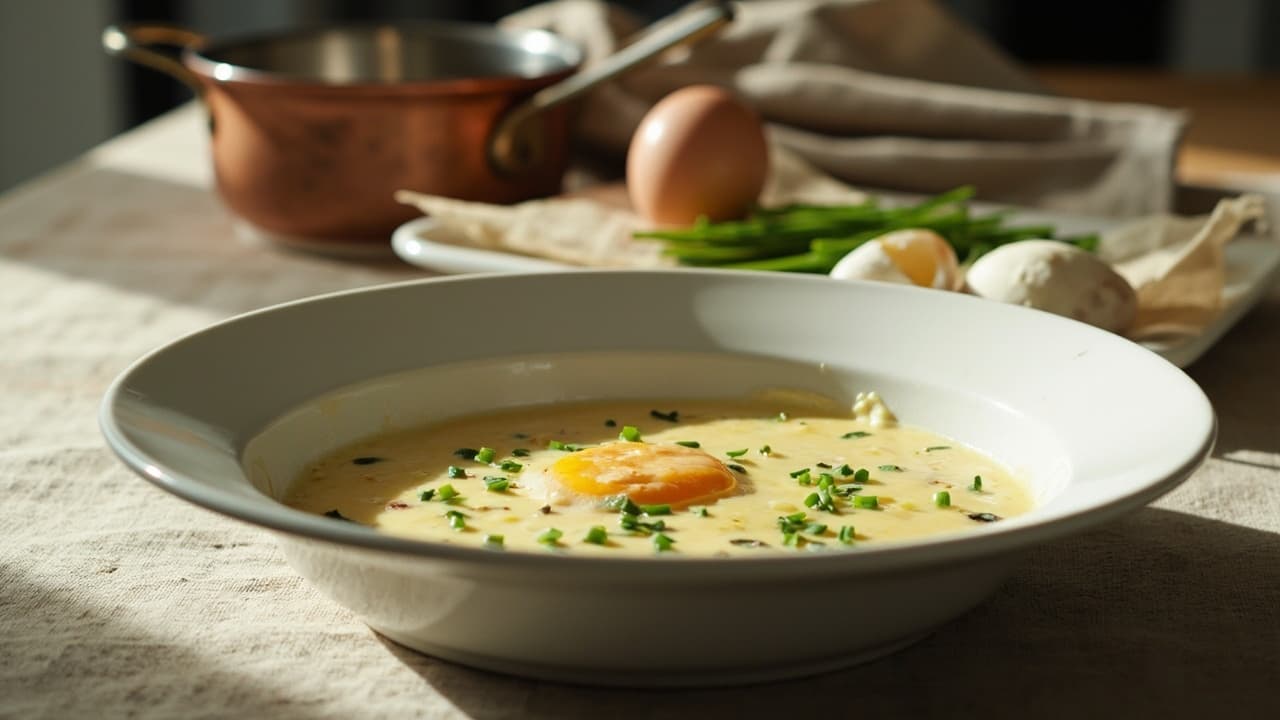
Eggs en Cocotte with Cream, Garlic, and Chives
A classic French bistro preparation where eggs are gently baked in ramekins nestled in a water bath, bathed in a rich cream infused with garlic and finished with fresh chives.

Prep
10 min
Cook
15 min
Rest
1 min
Total
26 min
Method
Preparation
1
2
Preheat oven to 325°F (160°C). Place ramekins in a baking dish and pour hot water around them until water reaches halfway up the ramekins. Set aside while preparing cream mixture.
The Cream Mixture
3
In a small saucepan over medium-low heat, combine heavy cream, minced garlic, salt, and pepper. Gently heat for 3-4 minutes until garlic infuses and cream just begins to simmer. Remove from heat immediately.
Baking in Cocotte
5
6
Carefully transfer the baking dish with ramekins to the preheated oven and bake for 12-15 minutes. The whites should be set but the yolks remain glossy and runny. Watch closely; they continue cooking once removed. Use oven thermometer to verify oven temperature is consistent.
Finishing
7
Using oven mitts, carefully remove ramekins from water bath. Place on a dry towel or trivet—never directly on cold surfaces to prevent thermal shock and cracking. Allow to rest 1 minute.
D
Nutri-Score
Needs balance
A–E · lower is better · score 15
Calories
339
per serving
High in saturated fat · 13gCalorie-dense · 339 kcalLow sugar · 3g
Protein
9g
Carbs
4g
Fat
33g
Sat. fat
13g
Fiber
1g
Sugar
3g
Sodium
390mg
Gluten FreeLow CarbKeto FriendlyHeart HealthyLow Sodium AdaptableHigh Protein
Nutri-Score is a general nutritional-balance guide, not medical or dietary advice.
D
Environmental impact
High impact
A–E · lower is better · includes estimates
kg CO2e
0.7
per serving
DCarbonAEU all-round· carbon sets the grade
Water
0.09m³
Land
22Pt
Runoff
0.05g P
Heavy cream drives 51% of this recipe’s estimated footprint.
Carbon from Poore & Nemecek 2018; water, land & runoff from Agribalyse — modelled averages for comparing recipes, not a measurement of your groceries.
Flavor Profile
7
Umami
4
Sweet
5
Salty
1
Sour
1
Bitter
3
Spicy
Textures
CreamySilkyTenderSmooth
Aromas
GarlickyHerbalRichDairy
Kitchen Equipment
Primary Tool
OvenCounter FootprintSmall
Techniques
Safety & Storage
Cooking Temperature
Bake eggs in ramekins at consistent oven temperature. Remove when whites are fully set but yolks remain glossy and runny. Internal temperature should reach 160°F for food safety.
High Risk Population
Runny or soft-cooked eggs pose Salmonella risk. Not recommended for pregnant women, young children, elderly, or immunocompromised individuals without cooking yolks to firm consistency.
Handling
Use oven mitts when handling ramekins and water bath. Hot water can cause burns if splashed. Ensure ramekins are stable in the water bath to prevent tipping.
Cross Contamination
Butter ramekins with clean utensils. If serving multiple batches, ensure equipment is properly sanitized between uses to prevent allergen cross-contact.
Storage
Serve immediately after baking. If leftovers must be stored, refrigerate within 2 hours and consume within 2 days. Reheat to 165°F before consuming.
Allergen Warning
This dish contains eggs and dairy. Clearly communicate allergen content to guests. Provide alternative preparation if requested for dietary restrictions.
Pro Tips
Technique
The water bath is not optional, my friend—it is what transforms this from a tough, rubbery disaster into a silky, trembling marvel. Fill your baking dish with hot water halfway up the ramekins, and let the oven's gentle, humid embrace do the work. Patience is not a virtue here; it is the technique itself.
Substitution
If fresh chives are unavailable, snipped thyme leaves will serve beautifully, though I prefer the chive's gentle onion whisper. As for the cream—do not substitute. Heavy cream is the foundation, and half-and-half cannot provide the richness this preparation demands.
Equipment
I insist you butter the ramekins generously. This is not excess; this is lubrication for the eggs as they cook, ensuring they release cleanly and develop that delicate, golden crust where butter and egg meet in harmony.
From the chef
This dish reminds me of my grandmother's kitchen in Lyon—where Sunday mornings smelled of butter and garlic and time moved slowly enough to watch an egg transform in a bain-marie. Eggs en Cocotte is not about complexity; it is about understanding how gentle heat respects the egg, how cream enriches without overwhelming, and how fresh chives provide the final, verdant punctuation. Master this, and you have unlocked a principle that governs all of French cooking: restraint, applied with knowledge.
TagsFrenchClassicBistroEggsCreamGarlicChivesBakedWater BathRamekin
AllergensEggsMilk
Source: generated · June 10, 2026