 French
Medium · Warm
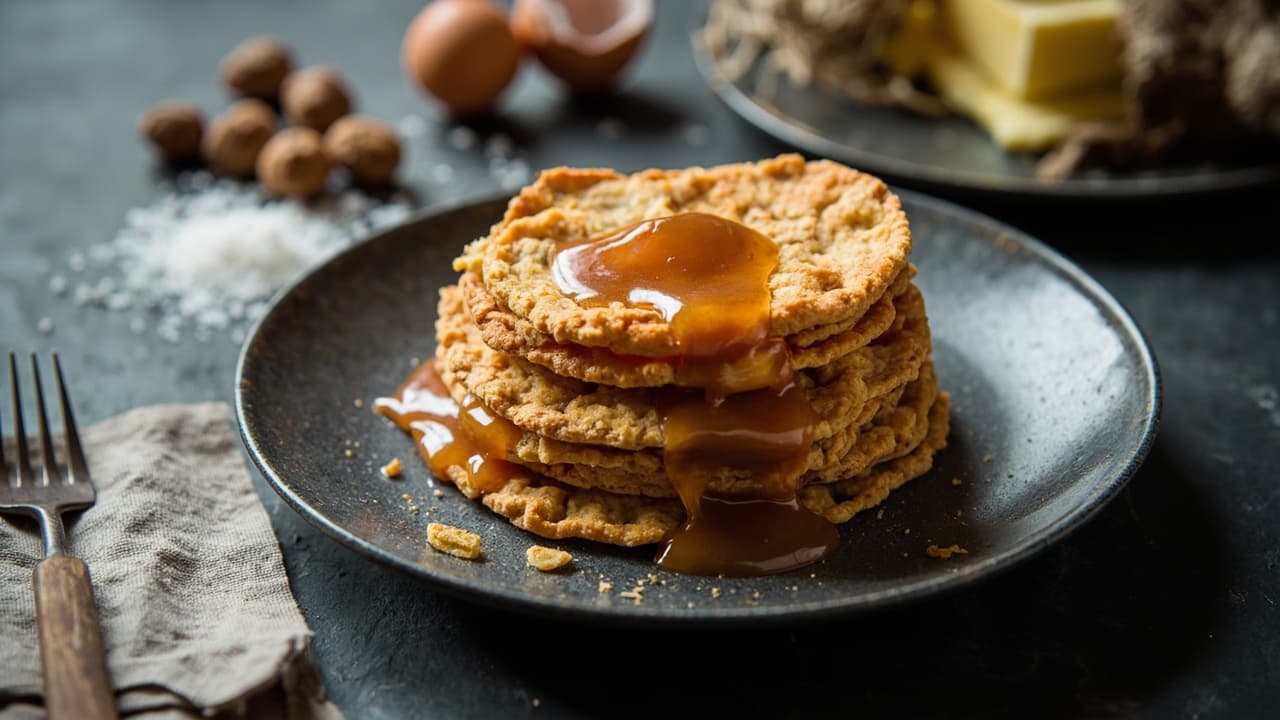
Maple Praline Tuile Stack with Hazelnut Praline
Elegant curved tuiles interlaced with silky hazelnut praline, kissed with pure maple. A study in caramelized nuttiness and shattering crispness — French technique, worldwide soul.

Prep
20 min
Cook
22 min
Total
42 min
Method
1
2
Combine white sugar and 20ml water in a heavy saucepan. Cook over medium heat without stirring until the syrup turns a rich amber caramel, about 8-10 minutes. Remove from heat immediately when amber — it goes from perfect to burnt fast.
3
4
Break the caramelized hazelnut slab into pieces and transfer to a food processor. Process for 3-4 minutes, scraping down sides often, until you have a smooth, flowing paste. The natural oils will release and transform it into silky praline. Set aside.
5
In a stand mixer fitted with the paddle, beat 90g softened butter with brown sugar on medium speed for 3 minutes until light and fluffy.
6
Add maple syrup and vanilla extract; mix until incorporated. Add eggs one at a time, beating 30 seconds after each addition.
7
Fold in all-purpose flour and salt with a spatula until just combined — do not overmix or gluten will make tuiles tough.
8
Cover bowl with plastic wrap and refrigerate tuile batter for at least 30 minutes. Chilled batter spreads thinner and bakes more evenly.
10
Drop 1-tablespoon portions of chilled batter onto prepared sheets, spacing at least 8cm apart — they spread significantly.
11
Use an offset spatula to spread each portion into a thin, even circle approximately 12cm in diameter.
12
Bake at 180°C for 8-10 minutes, until the edges turn golden amber and the centers are set but still slightly soft. Watch closely — tuiles go from pale to burnt quickly.
13
Cool on baking sheets for exactly 2 minutes — tuiles must be pliable when shaping. Working one at a time, drape each warm tuile over a rolling pin or wine bottle to create a curved shell. Let cool and crisp on the form for 5 minutes, then transfer to a wire rack.
14
Spoon 2 teaspoons of hazelnut praline into the curved hollow of each cooled tuile shell.
15
Place a second tuile on top, pressing gently to create a layered stack with praline sealed in the middle. Repeat for remaining stacks — you should have 8 tuiles total for 4 stacks of 2.
16
Serve within 30 minutes of assembly for optimal contrast between shattering tuile and flowing praline. (If needed, briefly warm stacks at 150°C for 2 minutes to re-soften the praline before serving.)
E
Nutri-Score
Least favorable
A–E · lower is better · score 22
Calories
673
per serving
High in saturated fat · 17gHigh in sugar · 50gCalorie-dense · 673 kcal
Protein
10g
Carbs
74g
Fat
39g
Sat. fat
17g
Fiber
4g
Sugar
50g
Sodium
434mg
VegetarianDiabetesLow CholesterolLow SodiumBalanced MacrosEnergy Focused
Nutri-Score is a general nutritional-balance guide, not medical or dietary advice.
B
Environmental impact
Low impact
A–E · lower is better · includes estimates
kg CO2e
0.5
per serving
BCarbonAEU all-round· carbon sets the grade
Water
0.5m³
Land
42Pt
Runoff
0.08g P
Butter drives 38% of this recipe’s estimated footprint.
Carbon from Poore & Nemecek 2018; water, land & runoff from Agribalyse — modelled averages for comparing recipes, not a measurement of your groceries.
Flavor Profile
4
Umami
9
Sweet
5
Salty
2
Sour
4
Bitter
0
Spicy
Textures
CrispySilkySmoothTender
Aromas
CaramelDairyMapleNuttyVanilla
Kitchen Equipment
Primary Tool
OvenOvenFood ProcessorHeat Resistant SpatulaHeavy SaucepanKitchen TowelOffset SpatulaRimmed Baking SheetRolling PinSilicone MatStand Mixer With Paddle AttachmentWire RackParchment PaperPlastic Wrap
Techniques
Safety & Storage
Cooking Temperature
Caramel syrup progresses rapidly from amber perfection to burnt within seconds. Remove from heat immediately upon achieving amber color and work quickly when incorporating hazelnuts.
Tuiles transition quickly from pale to burnt. Bake at 180°C for 8-10 minutes and watch closely — slight underbaking is preferable to burning.
Eggs in tuile batter must reach safe internal temperature during baking. For high-risk populations (children, elderly, immunocompromised), use pasteurized liquid eggs or ensure tuiles are baked to a minimum of 160°F (71°C) center temperature to eliminate Salmonella risk.
Handling
Hot caramel mixture (approximately 170°C) poses severe burn risk. Use heat-resistant utensils and allow caramelized hazelnuts to cool completely before processing.
Hot baking sheets emerging from 180°C oven require proper handling with oven mitts. Allow tuiles to cool on sheets for exactly 2 minutes before shaping while pliable.
Cross Contamination
Hazelnut praline requires processing in a food processor after handling raw and toasted nuts. Clean equipment thoroughly between uses if preparing for allergen-sensitive individuals.
Storage
Hazelnut praline paste can be stored in an airtight container at room temperature for up to 2 weeks or refrigerated for 1 month. Protect from moisture and humidity.
Shelf Life
Assembled tuile stacks must be served within 30 minutes for optimal texture contrast between shattering tuile and flowing praline. Praline will harden and tuiles will lose crispness beyond this window.
Allergen Warning
This recipe contains multiple priority allergens (tree nuts, milk, eggs, wheat). Always verify all ingredients for hidden allergen content, particularly vanilla extract which may contain trace allergens.
High Risk Population
Children, elderly individuals, and those with compromised immune systems should only consume fully cooked portions. The caramelized sugar reaches temperatures that eliminate bacterial concerns when properly prepared.
Pro Tips
Technique
The tuile shaping window is brutally short — exactly 2 minutes on the sheet, then they must be pliable. If they cool too much and crack, don't panic: pop them back in the oven at 150°C for 30 seconds to reheat and reshape. Patience rewards you with those gorgeous curved shells.
Substitution
Almonds make a classic alternative if hazelnuts aren't available — the praline paste technique is identical, and you'll get that traditional French flavor profile. The maple syrup is non-negotiable though, unless you want to commit fully to a European interpretation with just honey.
From the chef
I discovered real maple syrup at a Quebec sugar shack — not the pancake stuff, but liquid gold that tasted like forests and cold mornings — and I thought, this needs a French accent. Combined with my hazelnut praline, it creates this beautiful cross-cultural conversation: the European technique of tuiles meets North American terroir in every shattering, praline-filled bite.
TagsFrenchPatisseriePralineHazelnutMapleCaramelizedElegantStacking DessertClassic TechniqueShattering Crisp
AllergensTree NutsMilkWheatEggs
Source: generated · June 13, 2026