 Georgian
Medium · Chilled
Minted Cantaloupe Oat Kulturbund
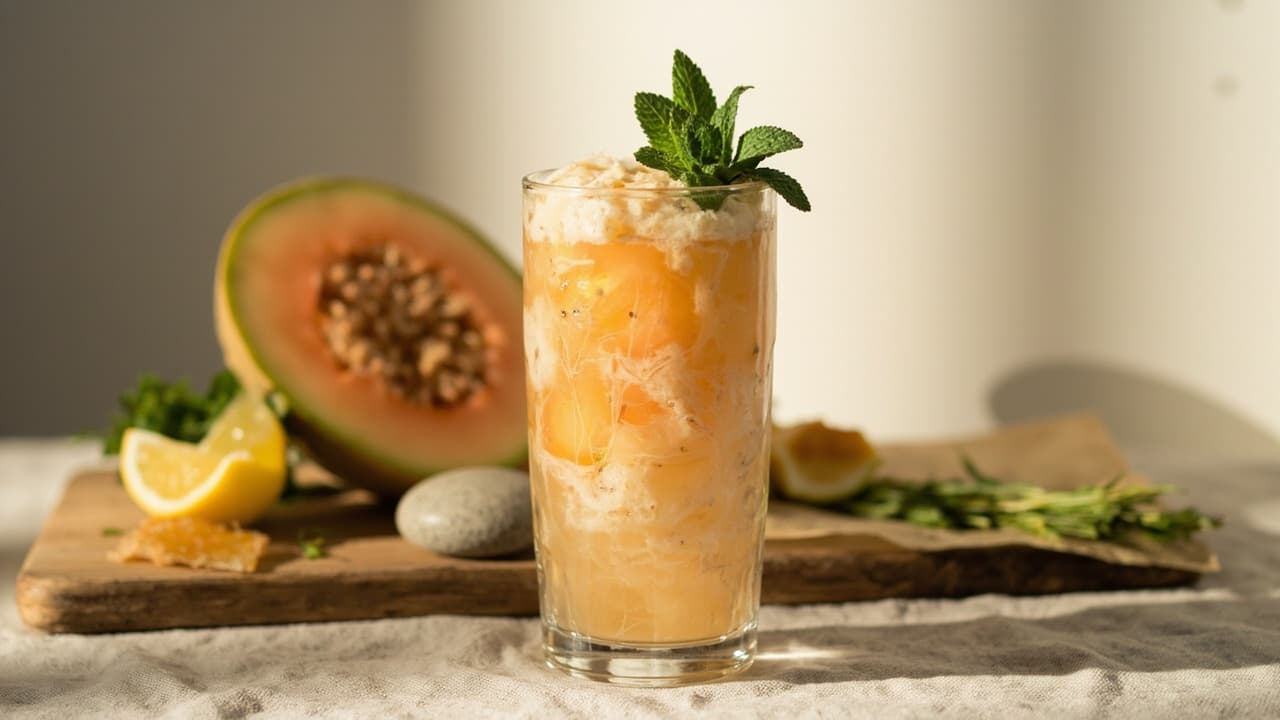
A living-culture fermented beverage marrying sweet cantaloupe and cool mint with creamy oats and honey, cultured to life in the Georgian tradition. Served chilled with visible culture strands still dancing in the glass.

Prep
20 min
Total
20 min
Method
1
Combine kefir and rolled oats in a ceramic fermentation crock. Fold in honey and stir gently with a wooden paddle for 2 minutes until evenly distributed.
2
Nestle the crock in a warm spot (22-24C) and cover with a natural cloth. Allow to culture for 8-10 hours until slightly thickened and pleasantly tangy — you should smell that wild-fermented depth rising.
3
While the culture rests, cut the cantaloupe in half and scoop out seeds. Slice flesh into 2cm cubes, yielding approximately 2 cups of fruit.
5
Strain the cultured oat base through a fine natural-cloth filter into a large ceramic bowl, pressing gently to extract liquid while leaving coarse oat particles behind.
6
Combine strained culture liquid, cantaloupe cubes, mint leaves, and lemon zest in a blender. Pulse 3-4 times for 15 seconds each — you want flecks of fruit and mint visible, not fully pureed.
7
Taste and adjust sweetness with additional honey if desired. Transfer to a glass pitcher and cover.
8
For a more effervescent result, seal the pitcher loosely and leave at room temperature for 2-3 hours. Watch for gentle bubbles forming — this is natural carbonation developing. Refrigerate immediately when carbonated to your liking.
9
Pour into tall chilled glasses, ensuring some cantaloupe pieces and visible culture threads float in each serving. Garnish with a single mint sprig. Best consumed within 24 hours while cultures are most alive.
A
Nutri-Score
Excellent balance
A–E · lower is better · score -5
Calories
352
per serving
Source of protein · 16gSource of fibre · 10gLow saturated fat · 4gLow salt · 68mg
Protein
16g
Carbs
63g
Fat
6g
Sat. fat
4g
Fiber
10g
Sugar
17g
Sodium
68mg
Lacto FermentedVegetarianGut HealthImmune SupportLactose ToleranceLow SodiumProbiotic RichWhole Foods
Nutri-Score is a general nutritional-balance guide, not medical or dietary advice.
B
Environmental impact
Low impact
A–E · lower is better · includes estimates
kg CO2e
0.8
per serving
BCarbon
Kefir culture drives 51% of this recipe’s estimated footprint.
Carbon from Poore & Nemecek 2018; water, land & runoff from Agribalyse — modelled averages for comparing recipes, not a measurement of your groceries.
Flavor Profile
4
Umami
6
Sweet
0
Salty
5
Sour
1
Bitter
0
Spicy
Textures
CreamyFruity ChunksSilky
Aromas
CitrusFermentedFruityHerbalSweet
Kitchen Equipment
Primary Tool
Ceramic Fermentation CrockCeramic Fermentation CrockBlenderChef KnifeCutting BoardGlass PitcherNatural Cloth StrainerWooden PaddleLinen ClothNatural Cloth Cover
Techniques
Safety & Storage
Handling
Sanitize all fermentation equipment thoroughly before use - wooden paddle, ceramic crock, natural cloth covers, and blender components. Residue bacteria can compete with or contaminate the kefir culture during fermentation.
Temperature
Maintain culturing temperature between 22-24°C (71-75°F). Temperatures in this range support kefir culture growth but can also allow harmful bacteria to develop if sanitation is inadequate or fermentation extends beyond 10 hours.
Storage
Refrigerate immediately after secondary fermentation reaches desired carbonation. Transfer from room temperature to refrigerator within 2-3 hours of starting secondary fermentation to prevent over-carbonation or spoilage.
Shelf Life
Consume within 24 hours of preparation while cultures are most active. Extended storage reduces living culture viability and increases risk of over-fermentation even when refrigerated.
High Risk Population
Do not serve this beverage to infants under 12 months due to raw honey content. Do not serve to immunocompromised individuals, elderly, or pregnant individuals without consulting healthcare provider regarding live culture consumption.
Allergen Warning
Verify kefir culture source is dairy-free if serving to individuals with severe milk allergies. Standard kefir contains milk proteins regardless of fermentation time.
Cross Contamination
Use dedicated fermentation equipment that has not contacted wheat-based products. Clean cloth covers and wooden utensils may retain gluten particles if previously used with gluten-containing ingredients.
Equipment Safety
Monitor secondary fermentation vessel (glass pitcher) closely for pressure buildup. Loose-seal method reduces explosion risk but glass can still crack if carbonation becomes excessive beyond 3 hours at room temperature.
Pro Tips
Technique
Trust the aroma more than the clock — when your oat culture turns pleasantly tangy and releases that deep, wild-fermented perfume, it is ready, regardless of whether the clock shows 8 or 10 hours. The microbes speak through scent.
Substitution
In late summer, replace cantaloupe with a handful of wild-harvested alpine berries — the kefir will sing a different song while maintaining the same ancestral conversation with your oats and honey.
From the chef
My great-grandmother used to say that a ferment knows when it is loved — it rises differently, breathes differently, carries the maker's patience in every bubble. When I first pressed cantaloupe against living kefir in our ancestral qvevri, the sweet gold fruit and cool mountain mint spoke to each other the way old friends do, completing sentences left unfinished for generations. This Kulturbund is not merely a drink but a living conversation between sun-ripened flesh and wild-cultured wisdom, meant to be shared at a table where time slows and community gathers.
TagsFermentedCulturedProbioticCold ServedGeorgian TraditionalOat BasedFruit BeverageHoney SweetenedRefreshing
AllergensMilkGluten
Source: generated · June 13, 2026