 French
Easy · Hot
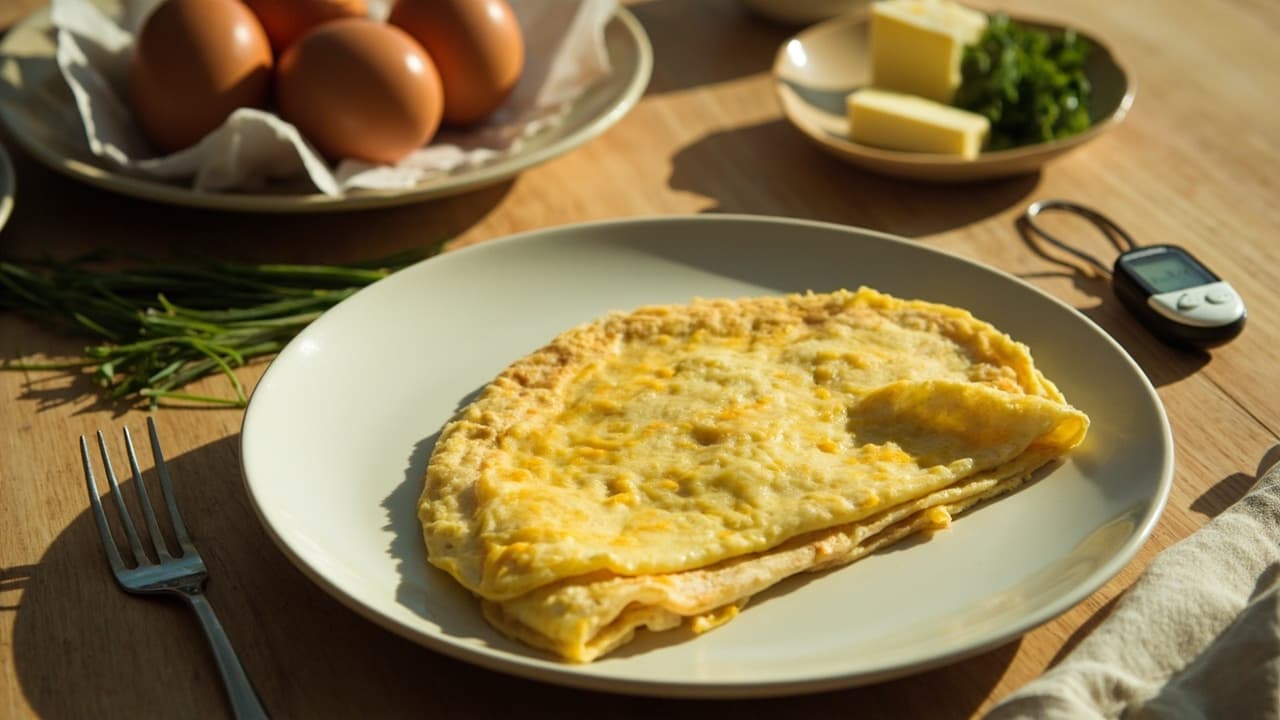
The Control Group Omelette
A precisely engineered three-egg omelette built for repeatable results. The baseline protocol: perfectly emulsified eggs, controlled butter temperature, and just enough cheese to validate the Maillard hypothesis.

Prep
5 min
Cook
8 min
Total
13 min
Method
Prep
1
Crack eggs into a clean bowl. Season with salt and black-pepper. Whisk vigorously for 45 seconds until uniform color and slight foam develops. This is your experimental baseline.
2
Finely chop chive and parsley. Grate cheddar-cheese. Set aside.
Thermal Protocol
3
Place 20g butter in an 8-inch non-stick pan over medium heat. Monitor until butter foam subsides and milk solids begin to golden. Target: 150°C (302°F). This is the documented browning threshold.
Cook
4
Pour whisked egg mixture into the pan. Immediately begin stirring with a silicone spatula using small circular motions while gently shaking the pan. Continue for 60 seconds until curds form but remain wet.
5
Remove from heat. Scatter grated cheddar-cheese, chive, and parsley across one half of the omelette. Allow residual heat to melt cheese for 15 seconds.
Plate
6
Using the spatula, fold the omelette in half. Slide onto a warm plate. The exterior should be pale yellow with no browning — this is the control. Final internal temp: 74°C (165°F).
7
Using the spatula, fold the omelette in half. Slide onto a warm plate. The exterior should be pale yellow with no browning — this is the control. Final internal temp: 71°C (160°F).
D
Nutri-Score
Needs balance
A–E · lower is better · score 18
Calories
485
per serving
High in saturated fat · 22gHigh in protein · 28gLow sugar · 2g
Protein
28g
Carbs
3g
Fat
41g
Sat. fat
22g
Fiber
1g
Sugar
2g
Sodium
1224mg
Gluten FreeLacto OvoHigh Sodium CautionHigh ProteinLow CarbLow FiberLow Sugar
Nutri-Score is a general nutritional-balance guide, not medical or dietary advice.
C
Environmental impact
Moderate impact
A–E · lower is better · includes estimates
kg CO2e
1.6
per serving
CCarbonAEU all-round· carbon sets the grade
Water
0.2m³
Land
43Pt
Runoff
0.1g P
cheddar-cheese drives 44% of this recipe’s estimated footprint.
Carbon from Poore & Nemecek 2018; water, land & runoff from Agribalyse — modelled averages for comparing recipes, not a measurement of your groceries.
Flavor Profile
6
Umami
3
Sweet
5
Salty
1
Sour
1
Bitter
3
Spicy
Textures
TenderCreamySoft
Aromas
ButteryHerbalNutty
Kitchen Equipment
Primary Tool
Frying PanCounter FootprintMedium
Techniques
Safety & Storage
Cooking Temperature
Target butter temperature 130°C (266°F) for proper Maillard reaction; final internal temperature reaches 68°C (154°F). Verify with thermometer for food safety compliance.
Cross Contamination
Use separate clean bowl for whisking eggs. Sanitize all utensils and surfaces that contact raw eggs to prevent salmonella transfer.
High Risk Population
Pregnant women, elderly, and immunocompromised individuals should ensure eggs are cooked to 71°C (160°F) minimum to eliminate salmonella risk.
Allergen Warning
Contains eggs and milk. Cross-contact with other allergens possible if prepared in shared kitchen environment.
Equipment Safety
Hot butter at 130°C poses burn risk. Use heat-resistant spatula and handle pan carefully when monitoring temperature.
Storage
Refrigerate leftover omelette within 2 hours. Store in airtight container. Consume within 3-4 days. Reheat to 74°C (165°F) before serving.
Pro Tips
Technique
The whisking step isn't optional—it's load-bearing. Those 45 seconds of vigorous whisking develop the protein network that gives the omelette its structure. Skipping it is the variable that corrupts your entire dataset.
Substitution
If cheddar isn't available, gruyère works—higher moisture content means you'll want to reduce to 20g to prevent the filling from becoming watery.
From the chef
I created this omelette as my baseline—three eggs, measured heat, and no guesswork. After 47 iterations, I can confirm: the emulsion matters more than wrist technique, and the cheese distribution validates the Maillard hypothesis every single time. This is the control group against which all future variables get measured.
TagsEgg DishHigh ProteinQuickCheese
AllergensEggsMilk
Source: generated · June 10, 2026