 Georgian
Medium · Chilled
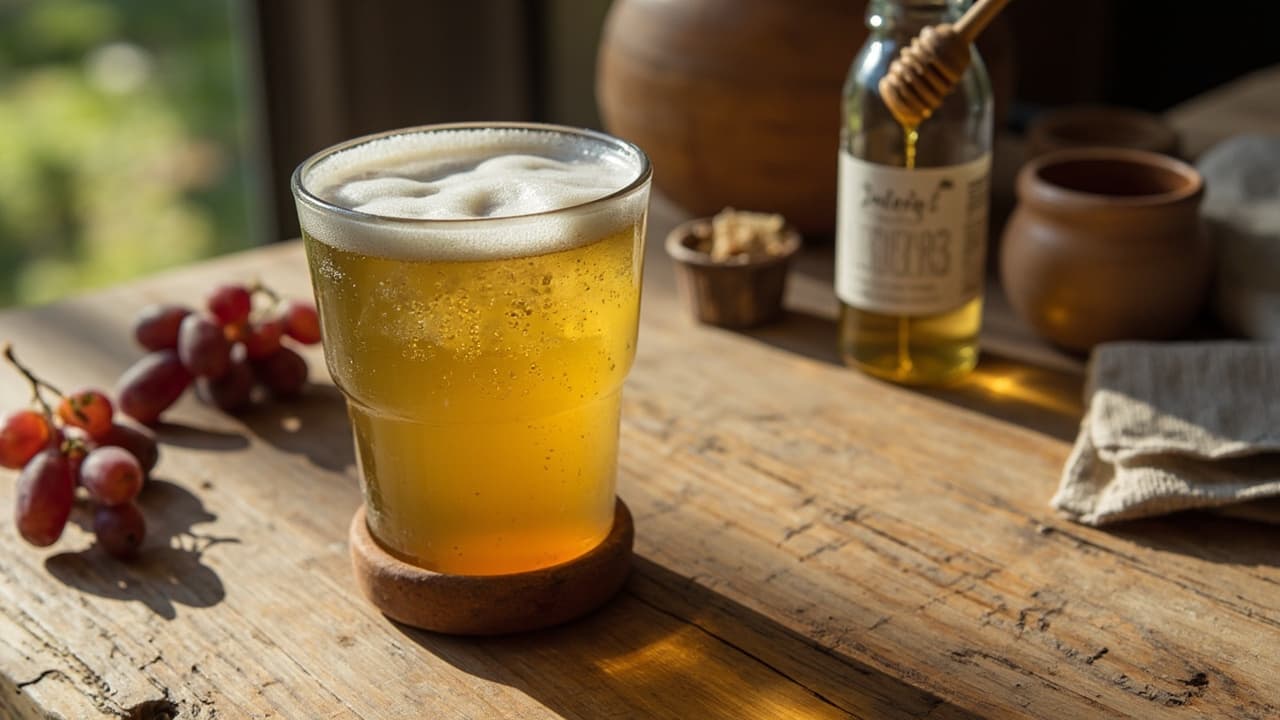
Wild Fermented Grape Must Fizz
A living-culture beverage born from the ancient tradition of Georgian qvevri winemaking, where wild yeast from organic grape skins transforms the sweet must into a naturally effervescent fizz with complex tanginess and honey-sweet undertones.
Prep
30 min
Total
30 min
Method
1
Inspect 1 kilogram of fresh organic grapes, discarding any damaged or unripe berries. The whitish film on the grape skins carries the wild yeast that will drive this living fermentation.
2
Gently crush the grapes using a wooden paddle or clean hands, releasing the juices and breaking the skins to expose the indigenous yeast. Work in a clean ceramic bowl or directly in the fermentation vessel.
3
Transfer the crushed grape must into a 2-liter Georgian qvevri or ceramic fermentation crock, pressing gently to extract maximum juice while keeping the vessel no more than three-quarters full to allow room for fermentation activity.
4
Drizzle 2 tablespoons of raw honey over the surface of the must, then stir gently with a wooden paddle to incorporate it evenly. The honey provides additional sugar for robust yeast activity and subtle sweetness.
5
Cover the vessel tightly with clean muslin or a natural cloth secured with kitchen twine, creating a barrier that allows wild yeast ingress while keeping insects out. Place in a cool dark location at 18-22 degrees Celsius.
6
Observe daily for the first 3-5 days as the wild yeast establishes itself. Small bubbles should begin rising through the must, indicating active fermentation. The liquid will darken slightly and develop a pleasantly sour aroma.
7
Stir the must gently once daily using the wooden paddle to submerge the cap of grape skins and pulp, preventing unwanted surface molds while promoting even fermentation. If any white mold appears, skim it off immediately.
8
Continue primary fermentation for 7-14 days until vigorous bubbling subsides to occasional bubbles and the must tastes dry with balanced acidity. Taste periodically to judge the transformation from sweet grape juice to fermented grape must.
9
Strain the fermented grape must through a clean fine-mesh cloth into a clean glass flip-top bottle, leaving behind the grape pulp and sediment. Pour slowly without disturbing the settled lees.
10
Seal the flip-top bottle tightly and place in the refrigerator for 1-2 days to slow fermentation before carbonation develops.
11
Remove from refrigerator and check carbonation by gently squeezing the bottle. When the bottle feels firm with built-up pressure, the natural fizz has developed.
12
Serve immediately as a living-culture beverage, pouring carefully to preserve the natural carbonation. Store remaining fizz in the refrigerator where it will remain effervescent for 1-2 weeks.
A
Nutri-Score
Excellent balance
A–E · lower is better · score -3
Calories
239
per serving
Low saturated fat · 0gLow salt · 1mg
Protein
2g
Carbs
63g
Fat
1g
Sat. fat
0g
Fiber
3g
Sugar
56g
Sodium
1mg
Dairy FreeGluten FreeLiving CultureOrganicPaleoPescatarianRawTerroir DrivenVeganWild FermentedAnti InflammatoryAntioxidant RichGut HealthHeart HealthyImmune SupportLow SodiumNatural ProbioticsWhole FoodAncestral NutritionLow Processed SugarNatural CarbonationNatural FermentsPolyphenol RichPrebiotic
Nutri-Score is a general nutritional-balance guide, not medical or dietary advice.
B
Environmental impact
Low impact
A–E · lower is better · includes estimates
kg CO2e
0.4
per serving
BCarbonAEU all-round· carbon sets the grade
Water
1.3m³
Land
6.2Pt
Runoff
0.03g P
Fresh organic grapes (with wild yeast on skins) drives 94% of this recipe’s estimated footprint.
Carbon from Poore & Nemecek 2018; water, land & runoff from Agribalyse — modelled averages for comparing recipes, not a measurement of your groceries.
Flavor Profile
5
Umami
4
Sweet
1
Salty
7
Sour
2
Bitter
0
Spicy
Textures
EffervescentLivelySilky
Aromas
EarthyFruitySweetTangyWild Fermented
Kitchen Equipment
Primary Tool
Ceramic Fermentation CrockCeramic Fermentation CrockGlass Flip Top BottleFine Mesh StrainerWooden PaddleCheeseclothKitchen Twine
Techniques
Safety & Storage
High Risk Population
Raw honey contains Clostridium botulinum spores which pose serious risk of infant botulism. Do not serve this beverage to infants under 12 months of age.
Handling
Inspect grapes thoroughly before crushing. Discard any damaged, moldy, or unripe berries to prevent contamination from harmful microorganisms during fermentation.
Skim any white surface mold immediately during fermentation. If mold appears discolored (green, black, or fuzzy), discard the entire batch rather than attempting to salvage it.
Ferment at 18-22 degrees Celsius. Temperatures above 25 degrees Celsius can promote growth of unwanted bacteria and spoilage organisms; temperatures below 15 degrees Celsius may prevent fermentation from completing properly.
Cross Contamination
Use dedicated wooden fermentation tools and ceramic vessels. Avoid contact with vessels that have held other ferments, meats, or allergen-containing foods to maintain fermentation integrity.
Equipment Safety
Do not overfill the fermentation vessel beyond three-quarters capacity. Fermentation produces carbon dioxide gas which can build pressure and cause vessel rupture if insufficient headspace remains.
When bottling for carbonation, use only glass flip-top bottles rated for carbonated beverages. Standard mason jar lids may fail under carbonation pressure, creating explosion hazard.
Storage
After carbonation develops, immediately refrigerate at or below 4 degrees Celsius. Cold temperatures slow remaining yeast activity and prevent dangerous pressure buildup in sealed bottles.
Shelf Life
Consume within 1-2 weeks of carbonation. Extended refrigeration does not stop fermentation indefinitely and bottles may eventually over-carbonate or produce off-flavors from over-fermentation.
Allergen Warning
Raw honey may contain trace bee pollen and bee-derived proteins. Individuals with pollen allergies or bee sting allergies should exercise caution; consider using heat-treated honey if severe allergy exists, though this reduces wild yeast inoculation potential.
Pro Tips
Technique
The daily stirring of the must is not merely maintenance—it is your moment of presence with the ferment. When you press the grape cap beneath the surface with your wooden paddle, you are channeling generations of keepers who understood that living cultures respond to attention. If you feel the must grow too warm and fermentation becomes aggressive, wrap the qvevri in damp burlap to draw coolth from the earth.
Substitution
If alpine wildflower honey proves elusive, allow your Georgian mountain honey—darker, more bitter than lowland varieties—to stand in its place. The grape must provides enough inherent sweetness that even a robust, tannic honey will harmonize beautifully, lending deeper complexity to the final fizz while supporting the wild yeast through its crucial first days of awakening.
From the chef
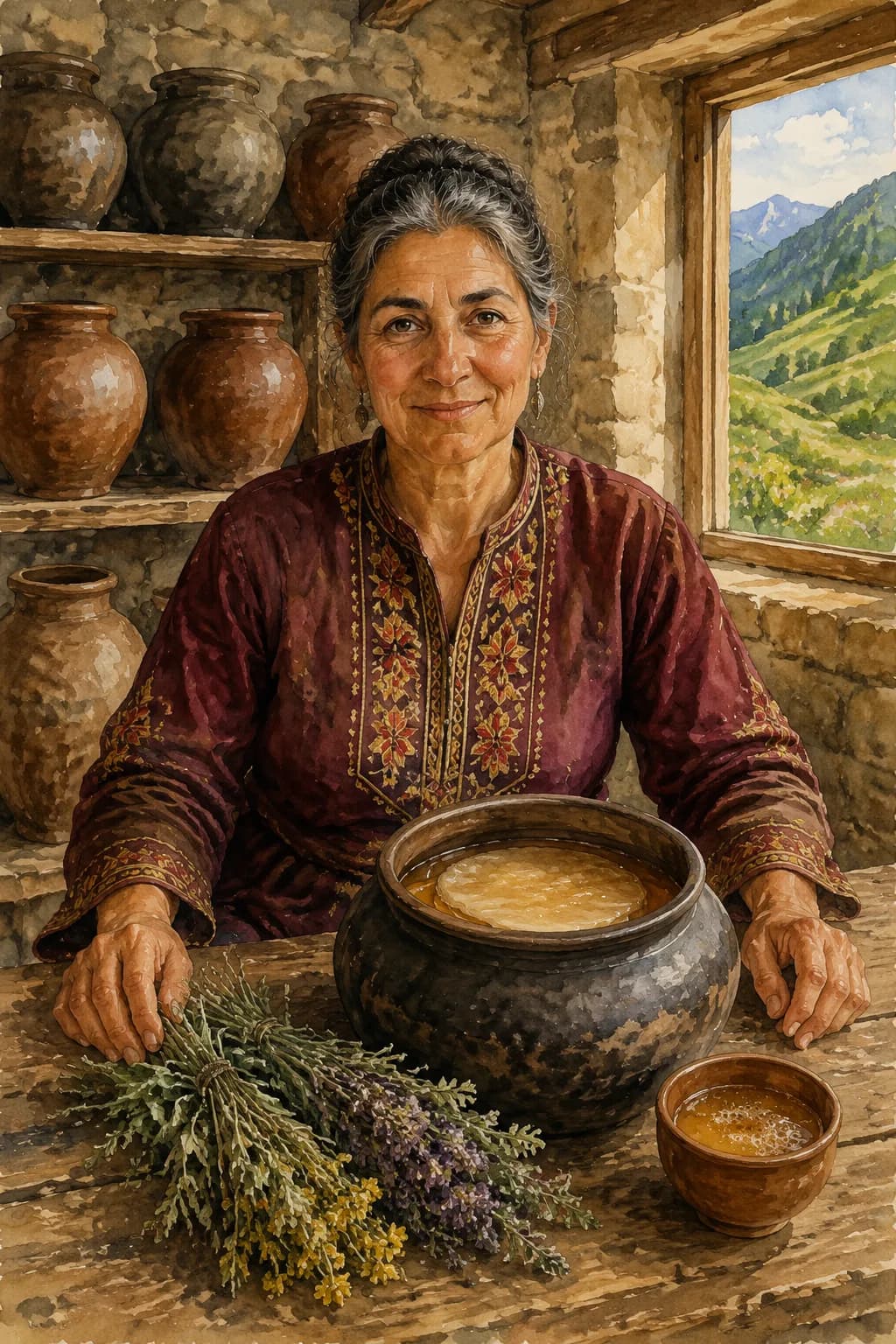
In the limestone caves of Kakheti, my great-grandmother would press the season's last grapes as twilight settled over the vineyards, trusting the wild yeast on those skins to begin what her grandmother taught her. This fizz carries that same living culture—indigenous microbes that traveled from mountain terroir through grape skin to vessel, now dancing in honey-sweet bubbles that taste of our Georgian autumn. When you open that flip-top bottle and hear the ancient hiss of carbonation escaping, you are not drinking a trend; you are joining a conversation between our ancestors and the land that has continued unbroken for three thousand years.
TagsWild FermentedNatural CarbonationTraditional GeorgianLiving CultureGrape BeverageHoney Sweetened
Source: generated · June 13, 2026