 Filipino
Medium · Warm
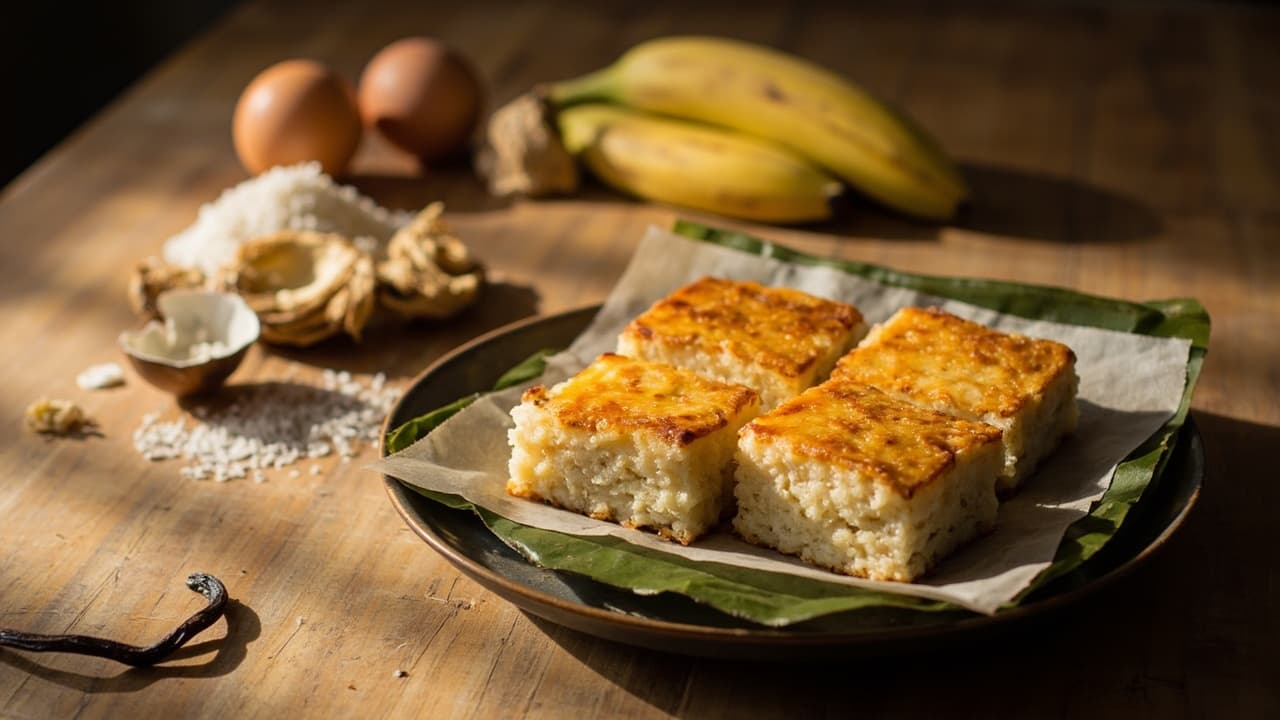
Coconut Flour Biko Cakes
Sweet coconut-infused rice cakes with a soft, dense crumb and caramelized banana top. A Filipino-inspired treat made with coconut flour and pantry staples, perfect for sharing.

Prep
45 min
Cook
55 min
Total
1h 40m
Method
1
Soak the white rice in cold water for 30 minutes. Drain well.
2
Preheat your oven to 180°C (350°F). Line an 8-inch square baking pan with parchment paper and lightly grease the sides.
3
In a blender, combine the drained rice, coconut flour, whole milk, white sugar, eggs, salt, and vanilla extract. Blend on high for 2 minutes until the batter is smooth and no rice grains remain.
4
Pour the batter into a medium saucepan. Cook over medium-low heat, stirring constantly with a wooden spoon or whisk, for 8-10 minutes until the mixture thickens noticeably and pulls away from the sides of the pan. It should resemble a very thick porridge.
5
6
Remove from the oven. Slice the ripe banana into thin rounds and arrange on top of the cake. Return to the oven and bake for an additional 10 minutes until the top is set and lightly golden.
B
Nutri-Score
Good balance
A–E · lower is better · score 0
Calories
665
per serving
High in fibre · 18gLow salt · 230mg
Protein
19g
Carbs
124g
Fat
12g
Sat. fat
9g
Fiber
18g
Sugar
53g
Sodium
230mg
Gluten FreeVegetarianCeliac DiseaseHigh Fiber
Nutri-Score is a general nutritional-balance guide, not medical or dietary advice.
B
Environmental impact
Low impact
A–E · lower is better · includes estimates
kg CO2e
0.8
per serving
BCarbonAEU all-round· carbon sets the grade
Water
0.9m³
Land
19Pt
Runoff
0.05g P
Whole Milk drives 39% of this recipe’s estimated footprint.
Carbon from Poore & Nemecek 2018; water, land & runoff from Agribalyse — modelled averages for comparing recipes, not a measurement of your groceries.
Flavor Profile
5
Umami
7
Sweet
4
Salty
1
Sour
1
Bitter
0
Spicy
Textures
DenseSoftTender
Aromas
CoconutFruitySweet
Kitchen Equipment
Safety & Storage
Allergen Warning
Contains milk and eggs. Do not serve to individuals with dairy or egg allergies without alternative substitutions.
Cooking Temperature
Cook the batter on stovetop until it reaches a thick porridge consistency and pulls away from pan sides, about 8-10 minutes over medium-low heat, to ensure eggs and milk are fully heated.
Final bake at 180°C (350°F) for 45 minutes plus 10 minutes with banana topping ensures internal temperature reaches safe levels for dairy and egg ingredients.
Cross Contamination
Use clean utensils when handling raw eggs and milk. Wash blender, saucepan, and utensils thoroughly with hot soapy water after preparing the batter if using for other foods.
Handling
Use caution when blending warm liquids in a blender. Allow batter to cool slightly before blending or use pulse function to prevent pressure buildup.
Storage
Refrigerate any leftovers within 2 hours in an airtight container. Consume within 3-4 days. Reheat thoroughly before serving.
Shelf Life
Coconut flour biko cakes with dairy and eggs have a limited shelf life of 2-3 days at room temperature. Store in refrigerator for up to 4 days or freeze for up to 1 month.
High Risk Population
Ensure eggs are fully cooked. Pregnant women, young children, elderly, and immunocompromised individuals should only consume eggs cooked to firm consistency.
Pro Tips
Technique
When you're cooking the batter on the stove before baking, you'll know it's ready when it pulls away from the sides of the pan like a soft lumpia wrapper—it should cling to your spoon but not stick to the metal. That's your cue that the coconut flour has hydrated properly and your cakes will set with that perfect dense-but-tender bite.
Substitution
No coconut flour in your pantry? No worries, luv. You can swap in the same amount of all-purpose flour and add a generous 2 tablespoons of unsweetened shredded coconut to bring back that coconut flavor. It won't be exactly the same, but it'll still taste like home.
From the chef
These biko cakes have a soft, dense crumb that comes from blending soaked rice with coconut flour and whole milk into a smooth batter, then cooking it down on the stovetop until it thickens before it ever sees the oven. Egg holds it together, vanilla lifts the coconut sweetness, and a layer of caramelized banana on top adds something jammy and golden in the final minutes of baking. Cut them into squares while still warm. They are the kind of thing you make when you want the kitchen to smell like something worth gathering around — and they are always gone before you plan for them to be.
TagsSweetBakedCoconutBananaFestiveFamily Style
AllergensMilkEggs
Source: generated · June 12, 2026