 Japanese American
Medium · Hot
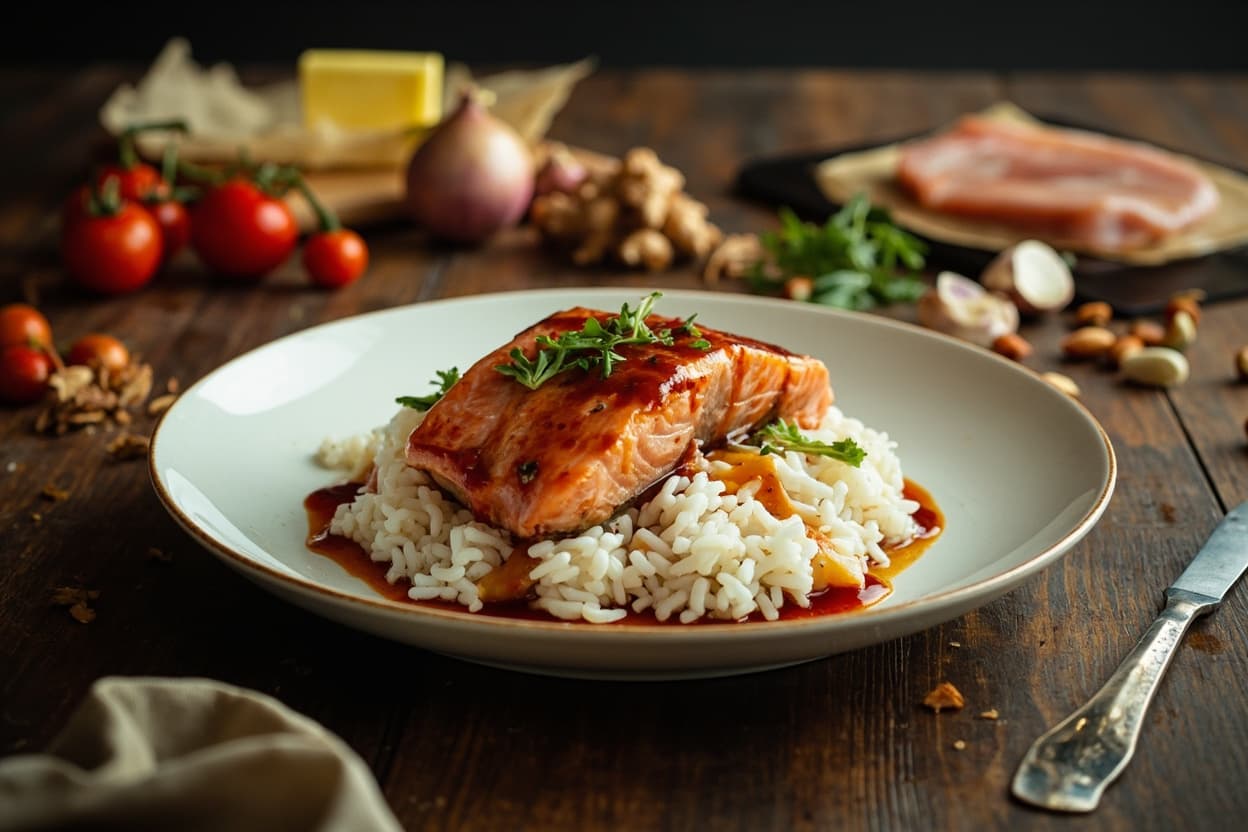
Soy-Butter Glazed Salmon over Steamed Rice
Think of it as the Japanese equivalent of your favorite steakhouse brown butter finish — soy sauce and butter hit the pan together and create something far greater than either alone, a glossy, savory-sweet lacquer that clings to salmon the way a great sauce should. Fresh ginger keeps it alive, cutting through the richness with gentle heat. Spooned over white rice, every grain catches the drips and becomes the best bite on the plate.

Prep
10 min
Cook
20 min
Rest
5 min
Total
35 min
Method
Prep the Rice
1
Add rice and 2.5 cups water to your rice cooker. Cook on white-rice setting and let it steam naturally after cycling off.
Sear the Salmon
2
Flip salmon skin-side down. Cook 3 minutes. Remove and rest on a plate—the carryover heat will finish cooking.
Build the Glaze
Plate and Serve
4
Finish with toasted sesame seeds clearly and a generous squeeze of lime. The acid wakes up all that umami we just built.
Grade pending
Nutri-Score
Estimated nutrition
Grade pending · 100% ingredient coverage
Calories
827
per serving
Calorie-dense · 827 kcalSource of protein · 34g
Protein
34g
Carbs
101g
Fat
30g
Sat. fat
11g
Fiber
2g
Sodium
979mg
PescatarianHigh ProteinHeart HealthyBalanced Macros
Nutri-Score is a general nutritional-balance guide, not medical or dietary advice.
E
Environmental impact
Very high impact
A–E · lower is better · includes estimates
kg CO2e
2.9
per serving
ECarbonAEU all-round· carbon sets the grade
Water
1.8m³
Land
52Pt
Runoff
0.3g P
Salmon fillets drives 80% of this recipe’s estimated footprint.
Carbon from Poore & Nemecek 2018; water, land & runoff from Agribalyse — modelled averages for comparing recipes, not a measurement of your groceries.
Flavor Profile
7
Umami
4
Sweet
5
Salty
3
Sour
1
Bitter
3
Spicy
Textures
TenderSilkyFluffyCrispy
Aromas
UmamiNuttyCitrusPungent
Kitchen Equipment
Primary Tool
Frying PanCounter FootprintMedium
Safety & Storage
Cooking Temperature
Cook salmon to an internal temperature of at least 145 °F to eliminate pathogens; avoid overheating butter past its smoke point.
Cross Contamination
Use separate cutting boards and utensils for raw fish, butter, soy sauce, and sesame seeds; wash all surfaces and hands thoroughly after contact.
Storage
Refrigerate leftovers within 2 hours, keep at ≤40 °F, and consume within 2 days; freeze at 0 °F for up to 2 months.
Handling
Handle raw salmon with disposable gloves and do not allow it to touch ready‑to‑eat items such as steamed rice or lime garnish.
Allergen Warning
Clearly label the presence of fish, milk, soy, and sesame allergens on any leftover packaging or serving dishes.
High Risk Population
Pregnant women, the elderly, and immunocompromised individuals should only eat the salmon after it has reached 145 °F and should avoid any glaze that has not been cooked.
Equipment Safety
Monitor butter in the pan to prevent burning; use a thermometer to verify temperature when cooking.
Pro Tips
Technique
When your glaze is ready, you'll know it by sight — it should coat your spoon like syrup and turn a deep, glossy amber. If it looks thin and watery, keep swirling; the emulsification of butter into reduced soy sauce is what gives this dish its signature richness.
Substitution
No fresh ginger? A pinch of ground ginger works in a pinch, though the fresh root gives you that bright, sharp zing that cuts through the butter beautifully. For a different umami direction, try substituting 1 tablespoon of white miso paste whisked into the butter — it adds fermented depth that mirrors what bonito brings to dashi.
From the chef
This dish is my way of introducing American home cooks to the soul of Japanese weeknight cooking. Think of soy-butter glaze as teriyaki's richer cousin — the butter rounds out the salty depth of soy sauce into something almost creamy. When you hit that glossy, amber glaze on a perfectly seared piece of salmon, you're tasting umami science that goes back generations, simplified for your weeknight dinner rotation.
TagsWeeknight DinnerSeared SalmonUmami Rich30 Minutes
AllergensFishMilkSoySesame
Source: generated · May 30, 2026