 Japanese
Medium · Hot
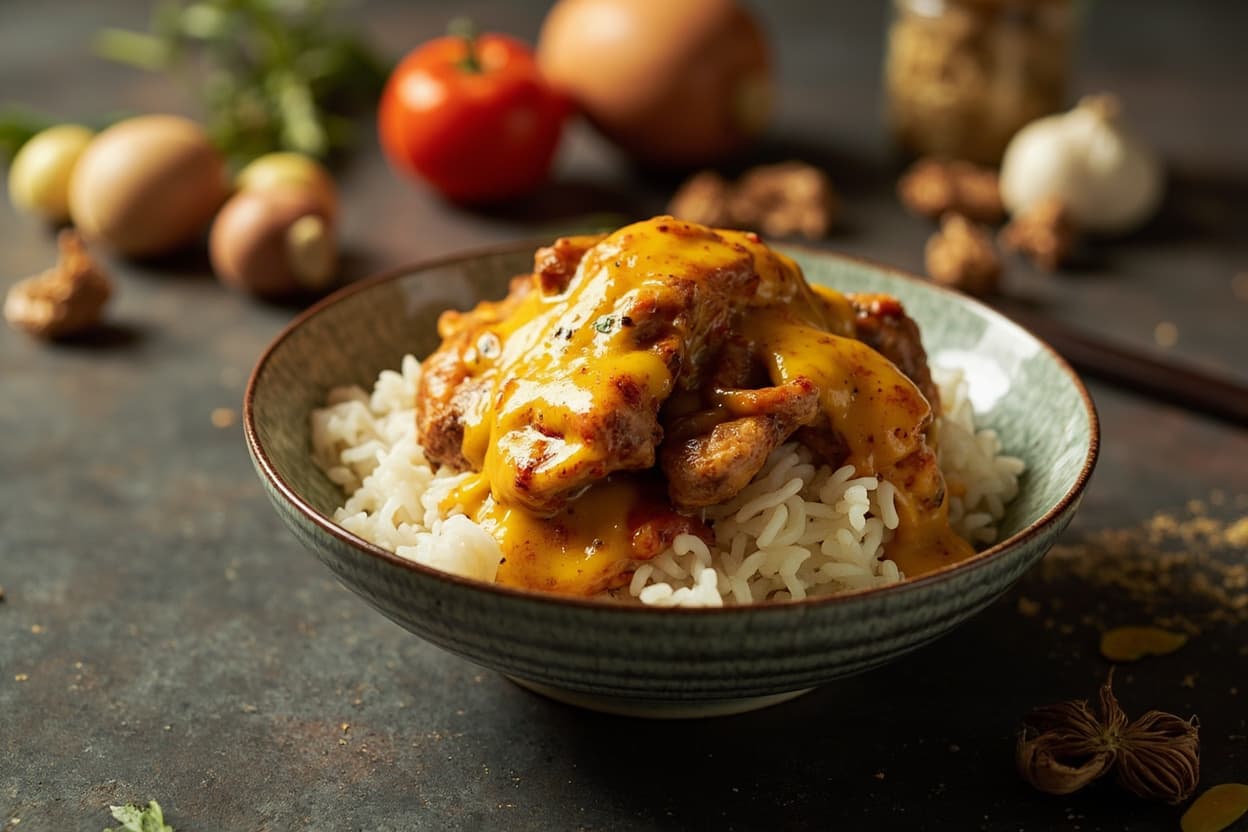
Oyakodon Chicken and Egg Over Rice
Chicken thigh and yellow onion simmer together in soy until the onion surrenders its sharpness and the chicken is tender throughout. Beaten egg settles over the top, turned off the heat, half-set and silky. Spooned over white rice, it is one of the most comforting things a single pan can produce.

Prep
10 min
Cook
20 min
Total
30 min
Method
Prepare the Rice
1
Rinse the white rice until water runs clear. Cook in your rice cooker with 2 cups water.
2
While rice cooks, slice the yellow onion into thin half-moons.
3
Cut the green onions into thin rounds, separating white and green parts.
4
Cut the chicken thigh into bite-sized pieces, about 2cm.
Build the Seasoning
5
In a small bowl, combine soy sauce, white sugar, and sake. Stir until the sugar dissolves completely.
6
In another bowl, beat the eggs gently — you want streaks of white, not a smooth blend.
Simmer the Oyakodon
7
In a wide skillet or nabe pot, arrange the sliced yellow onion over the chicken pieces.
8
Pour the seasoning sauce over the chicken and onion. Place over medium heat.
9
Cover and cook for 5 minutes until the chicken reaches 165°F (74°C) internal temperature. Use a food thermometer inserted into the thickest piece to confirm.
10
Scatter the white parts of green onion over the surface.
The Final Assembly
11
Pour the beaten egg slowly over the surface in a circular motion. Do not stir.
12
Cover immediately and cook for exactly 2 minutes. The eggs should be soft-set, slightly jiggly.
13
Internal temperature should reach 144-158°F (62-70°C) for soft-set eggs. Use a thermometer to verify if unsure.
14
Divide the rice into bowls. Ladle the chicken-egg mixture over each bowl.
15
Scatter the green onion tops as a garnish. Serve immediately.
B
Nutri-Score
Good balance
A–E · lower is better · score 0
Calories
817
per serving
High in protein · 49gLow sugar · 10gLow saturated fat · 5g
Protein
49g
Carbs
107g
Fat
19g
Sat. fat
5g
Fiber
2g
Sugar
10g
Sodium
701mg
Dairy FreeGluten FreeHeart HealthyLow SodiumHigh ProteinMuscle GainBalanced Macros
Nutri-Score is a general nutritional-balance guide, not medical or dietary advice.
D
Environmental impact
High impact
A–E · lower is better · includes estimates
kg CO2e
2.0
per serving
DCarbonAEU all-round· carbon sets the grade
Water
1.8m³
Land
58Pt
Runoff
0.2g P
Chicken Thigh drives 63% of this recipe’s estimated footprint.
Carbon from Poore & Nemecek 2018; water, land & runoff from Agribalyse — modelled averages for comparing recipes, not a measurement of your groceries.
Flavor Profile
7
Umami
4
Sweet
5
Salty
2
Sour
1
Bitter
0
Spicy
Textures
TenderSilkySoft
Aromas
SavoryHerbalUmami Rich
Kitchen Equipment
Primary Tool
SkilletCounter FootprintMedium
Safety & Storage
Cooking Temperature
Ensure chicken reaches 165°F (74°C) internal temperature before adding eggs to eliminate Salmonella and other pathogens
Target egg soft-set at 144-158°F (62-70°C); remove from heat at 2 minutes and allow residual heat to finish cooking the eggs gently
Cross Contamination
Keep raw chicken separate from all other ingredients, utensils, and surfaces throughout preparation
Handling
Wash hands thoroughly with soap and warm water for 20+ seconds after handling raw chicken before touching other ingredients
High Risk Population
For pregnant individuals, elderly, and immunocompromised persons: use pasteurized eggs and confirm chicken reaches safe internal temperature
Storage
Oyakodon is best served immediately; if storing, refrigerate below 40°F within 2 hours and consume within 24 hours
Shelf Life
Egg-based dishes should not be left at room temperature for more than 2 hours total; discard if left out longer
Pro Tips
Technique
Resist the urge to stir once you have added the eggs. Pour gently in a slow circle, then cover and let steam work its quiet magic. The eggs should barely set — still trembling when you lift the lid.
Substitution
If sake is unavailable, substitute with an equal measure of dry sherry mixed with a few drops of rice vinegar. The fermented depth will still honor the dish.
From the chef
Oyakodon means parent and child — chicken and egg together, a name that says everything about how simply this dish is conceived. Thigh pieces and onion simmer in soy until tender, then beaten egg is poured over and the heat turned off. It sets soft, still trembling at the center, spooned over white rice to catch the broth. Washoku at its most honest: a few ingredients, nothing wasted, something complete.
TagsComfort FoodWeeknight DinnerTraditional JapaneseQuick PrepOne Pot
AllergensSoyWheatEggs
Source: generated · May 30, 2026